
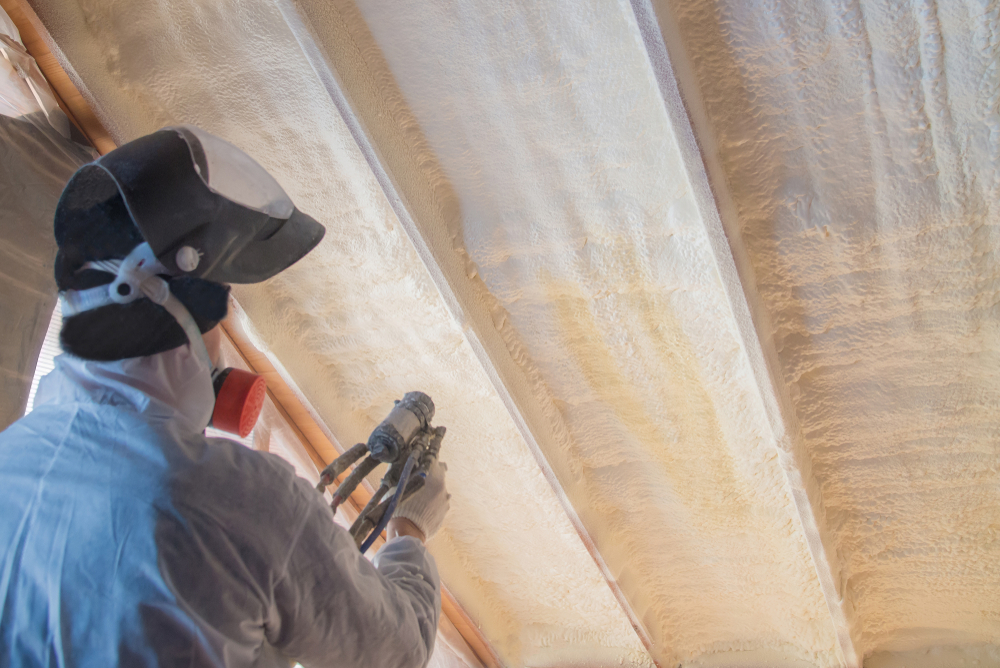


Homes and businesses across Newnan, GA lose energy through gaps, cracks, and poorly insulated spaces that traditional insulation materials fail to seal. Spray foam insulation expands to fill these gaps completely, creating an airtight barrier that stops energy loss at the source. We provide spray foam insulation services for homeowners and business owners throughout Newnan and the surrounding areas.
Uneven temperatures, high energy bills, and moisture problems often point to insulation that no longer performs as it should. Spray foam addresses these issues directly by sealing the building envelope, whether in an attic, crawl space, or commercial structure. We work with property owners to identify where their insulation is failing and apply a solution built for long-term performance.
Our team brings technical knowledge and local experience to every project, understanding the specific climate and construction challenges found in this region of Georgia. We handle both open-cell and closed-cell applications for residential and commercial properties, matching the product to the structure and the goal.
Spray foam can insulate and seal air leaks in attics, rooflines, walls, basements, and crawl spaces. We assess each area’s structure and moisture conditions to recommend a suitable application.
In an attic, we can apply spray foam along the roofline to create a conditioned space, or at the attic floor to separate the attic from the rooms below. The right location depends on your home’s design, ventilation, and HVAC equipment. Sealing gaps around penetrations and framing can reduce drafts and limit the movement of outdoor air.
Roofline applications require careful attention to roof leaks and moisture. We inspect the area before installation and follow product requirements for thickness, ventilation, and any needed ignition or thermal barriers. These details help the insulation perform as intended and support safe use of the attic.
In walls, spray foam fills cavities and seals around wiring, plumbing, and framing, helping reduce air leakage through the building envelope. We check cavity depth and existing conditions before choosing a product and application method. Correct installation matters because excess foam can affect wall finishes or interfere with electrical components.
Basements and crawl spaces need special attention to moisture sources, drainage, and foundation conditions. We evaluate those factors before applying foam to foundation walls or rim joists. In crawl spaces, the insulation plan should fit the moisture-control strategy, including ground vapor barriers and any required ventilation or conditioning. Sealing these areas can help reduce drafts and temperature swings in adjacent rooms.
At Georgia Insulation, we install spray foam to help commercial buildings in Woodstock and nearby areas manage heat flow, air leakage, and moisture. The right approach depends on the building’s use, construction, and ventilation needs.
In offices and retail spaces, spray foam can seal gaps around wall framing, rooflines, and penetrations for wiring or plumbing. This helps limit drafts and temperature swings, which can make it easier to maintain comfortable work and customer areas. Insulating the building enclosure can also reduce the workload on heating and cooling equipment.
We assess the building’s existing insulation, surface conditions, and planned use before recommending open-cell or closed-cell foam. The choice affects factors such as moisture resistance, insulation value, and available cavity space. We also account for ventilation and any code requirements relevant to the project. Before installation, your team should plan for occupants to leave the work area during application and until the product’s re-entry guidance is met.
Warehouses and metal buildings can develop drafts and condensation where exterior panels, roof assemblies, and joints allow outside air to reach cooler surfaces. Spray foam applied to suitable areas can create an insulating air barrier and help manage condensation risk. This can support more stable indoor conditions for stored goods, staff, and equipment.
We inspect the metal substrate and building details before installation. Surface preparation matters because foam needs a suitable, clean surface to adhere properly. We also consider the building’s ventilation, intended use, and any process or storage conditions that affect temperature and moisture. For large open areas, the insulation plan should address roof and wall assemblies together, along with safe access and ventilation during application.
Spray foam insulation creates a layer that slows heat transfer and seals many gaps where outside air enters. In Woodstock homes and commercial buildings, proper installation can support steadier indoor temperatures and reduce drafts.
Spray foam expands into cracks and gaps in areas such as attic rooflines, wall cavities, rim joists, and around penetrations for pipes and wiring. This air-sealing effect helps limit drafts and reduces the movement of outdoor air into conditioned spaces. It can also help reduce heat loss in winter and heat gain in summer.
With fewer air leaks, heating and cooling systems may maintain indoor temperatures with less fluctuation. Spray foam can also reduce noise transfer through insulated walls and ceilings. We assess the building’s layout and ventilation needs before recommending a foam type and installation location.
Spray foam can be a worthwhile investment when air leakage, uneven temperatures, or difficult-to-insulate spaces affect comfort and energy use. Its performance depends on the foam type, the installed thickness, and careful application. We review the areas you want insulated and explain how the work may affect your building’s air sealing and thermal performance.
The upfront cost can exceed that of some conventional insulation materials. To assess value, consider the building’s current condition, planned renovations, energy use, and how long you expect to own or operate the property. We can help you compare options and identify where spray foam is appropriate. Proper ventilation and installation practices also matter, so our recommendations account for the building’s ventilation requirements.
Unsealed gaps around walls, rooflines, and floor edges let conditioned air escape and outdoor air enter. Those leaks can raise energy use, create uneven temperatures, and allow moisture-laden air to reach building materials.
Gaps around plumbing, wiring, framing, and attic access points create paths for air to move through a home or commercial building. Heating and cooling systems then work harder to maintain the thermostat setting, which can increase energy use and make rooms less comfortable.
You may notice drafts near exterior walls, cold floors in winter, or rooms that stay warm in summer. Spray foam fills and seals many irregular openings, helping limit air leakage when the product suits the location and qualified installers apply it correctly. We assess the areas that need attention so the insulation plan addresses specific leaks and comfort concerns.
Air moving through unsealed gaps can carry moisture into attics, wall cavities, and crawl spaces. When humid air reaches a cooler surface, condensation can form and contribute to damp insulation, wood decay, or conditions that support mold growth.
Leaks also allow dust, pollen, and outdoor odors to enter through cracks around the building envelope. Spray foam can reduce these pathways, but it must be installed with proper ventilation and moisture control in mind. We inspect the space and recommend an approach that fits its structure, climate exposure, and intended use.
We serve property owners in Woodstock and nearby communities, and we tailor spray foam recommendations to each building’s layout, use, and insulation needs.
Georgia Insulation serves homeowners and businesses in Woodstock, GA, and nearby areas. We provide residential and commercial spray foam insulation, with practical solutions for attics, crawl spaces, walls, and roof assemblies.
We assess your property’s layout, existing conditions, and insulation goals before recommending spray foam. We explain the differences between open-cell and closed-cell foam and review access, preparation, ventilation, and installation requirements to help you choose the right solution.
We assess the building, prepare the work area, and apply spray foam to the specified surfaces. Before we finish, we inspect coverage and discuss the installation timeline with you.
We begin with an on-site assessment of the areas you want insulated, such as an attic, crawl space, wall cavity, or commercial building envelope. We check existing insulation, identify visible air leaks, measure the surfaces, and review access and ventilation conditions. These details help us determine the scope of work and estimate the materials needed.
Before application, we explain how to prepare the space and what areas need to remain accessible. We protect nearby surfaces, address required removal of old insulation if included in the project, and confirm that the application area is ready. Spray foam installation requires specialized equipment and appropriate safety precautions, so occupants and pets must stay out of the work area during application and for the recommended re-entry period.
Our installers apply spray foam to the agreed surfaces using professional equipment. The foam expands as it is applied, filling gaps and forming an insulation layer. We control application depth and coverage to match the project plan and the product requirements.
After the foam cures, we inspect the treated areas for consistent coverage and check that the work matches the agreed scope. We also review the completed installation with you, explain any relevant curing or ventilation guidance, and answer questions about the finished work. If the project requires additional trades or finishing, such as drywall installation, we clarify that before work begins.
The timeline depends on the size of the project, the type of space, access, and any preparation needed. A single attic or crawl space may take less time than a whole-home installation or a commercial building project with multiple areas.
During the assessment, we provide a project-specific schedule and let you know how long the work area must remain vacant after application. Preparation, removal of existing materials, or difficult access can add time. We confirm these details with you before scheduling so you can plan around the installation.
Georgia Insulation provides residential and commercial spray foam insulation in Woodstock, GA, and surrounding communities, offering practical solutions tailored to your property’s insulation needs.
Improve energy efficiency, indoor comfort, and air sealing with professionally installed spray foam insulation. Get a free quote and find the right insulation solution for your home or commercial property.
Spray foam costs depend on the area, foam type, and required thickness. Placement, moisture control, building use, and project size also affect installation time and planning.
The price depends on the square footage, whether we install open-cell or closed-cell foam, and the condition of the area. We assess the project and provide a quote based on the materials and labor required.
We install spray foam in areas such as attics, rooflines, crawl spaces, and walls. The best location depends on your home’s insulation needs, air leakage, and moisture conditions.
Yes. We install spray foam in commercial spaces, including roofs, walls, and other areas where the building needs insulation and air sealing. We consider the building’s use and construction when recommending an application.
Open-cell foam is lighter and more flexible, while closed-cell foam is denser and adds more resistance to moisture and heat flow per inch. We recommend a type based on the location, building requirements, and project goals.
Poorly planned or installed foam can affect how a building manages moisture. We assess the area’s ventilation, existing moisture conditions, and assembly before installation, especially in attics and crawl spaces.
Many projects take one day, but larger or more complex jobs can take longer. We determine the schedule after reviewing the area, preparation needs, and installation scope.