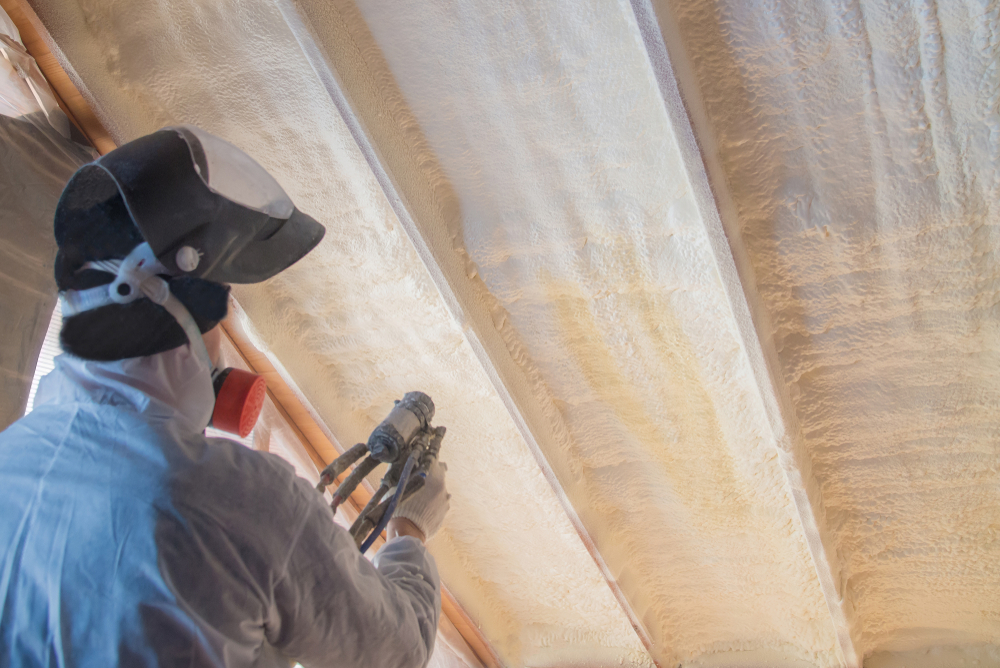
Sandy Springs homes and businesses face specific challenges when it comes to temperature control and energy costs, especially with Georgia’s humid summers and unpredictable winters. Spray foam insulation seals gaps and air leaks that traditional insulation methods miss, creating a barrier that keeps conditioned air inside and outside air out. We install spray foam insulation throughout the Sandy Springs area, working with both residential and commercial properties.
Poor insulation leads to higher utility bills, uneven temperatures between rooms, and strain on HVAC systems that have to work harder to compensate. We address these issues directly by applying spray foam insulation to attics, walls, crawl spaces, and commercial structures, creating a consistent thermal barrier throughout the building.
Our team at Georgia Insulation understands the specific needs of Sandy Springs properties and the local climate conditions that affect insulation performance. We bring our experience to every project, whether it’s a single-family home or a commercial building, and we’re ready to explain how spray foam insulation can solve the problems you’re facing.
Spray foam works differently depending on where we install it and what the space needs. Below, we break down our approach for attics, walls, and commercial structures.
Attics lose heat fast without proper insulation, and crawl spaces let moisture creep in from below. We apply spray foam directly to the underside of the roof deck or attic floor, sealing gaps that traditional insulation often misses.
In crawl spaces, we use closed-cell foam to block moisture and create a barrier against pests. This helps prevent wood rot and mold growth over time.
Rooflines benefit from foam application because it seals around vents, pipes, and other penetrations. We assess each area to determine whether open-cell or closed-cell foam fits the space and climate conditions better.
GET A FREE QUOTEExterior walls, garage ceilings, and basement rims all present different insulation challenges. We install spray foam within wall cavities to reduce air leakage and improve temperature consistency between rooms.
Garages often connect directly to living spaces, so we seal shared walls and ceilings to limit temperature transfer. Basements benefit from foam applied along rim joists and foundation walls, where cold air typically enters.
Common areas we treat include:
We match the foam type to the moisture levels and structural needs of each area.
GET A FREE QUOTECommercial spaces require insulation that holds up under different demands than residential properties. We apply spray foam in warehouses to manage large open volumes and reduce energy loss through metal roofing and walls.
Office buildings benefit from foam insulation in ceilings and exterior walls, which helps maintain consistent indoor temperatures across multiple rooms or floors. This can ease the load on HVAC systems.
For warehouses with high ceilings or metal construction, we focus on roofline and wall applications to control condensation and temperature swings. We evaluate the building's layout, use, and construction materials before recommending a specific foam type and application method.
GET A FREE QUOTESpray foam insulation addresses three concerns that matter most to Sandy Springs property owners: rising utility bills, uneven indoor temperatures, and moisture damage. We install this system to target all three at once, rather than treating them as separate issues.
We use spray foam because it seals gaps that fiberglass and cellulose leave open. Air leaks around wiring, plumbing penetrations, and framing joints let conditioned air escape year-round.
Closed-cell spray foam offers an R-value of roughly 6.0 to 7.0 per inch, higher than most traditional materials. This means your HVAC system works less to maintain a set temperature.
We typically see homeowners report noticeable reductions in monthly energy costs after installation. The exact savings depend on:
We apply spray foam to create a continuous air barrier across walls, attics, and rim joists. This stops the hot and cold spots common in homes with gaps in their insulation.
Rooms above garages, additions, and upper floors often suffer from temperature swings. Our installation process fills irregular cavities that batt insulation cannot reach, including areas around outlets and behind knee walls.
We also reduce outdoor noise transmission as a secondary effect of sealing these gaps. Business owners benefit from more consistent conditions across office spaces, storage areas, and customer-facing rooms.
We recommend closed-cell spray foam for areas prone to moisture, including crawl spaces and basement walls. Unlike fiberglass, it does not absorb water or lose its insulating properties when exposed to humidity.
This material also resists mold growth by limiting the conditions mold needs to develop. We install it as part of a broader moisture-control strategy, particularly in crawl space encapsulation projects.
Spray foam maintains its shape and seal for decades without settling or sagging. This durability means fewer callbacks for reinsulation compared to materials that degrade or shift over time.
Air leaks around framing, windows, doors, and roof transitions allow conditioned air to escape and outside air to intrude. Left unchecked, these gaps affect energy bills, comfort levels, and the long-term condition of a building.
We see this pattern often: small gaps in the building envelope force heating and cooling systems to run longer and harder. That extra runtime shows up directly on monthly utility statements.
A home or business with unsealed air leaks can lose a significant percentage of conditioned air through cracks, gaps around penetrations, and poorly sealed framing connections. Systems compensate by cycling more frequently, which increases wear on equipment and shortens its lifespan.
Over a year, these losses add up. What might seem like a minor draft in one room often reflects a broader pattern of air movement throughout the structure.
We regularly hear from property owners who notice certain rooms never quite match the temperature set on the thermostat. This happens because unsealed gaps let outside air bypass the insulation entirely, creating pockets of hot or cold air.
Humidity levels shift as a result. Outside moisture enters through the same gaps that let air escape, which can make interior spaces feel stuffy in summer and unusually dry in winter.
Common signs include:
Air leaks don’t just affect comfort. They create pathways for moisture to move into wall cavities, attics, and other enclosed spaces.
When warm, humid air meets a cooler surface inside a wall or attic, condensation can form. Over time, that moisture supports mold growth and can weaken building materials like wood framing and drywall.
We view this as one of the more serious risks tied to unaddressed air leaks, since mold and moisture damage are often harder to detect early. By the time signs become visible, remediation costs are typically higher than the cost of sealing the original leak.
We combine local knowledge, trained installation crews, and a product lineup suited to both homes and commercial buildings. Our team focuses on getting the application right the first time, which protects your investment over the long term.
We know the building styles and climate demands specific to Sandy Springs and the surrounding area. Homes here often deal with humid summers and shifting temperatures, and we account for these conditions in every job. Our crews have worked in a range of property types, from older homes with tight crawl spaces to newer construction with open attics. We understand local building codes and permitting requirements, helping avoid surprises during inspection. We also factor in regional pricing and material availability to keep our estimates accurate. When you work with us, you get a team that has installed spray foam in conditions similar to yours, not a generic approach borrowed from another region.
No two buildings are insulated the same way in our process. We evaluate the structure, its age, and its intended use before recommending a solution. For residential properties, we consider factors like attic accessibility, wall cavity size, and existing insulation condition. For commercial buildings, we account for larger square footage, HVAC zoning, and code requirements specific to business use. We offer several application types based on these findings: Application Area Common Solution Attics Open-cell or closed-cell spray foam Crawl spaces Closed-cell foam for moisture resistance Walls Open-cell foam for sound and thermal control Commercial roofing Closed-cell foam with protective coating This tailored approach avoids a one-size-fits-all method that can lead to underperformance.
Our services cover single-family homes, multi-unit residential buildings, and commercial structures such as warehouses, offices, and retail spaces. Each property type has different insulation needs based on square footage, ceiling height, and how the space is used. For residential properties, common application areas include attics, crawl spaces, basements, and exterior walls. Commercial applications often include roof decks, metal buildings, loading docks, and mechanical rooms. For commercial clients, we scale our crews and equipment to match the size of the job, whether it is a small retail unit or a larger warehouse. Residential clients receive the same level of attention, with a focus on sealing air leaks in the specific rooms or areas causing the most energy loss.

Every project starts with a property-specific evaluation and ends with a documented, inspected installation. We follow a consistent sequence so homeowners and business owners in Sandy Springs know what to expect at each stage.
We begin with a walkthrough of the attic, crawl space, walls, or commercial structure to identify air leaks, moisture issues, and existing insulation gaps. Our team measures square footage and checks for obstructions like wiring or ductwork that affect foam placement.
Based on these findings, we recommend the appropriate foam type:
We provide a written estimate outlining the scope, product selection, and estimated timeline before any work begins.
Before spraying, we protect surrounding surfaces, seal off work areas, and confirm proper ventilation. Our technicians wear protective equipment and set up equipment to maintain consistent foam temperature and pressure throughout the job.
Application happens in controlled passes. Applying foam in layers, rather than one thick coat, allows for proper curing and reduces the risk of off-gassing or uneven expansion.
Once the foam cures, we inspect coverage for gaps, thin spots, or over-spray. We check thickness against the job specification and confirm the seal meets the R-value promised in the estimate. Any corrections happen on-site before we consider the job complete.
After installation, we walk the property with the owner to review the completed work. We point out treated areas and explain what the finished foam should look like over time.
We also provide basic guidance:
We leave behind documentation of the products used, application dates, and warranty information. This gives property owners a clear record for future reference or resale purposes.
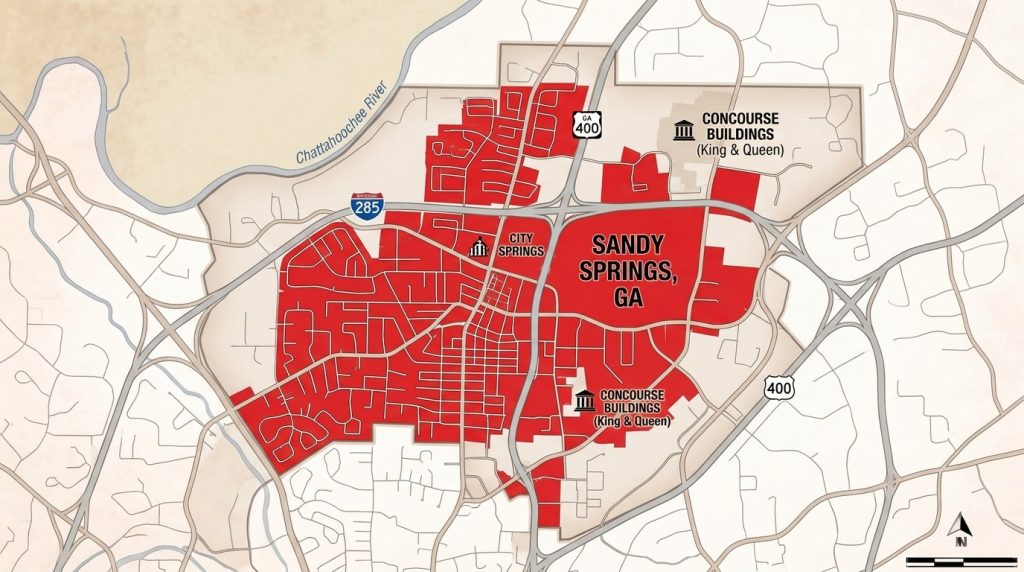
Our home base is Sandy Springs, GA, and we serve homeowners and businesses throughout the surrounding communities. We are familiar with the building codes, climate conditions, and construction styles common to North Georgia homes and commercial properties. This local knowledge helps us recommend the right insulation type and application based on each property’s specific needs. If you are outside our usual service area, contact us directly. We may be able to accommodate larger commercial projects or extend our service range by special request.
Requesting a consultation takes just a few minutes. Call us, fill out our online form, or send an email, and our team will follow up promptly to arrange your visit.
During the on-site consultation, we’ll:
There’s no obligation with our estimates, and we’re happy to answer questions about spray foam type, coverage, or cost before you commit to a project.
Homeowners and business owners in Sandy Springs often ask us about installation locations, pricing, safety, and how long spray foam lasts before making a decision.
Spray foam insulation is a two-part liquid mixture that expands on contact, filling cracks and gaps to create an air-tight seal. Once it cures, it forms a solid barrier against air leaks, moisture, and heat transfer. We use it in attics, walls, crawl spaces, and commercial buildings throughout the Sandy Springs area.
We install spray foam in attics, exterior walls, crawl spaces, basements, and rim joists. In commercial buildings, we apply it to roof decks, metal buildings, and mechanical rooms. Each application depends on the structure’s layout and specific insulation needs.
Cost depends on square footage, foam type (open-cell or closed-cell), and the areas being insulated. We provide a detailed quote after assessing your property. Most projects fall within a range we can define once we understand the scope of work.
Spray foam reduces energy costs by sealing air leaks that traditional insulation often misses. It also blocks moisture infiltration, which lowers the risk of mold growth. Additionally, it adds structural rigidity to walls and roof lines.
Yes, once fully cured, spray foam is safe for occupied spaces. We follow manufacturer guidelines for application and ventilation during installation. Our team wears proper protective equipment and clears the area until the foam has set.
Spray foam typically lasts 20 to 30 years or more without significant degradation. It doesn’t sag, settle, or lose its shape the way some traditional insulation materials do over time. We back our installations with warranty coverage to reflect this durability.