
Homes and commercial buildings in Calhoun, GA face wide temperature swings throughout the year, and gaps in insulation let conditioned air escape through walls, attics, and crawl spaces. Georgia Insulation provides professional spray foam insulation services that seal air leaks, reduce energy loss, and create a more consistent indoor temperature for homes and businesses throughout Calhoun and the surrounding areas. This approach addresses a problem that older insulation materials often fail to solve: inconsistent coverage that leaves small gaps where air, moisture, and pests can get through.
We work with homeowners and business owners who want a longer-lasting insulation solution for new construction, renovations, or existing structures that need an upgrade. Spray foam expands to fill irregular spaces that batt or blown-in insulation can miss, which makes it a practical option for attics, walls, crawl spaces, and commercial structures with complex layouts.
Our team walks you through every stage of the process, from an initial assessment of your property to the final inspection of the completed work. The sections below cover where spray foam insulation works best, the benefits it provides, the risks of delaying this upgrade, and what you can expect when you choose Georgia Insulation for your project.
Heat and moisture move through a house in different ways depending on the area, so the right spray foam type and thickness change from the roofline to the foundation. We match the product to each part of the building envelope instead of using one approach everywhere.
ing a product.
The attic is usually where a home loses or gains the most heat. In Georgia's climate, summer sun can push attic temperatures well above 120°F, and that heat radiates into the rooms below.
We spray foam in one of two ways. Applied to the underside of the roof deck, it creates a conditioned attic, which keeps ducts and HVAC equipment inside the thermal boundary. Applied to the attic floor, it works like a traditional insulated ceiling.
| Approach | Where we apply it | Best suited for |
|---|---|---|
| Roof deck application | Underside of roof sheathing and gable walls | Homes with HVAC equipment or ducts in the attic |
| Attic floor application | Top of the ceiling drywall | Vented attics with little stored equipment |
Open-cell foam is common for roof decks because it expands to fill gaps and adds sound dampening. Closed-cell foam is an option where you want a higher R-value per inch or added moisture resistance.
Get a Free QuoteWalls are harder to insulate well because of studs, wiring, and plumbing. Batts often leave gaps around these obstacles, and those gaps let air pass through.
Spray foam expands to fill the cavity and seals around outlets, rim areas, and framing joints. In new construction and open-stud additions, we spray the cavity before drywall goes up. In finished homes, we can use injection methods in some wall types, though the right method depends on the wall construction.
Additions, sunrooms, and converted garages benefit from foam because they often have irregular framing and connect awkwardly to the main house. Sealing these joints reduces drafts and uneven room temperatures.
We typically recommend:
Crawl spaces in the Southeast take on humidity from the ground and outdoor air. That moisture can lead to damp floor framing, musty odors, and mold growth over time.
We apply closed-cell spray foam directly to crawl space walls, which blocks vapor and insulates in a single layer. This approach is often paired with a ground vapor barrier as part of crawl space encapsulation.
Rim joists, the band of framing that sits on top of the foundation wall, are a major source of air leaks. Spray foam seals this area in one pass, which fiberglass cannot do reliably.
Closed-cell foam is the standard choice here because it resists water absorption and adds structural rigidity. We inspect for existing moisture problems or standing water first, since foam does not replace drainage repairs.
Get a Free QuoteSpray foam works as both insulation and an air barrier, which lets us address energy costs, moisture, and noise in a single application. The right product and thickness depend on the building type, the roof or wall assembly, and how the space is used.
In offices and retail spaces, comfort and operating costs are the main concerns. Uneven temperatures, drafts near storefront entries, and HVAC systems that run constantly are common complaints we hear from tenants and owners in Monroe and nearby communities.
We typically use spray foam in the following areas:
Air sealing also limits humid Georgia air from entering the building envelope, which helps control condensation and mold risk. Because foam is applied as a liquid and expands, it fills irregular cavities that batt insulation tends to miss.
Metal buildings and warehouses present a specific challenge: steel conducts heat quickly, and large roof surfaces are prone to condensation. In summer, interior temperatures climb. In cooler months, warm indoor air meets cold metal panels and produces moisture that drips onto inventory and equipment.
Closed-cell spray foam bonds directly to the underside of metal roofs and wall panels. This creates an insulated, air-sealed surface that limits condensation and reduces heat transfer through the steel.
Common benefits for these buildings include:
We evaluate the roof pitch, ventilation, and building use before recommending a thickness, since a heated shop and an unconditioned storage building call for different approaches.
On new construction projects, spray foam can be applied while walls and roof decks are open, which simplifies coordination with other trades. We work from the project plans and local energy code requirements to select the foam type and thickness for each assembly.
Retrofits take more planning. In occupied buildings, we schedule work around business hours when possible and isolate the work area to limit disruption. Foam can be sprayed into existing wall cavities through small access points, onto the underside of roof decks, and into rim joists and crawl spaces.
Project Type | Typical Focus | Common Foam Choice |
New construction | Code compliance, air barrier | Open-cell or closed-cell, by assembly |
Occupied retrofit | Minimal disruption, energy savings | Closed-cell in limited-access areas |
Roof deck upgrades | Moisture and heat control | Closed-cell |
Each project begins with an inspection so the scope and material match the building’s actual conditions.
A building that pairs the right insulation with a continuous air barrier loses less conditioned air, holds steadier temperatures, and manages moisture more predictably. In Georgia’s hot, humid climate, those three results directly affect comfort, utility bills, and the condition of the structure.
Air leaks are often the largest source of heat loss and heat gain in a building, and they are easy to overlook. Gaps around rim joists, attic hatches, plumbing and wiring penetrations, recessed lights, and top plates let conditioned air escape and outside air enter.
Spray foam expands to fill these openings and bonds to the surrounding surfaces. That creates an air barrier and an insulation layer in one application, so there is no separate sealing step that can be missed.
Reducing leakage lowers the amount of work your heating and cooling equipment has to do. Typical places where we see the most air movement include:
Energy savings vary with the building, the climate, and the starting condition, so we do not promise a fixed percentage.
Uneven temperatures usually come from a combination of air leaks and gaps in insulation coverage. A bonus room that stays hot in July or a back bedroom that stays cold in January often traces back to an attic or wall assembly that is leaking air or under-insulated.
Closed-cell spray foam delivers about R-6 to R-7 per inch, and open-cell delivers about R-3.5 to R-4 per inch. Both adhere directly to the substrate, so they do not shift, sag, or leave voids the way some loose-fill and batt products can.
With air movement reduced, rooms respond more evenly to your thermostat setting. Your system also tends to cycle less often, which can reduce wear on the equipment.
For commercial spaces, steadier temperatures help keep staff comfortable and make it easier to control conditions in storage and work areas.
Humid outdoor air carries a lot of water vapor, and it can condense on cool surfaces inside walls, attics, and crawl spaces. Air leaks are a main path for that moisture, which is why air sealing matters as much as R-value.
Closed-cell spray foam also acts as a vapor retarder at sufficient thickness, and it resists water absorption. Open-cell foam is vapor-permeable, so it suits assemblies where drying to the interior is intended.
The right choice depends on the roof or wall design, the ventilation strategy, and the building’s use. Moisture control works best when the foam type, thickness, and location are matched to the assembly.
We evaluate each building before recommending a product, so the foam supports the structure instead of trapping moisture where it should not be.
Gaps, thin coverage, and aging materials let air and moisture move through a building’s walls, attic, and floors. The result is uncomfortable rooms, rising energy bills, and damage that can build up out of sight.
Inadequate insulation lets outdoor air pass through the building envelope. In many Georgia homes and commercial buildings, the most common leak points are attic floors, rim joists, wall cavities, and gaps around windows, doors, and plumbing or wiring penetrations.
You may notice these signs:
Fiberglass batts that have sagged, settled, or been installed with gaps often leave pockets with no coverage. Air moves around and through these materials, so the stated R-value does not match real performance. We often find the biggest comfort complaints in rooms above garages and in bonus rooms with knee walls.
When conditioned air escapes, your heating and cooling system runs longer to hold the set temperature. In Monroe and nearby communities, long, humid summers put cooling equipment under heavy demand, and winter cold snaps add to the load.
Here is how the strain shows up:
Condition | Effect on Your System |
Heat gain through an under-insulated attic | Air conditioner runs longer cycles |
Air leaks in walls and floors | Furnace or heat pump restarts more often |
Uneven temperatures across rooms | Thermostat setpoints get adjusted repeatedly |
Constant long run times | Faster wear on compressors, blowers, and motors |
The U.S. Department of Energy notes that air sealing and insulation upgrades can reduce heating and cooling costs, though the exact savings depend on the building, its current condition, and local climate. Higher run times also shorten equipment life and can lead to earlier repair or replacement costs.
Warm, humid indoor air that reaches a cold surface releases moisture as condensation. Poorly insulated or unsealed areas give this air an easy path into wall cavities, attics, and crawl spaces.
Common results include:
Ductwork running through an unconditioned attic can sweat during summer if the duct insulation is thin or damaged. Moisture problems often stay hidden until stains, peeling paint, or odors appear, and repairs at that stage cost far more than correcting the insulation gap early.
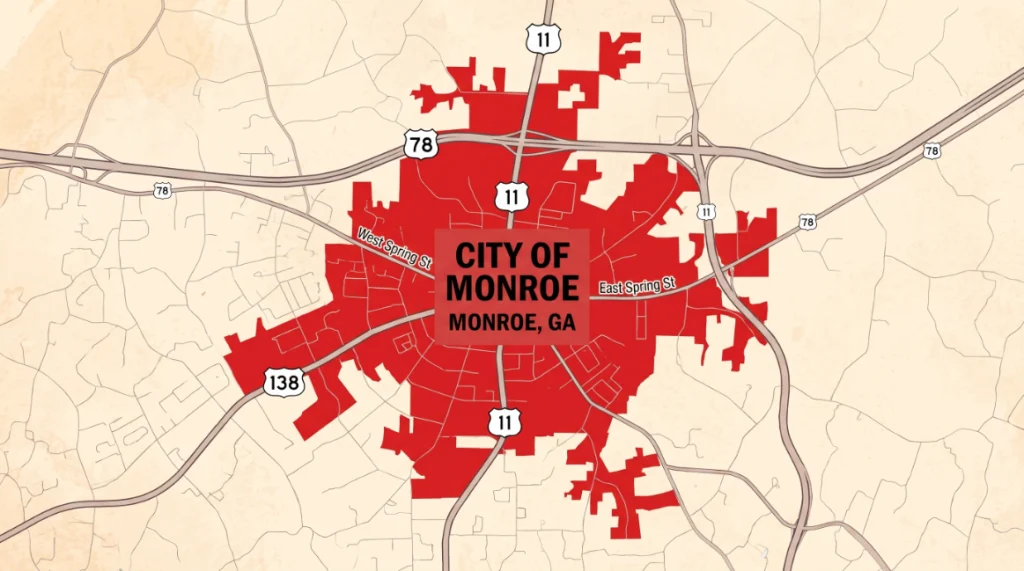
Our team is based in Monroe and installs spray foam across Monroe County and nearby communities, including the Gainesville area. We match the foam type and installation plan to your building, and we put pricing and project details in writing before work begins.
We are a licensed, locally operated insulation company serving Monroe County and over 40 counties across Georgia. Our local experience helps us address climate-related insulation needs, including air sealing and moisture control, while providing convenient scheduling, site visits, and follow-up support.
We recommend insulation based on your building's needs, existing materials, moisture conditions, and comfort goals. Our options include closed-cell and open-cell spray foam, batt insulation, blown-in insulation, and crawl space encapsulation for residential and commercial properties.
We provide free, detailed estimates outlining the work, materials, thickness, and total cost. Our team protects the work area, applies foam in controlled layers, and keeps you informed throughout installation, including curing requirements and any unexpected issues. No additional work is performed without your approval.
Every spray foam project we complete in Monroe, GA starts with an inspection of the building, followed by a foam selection, controlled application, and a set waiting period before the space is used again. Each step has a specific purpose, and knowing what happens at each one helps you plan your project.
We begin with a walk-through of your home or commercial building. We check the attic, crawl space, walls, rim joists, and any unconditioned areas, and we note the type, depth, and condition of the insulation already in place.
We also look for the places where conditioned air escapes. Common leak points include:
We look for moisture too, including staining, mold, or damp framing, because moisture problems must be corrected before foam goes in. If your building has old, wet, or pest-damaged insulation, we recommend removing it first. You receive a written scope of work and a quote based on the square footage and the areas to be treated.
The two foam types behave differently, and the right choice depends on where the foam is going and what the space needs.
Feature | Open-Cell Foam | Closed-Cell Foam |
Density | Lower, softer texture | Higher, rigid texture |
Typical R-value per inch | About 3.5 to 3.7 | About 6 to 7 |
Moisture resistance | Absorbs moisture vapor | Resists liquid water |
Sound dampening | Strong | Moderate |
Common uses | Interior walls, attic roof decks, ceilings | Crawl spaces, rim joists, metal buildings, exterior walls |
Georgia’s humid climate makes moisture resistance a key factor. We often recommend closed-cell foam for crawl spaces and below-grade areas, and open-cell foam where a lower cost per square foot and sound control matter more. We explain the reasoning for each area so you can decide with full information.
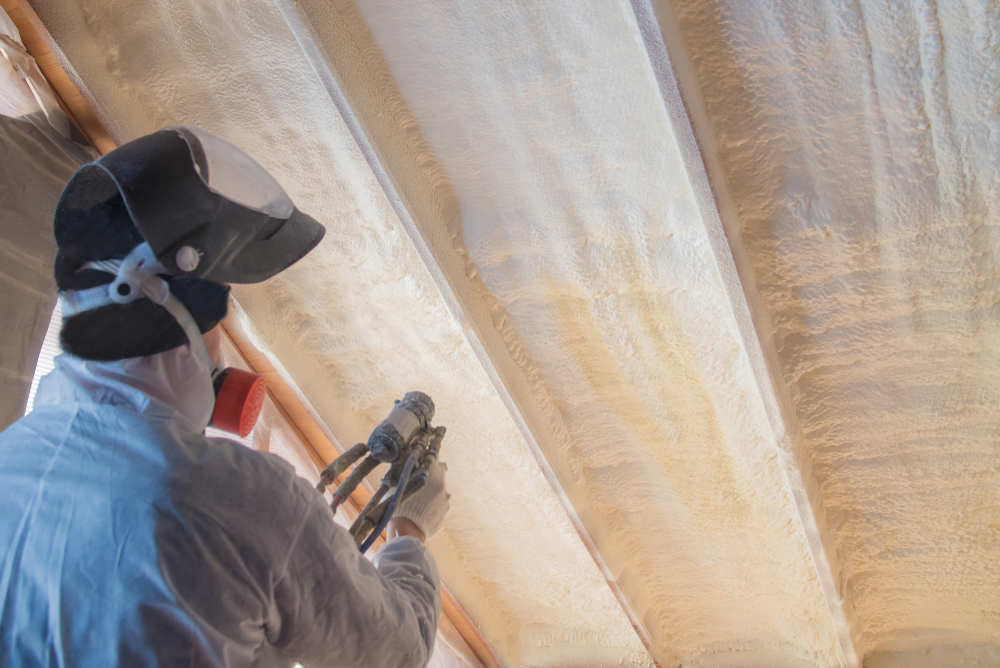
Before spraying, we cover floors, windows, vehicles, and other surfaces that should stay clean. We also mask areas that must remain clear, such as vents, HVAC components, and electrical boxes. Our crew wears protective suits, gloves, and respirators.
We apply the foam as a liquid that expands and hardens on the surface. Application is done in layers, called lifts, so the foam cures properly and reaches the target thickness. Closed-cell foam is typically applied in lifts of about 2 inches or less, while open-cell foam can be applied in thicker passes.
During the work, we measure thickness at multiple points to confirm coverage. We also check that foam fully contacts the framing and seals around penetrations. Most residential projects take one to three days, depending on the size of the building and the areas being treated.
Fresh spray foam releases chemical vapors while it cures, so the space needs time and airflow before people return. Reoccupancy times vary by product, so we follow the manufacturer’s written instructions for the specific foam we install.
For most products, this means:
If you have anyone in the household with asthma, chemical sensitivities, or other respiratory concerns, tell us before the work begins. We can adjust scheduling and ventilation plans, and you may choose to stay elsewhere for a longer period. We give you the exact return time in writing before we start.
When the foam has cured, we inspect the finished surfaces for consistent thickness, full coverage, and clean edges. We trim any excess foam and remove all protective coverings and debris from your property.
We then walk through the results with you. We show you the treated areas, explain the thickness and R-value installed, and answer questions about how to care for the space. If you plan to finish a treated attic or wall, we describe any code requirements, such as thermal barriers or ignition barriers where foam will be exposed.
We provide documentation of the installed product and thickness, which is useful for your records and for any energy-efficiency incentives you may qualify for. After the installation, you may notice steadier indoor temperatures over the following weeks, and we are available if you want us to review anything about the work.
We provide professional spray foam insulation services in Monroe, GA, and surrounding areas, helping homeowners and businesses improve energy efficiency, indoor comfort, and air sealing. From attics and crawl spaces to walls and commercial buildings, we deliver insulation solutions tailored to Georgia’s climate and your property’s needs.
Improve energy efficiency, indoor comfort, and air sealing with professionally installed spray foam insulation. Get a free quote and find the right insulation solution for your home or commercial property.
Spray foam pricing depends on foam type, thickness, and the size of the area, and the material works in attics, walls, crawl spaces, and commercial buildings. It is also installed by trained crews, and most residential jobs finish within one to three days.
Cost depends on the type of foam, the thickness applied, the square footage, and how easy the area is to reach. Open-cell foam generally costs less per square foot than closed-cell foam, which offers a higher R-value per inch and adds moisture resistance.
As a rough guide, many installations fall between $1 and $1.50 per board foot for open-cell and $1.50 to $3 per board foot for closed-cell. Final pricing varies by project.
We provide free on-site estimates so you receive a quote based on your actual building rather than a general average.
Spray foam expands to fill gaps, cracks, and irregular spaces, which creates an air seal that batt and blown-in insulation do not provide on their own. This reduces drafts and can lower heating and cooling costs.
Closed-cell foam also resists moisture and adds some structural rigidity to walls and roofs. Open-cell foam helps dampen sound between rooms.
Spray foam does not sag or settle over time, so its performance stays consistent when it is installed correctly.
In homes, we install spray foam in attics, exterior walls, rim joists, crawl spaces, garages, and bonus rooms over unconditioned spaces. Each area calls for a specific foam type and thickness.
In commercial buildings, we apply it to metal building walls and roofs, warehouses, retail spaces, and offices. Closed-cell foam is often chosen for metal structures because it limits condensation.
We assess each area before recommending a product so the foam matches the conditions of the space.
Once spray foam has fully cured, it is considered inert and does not release fumes into the living space when installed correctly. Problems usually come from improper mixing, incorrect ratios, or applying foam in conditions outside the manufacturer’s guidelines.
During installation, chemical vapors are present, so occupants and pets should stay out of the building until the work is complete and the area has been ventilated. We provide clear re-entry instructions for each job, which typically range from 12 to 24 hours depending on the product.
Because spray foam seals the building envelope tightly, proper ventilation matters. We can discuss ventilation needs for your home or building during the estimate.
Most residential projects take one to three days, depending on the number of areas being insulated and the thickness required. An attic or crawl space alone is often finished in a single day.
Larger homes and commercial buildings take longer, and some projects are completed in phases to limit disruption. Prep work, such as covering windows and protecting surfaces, is included in the timeline.
We give you a scheduled timeframe at the estimate stage so you know what to expect before work begins.
We are based in Monroe, GA, and serve homeowners and business owners across Monroe County and surrounding Georgia counties. Our team is licensed and trained in spray foam application, and we work with both open-cell and closed-cell products.
We offer a full range of insulation services, including batt, blown-in, attic, and crawl space work, so we can recommend spray foam only where it fits your needs. If another option makes more sense for your project, we will tell you.
You can request a free estimate to review your options and get a clear price before any work starts.