

Spray Foam Insulation McDonough, GA

Rated 5.0 on Google Reviews
Rated 5 out of 5

Seal, Save, and Stay Comfortable Year-Round

Spray foam insulation solutions

Air leaks, uneven room temperatures, and high energy bills often trace back to insulation that no longer does its job. Spray foam insulation in Winder, GA expands to fill gaps, cracks, and cavities, which creates an airtight seal that reduces heat loss in winter and heat gain in summer. Georgia Insulation installs it in homes and commercial buildings across Winder and the surrounding areas.

We apply open-cell and closed-cell foam to attics, crawl spaces, walls, and metal or concrete commercial structures. Each option suits different conditions, and the right choice depends on your building’s design, moisture exposure, and energy goals.

This page explains where spray foam works best, what it costs you to go without it, and how our installation process works. You will also find answers to common questions so you can decide with clear information.

Choosing the Right Foam for Your Property

The right foam depends on where it goes, how much moisture the assembly sees, and what R-value you need in a limited cavity depth. Open-cell and closed-cell foam each fit specific jobs in McDonough-area homes and commercial buildings.

🏠

Open-Cell Foam for Suitable Interior Assemblies

Open-cell foam is lighter and softer, with an R-value of roughly R-3.5 to R-3.8 per inch. It expands significantly during application, so it fills irregular cavities and seals small gaps well.

We typically recommend it for interior walls, vented or unvented attic roof decks, and floors over conditioned spaces. Its cell structure also absorbs sound, which helps in bedrooms, home offices, and shared walls.

Open-cell foam is permeable to water vapor and can absorb liquid water, so it is not a fit for areas that may flood or stay wet. It generally costs less per square foot than closed-cell foam, but you need more thickness to reach the same R-value.

  • Best for: attic roof decks, interior walls, soundproofing
  • Avoid in: crawl spaces prone to flooding, below-grade walls, exterior-facing wet areas
Get a Free Quote
🧱

Closed-Cell Foam for Higher R-Value per Inch

Closed-cell foam is dense and rigid, with an R-value of roughly R-6 to R-7 per inch. That makes it useful where cavity depth is limited, such as 2x4 walls, metal building panels, and rim joists.

It resists liquid water and acts as a vapor retarder at sufficient thickness. Because it adds rigidity, it can also strengthen the surface it adheres to.

We often use it in crawl spaces, basement walls, rim joists, and the exterior walls of commercial and agricultural buildings. Georgia's humid climate makes moisture resistance a practical concern in these areas.

The tradeoff is cost. Closed-cell foam typically runs higher per square foot, though you may need fewer inches to meet your target R-value.

Get a Free Quote
📋

Matching Materials to Building Conditions and Budget

Use this comparison as a starting point. We confirm the right choice during an on-site inspection.

Factor Open-Cell Closed-Cell
R-value per inch ~R-3.5 to R-3.8 ~R-6 to R-7
Moisture resistance Low High
Sound dampening Better Moderate
Cost per sq. ft. Lower Higher
Typical locations Attics, interior walls Crawl spaces, rim joists, metal buildings

Some properties benefit from both. A common approach is closed-cell foam in moisture-prone areas and open-cell foam in attic roof decks and interior cavities.

Building type, local code requirements, available cavity depth, and your energy goals all affect the decision. We review these with you before recommending a material, so the foam fits both the structure and your budget.

Get a Free Quote

Where Spray Foam Can Be Applied

Spray foam works in any area where air leaks, heat transfer, or moisture are causing problems, from attic rooflines and exterior walls to crawl spaces and commercial roof decks. The right product and thickness depend on the location, the climate in Georgia, and local code requirements.

Residential Attics and Rooflines

The attic is one of the most common places we apply spray foam in McDonough homes. In Georgia’s hot, humid summers, attic temperatures can climb well above 120°F, which pushes heat into the living space below.

We typically spray the underside of the roof deck, which turns the attic into a conditioned or semi-conditioned space. This keeps HVAC ducts and equipment inside the thermal envelope and reduces the load on your system.

Here is how the two foam types compare in attics:

Foam Type

Typical Use

Key Trait

Open-cell

Roof deck, vented or unvented attics

Good air seal, more flexible, lower cost

Closed-cell

Roof deck where moisture is a concern

Higher R-value per inch, acts as a vapor retarder

Spray foam can also be applied to attic floors when you prefer to keep the attic unconditioned. We confirm the approach against your roof type and ventilation before we start.

Exterior Walls and Rim Joists

Wall cavities and rim joists are major sources of air leakage because they contain many gaps, seams, and framing connections. Rim joists, the band of framing that sits on top of the foundation wall, are especially prone to drafts.

In new construction and open-wall remodels, we spray foam directly into stud cavities. In finished homes, injection methods may be possible, though results depend on the wall construction.

Georgia’s energy code includes specific requirements for rim joists. For basement rim joists, the code requires removable insulation on the interior side of spray foam installations, a point we account for in our work.

Key areas we address include:

  • Stud cavities in new framing
  • Rim and band joists
  • Gaps around windows, doors, and penetrations
  • Garage walls shared with living space

Crawl Spaces and Basement Areas

Crawl spaces in our region often have high humidity, and that moisture can reach floors, ductwork, and the air inside your home. Spray foam can be applied to crawl space walls to create a sealed, conditioned space instead of insulating between floor joists.

Closed-cell foam is the common choice here because it resists moisture and does not absorb water. It also adds some structural rigidity to the surfaces it covers.

In basements, we apply foam to foundation walls and rim joists to reduce cold spots and drafts. A vapor barrier on the ground and proper drainage are often needed alongside the foam. We assess standing water, leaks, and ventilation before recommending a plan.

Commercial Roof Assemblies and Building Envelopes

Business owners use spray foam on low-slope and metal roofs, warehouse walls, and the exterior envelope of buildings. Roofing foam is applied as a continuous layer, which limits seams and helps reduce air movement through the roof assembly.

For metal buildings, spray foam helps address condensation, which forms when warm, moist air meets cool metal surfaces. It also bonds to the substrate and can improve the building’s overall air tightness.

Common commercial applications include:

  • Roof decks: Closed-cell foam, often topped with a protective coating
  • Metal building walls and ceilings: Foam to control condensation and heat transfer
  • Warehouses and retail spaces: Envelope sealing to stabilize interior temperatures
  • Cold storage and offices: Continuous insulation for consistent conditions

We review roof condition, drainage, and manufacturer requirements before any commercial application.

Benefits for Homeowners and Business Owners

Spray foam insulation seals gaps that let conditioned air escape, which lowers the workload on your HVAC equipment and smooths out temperature swings from room to room. When it is installed as part of a well-designed assembly, it also helps control how moisture moves through walls, attics, and crawl spaces.

Reduced Air Leakage and Heating and Cooling Demand

Air leaks are a major source of wasted energy in many buildings. Gaps around rim joists, top plates, wiring penetrations, and attic hatches let heated or cooled air escape and pull outdoor air in.

Spray foam expands after application and fills these gaps, then cures into a continuous layer. Fiberglass batts and blown-in products slow heat transfer, but they do not stop air movement on their own.

Closed-cell foam provides roughly R-6 to R-7 per inch, and open-cell foam provides roughly R-3.5 to R-4 per inch. Because the foam also seals air leaks, your furnace and air conditioner run less often to hold the same temperature.

The actual savings depend on your building’s age, size, and existing insulation. We can inspect your property and explain what to expect before any work begins.

Many McDonough homes and commercial spaces have rooms that are hotter in summer and colder in winter than the rest of the building. Common causes include bonus rooms over garages, second floors under poorly insulated attics, and warehouse offices along exterior walls.

Spray foam reduces both conductive heat flow and air infiltration at these trouble spots. That narrows the temperature difference between rooms and lowers the drafts people feel near walls and ceilings.

Georgia’s long, humid summers put steady demand on cooling systems. Stable indoor temperatures mean the system cycles on and off less frequently, which can reduce wear on the equipment.

Where consistency improves most:

  • Rooms above garages
  • Finished attic and bonus spaces
  • Metal and pole-barn commercial buildings
  • Exterior walls with unfilled cavities

Georgia’s humidity makes moisture control a real concern. Warm, moist air that reaches a cool surface can condense, and that condensation can lead to mold, wood rot, and rusted fasteners.

Closed-cell spray foam resists water absorption and acts as a vapor retarder at sufficient thickness. Open-cell foam is vapor-permeable, so it works best in assemblies designed for that behavior.

The right choice depends on the location and the building design.

Area

Typical approach

Unvented attic roof deck

Open-cell or closed-cell, per code

Crawl space walls

Closed-cell, paired with ground moisture control

Exterior walls

Either type, based on the wall assembly

Metal building roofs

Closed-cell to limit condensation

Spray foam is not a substitute for fixing roof leaks, plumbing leaks, or poor drainage. We check for these problems first so the foam performs as intended.

Risks of Leaving Insulation Gaps Unaddressed

Gaps in attics, crawl spaces, rim joists, and wall cavities let conditioned air escape and outdoor air and humidity enter. In Georgia’s hot, humid climate, that exchange raises utility bills, makes rooms uncomfortable, and can lead to moisture problems inside the building envelope.

Energy Waste and Higher Utility Costs

Air leaks are one of the largest sources of wasted energy in a building. The U.S. Department of Energy estimates that sealing air leaks and adding insulation can reduce heating and cooling costs by about 15% on average, and a leaky attic or crawl space often accounts for a large share of that loss.

During a McDonough summer, your air conditioner works against hot attic air that leaks down through unsealed top plates, recessed light fixtures, and duct penetrations. In winter, warm indoor air escapes the same way.

Common leak points include:

  • Attic hatches and pull-down stairs
  • Gaps around plumbing and wiring penetrations
  • Rim joists above the foundation
  • Openings around ductwork and flues

When the system runs longer to compensate, it also wears faster. That means higher monthly bills and an earlier replacement date for equipment.

Drafts and Uneven Room Temperatures

Gaps let outside air move into living spaces, which you feel as drafts near baseboards, outlets, and exterior walls. Rooms over garages and bonus rooms under the roof are often the worst affected because they border unconditioned space on several sides.

Uneven insulation also causes temperature swings from room to room. One bedroom may stay several degrees warmer than the rest of the house, and the thermostat, which usually sits in a different part of the building, cannot account for that.

Business owners see the same pattern in offices, warehouses, and retail spaces. Employees and customers notice hot or cold zones, and staff often respond by adjusting thermostats or running space heaters and fans, which adds to energy use.

Condensation and Moisture-Related Damage

When warm, humid air reaches a cooler surface, it condenses into water. In our region, humid outdoor air entering a cool crawl space, wall cavity, or attic is a common cause of this problem, especially around ductwork and framing.

Repeated moisture exposure can lead to:

  • Mold and mildew on framing, sheathing, and drywall
  • Wood rot in rim joists, sill plates, and floor joists
  • Damp or degraded fiberglass and cellulose, which lose insulating value when wet
  • Musty odors that spread into living areas

Moisture damage often goes unnoticed until it spreads, and repairs can cost far more than addressing the gaps early. A thermal inspection can locate leak paths and damp areas before they cause structural harm.

Why Choose Georgia Insulation

We are based in McDonough and install spray foam for homes and commercial buildings across metro Atlanta and North and Central Georgia. Our approach combines nearby crews, planning built around each property, and plain-language advice on where foam belongs and which type to use.

Local Service in McDonough and Surrounding Areas

Based in McDonough, Georgia Insulation serves Henry County and nearby communities with convenient scheduling, local construction knowledge, and over 20 years of combined industry experience. Our licensed and insured team understands Georgia’s heat and humidity and provides reliable estimates, installation, and follow-up support.

Project Planning for Residential and Commercial Properties

We inspect each property to assess existing insulation, ventilation, moisture, and building conditions before recommending a spray foam solution. Our plan considers the specific needs of homes and commercial buildings, including occupancy, work schedules, and minimal disruption. You receive a written estimate detailing the areas, materials, and proposed foam thickness.

Clear Guidance on Scope and Material Selection

We explain the differences between open-cell and closed-cell foam and recommend the right option based on your building's needs. We also identify when alternative insulation or repairs may be more suitable, providing clear answers about thickness, R-value, and costs so you can make an informed decision.

From Property Assessment to Completed Installation

Every spray foam project we complete in McDonough and the surrounding area follows the same sequence: an inspection of your current insulation, a written estimate, careful site preparation and application, and a final check before you return to the space. Knowing what happens at each stage helps you plan your schedule and prepare your property.

01Evaluate Existing Insulation and Air Leakage

We start with a walkthrough of your home or commercial building. Our technician checks the attic, crawl space, walls, rim joists, and any other areas you want insulated.

During the visit, we look at the type, depth, and condition of the insulation already in place. We also look for signs of air leakage and moisture, including:

  • Gaps around plumbing, wiring, and duct penetrations
  • Stained or compressed insulation
  • Drafts near windows, doors, and attic hatches
  • Rust, mold, or water marks on framing and sheathing

Any moisture or roof leak needs to be repaired before foam goes in, because foam should not be sprayed over an active water problem. We also note the building’s age, framing type, and how the space is used, since these details affect which foam product fits the job.

After the inspection, we explain what we found and which areas we recommend insulating. We also tell you which type of foam suits each area. Open-cell foam is often used for interior walls and attic roof decks, while closed-cell foam is typically chosen for crawl spaces, rim joists, and areas that may be exposed to moisture.

You receive a written estimate that lists:

Item

What it covers

Areas to be insulated

Attic, walls, crawl space, or other spaces

Foam type and thickness

The product and depth planned for each area

Materials and labor

Itemized costs for the work

Schedule

Estimated start date and project length

You can ask us questions about the scope, pricing, or timing before you decide. Nothing begins until you approve the estimate.

Once you approve the estimate, we schedule the work. Before the crew arrives, you should clear access to the areas being insulated and move stored items, furniture, and vehicles away from the work zone.

On installation day, we protect floors, fixtures, and nearby surfaces with coverings and masking. We also set up ventilation equipment and confirm that the area is dry and free of debris.

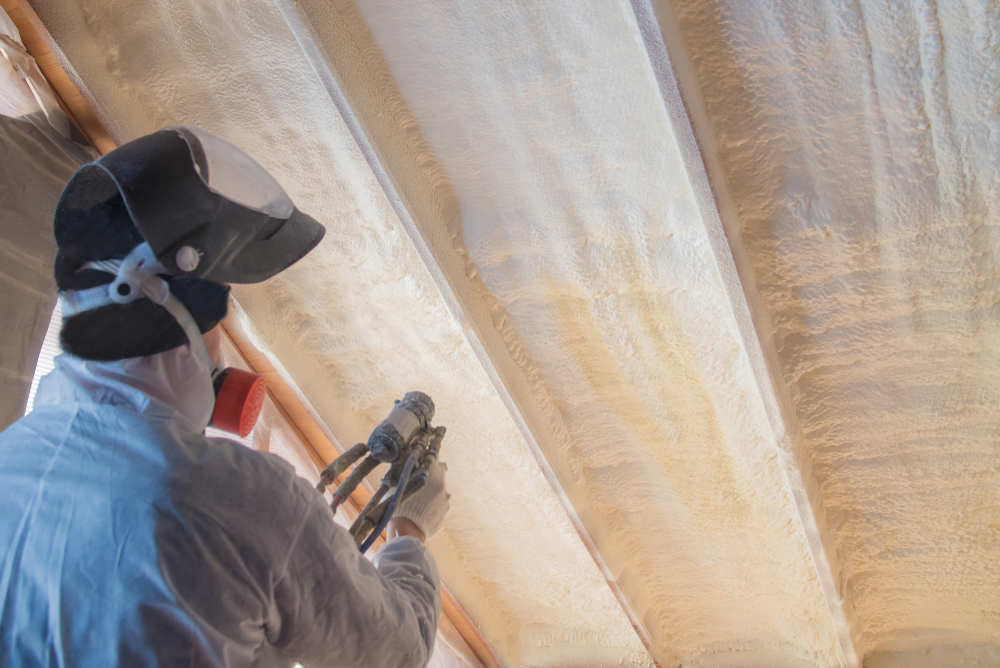
Our installers wear protective gear and spray the foam in controlled layers, building up to the planned thickness. Closed-cell foam is applied in passes, with time between layers so heat does not build up. We trim excess foam where needed so it does not interfere with framing, drywall, or access points.

Most residential projects take one to two days, depending on size. Larger commercial jobs may take longer.

When the spraying is finished, we inspect the work area. We check that the foam reaches the specified thickness, covers all targeted surfaces, and seals gaps around penetrations. Any thin spots or missed areas are corrected before we leave.

We then clean the site and remove equipment, overspray protection, and waste material.

Foam needs time to cure and ventilate before people and pets return. The exact waiting period depends on the product and the conditions on site, so we give you the manufacturer’s reentry guidance in writing. In general, you should keep the treated space clear until we tell you it is safe.

We also go over what to expect afterward, including any normal odor that fades during curing, and we answer questions about care of the finished insulation.

Serving McDonough, GA And Surrounding Areas

We provide professional spray foam insulation services in McDonough, GA, and surrounding areas, helping homeowners and businesses improve energy efficiency, indoor comfort, and air sealing. From attics and crawl spaces to walls and commercial buildings, we deliver insulation solutions tailored to Georgia’s climate and your property’s needs.

Testimonials

Posted on Google Google
Cara Tiesler profile picture
Cara Tiesler
Google star 1Google star 2Google star 3Google star 4Google star 5Trustindex verifies that the original source of the review is Google.
Georgia Insulation saved the day and our house! Breanna promptly answered my call, which was at the end of the work day, and listened to me freak out about being down to the wire and in need of insulation. She jumped right on the request and worked diligently with Jason to get me on the schedule asap. We cannot thank them enough for saving us! The installers were kind, professional and early… who is early these days?! We were very impressed by Breanna, Jason, and the rest of the team at Georgia Insulation. Don’t hesitate to work with this company, they actually care about their clients and don’t over promise (unlike the company that blew us off a day before they were scheduled to Install because they over promised and under delivered). So again, if you need a super reliable and professional insulation company, reach out to Breanna at Georgia Insulation, and she will get you taken care of! Thanks again for helping us!!
Posted on Google Google
Mary Jane profile picture
Mary Jane
Google star 1Google star 2Google star 3Google star 4Google star 5Trustindex verifies that the original source of the review is Google.
Fast friendly service
Posted on Google Google
jeff schmitt profile picture
jeff schmitt
Google star 1Google star 2Google star 3Google star 4Google star 5Trustindex verifies that the original source of the review is Google.
I can say enough great things about the people and my experience with Georgia Insulation. Terra came out and gave a thorough evaluation and quote for open cell foam insulation for our home. The quote was reasonable, and for the amount of work to be done, I thought it was a great deal. Edwin and his crew were awesome and entertaining. They removed all of the existing insulation in the attic and completely covered the underside of the roof with open cell foam. I’ve waited about 2 months to write this review, as I wanted to share energy savings. Last month bill was $106 less than the previous year, same month. The part about that blew me away, was last years June was a very mild June and this June has been quite hot. That being said, I feel very confident I will see a return on my investment. I highly recommend Georgia Insulation and Terra Schaefer and team.
Posted on Google Google
Allene Hoff profile picture
Allene Hoff
Google star 1Google star 2Google star 3Google star 4Google star 5Trustindex verifies that the original source of the review is Google.
The consultant was very good. He explained and answered all my questions concerning my problem. They were very prompt in coming out and the two young men, Edward and Ulises were very friendly and very professional. They took care not to get anything on my floors. They also cleaned up after the job was done. I would certainly recommend this company.
Posted on Google Google
Frank Armatti profile picture
Frank Armatti
Google star 1Google star 2Google star 3Google star 4Google star 5Trustindex verifies that the original source of the review is Google.
Ga insulation came to my home and insulated with close cell foam underneath my floor. Techs needed a second access to get to 2 bedrooms which I was not able to provide while they were here . The room temperatures were at 73 where they had sprayed and where they didn’t was at 59! I am excited that they are returning to finish now that I have the access they needed . The workers were excellent and very professional.This made such a difference in my heating now that the heat shuts off when needed to! Georgia Insulation is a top notch company providing a great service for a very fair price! My best decision ever!
Posted on Google Google
Will Brown profile picture
Will Brown
Google star 1Google star 2Google star 3Google star 4Google star 5Trustindex verifies that the original source of the review is Google.
Posted on Google Google
Chris Jones profile picture
Chris Jones
Google star 1Google star 2Google star 3Google star 4Google star 5Trustindex verifies that the original source of the review is Google.
Great service, fast, and good communication.
Posted on Google Google
Luke Thomas profile picture
Luke Thomas
Google star 1Google star 2Google star 3Google star 4Google star 5Trustindex verifies that the original source of the review is Google.
Great job. On time. Left place nice & clean. This is second job. I will definitely use them on the next one. Thanks All
Posted on Google Google
JC Ammons profile picture
JC Ammons
Google star 1Google star 2Google star 3Google star 4Google star 5Trustindex verifies that the original source of the review is Google.
Did an excellent job insulating our new construction. Good communication and clean work.
Posted on Google Google
James Morris profile picture
James Morris
Google star 1Google star 2Google star 3Google star 4Google star 5Trustindex verifies that the original source of the review is Google.
Georgia Insulation do excellent work and are a great bunch of people to work with. I highly recommend them and will use them again.

Upgrade Your Space With Spray Foam Insulation

Improve energy efficiency, indoor comfort, and air sealing with professionally installed spray foam insulation. Get a free quote and find the right insulation solution for your home or commercial property.

Frequently Asked Questions

Spray foam pricing depends on foam type and thickness, and the two foam types differ in density, moisture resistance, and cost. Installation is possible in both new and existing buildings, and occupants need to stay out for a set period afterward.

How much does spray foam insulation cost in McDonough, GA?

Spray foam in Georgia typically costs about $1.00 to $1.60 per board foot for open-cell foam and about $1.60 to $2.60 per board foot for closed-cell foam. A board foot is one square foot of surface covered at one inch thick.

The final price depends on the square footage, the thickness required, the area being insulated, and how easy the space is to access. We provide a written estimate after inspecting your home or building, so you know the cost before work begins.

Open-cell foam is softer and lighter. It expands more during application, which helps it fill irregular cavities, and it costs less per board foot. It works well for interior walls, attic roof decks, and other areas that stay dry.

Closed-cell foam is denser and rigid. It provides a higher R-value per inch, resists moisture, and adds some structural strength. We often recommend it for crawl spaces, rim joists, metal buildings, and other areas where moisture is a concern.

Yes. Spray foam can be applied in finished buildings, though the method depends on the space. In attics, crawl spaces, and unfinished basements, we spray directly onto exposed surfaces. In closed walls, we may use injection foam through small holes, or we may recommend insulating during a renovation when the drywall is open.

For commercial buildings, we can insulate metal roofs, warehouse walls, and roof decks. We inspect each structure first to confirm that spray foam fits the building’s condition and your goals.

Spray foam expands to fill gaps, cracks, and seams, and it forms an air seal along with the insulating layer. This reduces the amount of conditioned air that leaks out and unconditioned air that leaks in. Your heating and cooling system runs less often as a result.

The size of the savings varies with the age of the building, the existing insulation, and the foam type used. We can discuss realistic expectations for your property during the inspection.

Most manufacturers recommend that people and pets stay out of the work area during installation and for a period afterward while the foam cures and vapors clear. This commonly ranges from 12 to 24 hours, though the exact time depends on the product and ventilation conditions.

We follow the manufacturer’s guidelines for the specific foam we install and tell you when it is safe to return. Plan to arrange somewhere else to stay for the day if the work is in your living space.

Yes. We are based in McDonough and also serve surrounding communities in the area. Contact us with your address, and we can confirm that we cover your location and schedule an inspection.