
Pole barns in Georgia face year-round temperature swings, humidity, and condensation that standard construction doesn’t address. Without proper insulation, a pole barn in Woodstock, GA can trap moisture, invite pest activity, and lose heating or cooling efficiency within months of use. We install insulation systems built specifically for pole barn structures, whether you’re protecting equipment, livestock, inventory, or a workspace.
Our team at Georgia Insulation works with homeowners and business owners throughout Woodstock and the surrounding area to seal out the elements and stabilize indoor conditions. We assess your pole barn’s current condition, intended use, and climate exposure before recommending a solution that fits your budget and goals.
A well-insulated pole barn protects what’s inside it and reduces long-term energy costs. We walk you through the materials, methods, and benefits so you can make an informed decision for your property.
Spray foam works differently depending on where it’s applied and what the space is used for. We apply it in attics, walls, crawl spaces, and pole barn structures, each requiring a specific approach to insulation thickness and foam type.
Attics lose and gain heat faster than almost any other part of a home. We typically recommend closed-cell or open-cell spray foam applied directly to the roof deck, creating a conditioned attic space and helping stop heat transfer at the source.
Unlike traditional batt insulation laid on the attic floor, sealing the roofline helps reduce temperature swings that can cause HVAC systems to run longer than necessary.
Key benefits for attics include:
Wall cavities and crawl spaces are common sources of air leakage in older and newer homes. We use spray foam to fill irregular gaps around wiring, plumbing, and framing that other materials may miss.
In crawl spaces, moisture control matters as much as temperature control. Closed-cell foam resists water absorption, helping limit moisture conditions that can contribute to mold growth or wood rot in floor joists above.
For exterior walls, spray foam adds an air barrier alongside thermal resistance. This helps address drafts and energy loss that fiberglass batts alone may not fully resolve.
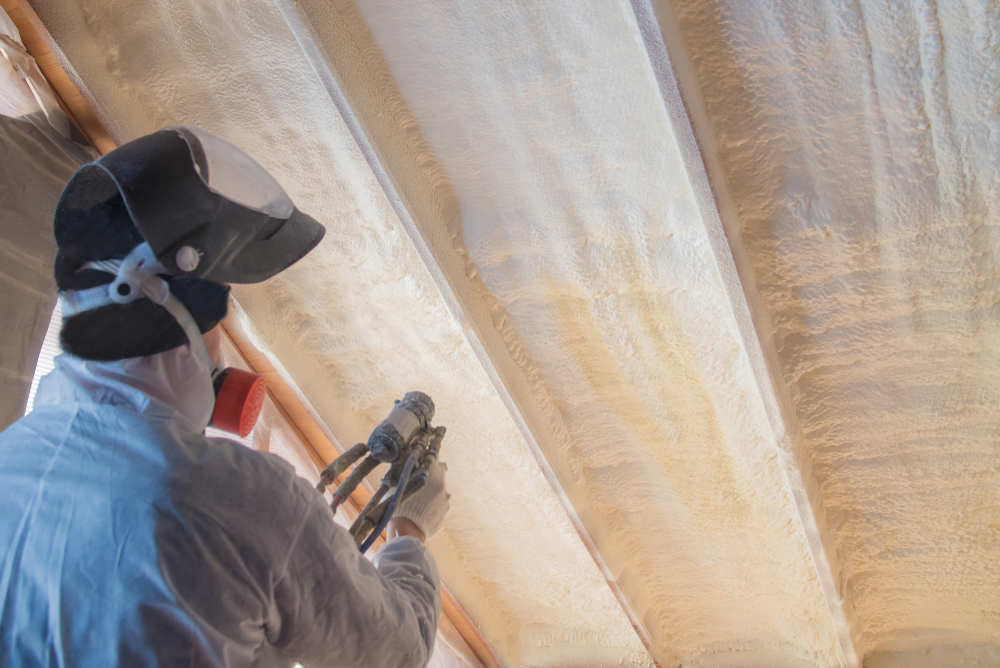
Get A Free QuotePole barns have a different structure than standard homes, with widely spaced posts and metal panel exteriors instead of continuous stud walls. We apply spray foam to the underside of metal roofing and wall panels to help address condensation on interior metal surfaces.
Metal buildings heat up and cool down quickly. When warm, humid air meets cold metal, moisture can form on interior surfaces. Closed-cell foam can help limit this condensation risk and reduce conditions that contribute to rust and corrosion.
| Pole Barn Area | Foam Type | Primary Concern |
|---|---|---|
| Roof panels | Closed-cell | Condensation and rust |
| Wall panels | Closed-cell or open-cell | Temperature swings |
| Girts and framing | Closed-cell | Air sealing irregular gaps |
For pole barns used as workshops, storage areas, or livestock shelters, we size the application based on how the space will be used and whether it will be heated or cooled.
Get A Free QuoteA properly insulated pole barn delivers measurable improvements in temperature control, energy efficiency, and daily usability. These advantages apply whether you’re storing equipment, running a business, or housing livestock.
Workshops and warehouses often run equipment that generates heat, and they need stable indoor temperatures to protect both tools and inventory. We install spray foam along walls and ceilings to reduce heat transfer and limit the drafts that make these spaces uncomfortable to work in year-round.
Closed-cell foam is our typical recommendation for these buildings. It adds rigidity to metal panels and resists moisture buildup, which matters when equipment or stock is sensitive to humidity.
We also account for noise control in workshop settings. Spray foam dampens sound from machinery, which can make a meaningful difference in daily working conditions.
Agricultural and storage buildings face a different set of demands, mainly centered on protecting what’s inside from temperature swings and moisture. We insulate these structures to help maintain consistent conditions for feed, equipment, or stored goods.
Condensation is a common issue in metal agricultural buildings, particularly when temperatures shift between day and night. Our spray foam application creates a continuous barrier that limits the moisture accumulation responsible for rust, mold, and material deterioration.
For buildings housing livestock, we also factor in air quality and ventilation needs. We design the insulation approach around how you actually use the space, not a one-size-fits-all method.
A properly insulated pole barn delivers measurable improvements in temperature control, energy efficiency, and daily usability. These advantages apply whether you’re storing equipment, running a business, or housing livestock.
Metal buildings heat up and cool down quickly without a thermal barrier in place. We install insulation that slows heat transfer through the roof and walls, keeping interior temperatures more stable across Georgia’s hot summers and cold winter nights.
This matters most for buildings used as workshops, offices, or livestock housing, where sudden temperature swings affect both people and animals. Without insulation, a pole barn can swing 20-30 degrees warmer or colder than outside air depending on sun exposure and ventilation.
We size insulation to your building’s specific use, whether that’s light storage or a climate-sensitive workspace.
Pole barns often have gaps around framing, doors, and roof panels that let conditioned air escape. We seal these areas as part of our installation process, which reduces the strain on any heating or cooling equipment you run inside the building.
Common air leak points we address:
Less air leakage means your HVAC system or space heater doesn’t have to work as hard to maintain a set temperature. Over time, this translates to lower utility costs for any climate-controlled pole barn.
A well-insulated pole barn is more usable year-round, whether you’re running a business out of it, working on projects, or storing sensitive equipment. We’ve seen clients convert uninsulated barns into functional workshops simply by addressing temperature and moisture control first.
Insulation also reduces condensation buildup on metal surfaces, which protects stored items like tools, vehicles, or inventory from rust and moisture damage. For business owners, this means fewer losses from humidity-related wear.
A comfortable interior temperature also makes it easier to spend extended hours working inside without relying heavily on supplemental heating or cooling.
Skipping insulation on a pole barn leads to two connected problems: indoor temperatures that track the outside weather too closely, and moisture that collects on cold metal surfaces. Both issues affect the building structure and anything stored or housed inside it.
Without insulation, a pole barn heats up fast in direct sun and loses heat just as quickly once temperatures drop. Metal roofing and siding conduct temperature changes directly into the interior, so the space rarely stays stable.
This creates problems for anyone using the barn for:
If you add any heating or cooling to an uninsulated barn, that equipment works harder to offset the constant heat loss or gain. We’ve seen energy costs climb well beyond what owners expect once a heater or AC unit runs against an uninsulated shell.
Metal surfaces react to temperature differences by sweating. Warm, moist air inside the barn hits the cold underside of an uninsulated metal roof or wall, and water forms on contact.
This condensation drips onto equipment, hay, stored items, or flooring below. Over time, it leads to:
Moisture problems tend to worsen with each seasonal temperature swing, since condensation cycles repeat whenever warm interior air meets a cold metal surface. Left unaddressed, this steady moisture exposure shortens the lifespan of both the building and its contents.
We bring local experience and practical recommendations to every pole barn insulation project in Woodstock and the surrounding region. Our approach combines knowledge of Georgia’s climate with an understanding of how you actually use your building.
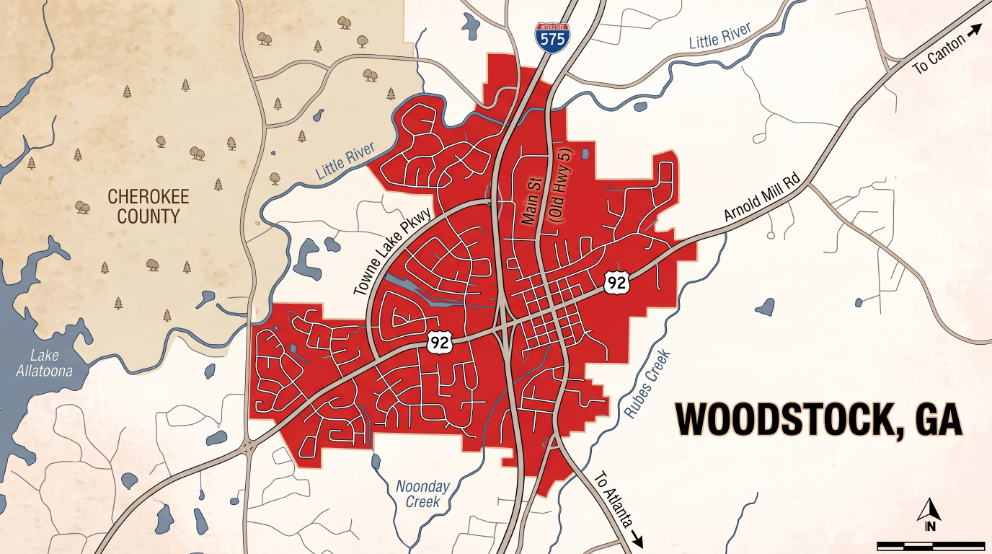
We serve Woodstock, GA, and nearby communities with insulation for residential pole barns, agricultural buildings, commercial spaces, detached garages, and workshops. Our team understands local construction methods, building codes, and Georgia’s changing weather to help plan your project with suitable materials, equipment, and scheduling.
We assess how you use your pole barn, whether for equipment storage, workshops, livestock, or commercial inventory, before recommending insulation. Our tailored approach considers moisture control, temperature regulation, ventilation, and energy efficiency to match your building’s needs without unnecessary costs.
We follow a structured process for every pole barn insulation project, from the initial walkthrough to the final quality check. Each step is designed to identify your building’s specific needs and apply the right materials correctly.
We start with an on-site evaluation of your pole barn’s structure, current condition, and intended use.
We check the roof pitch, wall framing, and any existing insulation or moisture issues. We also ask about how you use the space, whether for equipment storage, livestock, a workshop, or a commercial operation, since this affects our recommendations.
Based on this assessment, we put together an insulation plan that specifies:
We review this plan with you before scheduling work, so you know what to expect and can ask questions.
Before application begins, we clear the work area and protect surfaces that don’t require insulation, including stored items, equipment, and exposed electrical components.
We check that the building is dry and that temperatures fall within the range needed for proper spray foam curing. Our crew wears protective equipment, and we ventilate the space as required.
Once preparation is complete, we apply spray foam in controlled layers to reach the specified thickness and R-value. We work section by section, covering roof panels, wall cavities, and any gaps around framing members. This method helps us maintain consistent coverage and avoid missed spots that could lead to air leaks or condensation later.
After the foam has cured, we inspect the entire application for consistent thickness, full coverage, and proper adhesion to the substrate.
We check seams, corners, and penetration points where gaps are most likely to occur. Any areas that need touch-up get addressed before we consider the job finished.
We then remove equipment, debris, and protective coverings from the work site. Our crew does a final walkthrough with you to review the completed work and answer any remaining questions about maintenance or care.
We provide pole barn insulation in Woodstock, GA, and surrounding areas, helping control heat, moisture, condensation, and energy loss in workshops, garages, storage buildings, and barns.
Reduce heat transfer, control condensation, and improve indoor comfort with pole barn insulation in Woodstock, GA. Contact Georgia Insulation for a free quote.
We answer the questions we hear most often from Woodstock homeowners and business owners about pole barn insulation, covering material choices, costs, safety, and compatibility with existing structures.
Spray foam, reflective radiant barriers, and fiberglass batts each serve different purposes depending on your building’s use.
We typically recommend spray foam for pole barns used as workshops or living spaces, since it seals gaps and controls moisture in one step. For storage buildings with lighter climate control needs, a reflective barrier paired with batt insulation often provides adequate performance at a lower cost.
Pricing for a 40×60 pole barn typically ranges from $8,000 to $18,000, depending on the insulation type and coverage area. Spray foam sits at the higher end of that range, while reflective or batt insulation costs less.
We provide a free on-site assessment to give you an exact quote based on your building’s layout, roof pitch, and intended use.
Yes. Spray foam is safe once fully cured, which takes about 24 hours after application.
Our installers follow manufacturer guidelines for ventilation and curing time. We also use products that meet fire-safety codes applicable to Georgia structures.
We generally recommend an R-value between R-13 and R-21 for walls, depending on the building’s intended use. Roofs often benefit from a higher R-value, typically R-19 to R-30, since heat gain through metal roofing is more pronounced in Georgia’s climate.
Buildings used for livestock or storage may need less insulation than those converted into workshops or offices.
We recommend R-13 to R-19 for walls and R-30 to R-38 for ceilings in most Georgia pole barns. These values balance energy efficiency with the region’s mixed heat-and-humidity climate.
Buildings used for climate-controlled storage or workspaces may benefit from higher R-values, which we assess case by case.
Yes. We regularly retrofit pole barns that were built without insulation or need an upgrade.
Spray foam works well for retrofits because it adheres directly to existing framing and metal panels without requiring major structural changes. We assess your current setup first to recommend the most practical approach.