
Pole Barn Insulation Winder, GA

Rated 5.0 on Google Reviews
Rated 5 out of 5

Spray Foam Solutions That Keep Your Building Comfortable Year-Round

Spray foam insulation solutions

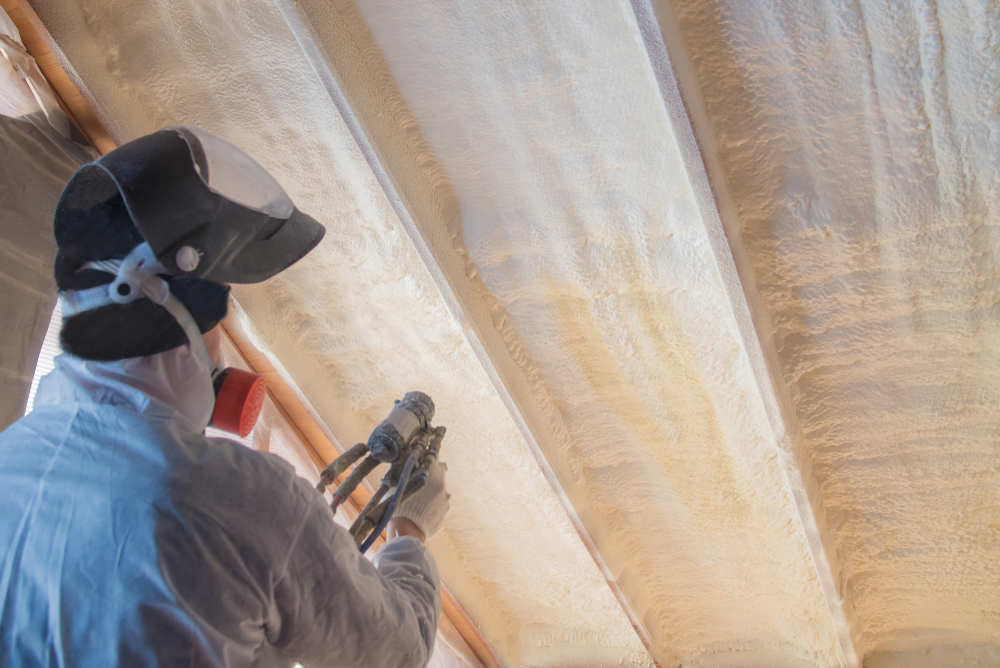
Pole barns are built with open wall cavities and metal or wood panels, which means they often swing between hot summers and cold winters with little resistance. Pole barn insulation in Winder, GA works by sealing the building envelope with spray foam or other insulation materials, which reduces heat transfer, controls condensation, and keeps the interior more stable year-round. For barns used as workshops, storage buildings, garages, or livestock shelters, this makes a noticeable difference in comfort and equipment protection.

At Georgia Insulation, we install insulation for homeowners and business owners in Winder and the surrounding areas. Georgia’s humidity creates a specific problem for metal-sided buildings, because warm, moist air meeting cool metal surfaces can form condensation that leads to rust, mold, and damaged stored items. Spray foam addresses this by acting as both an insulator and an air and moisture barrier.

On this page, we explain how spray foam is used in walls, roofs, and other parts of pole barns and commercial buildings. We also cover the benefits, the risks of leaving a barn uninsulated, how our process works, and answers to common questions.

Choosing the Right Insulation for Your Pole Barn

The best insulation depends on how you use the building, whether it is new or already standing, and how well it handles moisture on metal walls and roofs. We look at foam type, building stage, and condensation control to match the product to the barn.

🧱

Open-Cell and Closed-Cell Spray Foam

Both foam types seal air leaks, but they perform differently. The right choice depends on your climate, budget, and how the barn is used.

Feature Open-Cell Closed-Cell
R-value per inch About 3.5 About 6.5
Density Softer, lighter Rigid, dense
Moisture resistance Absorbs vapor Resists liquid water
Cost Lower Higher

Closed-cell foam is our usual recommendation for metal roofs and wall panels in Georgia. It bonds to the steel, adds some structural stiffness, and acts as a vapor barrier, which limits condensation.

Open-cell foam works well for interior partitions, workshops with conditioned air, and budget-focused projects where the foam is not in direct contact with moisture.

Get a Free Quote
🏗️

Insulation Options for New Construction and Existing Buildings

New pole barns give you the most flexibility. We can spray the foam directly against the metal before interior finishes are installed, which leaves no gaps behind the girts. Planning insulation before the walls are closed in avoids extra labor later.

Existing barns often have exposed metal and open framing, so spray foam can still be applied from the inside. If the building already has batt insulation that is damp, compressed, or pulling away, we recommend removing it first.

Other options include:

  • Fiberglass batts: Lower upfront cost, but horizontal girts create gaps that reduce performance.
  • Blown-in insulation: Suited to enclosed wall cavities and attic-style ceilings.
  • Rigid foam board: Useful for garage doors and small sections.

Heated, year-round spaces generally justify a higher R-value than storage-only buildings.

Get a Free Quote
💧

Moisture Control and Ventilation Considerations

Metal roofs and siding collect condensation when warm, humid air meets a cold surface. In Georgia's humid summers and cool winters, this can happen in both seasons.

An air-sealing insulation, such as closed-cell foam, keeps humid air from reaching the metal. Batt insulation does not seal the same way, so a separate vapor barrier and careful seams are necessary.

Ventilation matters too. Ridge vents, soffit vents, and gable vents let moisture escape in areas that are not sealed. If you plan to run a heater, dehumidifier, or air conditioner, we size the insulation and ventilation together so the building stays dry and the equipment does not work harder than it needs to.

Get a Free Quote

Spray Foam Applications for Residential and Commercial Spaces

Spray foam works on the roof, walls, and framing of a pole barn, and the right foam type depends on how the building is used. We install both open-cell and closed-cell foam across Winder, GA and nearby areas, matching the product to the structure and the moisture it faces.

Roof Decks and Exterior Walls

Metal roofs and wall panels are the main source of heat gain and condensation in a pole barn. Warm, humid air meets cool metal and forms water droplets, which drip onto stored items and soak into framing.

We typically use closed-cell foam on these surfaces. It bonds directly to the metal, seals seams and fastener gaps, and adds moisture resistance that open-cell foam does not offer on its own.

Here is how the two foam types compare on a pole barn:

Feature

Closed-Cell Foam

Open-Cell Foam

Typical R-value per inch

About 6.0 to 7.0

About 3.5 to 3.7

Moisture resistance

High

Low

Best use

Metal roof decks, exterior walls

Interior partitions, sound control

Adds structural rigidity

Yes

No

Because the foam expands to fill gaps around girts, purlins, and posts, it also reduces air leaks that standard batt insulation leaves open.

Many homeowners in our area use a pole barn as a workshop, detached garage, or storage building for vehicles, tools, and equipment. These spaces swing between hot summers and cold winters, and unconditioned air can rust tools and damage stored goods.

For these buildings, we often recommend:

  • Closed-cell foam on walls and ceilings to control condensation and hold steady temperatures.
  • A thicker layer over the ceiling if you plan to heat or cool the space.
  • Foam around overhead doors and rim areas where drafts commonly enter.

If your barn includes a finished room, such as a hobby area or office, open-cell foam on interior walls can help reduce noise from equipment.

The right thickness depends on whether you condition the space year-round or only during use. We assess this during an inspection and provide a clear recommendation.

Commercial pole buildings have larger surface areas, higher ceilings, and more demanding use. Warehouses need stable temperatures to protect inventory. Agricultural buildings face moisture, ammonia, and washdown conditions that can degrade unprotected materials.

In these settings, we apply closed-cell foam to roofs and walls because it resists moisture and holds up to regular cleaning. It also helps control the humidity that leads to mold on feed, grain, and stored product.

Common commercial uses include:

  • Equipment storage and repair shops, where consistent temperatures protect machinery.
  • Livestock and equine buildings, where less condensation improves air quality.
  • Retail and office conversions, where lower energy use reduces operating costs.

For larger projects, we plan application in phases so your operations can continue with minimal disruption.

Benefits of a Properly Insulated Building

A properly insulated pole barn holds steadier temperatures, wastes less conditioned air, and keeps moisture from collecting on metal surfaces. Each of these improvements affects how comfortable the building is, how much you spend to run it, and how long its contents and structure last.

More Consistent Indoor Temperatures

A metal-clad post-frame building heats up quickly in the Georgia summer and loses warmth just as fast on cold nights. Without insulation, the interior temperature follows the outdoor temperature closely, with only a small delay.

Insulation slows that heat transfer through the roof, walls, and overhead doors. The roof matters most, since it absorbs direct sun for most of the day and passes that heat down to the space below.

A steadier interior helps in practical ways:

  • Workshops stay usable for longer stretches without extreme heat or cold.
  • Stored vehicles, tools, and equipment face fewer large temperature swings.
  • Livestock and feed areas are easier to manage through summer heat and winter cold snaps.
  • Living and office spaces hold a set temperature with less effort from the HVAC system.

The result is a building you can use in more months of the year, not only in mild weather.

Reduced Air Leakage and Heating and Cooling Demand

Post-frame buildings have many seams where air can pass: eaves, ridge lines, wall-to-roof joints, door frames, and penetrations for wiring or vents. Conditioned air escapes through these gaps, and unconditioned outdoor air takes its place.

Closed-cell spray foam both insulates and seals. It expands into gaps and cures into a continuous layer, which cuts air movement that fiberglass blankets alone often leave open.

Less leakage means your heating and cooling equipment cycles less often. Smaller run times can lower monthly energy costs and reduce wear on the equipment. If you are sizing a new heater, mini-split, or air conditioner for the building, a well-sealed shell may also allow a smaller unit.

We also see improved air quality in sealed buildings, since less dust, pollen, and outdoor humidity enters through unintended openings.

Better Condensation Control With Proper Building Design

Condensation is one of the most common complaints in metal-roofed buildings. When warm, humid air touches a cool metal surface, water forms and drips onto whatever sits below.

Insulation helps by keeping the metal panel temperature closer to the dew point of the interior air. Spray foam applied directly to the underside of the roof and wall panels also blocks humid air from reaching the metal at all.

Results depend on the full design, not insulation alone. Ventilation, vapor control, and the type of insulation chosen all play a part. For example:

Design Element

Role in Moisture Control

Spray foam on panel underside

Seals the surface and limits contact with humid air

Proper ventilation

Removes excess moisture from the interior

Sealed penetrations

Reduces moisture entering through gaps

We assess how you use the building before recommending an approach, since a heated workshop and an unheated storage barn manage moisture differently.

Risks of Leaving Your Pole Barn Uninsulated

A pole barn with bare metal walls and roof reacts quickly to outdoor weather. Temperature swings, trapped moisture, and poor working conditions are the main problems we see in buildings without insulation.

Seasonal Heat Gain and Heat Loss

Metal panels conduct heat very well. In Georgia summers, a sun-baked steel roof can push indoor temperatures well above the outdoor air temperature. In winter, that same metal pulls warmth out of the building almost as fast as you add it.

This has direct effects on cost and equipment:

  • Higher energy bills if you run a heater, fan, or air conditioner to keep the space usable.
  • Equipment stress on mini-split units or shop heaters that run longer without ever reaching a set temperature.
  • Heat damage to paints, adhesives, batteries, and fuel stored inside during July and August.

An uninsulated building also has no thermal buffer. Temperatures inside follow the outdoors by the hour, which makes it hard to hold any steady conditions.

Condensation forms when warm, humid air touches a cold metal surface. Georgia’s humidity makes this common, especially on cool mornings after a warm day. Water collects on the underside of the roof panels and then drips onto whatever is below.

The effects build up over time:

  • Rust on the panels, fasteners, and framing connections, and on tools, tractors, and vehicles.
  • Mold and mildew on wood posts, stored lumber, cardboard boxes, and fabric.
  • Wet or degraded stored goods such as feed, seed, furniture, and paper records.

Dripping water also leaves stains and can wear down paint coatings on the panels. Because the moisture appears without a leak, many owners first assume the roof is failing when the cause is condensation.

If you use the building as a workshop, garage, studio, or business space, the lack of insulation affects daily use. A bare metal interior can feel hot and stuffy in summer and cold and damp in winter.

Noise is another factor. Rain on a metal roof can be loud enough to make conversation or phone calls difficult, and wind and hail add to it. Insulation reduces that sound.

Practical limits show up as well:

  • Work gets uncomfortable or stops during temperature extremes.
  • Finished projects such as woodwork, paint, and electronics can be affected by humidity and heat.
  • Hiring, renting out, or reselling the space is harder when it cannot be kept at a livable temperature.

For commercial owners, this can mean lost working hours and a less appealing space for staff and customers.

Why Choose Georgia Insulation

We are a licensed, locally operated insulation company with more than 35 years of industry experience, based in the Winder, GA area. Our work centers on clear planning, defined scope, and written pricing for pole barns, garages, workshops, and barndominiums.

Local Service in Winder, GA and Surrounding Areas

We serve Winder and surrounding Georgia communities with local climate expertise and over 35 years of insulation industry experience. As a licensed, locally operated, and BBB-accredited company since January 2022, we provide pole barn insulation solutions suited to regional weather conditions and building needs.

Project Planning for Homeowners and Business Owners

We tailor pole barn insulation to your building's use, structure, moisture conditions, and energy goals. We consider occupancy, construction materials, temperature needs, and project timelines to recommend a solution that fits your residential or commercial property.

Discussing Scope, Material Options, and Pricing

We explain insulation options, coverage areas, and costs to help you choose the right solution for your pole barn. We compare open-cell, closed-cell, and alternative materials based on moisture protection, application, and budget, providing a detailed written estimate before work begins.

From Building Assessment to Installation

Every pole barn project we take on in Winder, GA follows the same path: an on-site assessment, written estimate, surface preparation, and a final walkthrough. Each step is meant to keep the schedule predictable and the finished insulation consistent across the whole building.

01 Request an Assessment and Project Estimate

You can start by calling or filling out the contact form with a few basic details about your building. We ask about the building’s use (workshop, equipment storage, livestock, or a living space), its approximate size, and the type of roof and wall covering.

We then visit the site to measure the walls and roof, and to check the framing and existing conditions. We look for signs of condensation under metal panels, rust at fasteners, wet spots, gaps around doors, and any areas where pests have entered.

You receive a written estimate that lists:

  • The insulation type recommended for each surface
  • The target R-value and thickness
  • The total square footage to be covered
  • Timeline and any preparation work needed

If you plan to heat or cool the building, we factor that into our recommendations. A cold storage barn and a conditioned workshop usually call for different approaches.

Spray foam bonds best to clean, dry surfaces, so preparation matters. We remove loose debris, dust, and surface moisture from the metal panels and framing. Where we find active leaks or heavy rust, we flag them before any foam goes on.

We also cover or remove items that should not be exposed to overspray. Vehicles, tools, equipment, and stored goods may need to be moved out or covered with plastic sheeting. Windows, doors, and electrical fixtures are masked off.

Safety planning is part of this step:

  • Ventilation: We set up airflow for the work area during and after application.
  • Protective gear: Our crew wears respirators and protective suits.
  • Occupancy: People and pets should stay out of the building during application and for the cure period we specify, which depends on the product.

We confirm the work date, the weather conditions, and the building temperature, since these affect how the foam cures.

Our crew applies the insulation in controlled passes, building up layers to reach the specified thickness. For most pole barns, that means spraying the underside of the roof panels and the wall cavities between the girts. The foam expands to seal seams, gaps, and fastener points.

We check thickness with depth gauges as we work, and we trim any foam that extends past the framing where needed. Once the application is complete, we clean the work area and remove masking materials and waste.

Before we leave, we walk the building with you. We point out the finished areas, confirm the thickness and coverage match the estimate, and explain the cure time before the building can be used normally.

You also receive the product information and any care guidance, so you know what to expect as the insulation settles into service.

Serving Winder, GA and surrounding areas

We provide professional pole barn insulation services in Winder, GA, and surrounding communities. Our tailored insulation solutions help improve energy efficiency, manage moisture, and maintain comfortable conditions for agricultural buildings, workshops, and storage spaces.

Testimonials

Posted on Google Google
Cara Tiesler profile picture
Cara Tiesler
Google star 1Google star 2Google star 3Google star 4Google star 5Trustindex verifies that the original source of the review is Google.
Georgia Insulation saved the day and our house! Breanna promptly answered my call, which was at the end of the work day, and listened to me freak out about being down to the wire and in need of insulation. She jumped right on the request and worked diligently with Jason to get me on the schedule asap. We cannot thank them enough for saving us! The installers were kind, professional and early… who is early these days?! We were very impressed by Breanna, Jason, and the rest of the team at Georgia Insulation. Don’t hesitate to work with this company, they actually care about their clients and don’t over promise (unlike the company that blew us off a day before they were scheduled to Install because they over promised and under delivered). So again, if you need a super reliable and professional insulation company, reach out to Breanna at Georgia Insulation, and she will get you taken care of! Thanks again for helping us!!
Posted on Google Google
Mary Jane profile picture
Mary Jane
Google star 1Google star 2Google star 3Google star 4Google star 5Trustindex verifies that the original source of the review is Google.
Fast friendly service
Posted on Google Google
jeff schmitt profile picture
jeff schmitt
Google star 1Google star 2Google star 3Google star 4Google star 5Trustindex verifies that the original source of the review is Google.
I can say enough great things about the people and my experience with Georgia Insulation. Terra came out and gave a thorough evaluation and quote for open cell foam insulation for our home. The quote was reasonable, and for the amount of work to be done, I thought it was a great deal. Edwin and his crew were awesome and entertaining. They removed all of the existing insulation in the attic and completely covered the underside of the roof with open cell foam. I’ve waited about 2 months to write this review, as I wanted to share energy savings. Last month bill was $106 less than the previous year, same month. The part about that blew me away, was last years June was a very mild June and this June has been quite hot. That being said, I feel very confident I will see a return on my investment. I highly recommend Georgia Insulation and Terra Schaefer and team.
Posted on Google Google
Allene Hoff profile picture
Allene Hoff
Google star 1Google star 2Google star 3Google star 4Google star 5Trustindex verifies that the original source of the review is Google.
The consultant was very good. He explained and answered all my questions concerning my problem. They were very prompt in coming out and the two young men, Edward and Ulises were very friendly and very professional. They took care not to get anything on my floors. They also cleaned up after the job was done. I would certainly recommend this company.
Posted on Google Google
Frank Armatti profile picture
Frank Armatti
Google star 1Google star 2Google star 3Google star 4Google star 5Trustindex verifies that the original source of the review is Google.
Ga insulation came to my home and insulated with close cell foam underneath my floor. Techs needed a second access to get to 2 bedrooms which I was not able to provide while they were here . The room temperatures were at 73 where they had sprayed and where they didn’t was at 59! I am excited that they are returning to finish now that I have the access they needed . The workers were excellent and very professional.This made such a difference in my heating now that the heat shuts off when needed to! Georgia Insulation is a top notch company providing a great service for a very fair price! My best decision ever!
Posted on Google Google
Will Brown profile picture
Will Brown
Google star 1Google star 2Google star 3Google star 4Google star 5Trustindex verifies that the original source of the review is Google.
Posted on Google Google
Chris Jones profile picture
Chris Jones
Google star 1Google star 2Google star 3Google star 4Google star 5Trustindex verifies that the original source of the review is Google.
Great service, fast, and good communication.
Posted on Google Google
Luke Thomas profile picture
Luke Thomas
Google star 1Google star 2Google star 3Google star 4Google star 5Trustindex verifies that the original source of the review is Google.
Great job. On time. Left place nice & clean. This is second job. I will definitely use them on the next one. Thanks All
Posted on Google Google
JC Ammons profile picture
JC Ammons
Google star 1Google star 2Google star 3Google star 4Google star 5Trustindex verifies that the original source of the review is Google.
Did an excellent job insulating our new construction. Good communication and clean work.
Posted on Google Google
James Morris profile picture
James Morris
Google star 1Google star 2Google star 3Google star 4Google star 5Trustindex verifies that the original source of the review is Google.
Georgia Insulation do excellent work and are a great bunch of people to work with. I highly recommend them and will use them again.

Improve Your Pole Barn with Spray Foam Insulation

Reduce heat transfer, control condensation, and improve indoor comfort with pole barn insulation in Woodstock, GA. Contact Georgia Insulation for a free quote.

Frequently Asked Questions

Insulation choice, cost, condensation control, R-values, retrofits, and service area are the questions pole barn owners ask us most often. The answers below reflect conditions in Winder, GA and the surrounding counties.

What is the best insulation for a pole barn in Winder, GA?

For most pole barns, we recommend closed-cell spray foam applied to the underside of the metal roof and the wall panels. It bonds directly to the metal, adds air sealing and a vapor barrier, and stops the airflow that carries moisture behind the panels.

Fiberglass blanket and rigid foam board are lower-cost options. They work in some buildings, but they leave seams and gaps that allow humid Georgia air to reach cold metal surfaces.

Cost depends on the insulation type, the square footage of roof and wall area, the thickness you need, and how easy the surfaces are to reach. Fiberglass costs the least per square foot, and closed-cell spray foam costs the most.

We provide a written quote after reviewing your building’s size and intended use. A shop that will be heated and cooled has different needs than a storage barn, and the quote reflects that.

Yes, when it is applied correctly. Condensation forms when warm, humid air meets a cold metal surface, and closed-cell spray foam removes that contact by sealing directly against the panels.

Open-cell foam is not suited for this purpose on exposed metal in most cases, since it lets moisture vapor pass through. We check the building’s conditions before choosing a foam type.

Georgia falls mostly within climate zones 2 through 4 in the energy code, and the target depends on how you use the building. A conditioned workshop or living space generally calls for about R-13 to R-15 in the walls and R-30 or higher in the roof.

An unconditioned storage barn can use less, since the main goal is controlling condensation. Closed-cell foam delivers roughly R-6 to R-7 per inch, so thickness is set to meet the target you choose.

Yes. Existing buildings are common projects for us, and spray foam can be applied to roof and wall panels without removing them.

Before we spray, we inspect the metal for rust, loose fasteners, and leaks. Surfaces must be clean and dry for the foam to adhere, so repairs and cleaning come first when needed.

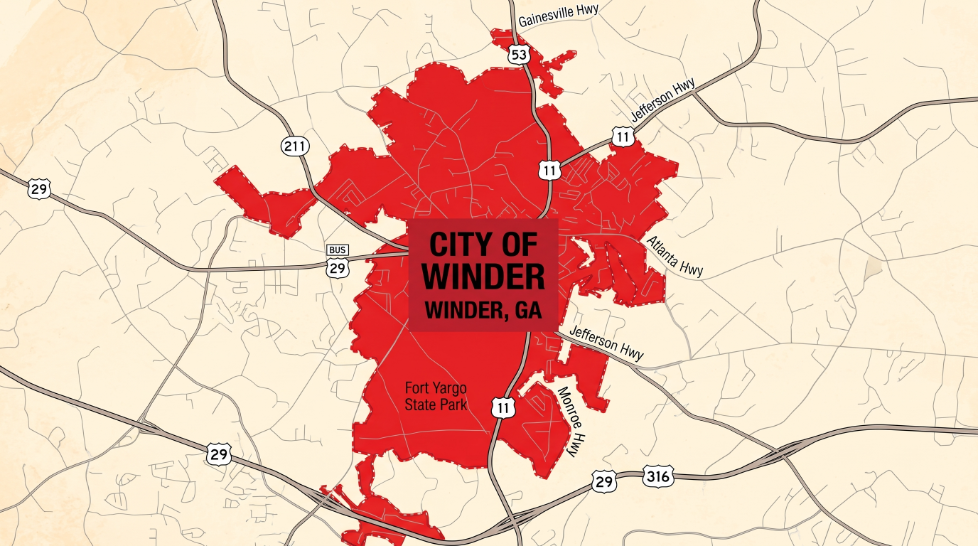
Yes. We are based in Winder and also serve nearby communities and surrounding counties in the northeast Atlanta area.

Contact us with your building’s address, and we will confirm whether it falls within our service area and schedule an inspection.