Pole Barn Insulation Sandy Springs, GA

Rated 5.0 on Google Reviews
Rated 5 out of 5

Expert Spray Foam Solutions by Georgia Insulation

Spray foam insulation solutions

Pole barns face conditions that standard buildings don’t deal with in the same way. Metal roofing and open framing allow heat, cold, and moisture to move through the structure with little resistance. In Sandy Springs, GA, where summers bring high humidity and winter nights can still drop temperatures fast, an uninsulated pole barn becomes uncomfortable and prone to condensation damage.

We work with homeowners and business owners across the area who use their pole barns for storage, workshops, livestock, or commercial operations. Proper insulation controls temperature swings, stops condensation from forming on the underside of the metal roof, and protects the contents and structure of the building. Without it, moisture buildup can lead to rust, mold, and deterioration of stored equipment or materials over time.

We install insulation systems built for the way pole barns are constructed, addressing the specific gaps and thermal weaknesses that come with post-frame buildings. Our approach accounts for Georgia’s climate and the practical needs of a working structure, whether it’s a home addition or a commercial facility.

Spray Foam Applications for Agricultural and Commercial Structures

Pole barns, equipment buildings, and metal commercial structures each have specific areas where spray foam performs best. We apply insulation strategically across the roof, walls, and floor to address the biggest sources of heat loss and moisture buildup.

🏭

Roof Deck and Ceiling Insulation

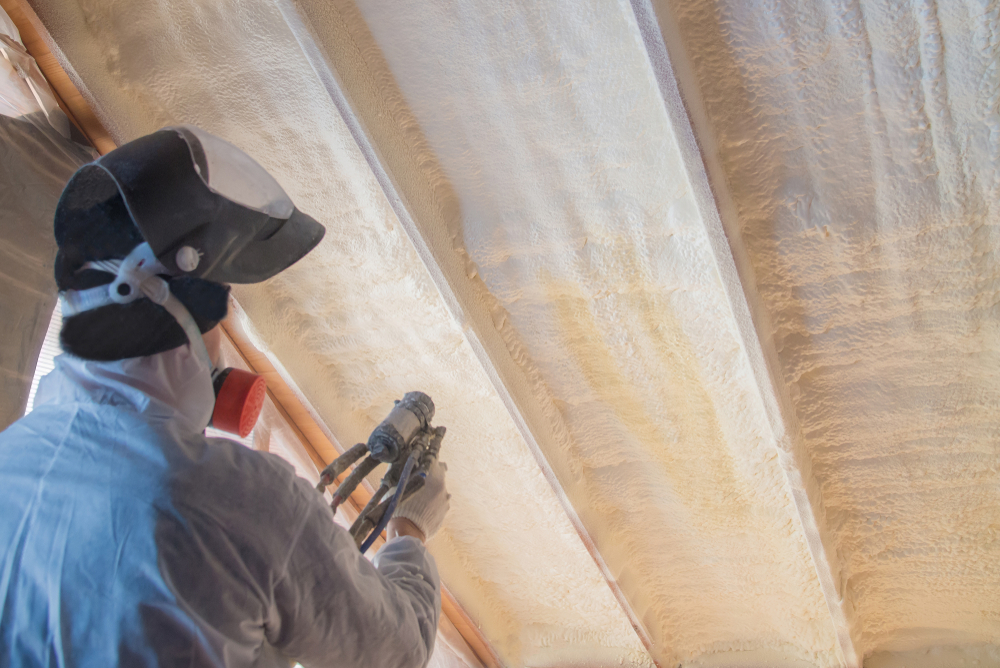
Metal roofs on pole barns and commercial structures transfer heat quickly and attract condensation. We apply closed-cell spray foam directly to the underside of the roof deck, creating a continuous barrier that adheres to metal panels and purlins.

This application controls condensation drip, a common problem in unheated barns where temperature swings cause moisture to form on the interior roof surface. It also reduces noise from rain and wind.

We size the foam thickness based on the building's use, whether it's for equipment storage, livestock housing, or a conditioned workshop space. Roof deck coverage typically delivers the largest efficiency gain in open-span structures.

GET A FREE QUOTE
🧱

Wall and Post-Frame Cavity Insulation

Post-frame construction creates open cavities between structural posts and exterior panels. We fill these spaces with spray foam, which expands to fill gaps around framing members that batt insulation cannot reach.

For agricultural buildings, we often recommend closed-cell foam on exterior walls due to its moisture resistance and structural rigidity. Commercial buildings with metal wall panels benefit from the same air-sealing properties.

This coverage reduces drafts along wall seams and around door and window openings. It also adds a layer of protection against wind-driven moisture in barns used for equipment or livestock.

GET A FREE QUOTE
🏗️

Slab Edge and Floor Insulation

Heat loss through concrete slab edges is often overlooked in pole barns and commercial buildings. We apply spray foam along the slab perimeter to reduce heat transfer between the ground and conditioned interior space.

This step matters most in buildings with occupied space, such as workshops, offices attached to agricultural operations, or heated storage areas. Uninsulated slab edges can account for a measurable share of total heat loss in these settings.

We coordinate slab edge work with wall insulation to maintain a continuous thermal boundary from floor to roof.

GET A FREE QUOTE

Energy, Comfort, and Moisture Control Benefits

Insulating a pole barn changes how the structure performs in every season. We focus on three areas that matter most: thermal efficiency, moisture control, and long-term comfort.

Reduced Heating and Cooling Loss

An uninsulated pole barn loses conditioned air through the roof, walls, and gaps around framing. We address these areas directly, cutting down on the energy waste that drives up utility bills.

Metal panels conduct heat quickly. In summer, this means a pole barn can absorb outdoor heat and hold it inside. In winter, the same panels pull warmth out just as fast.

Our insulation systems slow this exchange. We install materials with appropriate R-values based on how the space is used, whether it’s a workshop, storage building, or livestock area.

The result is a structure that requires less energy to heat or cool. Equipment runs less often, and temperature swings between day and night become less extreme.

Condensation and Humidity Management

Georgia’s humidity creates a specific challenge for metal buildings. When warm, moist air meets a cold metal surface, condensation forms. Over time, this moisture leads to rust, mold, and rot in wood framing.

We install vapor barriers alongside insulation to manage this exposure. This combination keeps moisture from settling on interior surfaces where it can cause damage.

Proper airflow also plays a role. We assess ventilation needs during the project to make sure moisture has a way to escape rather than accumulate.

Common condensation risks we address:

  • Rust on metal fasteners and framing
  • Mold growth on wood surfaces
  • Damage to stored equipment or feed
  • Reduced air quality inside the building

Improved Indoor Comfort and Building Durability

A well-insulated pole barn stays more usable throughout the year. Temperatures remain steadier, which matters for anyone spending time inside, whether working, storing goods, or housing animals.

Comfort isn’t the only benefit. Insulation protects the building itself. Wood framing exposed to repeated moisture and temperature swings deteriorates faster than framing kept dry and stable.

We’ve seen how insulation extends the practical lifespan of a structure. Reducing moisture exposure and temperature stress means fewer repairs and a more reliable building over time.

This durability translates into long-term value. A properly insulated pole barn requires less maintenance and holds up better against Georgia’s seasonal shifts.

Risks of Leaving Your Structure Uninsulated

An uninsulated pole barn faces three main problems: moisture buildup that corrodes metal and rots wood, energy losses that raise our clients’ utility bills, and temperature swings that damage whatever is stored inside.

Condensation-Related Rust and Rot

Without insulation, warm interior air meets a cold metal roof and forms condensation on the underside of the panels. That moisture drips onto framing, equipment, and stored goods below.

Over time, this cycle causes:

  • Rust on metal roofing, siding, and structural fasteners
  • Wood rot in girts, posts, and trusses
  • Mold growth on any organic material inside the building
  • Corrosion of stored tools, vehicles, or equipment

We see this most often in buildings with metal roofs and no vapor barrier. Once rust or rot sets in, repairs cost far more than the insulation would have.

An uninsulated pole barn loses heat through the walls and roof at a constant rate. If we heat or cool the space, that energy escapes almost as fast as we produce it.

This means:

  • Furnaces and heaters run longer to maintain a set temperature
  • Air conditioners work harder during Georgia summers
  • Monthly utility bills climb without any change in usage habits

We’ve found that clients who insulate see a noticeable drop in heating and cooling costs, since the building retains conditioned air instead of losing it through open cavities.

Pole barns without insulation swing with the outside temperature. In summer, interior heat can reach levels that damage sensitive items. In winter, cold settles in and stays.

This affects:

Stored Item

Risk from Temperature Swings

Vehicles and equipment

Battery strain, fluid breakdown

Paint, chemicals, adhesives

Freezing or separation

Electronics

Condensation damage, warping

Wood furniture

Cracking, warping

We recommend insulation for any structure used to store items sensitive to heat or cold, since an unregulated interior offers no protection against these swings.

Why Choose Georgia Insulation

We bring hands-on experience with Georgia’s climate, industrial-grade materials, and building-specific recommendations to every pole barn insulation project we take on.

Experienced Local Insulation Specialists

We have worked on insulation projects throughout Sandy Springs and the surrounding North Georgia area for over 35 years, giving us a strong understanding of how local humidity, summer heat, and occasional cold snaps affect pole barns differently than standard homes. Our team has insulated barns, workshops, garages, and commercial storage buildings across more than 40 Georgia counties, giving us experience selecting materials for different uses, from livestock barns to vehicle storage buildings. Our crews are licensed and trained in spray foam application, vapor barrier installation, and moisture control techniques suited to pole barn structures.
Professional-Grade Spray Foam Solutions

We use closed-cell and open-cell spray foam products designed for metal buildings and pole barns rather than generic residential-grade materials. These products create an air seal that standard batt insulation cannot match and can help address common issues such as condensation on metal roofing and walls, temperature changes during Georgia's hot summers and cooler winter nights, air leaks around joints, seams, and structural gaps, and moisture and pest concerns in wall and ceiling cavities. We source materials suited to the specific demands of pole barn construction, including temperature swings and the open-air ventilation patterns common in these structures.

Clear Recommendations for Every Building Type

We do not apply a single insulation approach to every project. A barn used for livestock has different requirements than a workshop for storing tools or a commercial building used for equipment storage. Before starting work, we assess the building's use, existing structure, and ventilation setup. From there, we recommend the right combination of spray foam, radiant barrier, or vapor barrier products based on the building's specific needs. We explain our recommendations in plain terms so property owners understand why one approach may work better than another for their particular building.

Our Insulation Installation Process

We follow a structured process for every pole barn project, starting with a thorough evaluation and ending with a detailed final check. This approach helps us apply the right insulation type correctly and address moisture control from the start.

01 On-Site Building Assessment

We begin by inspecting the structure, including the roof, walls, and existing framing. We check for current moisture issues, gaps, or areas prone to condensation.

Our technicians measure the building dimensions and identify the framing style, since post-frame construction requires different insulation approaches than traditional stick-built walls. We also ask about how the space is used, whether for equipment storage, livestock, or a workshop.

This information determines which insulation type and R-value we recommend. We document any ventilation concerns, since pole barns with metal roofing are prone to condensation without proper airflow.

Before we finalize a plan, we review our findings with the property owner and explain our recommendations in plain terms.

Once we have a plan, we prepare the surfaces by clearing debris, checking for exposed fasteners, and addressing any framing irregularities. We install a vapor barrier where needed to reduce moisture transfer through the walls or roof deck.

Depending on the project, we apply spray foam, fiberglass batts, or a radiant barrier system. We work in sections, starting with the roof in most cases, since it typically loses the most heat and finishing the roof first reduces the risk of condensation dripping onto newly installed wall insulation.

We follow manufacturer specifications for thickness and coverage. Our team seals seams and joints carefully to limit air infiltration, which directly affects the building’s energy performance.

After installation, we inspect the completed work for gaps, uneven coverage, or areas that may need additional sealing. We check that vapor barriers are properly secured and that insulation meets the R-value we specified during the assessment.

We also test for any air leaks around windows, doors, or structural penetrations. Our team reviews the ventilation setup to confirm it supports the insulation system installed.

Before we leave the site, we walk through the results with the owner and answer any questions about maintenance or performance expectations. We provide documentation of the materials used and the areas covered, so the owner has a clear record of the work performed.

Serving Sandy Springs, GA

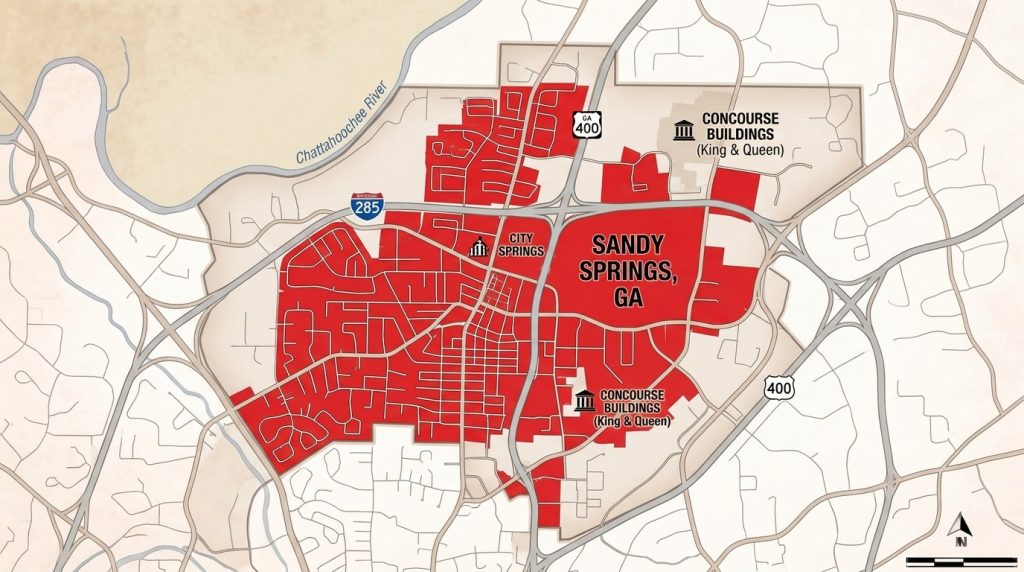
Sandy Springs is our home base, and we know the area well.

Pole barns and metal buildings in this region face specific challenges. Humid summers, heavy rainfall, and seasonal temperature swings all affect how well a structure holds up over time.

We work with property owners on barns used for equipment storage, livestock, workshops, and hobby spaces. Whether the building is new construction or an older structure that needs an upgrade, we assess the space and recommend the right insulation approach.

Our familiarity with local building layouts and climate conditions allows us to complete jobs efficiently.

Testimonials

Posted on Google Google
Cara Tiesler profile picture
Cara Tiesler
Google star 1Google star 2Google star 3Google star 4Google star 5Trustindex verifies that the original source of the review is Google.
Georgia Insulation saved the day and our house! Breanna promptly answered my call, which was at the end of the work day, and listened to me freak out about being down to the wire and in need of insulation. She jumped right on the request and worked diligently with Jason to get me on the schedule asap. We cannot thank them enough for saving us! The installers were kind, professional and early… who is early these days?! We were very impressed by Breanna, Jason, and the rest of the team at Georgia Insulation. Don’t hesitate to work with this company, they actually care about their clients and don’t over promise (unlike the company that blew us off a day before they were scheduled to Install because they over promised and under delivered). So again, if you need a super reliable and professional insulation company, reach out to Breanna at Georgia Insulation, and she will get you taken care of! Thanks again for helping us!!
Posted on Google Google
Mary Jane profile picture
Mary Jane
Google star 1Google star 2Google star 3Google star 4Google star 5Trustindex verifies that the original source of the review is Google.
Fast friendly service
Posted on Google Google
jeff schmitt profile picture
jeff schmitt
Google star 1Google star 2Google star 3Google star 4Google star 5Trustindex verifies that the original source of the review is Google.
I can say enough great things about the people and my experience with Georgia Insulation. Terra came out and gave a thorough evaluation and quote for open cell foam insulation for our home. The quote was reasonable, and for the amount of work to be done, I thought it was a great deal. Edwin and his crew were awesome and entertaining. They removed all of the existing insulation in the attic and completely covered the underside of the roof with open cell foam. I’ve waited about 2 months to write this review, as I wanted to share energy savings. Last month bill was $106 less than the previous year, same month. The part about that blew me away, was last years June was a very mild June and this June has been quite hot. That being said, I feel very confident I will see a return on my investment. I highly recommend Georgia Insulation and Terra Schaefer and team.
Posted on Google Google
Allene Hoff profile picture
Allene Hoff
Google star 1Google star 2Google star 3Google star 4Google star 5Trustindex verifies that the original source of the review is Google.
The consultant was very good. He explained and answered all my questions concerning my problem. They were very prompt in coming out and the two young men, Edward and Ulises were very friendly and very professional. They took care not to get anything on my floors. They also cleaned up after the job was done. I would certainly recommend this company.
Posted on Google Google
Frank Armatti profile picture
Frank Armatti
Google star 1Google star 2Google star 3Google star 4Google star 5Trustindex verifies that the original source of the review is Google.
Ga insulation came to my home and insulated with close cell foam underneath my floor. Techs needed a second access to get to 2 bedrooms which I was not able to provide while they were here . The room temperatures were at 73 where they had sprayed and where they didn’t was at 59! I am excited that they are returning to finish now that I have the access they needed . The workers were excellent and very professional.This made such a difference in my heating now that the heat shuts off when needed to! Georgia Insulation is a top notch company providing a great service for a very fair price! My best decision ever!
Posted on Google Google
Will Brown profile picture
Will Brown
Google star 1Google star 2Google star 3Google star 4Google star 5Trustindex verifies that the original source of the review is Google.
Posted on Google Google
Chris Jones profile picture
Chris Jones
Google star 1Google star 2Google star 3Google star 4Google star 5Trustindex verifies that the original source of the review is Google.
Great service, fast, and good communication.
Posted on Google Google
Luke Thomas profile picture
Luke Thomas
Google star 1Google star 2Google star 3Google star 4Google star 5Trustindex verifies that the original source of the review is Google.
Great job. On time. Left place nice & clean. This is second job. I will definitely use them on the next one. Thanks All
Posted on Google Google
JC Ammons profile picture
JC Ammons
Google star 1Google star 2Google star 3Google star 4Google star 5Trustindex verifies that the original source of the review is Google.
Did an excellent job insulating our new construction. Good communication and clean work.
Posted on Google Google
James Morris profile picture
James Morris
Google star 1Google star 2Google star 3Google star 4Google star 5Trustindex verifies that the original source of the review is Google.
Georgia Insulation do excellent work and are a great bunch of people to work with. I highly recommend them and will use them again.

Schedule Your Pole Barn Insulation Consultation

Requesting an estimate takes just a few steps.

  1. Contact us by phone or through our website to describe your building and insulation needs.
  2. Schedule a site visit, during which we inspect the structure, measure the space, and discuss goals such as temperature control or moisture prevention.
  3. Receive a detailed quote outlining materials, labor, and timeline.

There’s no obligation tied to the estimate. We provide clear pricing based on the specifics of your project, not a generic estimate.

Once you approve the quote, we schedule the work at a time that fits your calendar.

Frequently Asked Questions

Pole barn owners in Sandy Springs often ask about material choices, condensation, cost savings, and installation timing before moving forward with a project. Below, we answer the questions we hear most.

What type of insulation works best for a metal barn?

Closed-cell spray foam is our top recommendation for metal pole barns. It adheres directly to metal panels, seals seams, and blocks air infiltration in one application.

For barns with less demanding climate control needs, we sometimes pair reflective radiant barriers with fiberglass batts. We assess your building’s use and budget before recommending a specific approach.

Yes, we install spray foam in existing pole barns without requiring you to remove the exterior siding. Our team applies foam directly to the interior of the metal panels or wall cavities.

We do recommend an inspection first. This lets us check for existing moisture damage or structural issues that need addressing before insulation goes in.

Metal surfaces cool quickly at night and warm up during the day, causing moisture in the air to condense on the interior panels. Closed-cell spray foam creates a continuous barrier that keeps the metal surface temperature closer to the interior air temperature, which reduces this condensation cycle.

Without this barrier, moisture can drip onto stored equipment, hay, or livestock areas. Over time, this leads to rust, mold, and material decay.

Insulating a pole barn reduces the rate at which heat transfers through the walls and roof. This means less energy is needed to maintain a stable interior temperature, whether you’re heating the space in winter or cooling it in summer.

The amount you save depends on your barn’s current construction, insulation type, and how the space is used. We provide a project-specific estimate based on these factors during our assessment.

Yes, spray foam is used in agricultural buildings that house livestock, store feed, or shelter equipment. Once cured, it is inert and does not off-gas under normal conditions.

We follow manufacturer guidelines for ventilation during and immediately after application. This ensures the space is safe for animals and workers once the foam has set.

Most pole barn insulation projects take one to three days, depending on the size of the building and the type of insulation selected. Larger commercial buildings or projects involving multiple insulation types may take longer.

We provide a project timeline before work begins so you know what to expect. Weather conditions can affect scheduling for spray foam applications, since temperature and humidity impact curing.