Pole barns and metal buildings in Marietta, GA face temperature swings and moisture problems that wood-framed structures rarely encounter. Without proper insulation, condensation forms on the interior of metal roofing and walls, leading to rust, mold, and damage to whatever is stored inside.
We provide pole barn insulation services that address these issues directly, giving homeowners and business owners a dry, temperature-stable structure year-round. Whether the building houses livestock, equipment, a workshop, or a commercial operation, we install insulation systems designed for the specific challenges metal buildings present.
We serve Marietta and the surrounding Georgia area, working with property owners who need a practical solution to condensation, heat gain, and energy loss. Our approach focuses on matching the right insulation type to the building’s use and existing structure.
Pole barns and agricultural buildings have unique framing and coverage that call for a different approach than standard residential insulation. We address the rooflines, walls, and open-use spaces that make up the building envelope, applying spray foam and complementary insulation methods matched to each surface.
Metal roofing on pole barns transfers heat and cold quickly, making it one of the largest sources of energy loss.
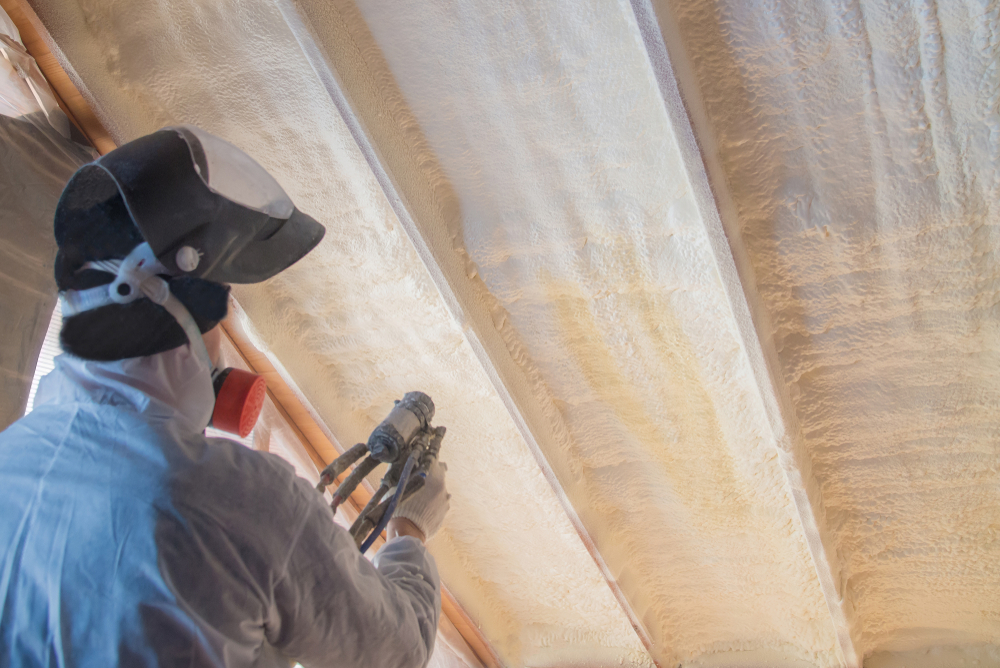
We apply spray foam directly to the underside of the roof deck to create a continuous air seal that reduces drafts and condensation buildup.
Condensation on metal roofing can lead to:
Closed-cell spray foam also adds rigidity to the roof assembly and can help improve wind uplift resistance.
GET A FREE QUOTEMetal wall panels expand and contract with temperature changes, while gaps at seams and fasteners can allow outside air to enter.
We use spray foam to seal these gaps and provide continuous insulation that fiberglass batts often miss.
Our process includes:
This approach helps maintain more stable indoor temperatures and reduces the workload on heating and cooling equipment.
GET A FREE QUOTEWorkshops and attached garages often serve as active workspaces, making temperature control more important than in open storage bays.
We focus on areas such as:
Proper insulation helps protect tools, materials, and equipment from temperature extremes while creating a more comfortable workspace year-round.
This is especially important during Georgia's humid summers and cooler winter months.
GET A FREE QUOTEInsulation directly affects how a pole barn performs across Marietta’s hot summers and cool winters. It controls indoor temperature, seals off air leaks, and manages moisture that would otherwise damage the structure.
An uninsulated pole barn heats up quickly in summer and loses warmth fast in winter. This makes the space uncomfortable and inefficient to heat or cool.
We install insulation that slows heat transfer through the walls and roof, keeping temperatures more consistent inside the barn. This matters whether the space is used for:
A stable indoor temperature also protects sensitive contents like electronics, tools, and inventory from temperature-related wear over time.
Pole barns often have gaps at seams, joints, and panel connections where outside air enters freely. These leaks force heating and cooling systems to work harder than necessary.
We seal these entry points and pair that work with insulation designed to reduce airflow through the building envelope. This lowers energy consumption for any climate control equipment in use.
Reduced air leakage also cuts down on dust, pests, and outdoor noise entering the structure. For business owners, this can mean a more controlled environment for equipment or products stored inside.
Georgia’s humidity creates conditions where warm, moist air meets cooler metal surfaces inside a pole barn. This produces condensation on the roof and walls.
Over time, this moisture leads to:
Issue | Result |
Rust and corrosion | Weakens metal framing and fasteners |
Wood rot | Compromises structural posts and beams |
Mold growth | Affects air quality and stored items |
We install vapor barriers and insulation that limit the temperature differential responsible for condensation. This reduces the moisture buildup that contributes to long-term material damage inside the barn.
An uninsulated pole barn works against you in every season. In summer, heat builds up inside the metal roof and walls, turning the space into an oven. In winter, cold air moves through freely, making the building difficult to heat or use comfortably.
Temperature swings aren’t the only issue we see. Without insulation, moisture has nowhere to go.
We also see condensation drip directly onto vehicles, tools, or livestock housed inside these buildings. Over time, this moisture exposure shortens the lifespan of both the structure and whatever it holds.
Metal buildings are particularly prone to a phenomenon called “sweating,” where temperature differences between inside and outside air cause water droplets to form on interior surfaces. This isn’t a minor inconvenience.
Left unaddressed, these conditions compound each other. Rust weakens metal components, rot compromises wood framing, and mold creates air quality concerns. We recommend addressing insulation early, before these issues require costlier repairs.
We combine local knowledge of Georgia’s climate with careful workmanship and quality materials to deliver pole barn insulation that performs. Both factors matter when it comes to protecting your structure, equipment, and livestock over time.
We work throughout Marietta and the surrounding Georgia region, so we understand the specific challenges local property owners face. Summer humidity, heat spikes, and occasional winter cold snaps all affect how a pole barn should be insulated. Our teams have handled projects on residential properties, agricultural buildings, and commercial pole barns across the area. This means we know which insulation approaches hold up under Georgia conditions and which ones tend to fail. We also understand local building considerations, including ventilation needs and moisture control specific to this region. That familiarity helps us recommend solutions suited to your building rather than a generic approach.
We use spray foam and other insulation materials chosen for durability and performance in pole barn applications. Our crews apply these materials with careful attention to coverage, thickness, and sealing around seams and penetrations. On every job, we prioritize proper surface preparation, consistent application thickness to meet performance targets, sealing gaps and joints to reduce air leakage and moisture entry, and quality checks throughout the installation process. We stand behind our workmanship and use materials suited to the specific building type, whether it is a storage barn, workshop, or livestock structure, helping the insulation perform as intended for years after installation.
Every pole barn insulation project follows a set process designed to match the right materials to your building’s structure and use. From the first walkthrough to the final cleanup, we keep you informed at each stage.
We start with a detailed inspection of your pole barn, checking post spacing, roof pitch, and existing moisture or ventilation issues.
We measure wall and ceiling dimensions to calculate material needs accurately. We also ask about how you use the space, whether for equipment storage, livestock, a workshop, or a commercial operation, since this affects R-value recommendations.
Our team checks for signs of condensation, rust on metal fasteners, or gaps in the building envelope. We document any existing insulation and note areas that need air sealing before new material goes in.
This evaluation gives us the information we need to provide an accurate quote and a realistic project timeline.
Once we finalize the plan, our crew installs insulation according to the building’s specific requirements. Our process typically includes:
We follow manufacturer specifications for each material type to maintain rated R-values. Our technicians wear appropriate safety equipment and use commercial-grade tools suited to post-frame construction. We work in sections to keep the site organized and to avoid leaving parts of the building exposed to weather during installation.
After installation, we inspect every wall and ceiling section for gaps, compression, or uneven coverage. We check vapor barriers for tears or improper seals that could lead to moisture problems later.
We remove all packaging, debris, and leftover materials from the site before we consider the job complete. Our team walks through the finished space with you to point out the work performed and answer any questions about maintenance or future upgrades.
We also provide documentation of the materials used and R-values achieved, which can support insurance records or resale value if you decide to sell the property later.
We provide pole barn insulation services throughout Marietta and the greater metro Atlanta region. Getting started with us is straightforward: contact us for a consultation, and we’ll schedule a time that works for your property.
Requesting an estimate takes just a few minutes. Call us or fill out our online request form with basic details about your pole barn, including size, current insulation status, and intended use.
We’ll follow up to schedule an on-site visit. During this visit, our team inspects the structure, discusses your goals, and identifies the best insulation approach for your budget and building type.
You’ll receive a written estimate outlining materials, labor, and estimated timeline. There’s no obligation attached to this quote, and we’re happy to answer questions before you commit to a project.
Pole barn owners in Marietta and across Georgia often ask us about material choices, cost, safety, and performance before committing to a project. Below, we answer the questions we hear most from homeowners and business owners.
Spray foam is our top recommendation for most pole barns, especially closed-cell foam, because it adheres directly to metal panels and blocks air infiltration. It also seals gaps that fiberglass batts or rigid foam boards often miss.
For budget-conscious projects, we sometimes pair fiberglass batts with a vapor barrier. Spray foam costs more upfront, but it delivers better long-term performance in Georgia’s humid climate.
Yes, spray foam is safe for pole barns and metal buildings when installed correctly. We use products designed to adhere to metal surfaces without corroding or degrading over time.
Proper ventilation during installation is required, and we follow manufacturer guidelines for curing time. Once cured, spray foam poses no ongoing safety risk to occupants or livestock.
Costs vary based on square footage, insulation type, and building height. Spray foam typically runs higher per square foot than fiberglass, but it reduces long-term energy costs.
We provide free, on-site estimates for every project. This lets us give you an accurate number based on your building’s specific dimensions and needs.
We generally recommend an R-value between R-19 and R-30 for walls and R-30 to R-38 for ceilings in Georgia’s climate. The exact number depends on how you use the space and whether it’s heated or cooled.
Buildings used for livestock or storage may need less insulation than workshops or offices. We assess your building’s use before recommending a specific R-value.
Yes, we install spray foam in existing pole barns without requiring major structural changes. The foam adheres directly to the interior of metal panels or wood framing, whichever your building has.
We do recommend addressing any existing moisture issues before installation. This ensures the foam bonds properly and performs as expected.
Yes, insulation is one of the most effective ways to prevent condensation in a pole barn. Metal roofs and walls conduct temperature changes quickly, which causes moisture to form on interior surfaces without a thermal barrier.
Spray foam creates a continuous barrier that stops this temperature transfer. This reduces dripping, rust, and mold growth inside the structure.