
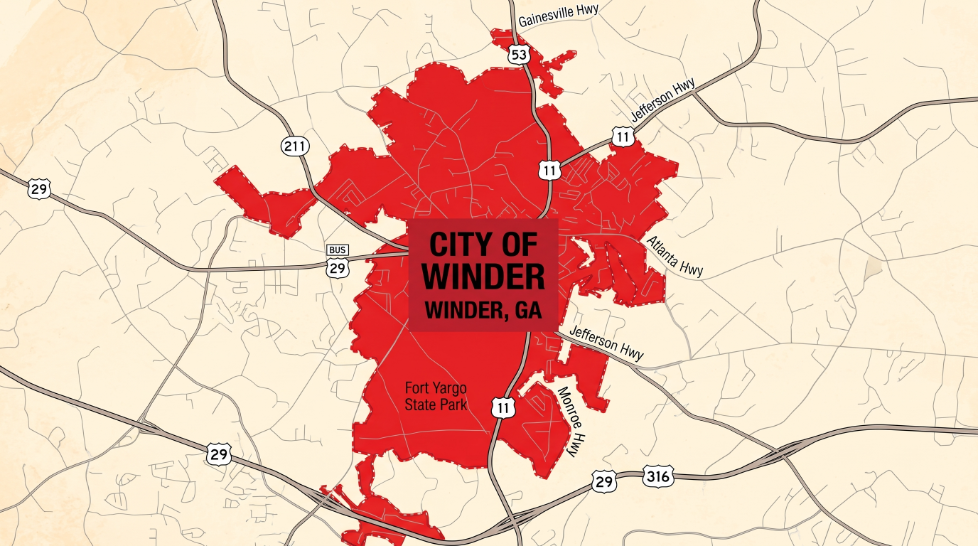
Cold floors, a musty smell, and higher heating and cooling bills often start in the crawl space. Crawl space insulation reduces heat loss through the floor, limits moisture problems, and helps your HVAC system run more efficiently. At Georgia Insulation, we provide crawl space insulation in Winder, GA and the surrounding areas for homeowners and business owners.
Georgia’s humid summers and cool winters put steady stress on the area under a building. Without proper insulation and moisture control, air from the crawl space moves into the living areas above. This can lead to uncomfortable rooms, damp air, and extra wear on your heating and cooling equipment.
We use spray foam and other insulation methods in crawl spaces, as well as in other parts of homes and commercial buildings. This page explains how crawl space insulation works, the benefits, the risks of leaving it out, and what to expect when you work with us.
The right approach for a crawl space depends on whether the space stays open to outside air or is sealed as part of the building envelope. That choice determines where the foam goes, how much moisture the space can tolerate, and which R-value you should target for Barrow County and the surrounding Georgia climate.
In a vented crawl space, foundation vents let outdoor air circulate. Insulation goes in the floor assembly, between the joists, because the crawl space itself is not conditioned. This approach works when the ground is dry, drainage is good, and vents stay clear.
In an unvented crawl space, the vents are closed and the space is sealed. Insulation goes on the foundation walls instead, and the crawl space becomes part of the conditioned envelope.
Georgia's humid summers make this choice important. Warm, moist air entering a vented space can condense on cooler surfaces, which raises the risk of wood rot and mold.
| Factor | Vented | Unvented |
|---|---|---|
| Insulation location | Floor joists | Perimeter walls |
| Moisture strategy | Airflow and ground cover | Air sealing and vapor barrier |
| Best fit | Dry sites with good drainage | Humid or damp sites |
We evaluate your site before recommending either option.
Get a Free QuoteWhen insulation belongs in the floor, spray foam fills the gaps between joists and seals air leaks at the same time. Fiberglass batts tend to sag or collect moisture in crawl spaces, so foam is often a more durable choice.
There are two main types:
For most floor assemblies in our area, we recommend closed-cell foam. Climate zones 2 and 3 in Georgia generally call for floor insulation in the range of R-13 to R-19, and a few inches of closed-cell foam meets or exceeds that.
We also seal rim joist areas, plumbing penetrations, and duct boots, since these are common sources of air leakage.
For commercial buildings with crawl spaces, the same principles apply, with attention to larger spans and mechanical equipment.
Get a Free QuoteInsulation does not fix a wet crawl space. Standing water, leaking pipes, and poor grading should be corrected before any foam is installed.
Encapsulation addresses ground moisture directly. A typical system includes:
Encapsulation costs more than floor insulation alone, but it gives you the most control over humidity. If your crawl space has a history of damp soil, musty odors, or visible mold, we generally recommend it.
If the space is dry and stable, a vented floor assembly with a ground vapor barrier can be enough. We inspect for moisture before quoting so the plan matches the actual conditions.
Get a Free QuoteSpray foam can seal and insulate several parts of a crawl space, from the perimeter walls to the floor above, and the same materials work in attics, walls, and commercial underfloor areas. Where we apply it, and which foam type we choose, depends on moisture levels, building use, and local code requirements.
Insulating the crawl space walls and rim joists moves the thermal boundary to the foundation perimeter. This turns the crawl space into a conditioned or semi-conditioned area rather than a vented one. Closed-cell foam is our usual choice here because it resists moisture and adds rigidity.
The rim joist is the wood band that sits on top of the foundation wall. It is one of the leakiest spots in a house, so we seal it first, along with sill plate gaps and utility penetrations.
Georgia’s 2022 code amendments require rim joist insulation to be removable so inspectors can check for termites. Because of this, we plan the application to meet those termite inspection and protection requirements before we spray.
Typical wall applications include:
When a crawl space stays vented, insulation goes against the underside of the floor. This approach is common in older homes where sealing the foundation is not practical. Foam is applied between the floor joists, directly under the subfloor.
Here we often use closed-cell foam, which adds R-value in a thin layer and resists moisture from below. Open-cell foam can work in drier assemblies, but it absorbs water more readily, so we use it with caution in damp Georgia crawl spaces.
Foam Type | Approximate R-Value per Inch | Moisture Behavior |
Closed-cell | 6 to 7 | Resists water absorption |
Open-cell | 3.5 to 4 | Absorbs and releases moisture |
Foam applied to the floor also seals the gaps around plumbing, wiring, and ductwork that pass through the subfloor. This reduces drafts and keeps humid crawl space air from moving into living areas.
Crawl space work often pairs with other insulation improvements. Air that leaks through the attic or walls can undo the gains from a sealed foundation, so we look at the whole building envelope.
In attics, we spray the underside of the roof deck or the attic floor. Roof deck applications keep ductwork and equipment inside the conditioned space, which can lower cooling loads in Georgia summers.
In walls, open-cell foam is a common choice for new framing and renovations where cavities are exposed. It fills irregular spaces and seals around outlets and framing members.
Common upgrades we pair with crawl space insulation:
Commercial buildings with crawl spaces, raised slabs, or accessible underfloor areas face the same moisture and energy issues as homes, at a larger scale. Retail spaces, offices, churches, and small warehouses often have these areas.
We apply closed-cell foam to foundation walls and underfloor surfaces to control air and moisture movement. Larger surface areas mean we plan access, ventilation during application, and scheduling around business hours.
Foam also helps with temperature consistency in rooms above unconditioned space. This matters for buildings where cold floors affect staff comfort or where stored goods are sensitive to humidity.
Before work starts, we confirm the applicable fire and building code requirements for the occupancy type, since some commercial uses call for thermal barriers or ignition barriers over foam.
A well-insulated crawl space keeps the floors above it closer to room temperature, limits the air that moves between the crawl space and your living areas, and helps control moisture around the framing. Each of these changes affects comfort, utility bills, and the condition of your building.
Uninsulated crawl spaces in Georgia take on the temperature of the outdoors. In winter, cold air under the floor pulls heat out of the rooms above. In summer, hot, humid air under the building adds to the load on your air conditioner.
When we insulate the crawl space walls or the underside of the floor, the temperature in that space stays closer to the temperature inside your home. Floors feel warmer underfoot in winter, and rooms over the crawl space stop running several degrees off from the rest of the building.
This matters most in:
Your HVAC system also cycles less often when the space below it stops swinging with the weather.
Air moves through a crawl space constantly. It enters through foundation vents, gaps around plumbing and wiring, and openings at the rim joist. Once inside, it can rise into the living space through the same gaps in the subfloor.
Spray foam seals those gaps and adds insulation in one step. Closed-cell spray foam, for example, forms an air barrier and a moisture-resistant layer when applied to crawl space walls and rim joists.
Sealing leaks and insulating can reduce heating and cooling costs, with some industry sources citing savings of up to 15% for sealed crawl space systems. Results depend on the home’s size, existing insulation, and climate, so we assess each property before giving an estimate.
Less air leakage also means fewer drafts, less dust, and less outdoor air carrying pollen into
Georgia’s humid climate puts crawl spaces at risk of condensation and damp air. Moisture in that space can lead to mold growth, rotting floor joists, and musty odors that travel upward.
Insulation, combined with sealing and a vapor barrier on the ground, reduces how much humid air reaches cool surfaces where condensation forms. Drier framing is less likely to rot, and floor structures last longer.
Moisture control also helps with:
Homeowners and business owners both benefit, since repairs to damaged subfloors and joists are often costly and disruptive.
An open, uninsulated crawl space affects comfort, air quality, and the condition of the wood that holds your building up. In Georgia’s humid climate, these problems tend to develop gradually and become more costly the longer they continue.
Without insulation, the floor above a crawl space loses heat to the cooler air beneath it. In winter, that air can sit well below the temperature of your living area, so the flooring feels cold underfoot even when the thermostat is set comfortably.
Vents, gaps around plumbing and wiring penetrations, and unsealed rim joists let outside air move freely under the building. That air pushes up through small openings in the subfloor and shows up as drafts near baseboards, along exterior walls, and around floor outlets.
Your heating and cooling system compensates by running longer. Over a full year, this can raise energy bills in homes, offices, and small commercial buildings alike.
Common signs include:
Georgia summers bring warm, humid air into vented crawl spaces. When that air meets cooler surfaces such as ductwork, pipes, or the underside of the subfloor, moisture condenses on them.
Bare soil adds to the problem. Without a vapor barrier, ground moisture evaporates continuously into the space below your building.
Mold needs organic material, moisture, and moderate temperatures. Wood framing and subfloor sheathing provide the material, and persistent humidity provides the rest. Mold growth can begin when relative humidity stays above roughly 60 percent for extended periods.
Air from a crawl space does not stay there. A portion of it moves upward into living and working areas through gaps and penetrations, which can carry musty odors and airborne spores with it. People with allergies or asthma may notice the effect first.
Wood that stays damp loses strength. Floor joists, beams, sill plates, and subfloor panels exposed to ongoing moisture can develop fungal decay, commonly called wood rot, over months and years.
Early decay is easy to miss because it happens out of sight. Wood may feel soft when probed with a screwdriver, appear darkened, or show a crumbly texture.
As the structure weakens, you may notice:
Damp, decaying wood also attracts termites, carpenter ants, and other wood-damaging insects, and rodents often nest in uninsulated, undisturbed spaces. Repairing or replacing structural framing is far more involved and expensive than addressing moisture and insulation before damage develops.
Crawl space work goes better when the contractor knows local conditions, matches the solution to the building, and puts the plan in writing. Here is what you can expect from us on each point.
Based in Winder, GA, we serve Barrow County and nearby communities, including Gainesville, Marietta, and Warner Robins. Our local experience helps us understand how Georgia’s humidity, seasonal rain, and red clay soil affect crawl space moisture. We assess drainage, foundation vents, and soil conditions to determine the right approach while keeping estimates and follow-up visits convenient.
We tailor crawl space solutions to each property based on its condition and needs. During inspection, we check for water, wood rot, damaged insulation, pests, and humidity before recommending options such as spray foam, encapsulation, or insulation removal. Homes typically prioritize comfort and energy efficiency, while commercial buildings focus more on moisture control, air quality, and structural protection.
Before work begins, we provide a written scope outlining the materials, treatment areas, insulation thickness, preparation, and pricing. Crawl space encapsulation in Georgia typically costs $2,400 to $5,400, depending on the property's size, access, and condition. We also plan the installation schedule and access requirements in advance, and discuss any unexpected issues or cost changes before proceeding.
Every crawl space insulation project at Georgia Insulation follows the same order of work: inspection, preparation, installation, and a final review. Each step is documented so you know what was found, what was done, and what to expect afterward.
We start at the crawl space entrance and measure the clearance, since a tight hatch or low joists affect which materials and equipment we can use. Once inside, we check the following:
We use a moisture meter on wood framing and take readings of humidity in the space. In Winder and the surrounding area, humid summers often leave crawl spaces damp, so these numbers shape the recommendation.
After the inspection, we explain what we found and show photos from under your home or building.
Insulation performs poorly over unresolved problems, so we list any preparation items before work begins. Common examples include removing wet or damaged insulation, clearing debris, repairing plumbing leaks, and correcting drainage that sends water toward the foundation.
We also decide where the insulation boundary will sit. There are two typical options:
Boundary | Where insulation goes | Best suited for |
Floor system | Between the joists, under the subfloor | Vented crawl spaces that stay dry |
Foundation walls | On the perimeter walls, with vents sealed | Spaces with moisture or ductwork inside |
Your choice affects cost, material, and moisture control. We review both with you and put the agreed scope in the written estimate before any work starts.
Crawl spaces are confined, so we plan the installation for safe working conditions. Our crew wears protective suits, gloves, eye protection, and respirators suited to the material being installed. We set up lighting and ventilation, and we do not work alone in tight areas.
If we are applying spray foam, we cover areas that should not be coated and apply the foam in layers to the thickness specified for the job. Spray foam requires time to cure, and the space should stay clear of people and pets during that period. We will tell you how long to stay out for the product used.
For batt or board insulation, we fit the material tightly against framing and secure it so it stays in place. We seal gaps around pipes and wiring at the same time.
When the installation is complete, we walk through the work and check for gaps, uneven thickness, and unsealed penetrations. We take final photos so you have a record of the finished space.
We then go over a few practical points with you:
If something looks incomplete, we correct it before we leave.
If your floors feel cold, your energy bills have risen, or you have noticed musty odors, a crawl space evaluation is a practical first step. We serve homeowners and business owners in Winder, GA and nearby communities.
Call Georgia Insulation or use our quote request form to schedule a visit. We will inspect the space, explain the options, and provide a written estimate with no obligation to proceed.
We provide professional crawl space insulation and encapsulation services in Winder, GA, and surrounding communities. Our tailored solutions help control moisture, improve energy efficiency, and protect residential and commercial properties from crawl space issues.
Starting with a consultation lets us evaluate your crawl space and identify the best insulation approach for your property.
We provide a written estimate after the inspection, with no obligation to proceed. This gives property owners time to review options before making a decision.
Crawl space insulation costs depend on the square footage, the material, and whether the space is vented or sealed. The right choice for Georgia’s humid climate affects energy bills, moisture levels, and the condition of the floors above.
Cost varies based on the size of the crawl space, the type of insulation, the R-value you need, and the condition of the space. Spray foam typically costs more per square foot than fiberglass batts, but it also seals air leaks and resists moisture.
Access, existing moisture problems, and the need for a vapor barrier can also change the final price. We inspect the space and provide a written estimate before any work begins, so you know the scope and cost up front.
Closed-cell spray foam is a strong choice for most Georgia crawl spaces. It forms an air-tight seal, resists moisture, and does not absorb water the way fiberglass can.
Fiberglass batts can work in a vented crawl space if the wood is dry and the batts are installed correctly. However, they can sag or trap moisture in humid conditions. We evaluate each crawl space and recommend the material that fits its moisture level, venting, and layout.
Insulation is a layer of material that slows heat transfer. In a vented crawl space, it goes between the floor joists. In a sealed crawl space, it goes on the foundation walls.
Encapsulation is a broader approach. It seals the vents, covers the ground with a continuous vapor barrier, and insulates the walls so the space is separated from outdoor air. Insulation is one part of encapsulation, but insulation alone does not control moisture from the soil or outside air.
Yes, in many homes it can. A properly insulated crawl space reduces heat loss in winter and heat gain in summer, which lowers the workload on your heating and cooling system.
Moisture control depends on the method. Spray foam on the walls, a ground vapor barrier, and sealed vents work together to limit humidity in the space. Insulation by itself will not fix standing water or ground moisture, so we check for those issues first.
An uninsulated crawl space can leave floors above it cold in winter and make rooms harder to heat and cool. Humid air can also settle in the space, which may lead to damp wood, mold growth, and musty odors in the living area.
Over time, moisture can weaken floor joists and subfloors. Plumbing in an uninsulated crawl space may also be more exposed to freezing temperatures during cold snaps.
Yes. We insulate crawl spaces in homes and commercial buildings in Winder, GA, and the surrounding communities.
Commercial buildings often have larger or more complex crawl spaces, and we plan the work around the building’s layout and use. Contact us to confirm that your location is within our service area and to schedule an inspection.