
Commercial Insulation McDonough, GA
Improve Building Efficiency and Indoor Comfort
Commercial insulation plays an important role in keeping business properties comfortable, energy-efficient, and protected from outside temperature changes. Georgia Insulation provides commercial insulation in McDonough, GA, and surrounding areas, helping business owners reduce air leakage, control heat transfer, manage moisture, and maintain more consistent indoor temperatures.
Commercial buildings often have different insulation requirements than residential properties. Warehouses, retail spaces, offices, metal buildings, and industrial facilities have larger areas to insulate, different building materials, and varying heating and cooling demands. Without proper insulation, conditioned air escapes, outdoor heat enters, and HVAC systems have to work harder to maintain comfortable conditions.
Georgia’s hot, humid summers and cooler winters make insulation particularly important for local businesses. Poorly insulated roofs, walls, and ceilings can contribute to high energy expenses, uncomfortable work areas, and condensation problems. We help property owners identify these issues and select insulation materials that suit their building’s structure, use, and budget.
On this page, we explain where commercial spray foam insulation can be applied, how it benefits different types of businesses, and what can happen when insulation problems go unaddressed. We also cover our installation process and answer common questions about commercial insulation.
Choosing the Right Insulation for Commercial Buildings
The right insulation depends on the building’s construction, the areas being insulated, moisture exposure, and the level of thermal performance needed. Spray foam is a popular option for commercial properties because it provides insulation while also sealing gaps that allow outside air to enter.
We primarily consider two types of spray foam: open-cell and closed-cell. Each has different properties, making one more suitable than the other depending on the application.
Open-Cell Spray Foam for Interior Applications
Open-cell spray foam is a lightweight, flexible material that expands significantly during application. It has an R-value of approximately R-3.5 to R-3.8 per inch and works well in areas where filling irregular cavities and reducing air leakage are priorities.
We commonly use open-cell foam in commercial wall cavities, certain roof assemblies, and interior spaces where moisture exposure is limited. Its softer structure also helps reduce sound transmission, which can be useful in offices, meeting rooms, and other shared spaces.
However, open-cell foam is vapor-permeable and can absorb liquid water. It is not the right choice for every commercial application, particularly in areas that experience regular water exposure.
- Best for: Interior walls, suitable roof decks, office partitions, and sound reduction
- Considerations: Requires proper moisture management and sufficient installation thickness to meet insulation requirements
Closed-Cell Spray Foam for Commercial Buildings
Closed-cell spray foam is denser and more rigid than open-cell foam. It generally provides an R-value of approximately R-6 to R-7 per inch, making it useful in buildings where insulation space is limited.
Its compact cell structure resists liquid water and acts as a vapor retarder at sufficient thickness. It also adheres to many building surfaces and adds rigidity to the areas where it is installed.
We often recommend closed-cell foam for metal buildings, commercial roof assemblies, exterior walls, and other areas where moisture control and higher R-value per inch are important.
- Best for: Metal buildings, commercial roofs, exterior walls, and areas with limited cavity depth
- Considerations: Typically costs more per square foot than open-cell foam, and installation thickness must meet the assembly's requirements
Comparing Open-Cell and Closed-Cell Foam
Both insulation types can work in commercial buildings, but their differences matter when selecting materials.
| Factor | Open-Cell Foam | Closed-Cell Foam |
|---|---|---|
| R-value per inch | ~R-3.5 to R-3.8 | ~R-6 to R-7 |
| Density | Lower | Higher |
| Moisture resistance | Lower | Higher |
| Sound dampening | Good | Moderate |
| Cost per sq. ft. | Generally lower | Generally higher |
| Common applications | Interior walls, roof decks | Metal buildings, roofs, exterior walls |
Some commercial properties benefit from using both types in different areas. We consider the building's construction, moisture conditions, available space, and applicable building code requirements before recommending an insulation system.
Get a Free QuoteWhere Commercial Spray Foam Insulation Can Be Applied
Commercial buildings have different insulation needs depending on their size, layout, and daily operations. Warehouses may need better temperature control across large open spaces, while offices and retail properties often require consistent indoor comfort.
Spray foam can be applied to several parts of a commercial building to reduce heat transfer and air leakage. We assess each area to determine the appropriate foam type and installation approach.
Metal Buildings and Warehouses
Metal buildings are particularly susceptible to temperature changes because metal surfaces transfer heat quickly. During Georgia’s summer months, sunlight can heat metal roofs and walls, making interior spaces uncomfortable and increasing the demand on cooling equipment.
Condensation is another concern. When warm, humid air comes into contact with cooler metal surfaces, moisture can collect on the building’s interior.
Closed-cell spray foam is commonly used on metal building walls and roof assemblies because it adheres to the surface, provides a higher R-value per inch, and helps limit condensation when properly designed and installed.
Common applications include:
- Metal roof panels and roof decks
- Exterior metal walls
- Warehouse ceilings
- Agricultural and storage buildings
- Workshops and industrial facilities
Commercial Roofs and Ceiling Assemblies
Commercial roofs receive significant exposure to direct sunlight, especially on large buildings with low-slope or metal roofing systems. Heat transferred through an inadequately insulated roof can affect the entire space below.
Spray foam can create a continuous insulation layer across suitable roof assemblies, reducing thermal transfer and limiting gaps where air can move through the structure.
Closed-cell foam is often considered for commercial roof applications because of its higher R-value per inch and moisture-resistant properties. Depending on the roofing system, a protective coating may also be required.
Before installation, we consider the roof’s condition, drainage, existing materials, and compatibility with the proposed insulation system.
Exterior Walls and Interior Wall Cavities
Commercial exterior walls help separate indoor environments from outdoor conditions. When insulation is missing, compressed, or improperly installed, heat can move through the walls and make it harder to maintain consistent indoor temperatures.
In new construction, spray foam can be applied directly to exposed wall cavities before drywall or interior finishes are installed. For existing buildings, accessible wall sections may be insulated during renovations or other improvement projects.
We also consider areas around structural connections, wiring, plumbing, and other penetrations where air leakage can occur.
These applications are particularly useful in:
- Office buildings
- Retail stores
- Commercial kitchens
- Workshops
- Industrial and manufacturing facilities
Office Spaces and Retail Buildings
Offices and retail properties need comfortable indoor conditions for employees, customers, and daily business operations. Poor insulation can create noticeable temperature differences between rooms, particularly near exterior walls, upper floors, and large windows.
Spray foam helps reduce air movement through building gaps and supports more consistent indoor temperatures when incorporated into a properly designed insulation system.
We can assess wall cavities, ceiling assemblies, rooflines, and other accessible areas to identify where insulation improvements may help.
Agricultural and Storage Buildings
Agricultural buildings and storage facilities often have different temperature and moisture requirements than traditional offices. Some need insulation to help protect stored materials, equipment, or supplies from extreme temperature fluctuations.
Metal agricultural buildings can also experience condensation when humid air meets cooler surfaces.
Closed-cell spray foam is one option for insulating suitable roof and wall assemblies in these structures. We evaluate the building’s intended use, ventilation, and moisture conditions before recommending an application.
Benefits of Commercial Insulation for Business Owners
Proper commercial insulation helps businesses manage indoor conditions while reducing unnecessary energy loss. When installed as part of a suitable building assembly, spray foam can provide both thermal insulation and air sealing.
Reduced Energy Loss and HVAC Demand
Commercial buildings often have large roofs, walls, and ceiling areas that allow heat to move between indoor and outdoor environments. Gaps around structural connections and building penetrations can also allow conditioned air to escape.
Spray foam expands during application and fills many of these openings, creating an air barrier while adding insulation.
This can reduce the amount of outdoor air entering the building and conditioned air escaping. As a result, heating and cooling equipment may not need to work as hard to maintain the desired indoor temperature.
Actual energy savings depend on the building’s size, existing insulation, HVAC equipment, operating schedule, and other conditions.
More Consistent Indoor Temperatures
Temperature differences can affect how employees work and how customers experience a commercial property. Some areas may become too hot during summer, while others remain cold during winter.
These problems often occur in spaces with poorly insulated roofs, exterior walls, or metal building panels.
Commercial spray foam insulation helps limit heat transfer and air leakage through these areas. This supports more stable indoor temperatures and can reduce uncomfortable hot and cold spots.
Areas where improved temperature consistency can make a difference include:
- Warehouse work areas
- Offices along exterior walls
- Retail spaces with large ceiling areas
- Commercial workshops
- Storage and agricultural buildings
Better Air Sealing and Moisture Management
Air leakage can carry humid outdoor air into wall cavities, roof assemblies, and other building spaces. When this air reaches cooler surfaces, condensation may form.
Closed-cell spray foam resists liquid water and acts as a vapor retarder at sufficient thickness. Open-cell foam allows more water vapor to pass through, so it must be used in assemblies designed for that behavior.
The appropriate insulation system depends on the building’s moisture conditions and overall design.
Commercial Area | Typical Insulation Approach |
Metal building walls | Closed-cell foam |
Commercial roof decks | Open-cell or closed-cell, depending on assembly |
Office wall cavities | Open-cell or closed-cell |
Warehouse ceilings | Foam selected according to roof design |
Storage buildings | Based on temperature and moisture requirements |
Spray foam is not a replacement for repairing roof leaks, plumbing problems, or drainage issues. These conditions should be addressed before insulation is installed.
Improved Indoor Comfort for Employees and Customers
An uncomfortable building can affect daily business operations. Employees may struggle with hot work areas, customers may spend less time in uncomfortable retail spaces, and facility managers may constantly adjust thermostats to compensate for temperature differences.
Insulation helps reduce the movement of heat through the building envelope. When combined with appropriate air sealing and HVAC design, it can make indoor conditions more manageable throughout the year.
For business owners, improving indoor comfort can be an important part of maintaining a functional commercial environment.
Why Choose Georgia Insulation for Commercial Insulation?
We provide insulation services from our location in McDonough, GA, serving surrounding communities and commercial properties in the region. Our goal is to help business owners find insulation solutions that match their building’s structure, operating needs, and budget.
Local Service in McDonough and Surrounding Areas
Based in McDonough, Georgia Insulation serves nearby businesses with solutions tailored to Georgia’s hot summers, humidity, and seasonal temperature changes. We assess the needs of metal buildings, warehouses, and commercial roof assemblies to recommend suitable insulation applications.
Insulation Recommendations Based on Your Building
Based in McDonough, Georgia Insulation serves nearby businesses with solutions tailored to Georgia’s hot summers, humidity, and seasonal temperature changes. We assess the needs of metal buildings, warehouses, and commercial roof assemblies to recommend suitable insulation applications.
Clear Project Scope and Recommendations
We plan commercial insulation projects around building requirements and ongoing business operations. Our team evaluates the areas needing insulation, explains suitable options, and provides a detailed estimate. We also review preparation, scheduling, and application and curing requirements so business owners know what to expect.
Our Commercial Insulation Installation Process
Every commercial insulation project starts with understanding the building and identifying the areas that need improvement. We follow a structured process to evaluate the property, recommend suitable materials, and complete the installation.
01 Inspect the Commercial Property
We begin with an assessment of the building and the areas you want insulated. This may include the roof, metal walls, ceiling assemblies, exterior wall cavities, and other accessible spaces.
During the inspection, we look at the existing insulation, building materials, ventilation, and signs of air leakage or moisture.
We also consider how the property is used, since an active warehouse, retail store, and office building may have different scheduling and installation requirements.
02Review Insulation Options and Provide an Estimate
After assessing the property, we explain which insulation materials may be suitable for the building.
Open-cell foam may work well in certain interior applications, while closed-cell foam is often considered for metal buildings, roof assemblies, and areas where higher R-value per inch or moisture resistance is needed.
Your written estimate outlines the proposed work, including:
Estimate Item | What It Covers |
Insulation areas | Roofs, walls, ceilings, or other spaces |
Foam type | Open-cell or closed-cell insulation |
Installation thickness | Proposed foam depth |
Materials and labor | Costs associated with the project |
Project schedule | Estimated start date and duration |
We review the scope with you and answer questions about the materials, pricing, and installation requirements before work begins.
03Prepare the Building and Install the Insulation
Once you approve the estimate, we coordinate the installation schedule.
Before application, the work area must be prepared. This may involve moving equipment, clearing access to walls and ceilings, protecting nearby surfaces, and addressing any existing moisture problems.
Our installers use appropriate protective equipment and apply the foam in controlled layers according to the product requirements.
We pay attention to coverage, thickness, and the surfaces being insulated. For commercial properties, we also consider nearby equipment, building components, and areas that must remain accessible.
The installation time depends on the building’s size, the number of areas being insulated, and site conditions.
04Complete the Final Inspection
After application, we inspect the completed work to check that the insulation covers the intended surfaces and reaches the specified thickness.
We also check for missed areas, thin spots, and gaps around building penetrations that were included in the project scope.
Once the work is complete, we clean the work area and remove installation materials and equipment.
Spray foam requires time to cure and ventilate before occupants can return to the treated area. We follow the manufacturer’s guidance for the specific product and provide the applicable reentry instructions.
Serving McDonough, GA and Surrounding Areas
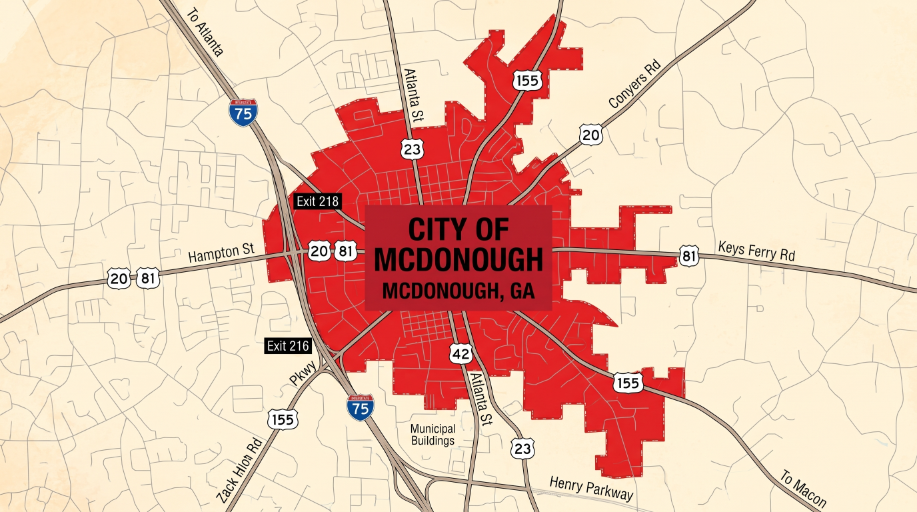
We provide commercial insulation services in McDonough, GA, and surrounding areas, helping businesses improve energy efficiency, regulate indoor temperatures, and reduce heating and cooling costs. From warehouses and offices to retail spaces and industrial facilities, we deliver insulation solutions tailored to your building’s needs and Georgia’s climate.
Testimonials
Improve Your Commercial Building’s Efficiency
Upgrade your commercial property with insulation designed for better energy efficiency, indoor comfort, and long-term performance. Contact Georgia Insulation today for a free quote tailored to your building.
Frequently Asked Questions
Commercial insulation requirements vary depending on the building type, insulation material, and intended use. Here are some common questions business owners ask when considering spray foam insulation.
How much does commercial insulation cost?
The cost depends on the building’s square footage, foam type, installation thickness, and accessibility. Closed-cell foam generally costs more per square foot than open-cell foam.
We provide a written estimate after assessing your commercial property and determining the scope of work.
What is the best insulation for metal buildings?
Closed-cell spray foam is commonly used in metal buildings because it provides a higher R-value per inch and resists liquid water. It also helps limit air movement and condensation when properly installed as part of the building assembly.
The best option depends on the building’s construction and moisture conditions.
Can spray foam be installed in existing commercial buildings?
Yes. Spray foam can be installed in many existing commercial properties, including warehouses, offices, workshops, and metal buildings.
The installation method depends on access to the roof, walls, ceilings, and other areas that need insulation.
Does commercial spray foam help reduce energy bills?
Spray foam helps reduce air leakage and heat transfer, which can lower the demand on heating and cooling equipment.
Actual energy savings depend on the building’s existing insulation, HVAC system, operating schedule, and other factors.
How long does commercial insulation installation take?
The timeline depends on the building’s size, the areas being insulated, and the preparation required.
Smaller projects may take a few days or less, while larger commercial properties may require additional time. We discuss the expected schedule before installation.
Is spray foam suitable for commercial roofs?
Yes. Spray foam can be applied to suitable commercial roof assemblies to provide insulation and air sealing. Closed-cell foam is often considered for these applications, sometimes with a protective coating.
We assess the roof’s condition, drainage, and assembly requirements before recommending an approach.