
Commercial Insulation Douglasville, GA
Expert Solutions for Business Owners by Georgia Insulation
Commercial buildings in Douglasville, GA lose energy and comfort every day due to poor insulation. Georgia Insulation provides commercial insulation services that control temperature, reduce energy costs, and protect the structural integrity of your building. Business owners across Douglasville and the surrounding areas rely on us to address these issues with proven installation methods.
Insulation problems affect every part of a commercial property, from rooftops to walls to crawl spaces. We work with property managers, contractors, and business owners to identify weak points and apply solutions suited to each building’s layout and use.
Poor insulation creates ongoing costs and risks that extend beyond utility bills. This guide covers the areas we insulate, the benefits our services provide, and what you can expect when you choose Georgia Insulation for your commercial property.
Where Spray Foam Can Be Installed
Spray foam insulation adapts to nearly any structure, from commercial office interiors to industrial warehouses and residential homes. We apply it to walls, ceilings, roof decks, attics, and crawl spaces, sealing gaps that standard insulation often misses.
Office and Retail Walls
Office and retail spaces rely on consistent temperatures to keep employees and customers comfortable. We install spray foam inside wall cavities, where it expands to fill irregular gaps around outlets, framing, and corners.
This application helps reduce outside noise, which matters in retail environments with street-facing storefronts. It also seals air leaks around windows and doors, where fiberglass batts may not provide an effective air barrier.
For multi-tenant buildings, spray foam in shared walls can help limit sound and temperature transfer between units. We tailor the application to the wall thickness and existing structural conditions.
Warehouse Roof Decks and Ceilings
Warehouse roof decks face direct sun exposure and temperature swings throughout the day. We apply closed-cell spray foam to the underside of suitable metal roof decks to create an air barrier and help limit heat transfer into the building.
This can benefit warehouses storing temperature-sensitive inventory or operating HVAC systems across large open spaces. Spray foam can also help manage condensation on metal building surfaces, reducing the risk of moisture dripping onto stored goods or equipment.
Roof Deck Underside
Closed-cell foam helps provide an air and moisture-control barrier.
Open Ceiling Joists
Open-cell or closed-cell foam may be suitable depending on the building design and requirements.
Metal Building Interiors
Closed-cell foam can help manage condensation when properly specified and installed.
Home Attics and Crawl Spaces
Attics and crawl spaces are common areas where air leaks occur in residential structures. We apply spray foam along attic rooflines or at the attic floor and on suitable crawl space surfaces to help create a more consistent building envelope.
In crawl spaces, spray foam can be part of a broader moisture-control plan addressing damp conditions that contribute to wood rot and indoor air quality concerns. Proper ground vapor barriers and moisture management remain important.
For attics, we consider whether the space is used for storage or intended to be conditioned before determining foam placement. We assess each area individually to recommend an appropriate foam type and application method.
Benefits for Your Business
Proper commercial insulation affects three areas that matter most to business owners: temperature stability, energy costs, and the daily experience of everyone inside your building.
More Consistent Indoor Temperatures
When we install commercial insulation, we’re targeting the temperature swings that disrupt operations throughout the day. Buildings without adequate insulation experience hot spots near windows and cold zones near exterior walls.
Our insulation work creates a thermal barrier that keeps conditioned air where it belongs. This matters for businesses with temperature-sensitive inventory, server rooms, or production areas.
We typically see the following improvements after installation:
- Fewer complaints about uneven heating or cooling between rooms
- Reduced strain on HVAC systems trying to compensate for temperature loss
- More predictable indoor conditions regardless of outdoor weather
A stable indoor environment also protects equipment and materials that are sensitive to temperature fluctuation.
Reduced Air Leakage
Air leakage is one of the most common sources of wasted energy in commercial buildings. Gaps around windows, doors, rooflines, and wall penetrations let conditioned air escape and outside air infiltrate.
We seal these points during our insulation process, which directly reduces how hard your HVAC system has to work. Less air leakage means:
- Lower monthly utility costs
- Reduced wear on heating and cooling equipment
- Fewer drafts in work areas near exterior walls
Our team identifies leakage points during the initial assessment, so you know exactly where the problems exist before work begins. This gives you a clear picture of what’s driving inefficiency in your building.
Improved Comfort for Employees and Customers
Comfortable temperatures affect how employees perform and how customers perceive your business. We’ve found that spaces with consistent insulation have fewer complaints related to drafts, cold floors, or overheated rooms.
For retail and office spaces, this translates to:
- Employees who aren’t distracted by discomfort
- Customers who stay longer in a well-regulated environment
- Fewer requests to adjust thermostats throughout the day
We design our insulation solutions with occupant comfort as a core consideration, not an afterthought. A building that maintains steady conditions supports better focus, productivity, and customer satisfaction across all areas of your operation.
The Cost of Leaving Buildings Underinsulated
Underinsulated commercial buildings cost money every month, not just during extreme weather. The effects show up in utility bills, occupant complaints, and equipment wear long before they become visible structural problems.
Higher Heating and Cooling Demands
When insulation is insufficient, conditioned air escapes through walls, roofs, and gaps faster than your HVAC system can replace it. This forces heating and cooling equipment to run longer and more often to maintain a stable indoor temperature.
The result is a direct increase in energy consumption. We’ve seen commercial properties with inadequate insulation spend significantly more on utilities compared to similar buildings with proper insulation levels.
These costs compound monthly. Over a year, the difference between an adequately insulated building and an underinsulated one can represent a substantial portion of your annual operating budget.
Drafts and Uneven Temperatures
Poor insulation doesn’t just raise energy bills—it creates inconsistent conditions throughout a building. Some rooms may feel too cold while others overheat, depending on their proximity to exterior walls, windows, or roof sections.
This happens because:
- Air gaps allow outside temperatures to penetrate unevenly
- Thermal bridging occurs where insulation is missing or compressed
- Airflow patterns shift to compensate, creating hot and cold zones
For tenants and employees, this means discomfort regardless of what the thermostat reads. We often find that temperature complaints in commercial spaces trace back to insulation gaps rather than HVAC malfunctions.
Greater Strain on HVAC Systems
HVAC systems in underinsulated buildings work harder to offset constant heat loss or gain. This added strain shortens equipment lifespan and increases the frequency of repairs.
Systems that cycle on and off more frequently experience greater mechanical wear. Compressors, motors, and fans all bear the brunt of this extra workload.
We recommend viewing insulation as a way to protect your HVAC investment, not just as a comfort measure. Reducing the demand placed on your equipment can extend its service life and reduce the likelihood of costly mid-season breakdowns.
Why Work With Georgia Insulation
We bring local knowledge and technical expertise to every commercial project, and we match insulation solutions to the specific requirements of your building type and industry.
Service in Douglasville and Surrounding Areas
Based in Douglasville, GA, we provide commercial insulation services throughout nearby communities. We understand local climate conditions, building codes, and permitting requirements, serving retail stores, warehouses, offices, restaurants, and manufacturing facilities with insulation solutions tailored to each property's needs.
Insulation Recommendations Based on Your Building
We evaluate each commercial building’s age, construction type, HVAC system, and intended use to determine the most effective insulation solution. Our tailored recommendations address specific performance gaps, helping improve energy efficiency and indoor comfort.
What to Expect From the Installation Process
Our commercial insulation installation follows a structured sequence from initial evaluation through final inspection. Each stage is designed to minimize disruption to your business operations while ensuring accurate, lasting results.
01 Property Assessment and Project Planning
We start with a detailed walkthrough of your building, examining current insulation conditions, structural layout, and any problem areas like drafts or moisture buildup. Our team measures square footage and identifies the specific zones that need attention, whether that’s the roof deck, wall cavities, or mechanical rooms.
Based on this assessment, we put together a project plan that outlines the insulation type, material volume, and estimated timeline. We’ll also discuss your building’s usage schedule with you to determine the best times for work to minimize interference with daily operations.
You’ll receive a written proposal detailing costs, materials, and the scope of work before any installation begins. This gives you a clear reference point and lets you ask questions or request adjustments.
02Site Preparation and Spray Foam Application
Before application starts, our crew prepares the work area by covering equipment, flooring, and any surfaces not being insulated. We verify that ventilation systems are set up correctly, since proper airflow matters during the curing process.
Our technicians then apply spray foam using specialized equipment that controls thickness and coverage. The material expands within seconds and hardens into a solid, air-sealing layer. Depending on the areas being treated, we may use open-cell or closed-cell foam, each suited to different applications like wall insulation or roof decking.
Work is typically completed section by section to maintain consistency and quality control throughout the building.
Application Area | Common Foam Type | Primary Purpose |
Wall cavities | Open-cell | Sound dampening, air sealing |
Roof decks | Closed-cell | Moisture resistance, structural support |
Mechanical rooms | Closed-cell | Temperature control, durability |
03Final Review and Cleanup
Once the spray foam has cured, we remove all protective coverings and clear away any debris or packaging materials from the site. Our team inspects the application for even coverage and checks that no gaps or thin spots remain.
We walk through the completed areas with you to confirm the work meets the agreed specifications. This is your opportunity to raise any concerns before we close out the project.
Before leaving, we provide documentation of the installation, including material specifications and any warranty information tied to the products used.
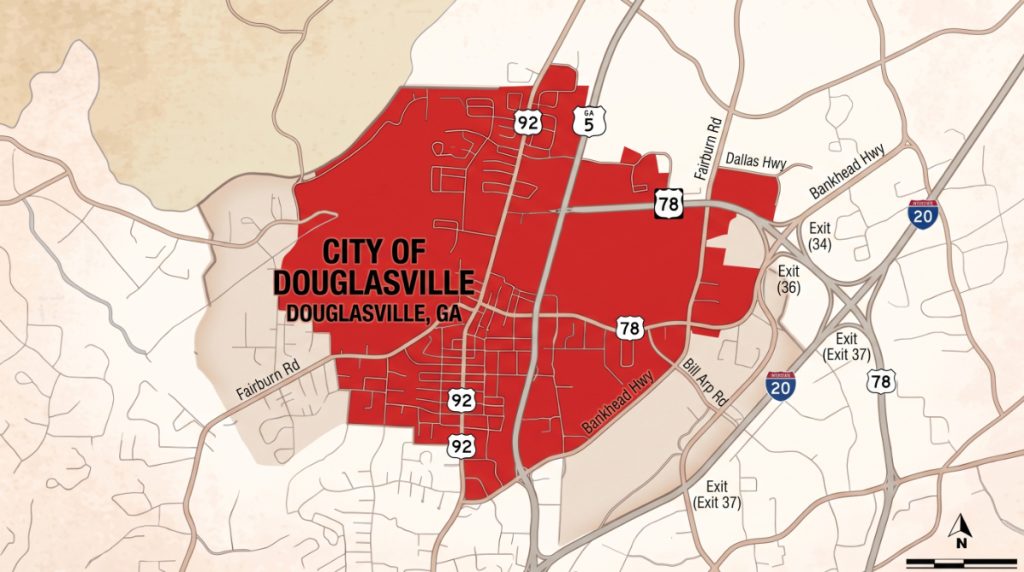
Serving Douglasville, GA and Surrounding Areas
We provide professional spray foam insulation for homes and businesses in Douglasville, GA, and surrounding communities. Our tailored solutions help improve energy efficiency, reduce air leaks, and maintain comfortable indoor temperatures year-round.
Testimonials
Improve Your Commercial Building’s Efficiency
Upgrade your commercial property with insulation designed for better energy efficiency, indoor comfort, and long-term performance. Contact Georgia Insulation today for a free quote tailored to your building.
Frequently Asked Questions About Commercial Insulation in Douglasville, GA
Business owners considering commercial insulation often have questions about building types, installation areas, costs, and timelines. We answer the most common ones below.
What types of commercial buildings do you insulate?
We work on warehouses, retail stores, offices, restaurants, metal buildings, and pole barns. Our team also handles multi-unit facilities and industrial spaces.
Each building type has different insulation requirements based on construction materials and use.
Where can spray foam be installed in a commercial building?
Spray foam can be applied in attics, walls, ceilings, and crawl spaces. We also install it around metal building components, including roof decks and wall panels.
This flexibility allows us to address air leaks in areas that batt insulation cannot reach.
How can insulation reduce business energy costs?
Proper insulation reduces the amount of conditioned air that escapes through walls, roofs, and gaps. This lowers the workload on heating and cooling systems.
Over time, this can lead to lower monthly utility bills for your business.
What are the risks of inadequate commercial insulation?
Poor insulation can lead to higher energy bills, inconsistent indoor temperatures, and increased strain on HVAC equipment. It can also contribute to moisture buildup, which may cause mold growth or structural damage.
Employees and customers may notice discomfort in poorly insulated spaces.
How much does commercial insulation cost in Douglasville, GA?
Costs vary depending on building size, insulation type, and the areas requiring treatment. We provide a detailed quote after assessing your property.
Factors like existing insulation condition and accessibility also affect pricing.
Will installation disrupt business operations?
We work with your schedule to minimize disruptions, including offering options for after-hours or weekend installation. Most projects are completed within a few days, depending on the scope of work.
We communicate timelines clearly before starting any project.