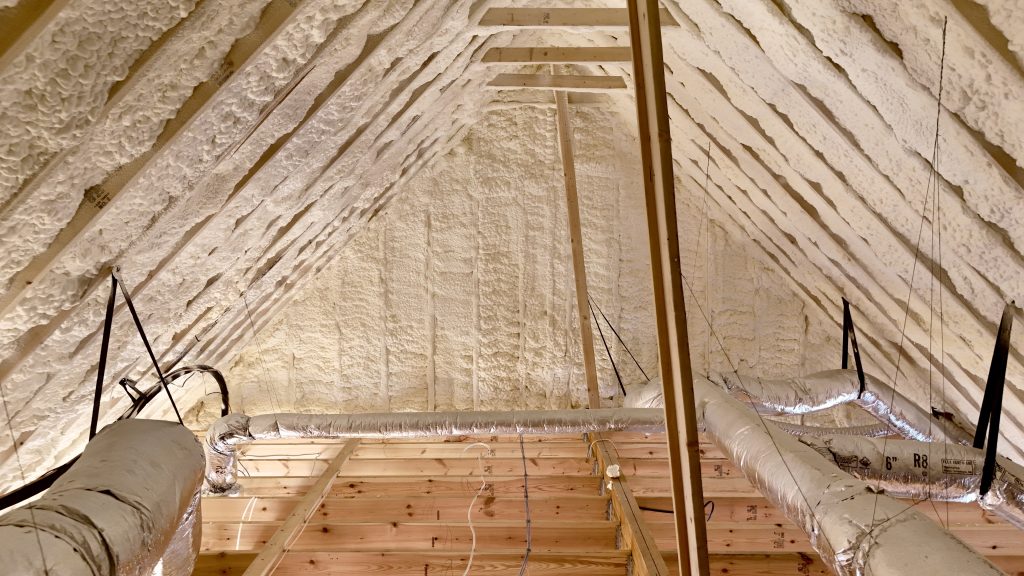
Georgia summers push attic temperatures past 140 degrees, and without proper insulation, that heat transfers directly into your living or working space. Georgia Insulation provides attic insulation services in Sandy Springs, GA and the surrounding metro area, helping homeowners and business owners reduce energy costs and maintain consistent indoor temperatures year-round.
Attics with insufficient or damaged insulation force HVAC systems to work harder, driving up utility bills and shortening equipment lifespan. We assess each property’s specific needs and apply solutions built for Georgia’s climate, from humid summers to occasional winter cold snaps.
This page covers our attic insulation process, the risks of neglecting this part of your property, and why property owners across the region choose us for this work.
Every structure has different insulation needs based on its layout, materials, and use. We apply spray foam differently depending on whether we’re working in a residential attic, a commercial facility, or a tight, awkward space that standard equipment can’t reach.
We install spray foam directly to the attic floor or roofline, depending on your home's ventilation setup. Open-cell foam works well for sound dampening and moderate climates, while closed-cell foam adds structural rigidity and a higher R-value per inch.
We seal around common trouble spots, including:
Each home gets a different approach based on age, roof design, and existing insulation. We assess these factors before recommending open-cell, closed-cell, or a combination of both.
GET A FREE QUOTECommercial buildings often have larger, more complex attic and roof systems than homes. We work with metal buildings, flat roofs, and mixed-use structures, adjusting our application method to match the roofline and building codes that apply.
Closed-cell foam is typically our choice for commercial spaces because it resists moisture and adds a layer of structural strength. This matters for buildings with HVAC systems running above ceiling tiles or through attic spaces, since foam insulation reduces strain on equipment.
We also account for fire-rating requirements and local commercial building codes during installation. Our team coordinates with property managers or business owners to minimize disruption during the process, often scheduling work outside normal business hours.
GET A FREE QUOTESome areas of a home or building don't fit standard insulation methods. Low-clearance attics, tight crawlspace transitions, and irregular framing require adjusted equipment and technique.
Spray foam expands to fill gaps that batt or blown-in insulation can miss, including:
We use specialized nozzles and application techniques to reach these spaces without disturbing surrounding structures. This reduces air leakage points that often go untreated in properties with complex framing or additions built over time.
GET A FREE QUOTEProper attic insulation affects three areas of your home or building: energy use, temperature stability, and moisture control. Each of these factors influences your comfort, your utility costs, and the condition of your property over time.
Your attic is one of the main points where conditioned air escapes. In winter, heat rises and exits through an under-insulated attic. In summer, attic heat pushes downward into living spaces.
When we install or upgrade attic insulation, we reduce this transfer of heat. Your HVAC system doesn’t have to work as hard to maintain your set temperature.
This translates into measurable savings on your energy bills. For commercial buildings, this can mean lower operating costs across multiple units or floors, particularly in properties with large or exposed attic spaces.
Uneven insulation coverage creates temperature imbalances throughout a building. You may notice certain rooms feel colder in winter or hotter in summer compared to the rest of the space.
We address this by providing consistent insulation depth and coverage across the entire attic area. This helps eliminate hot and cold spots between rooms or floors.
For commercial properties, this consistency matters for occupant comfort and for protecting sensitive equipment or inventory stored in upper floors near the roofline. Stable temperatures also reduce the strain on HVAC systems from constant adjustment.
Attics without adequate insulation are prone to condensation buildup, especially during temperature swings between seasons. This moisture can lead to:
We install insulation that helps regulate attic temperature and reduce the conditions that lead to condensation. This lowers the risk of moisture-related damage to your roof deck, framing, and stored belongings.
For commercial buildings, moisture control also protects inventory, equipment, and finishes from long-term water damage.
When attic insulation falls short of recommended R-values or has gaps and thin spots, the effects show up in your energy bills, comfort levels, and building materials. We see the same patterns repeatedly in homes and commercial properties across Sandy Springs.
Gaps in attic insulation let conditioned air escape through the roofline. Your HVAC system compensates by running longer and more frequently, which drives up monthly energy costs.
We commonly find that inadequately insulated attics account for a significant share of a building’s total heat loss in winter and heat gain in summer. This means your equipment works harder to reach the same setpoint.
Over a year, this adds up:
We often find that addressing insulation gaps produces noticeable savings within the first billing cycle.
Insufficient attic coverage creates hot and cold spots throughout a building. Rooms directly beneath thin insulation areas often feel warmer in summer and colder in winter compared to the rest of the structure.
This temperature inconsistency forces occupants to adjust thermostats repeatedly or rely on space heaters and fans to compensate. In commercial buildings, this can affect employee comfort and productivity in specific zones.
We also see drafts near ceiling fixtures, attic hatches, and exterior walls where insulation has settled or shifted. These air leaks bypass the insulation entirely, undermining the building’s overall thermal performance even if coverage looks adequate elsewhere.
When insulation doesn’t maintain a consistent temperature barrier, warm indoor air meets cold attic surfaces and condenses. This moisture accumulates on rafters, sheathing, and insulation materials themselves.
Over time, we find that persistent condensation leads to:
Issue | Effect on Building |
Wood rot | Weakens roof decking and structural framing |
Mold growth | Compromises indoor air quality |
Insulation degradation | Reduces R-value further, creating a cycle |
Rust on metal fasteners | Shortens the lifespan of roofing components |
Mold in an attic space can spread to living or working areas below, particularly through shared ventilation systems. We recommend addressing insulation gaps before moisture damage requires separate remediation work.
We bring over 35 years of industry experience to every attic insulation project in Sandy Springs. Our team combines local knowledge with professional installation standards to deliver solutions for both residential and commercial properties.
We understand the construction styles common throughout Sandy Springs, from older homes with original attic framing to newer builds with modern ventilation systems. This region experiences hot, humid summers and moderate winters, so attic insulation needs to account for both conditions. Our familiarity with local building codes and typical attic configurations allows us to assess each property accurately and determine which insulation types are best suited to the area's climate and housing age. We commonly address ranch-style homes with limited attic access points, multi-story properties with varying roof pitches, older homes with outdated or deteriorated insulation, and commercial buildings with flat or low-slope roofs.
Our technicians follow established procedures for every insulation job. We accurately measure attic spaces, calculate the appropriate R-value, and apply materials according to manufacturer specifications. We use proper safety equipment and containment methods during spray foam application to protect the home's interior and keep the work area clean. Every project begins with a pre-installation inspection to identify existing moisture issues, structural concerns, or ventilation problems before work starts. During installation, we maintain consistent coverage because gaps and thin spots can reduce insulation performance, and we verify the application is complete before finishing the job.
We work on both residential attics and commercial building spaces, with each property requiring a different approach based on its size, structure, and use. Our residential services include single-family home attic insulation, townhome and condo unit insulation, and garage attic spaces, while commercial services include retail and office building attics, warehouses, and multi-unit properties. We adjust our approach based on how the building is used, since a commercial space with continuous HVAC operation has different insulation needs than a residential attic exposed to seasonal temperature changes. Our team considers these differences during the assessment and installation process to ensure the insulation plan fits the property's specific requirements.

We follow a structured process for every attic insulation project, whether it’s a home in Sandy Springs or a commercial building nearby. This approach lets us identify existing problems, plan the right materials, and confirm the work meets our standards before we consider a job finished.
Every project starts with a thorough inspection of your attic space. We check current insulation levels, look for gaps, moisture damage, and areas where air is escaping.
We also inspect for ventilation issues, pest damage, and any structural concerns that could affect installation. This step tells us what’s actually happening in your attic, not just what’s visible on the surface.
For commercial buildings, we assess larger spaces and multiple zones to understand how insulation needs vary throughout the structure. We document our findings and explain them in plain terms before moving forward.
Based on the evaluation, we determine which insulation type fits your space and goals. Options include:
We calculate the required R-value based on your building’s size and Georgia’s climate demands. We also plan coverage depth to meet current energy code standards.
This step accounts for any air sealing needed before insulation goes in, since gaps left unsealed reduce performance regardless of material quality.
Our team installs insulation according to the plan, working methodically through each section of the attic. We seal air leaks first, then apply insulation to achieve even, consistent coverage throughout the space.
We clean up thoroughly once installation is complete, removing debris and leftover materials. Before we leave, we conduct a final review to confirm depth, coverage, and sealing meet the standards we set during planning.
We walk you through the completed work and answer any questions about maintenance or performance expectations.
Georgia Insulation works throughout Sandy Springs and the neighborhoods that surround it, from Riverside to Perimeter Center. Scheduling a visit takes only a few minutes, and we outline exactly what happens once you reach out.
Getting started is straightforward. We offer a few ways to reach our team:
Once we receive your request, we schedule a convenient time for an on-site evaluation. During this visit, we inspect your attic, assess current insulation levels, and check for air leaks or moisture issues.
We then provide a written estimate before any work begins. There’s no obligation to move forward after the consultation, and we answer any questions you have about the process, materials, or timeline.
We answer the questions we hear most often from homeowners and business owners in Sandy Springs about attic insulation, R-values, and spray foam application. These answers cover installation timelines, energy savings, and the service area we cover.
We recommend an R-value between R-38 and R-60 for attics in the Sandy Springs area. This range accounts for Georgia’s hot summers and mild winters.
Older homes often have R-values well below this recommendation. We assess your current insulation levels before suggesting an upgrade.
Spray foam expands to fill gaps, cracks, and irregular spaces that other insulation types miss. This creates a continuous air barrier that blocks heat transfer.
We apply it directly to roof decking, rafters, and attic floors depending on your home’s structure. The seal it forms reduces air leakage significantly compared to fiberglass batts alone.
Yes, proper attic insulation reduces the workload on your HVAC system. Less heat transfer means your air conditioner and furnace run less often.
We’ve seen clients reduce their energy consumption after replacing outdated or insufficient insulation. The exact savings depend on your home’s size, current insulation condition, and energy usage habits.
Most residential attic insulation projects take one day to complete. Larger homes or commercial spaces may require additional time.
We provide a specific timeline estimate after our initial inspection. Factors like attic size, existing insulation removal, and access points affect the schedule.
We install spray foam in commercial buildings including warehouses, retail spaces, and office buildings. The application process adjusts based on the building’s structure and square footage.
Commercial projects often involve larger surface areas and different roofing systems than residential homes. We evaluate each commercial space individually before recommending a specific approach.
We serve Sandy Springs and the surrounding metro Atlanta area. Our service area includes nearby communities and extends to other parts of Georgia.
We work with homeowners and business owners throughout this region on both new installations and insulation upgrades.