
Homes and businesses in Peachtree City lose energy through poorly insulated attics every day. Georgia Insulation provides professional attic insulation services designed to stop this energy loss and keep indoor temperatures stable throughout the year. We work with homeowners and business owners across the surrounding areas to identify gaps in existing insulation and install solutions that fit each property’s specific needs.
An uninsulated or under-insulated attic forces your HVAC system to work harder, which drives up utility costs and shortens equipment lifespan. We see this issue in older homes and newer builds alike, often caused by settled insulation, moisture damage, or incorrect installation from the start.
Our team evaluates your attic space, recommends the right material and R-value for your property, and completes installation with minimal disruption to your daily routine. We serve both residential and commercial clients in Peachtree City and nearby communities, applying the same attention to detail on every job.
Attic spaces vary between homes and commercial buildings, and the right insulation choice depends on structure type, square footage, and existing conditions. We work with multiple material types to match each property’s specific needs.
Peachtree City homes typically require insulation that balances cost, R-value, and attic accessibility.
We install the following types for residential properties:
Older homes in the area often have insulation that has settled or degraded over time. We assess existing material before recommending whether to add to it or replace it entirely.
Attic access points, ventilation, and roofline design all factor into which option works best for a given house.
Commercial buildings present different challenges than residential attics, including larger square footage and varied roof structures.
We work with:
Business owners need insulation that supports consistent indoor temperatures across larger spaces without driving up utility costs. Spray foam and rigid board insulation are common choices for commercial applications due to their durability and moisture resistance.
We evaluate each commercial property's layout, occupancy patterns, and HVAC demands before recommending a material. Buildings with retail space, office areas, or storage sections may need different insulation approaches within the same structure.
Material selection depends on several factors specific to your property.
We measure attic dimensions, check for existing moisture or mold issues, and review current R-values before making a recommendation.
This process helps avoid installing material that won't perform well in your specific attic conditions.
We apply spray foam across multiple areas of residential and commercial structures, each requiring a different approach based on substrate, moisture conditions, and code requirements. Below, we outline how we handle home and commercial applications differently to match each structure’s needs.
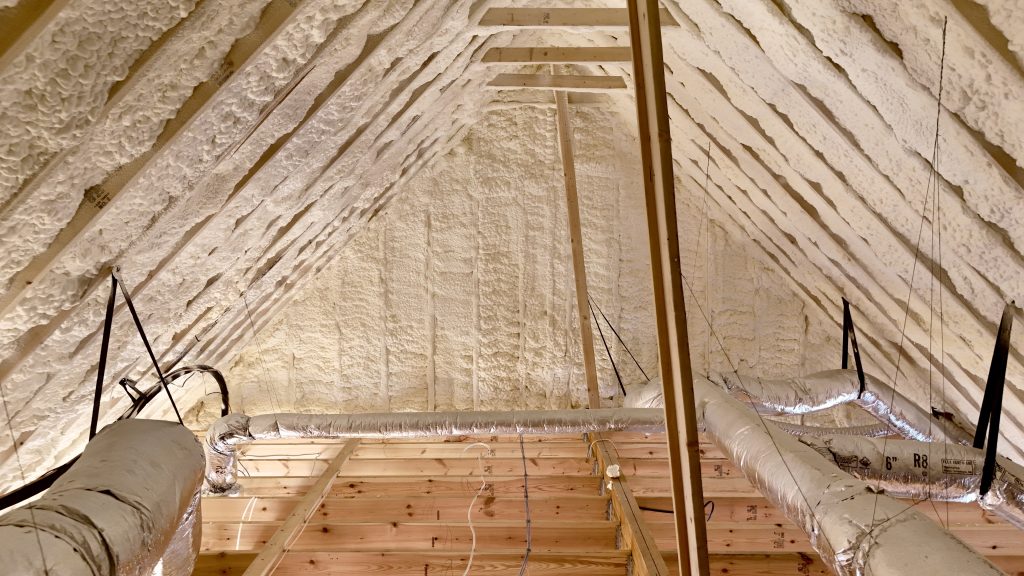
We insulate roofline rafters using closed-cell or open-cell spray foam, creating a conditioned attic space that keeps ductwork and HVAC equipment out of extreme temperatures. This approach seals the roof deck directly, reducing the gaps that typically let heat and moisture pass through.
For walls, we apply spray foam between studs to add an air barrier that batt insulation cannot match on its own.
Crawl spaces present a different challenge: ground moisture and humidity. We use closed-cell foam on crawl space walls to block vapor intrusion and limit mold growth. This application works alongside encapsulation methods we also provide for complete moisture control.
Area | Foam Type | Primary Function |
Rooflines | Open or closed-cell | Thermal and air seal |
Walls | Closed-cell | Air barrier |
Crawl spaces | Closed-cell | Moisture control |
We spray foam commercial roof decks to address large surface areas where seams and penetrations are common sources of air and water infiltration. Closed-cell foam adheres directly to metal, concrete, or wood decking, forming a continuous membrane that resists ponding water and thermal bridging.
For building envelopes, we target wall cavities, loading dock areas, and mechanical penetrations where conditioned air commonly escapes. Commercial structures often have irregular geometry and multiple contractors involved in construction, which creates more opportunities for gaps.
We assess each envelope component separately, including:
This section-by-section method helps us identify weak points that general insulation upgrades might miss on larger commercial properties.
A well-insulated attic directly affects how your home or business feels day to day and how much energy it consumes. Both factors are connected: steady indoor temperatures and lower utility bills result from the same underlying improvement.
Insulation acts as a barrier against outdoor temperature extremes. In the summer, it keeps heat from pushing down into living or working spaces. In the winter, it keeps warm air from escaping upward through the ceiling.
Without this barrier, rooms directly below the attic often feel noticeably warmer or colder than the rest of the building. This creates uneven temperatures between floors and makes it harder to maintain a consistent setting on the thermostat.
We find that properly insulated attics reduce these temperature swings. This means:
Attics with insufficient insulation force heating and cooling systems to work harder to maintain set temperatures. This happens because conditioned air escapes through the ceiling and roof area, requiring the system to run longer and more frequently.
When we upgrade attic insulation to the recommended level for our climate zone, the result is less conditioned air lost through the attic. Your HVAC system doesn’t need to cycle as often to offset that loss.
This has a direct effect on energy bills. Homeowners and business owners typically see a measurable drop in monthly utility costs after an attic insulation upgrade, particularly when moving from older, thinner insulation to current standards.
An attic with too little insulation does not just make your home less comfortable. It creates conditions that drive up utility bills and allow moisture to accumulate where you cannot see it.
When attic insulation is thin or unevenly distributed, conditioned air escapes through the ceiling. We find that this forces HVAC systems to run longer cycles just to maintain a stable indoor temperature.
The result is noticeable hot and cold spots throughout a home or commercial building. Rooms directly below a poorly insulated attic often feel warmer in summer and colder in winter than the rest of the structure.
This imbalance puts extra strain on heating and cooling equipment. Over time, that added workload can shorten the lifespan of your HVAC unit and increase monthly energy costs.
Gaps in attic insulation often go hand in hand with air leaks around vents, wiring, and ductwork. These openings let outside air in and allow conditioned air to escape, undermining the efficiency of the insulation that is already in place.
Air leaks also contribute to moisture problems. Warm, humid air entering an attic can condense on cooler surfaces, leading to:
We recommend addressing air sealing and insulation together, since one without the other rarely solves the underlying issue.
We bring local knowledge, licensed expertise, and property-specific recommendations to every attic insulation project we take on in Peachtree City and the surrounding region.
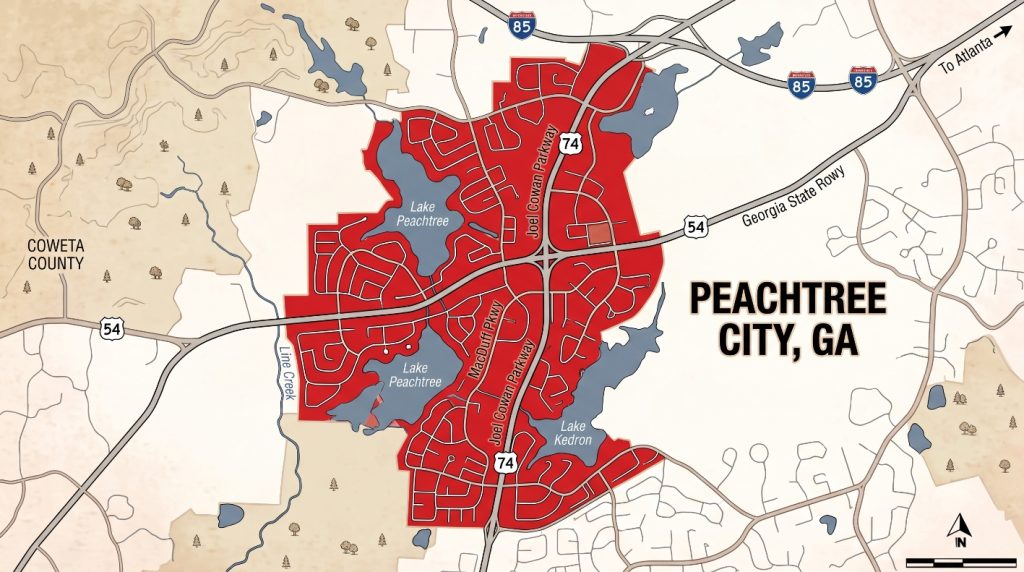
We serve Peachtree City and nearby communities with knowledge of the local climate, insulation standards, and building codes. Our local crews provide efficient scheduling for attic inspections and installations.
We inspect each attic’s insulation, ventilation, air leaks, and moisture before recommending a solution. Based on the findings, we may recommend spray foam, blown-in, or batt insulation, with clear explanations for each choice.
From the first inspection to the final walkthrough, every step is handled with attention to detail and clear communication. Here’s what you can expect when you work with us.
We start by inspecting your attic to check existing insulation levels, identify air leaks, and assess moisture or ventilation issues. This step helps us understand the specific conditions in your home or building before recommending a solution.
Based on our findings, we select the insulation material best suited to your space. Options typically include:
We factor in your budget, attic structure, and climate goals when making a recommendation. We also explain the reasoning behind our suggestion so you can make an informed decision.
Once you approve the plan, our team prepares the attic by sealing air leaks and addressing any necessary repairs. We then install the chosen insulation material to the correct depth and coverage specified for your property.
Throughout installation, we follow safety protocols and protect the surrounding areas of your home or building. After the work is complete, we conduct a final review to confirm proper coverage and performance.
We clean up the work area before leaving and walk you through the results. This gives you a clear picture of the improvements made and what to expect in terms of comfort and energy efficiency going forward.
We provide attic insulation services in Peachtree City, GA and surrounding areas, helping homeowners improve indoor comfort and energy efficiency. Our team evaluates existing insulation, air leaks, moisture concerns, and attic conditions before recommending the right insulation approach for your home.
We start every project with an on-site evaluation. This lets us check current insulation levels, identify air leaks, and measure attic conditions before recommending a solution.
Our team inspects insulation type, depth, and coverage across the attic space. We also look for signs of moisture, pest activity, or ventilation issues that could affect performance.
After the evaluation, we provide a written estimate outlining the recommended insulation type and expected coverage. Scheduling is straightforward: call us or submit a request through our website, and we will arrange a convenient time to visit your property in Marietta or one of the surrounding communities we serve.
Costs, code requirements, and material choices vary based on attic size, existing insulation, and the type of property. Here are answers to the questions we hear most often from homeowners and business owners in Peachtree City.
Pricing depends on attic square footage, the insulation type you select, and whether removal of old material is needed. We provide a free, no-obligation quote after assessing your attic’s condition and your energy goals.
Most residential projects range from a few hundred to a few thousand dollars. Commercial buildings typically cost more due to larger square footage and access requirements.
For our climate zone, we generally recommend an R-value between R-38 and R-60 for attic spaces. This range accounts for Georgia’s hot, humid summers and mild winters.
The exact number depends on your home’s construction, existing insulation, and energy usage patterns. We measure your current R-value during inspection and recommend an appropriate target.
Georgia’s energy code, based on the International Energy Conservation Code (IECC), sets minimum insulation standards for new construction and major renovations. Our area typically falls under requirements calling for R-38 or higher in attic spaces.
We stay current on local code updates and ensure every installation meets or exceeds these requirements.
The right choice depends on your attic’s structure, ventilation, and budget. Blown-in insulation works well for irregular spaces and attics with existing insulation that needs topping off.
Batt insulation suits attics with standard joist spacing and few obstructions. Spray foam offers higher air-sealing performance and works well in attics with ductwork or complex framing.
Yes, spray foam works in both settings. In homes, it seals gaps around framing, vents, and penetrations that other materials can miss.
In commercial buildings, spray foam helps manage larger, often more complex roof structures and can reduce air leakage across expansive attic or ceiling cavities. We assess each property individually before recommending this option.
Most residential attic insulation jobs take one day to complete, depending on attic size and whether old insulation needs removal. Commercial projects take longer based on square footage and building layout.
We provide a time estimate upfront after our initial inspection, so you know what to expect before work begins.