
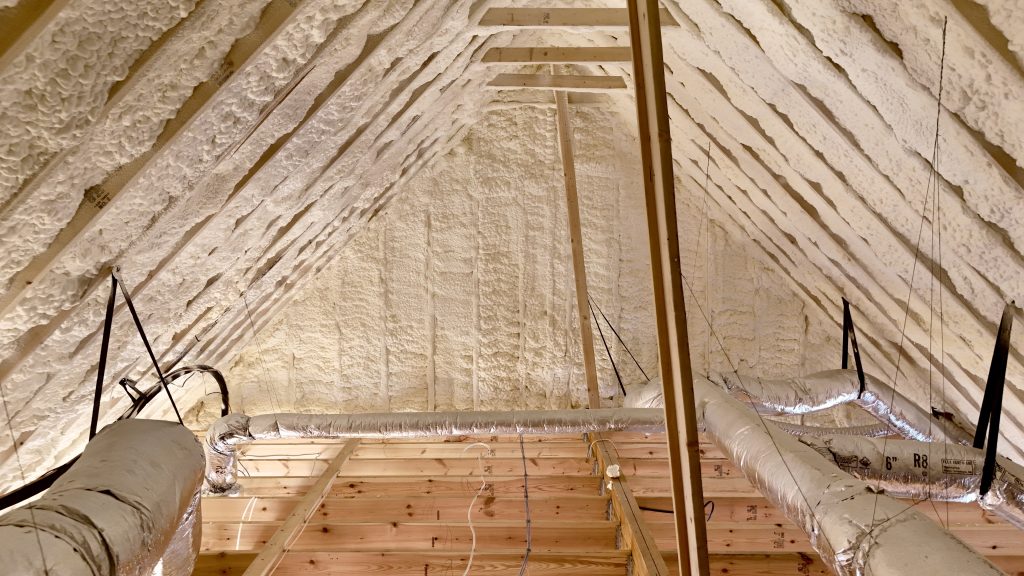

Attic insulation limits how much heat moves between your living space and the outdoors, which keeps indoor temperatures steadier and can lower heating and cooling costs. At Georgia Insulation, we install attic insulation for homes and commercial buildings in Calhoun, GA, and the surrounding areas. Poor or missing insulation is one of the most common reasons buildings lose conditioned air through the roof.
If your attic has thin, uneven, or damaged insulation, adding or replacing it is one of the most direct ways to reduce energy waste and improve comfort in every room below. Georgia’s hot summers and cool winters put steady demand on heating and cooling systems, and the attic is often where the largest share of that energy escapes.
On this page, we explain where spray foam and other insulation types fit in different parts of a home or commercial building. We also cover the benefits, the risks of leaving an attic underinsulated, how our process works, and answers to common questions.
Spray foam can be applied to attic floors, underside of roof decks, knee walls, and the roof assemblies of commercial buildings. The right placement depends on how the space is used, how it is ventilated, and what is already installed.
In homes, we apply spray foam in two main locations: on the attic floor and on the underside of the roof deck. Each option suits a different situation.
Attic floor application places foam over the ceiling joists, sealing gaps around wiring, recessed lights, and plumbing penetrations. This keeps the attic vented and works well when the attic is only used for storage access or HVAC equipment is not located there.
Roof deck application creates an unvented, or sealed, attic by spraying foam directly beneath the roof sheathing. This brings the attic inside the conditioned envelope, which helps when ductwork or an air handler sits in the attic. In Georgia's hot, humid summers, that can reduce the temperature swing around the equipment.
| Location | Attic Type | Best For |
|---|---|---|
| Attic floor | Vented | Storage-only attics, tight budgets |
| Roof deck | Unvented | Attics with HVAC equipment or ducts |
Knee walls are the short walls found in finished attic rooms and upper-floor bonus rooms. They often separate living space from unconditioned attic areas, and they are a common source of drafts and uneven room temperatures.
Spray foam works well here because it expands to fill the cavities between studs and seals the cracks that fiberglass batts leave behind. We typically use closed-cell foam on knee walls, since it adds rigidity and resists moisture.
Other tight areas we treat include:
Foam is applied as a liquid and expands in place, so it reaches spaces that are difficult to insulate with batts or blown-in material.
Get a Free QuoteCommercial buildings in Calhoun and the surrounding area, such as offices, retail spaces, warehouses, churches, and pole barns, often have large roof surfaces that account for much of the heat gain and loss. Spray foam applied to the underside of a metal or wood roof deck helps control that transfer.
On metal roofs, foam also limits condensation, which forms when warm, humid air touches the cool metal surface. Closed-cell foam is commonly chosen for this purpose because it acts as both insulation and a moisture barrier.
We consider several factors for commercial projects:
Foam thickness and type are selected after we review the roof structure and the building's intended use.
Get a Free QuoteA well-insulated attic slows the movement of heat through your ceiling, keeps rooms at steadier temperatures, and reduces the workload on your heating and cooling equipment. For homes and commercial buildings in Calhoun, GA, these changes show up in monthly utility costs and day-to-day comfort.
Heat moves from warm areas to cool ones, and in winter that means conditioned air rises and escapes through the ceiling and roof. In summer, a roof heated by the sun can push attic temperatures well above 100°F, and that heat travels down into the living space. Insulation slows both movements.
The biggest gains come when an attic has little or no insulation to begin with. Moving from roughly R-11 to the R-38 to R-49 range, which is the level commonly recommended for Georgia, captures most of the available savings.
Spray foam adds a second advantage because it also seals the small gaps around wiring, plumbing penetrations, and framing where air leaks out. Air sealing and insulation work together:
Uneven temperatures are one of the most common complaints we hear. A bedroom under the roof may run several degrees warmer than a first-floor room, or an office near an exterior wall may feel cold in January.
Proper attic insulation reduces these differences because the ceiling stops acting as a thin barrier between your living space and the extreme temperatures above it. Rooms closest to the roofline benefit the most.
You can expect these practical changes:
For commercial buildings, steadier temperatures help keep offices, retail floors, and work areas comfortable for staff and customers without constant thermostat adjustments.
When heat gains and losses through the attic are high, your HVAC system runs longer cycles to keep up. Longer run times mean more wear on compressors, blower motors, and heat exchangers.
A properly insulated attic shortens those cycles. Your equipment starts and stops less often, reaches the set temperature sooner, and spends more time idle.
This matters for both cost and lifespan. Lower run times reduce energy use, and less mechanical wear can delay repair calls and extend the years before replacement is needed. In some cases, better insulation also allows a smaller system to be selected when equipment eventually needs replacing, though that depends on a proper load calculation for your building.
An underinsulated attic lets conditioned air escape, which raises energy costs and leaves indoor spaces drafty. It also allows moisture to build up in the roof structure and causes temperature differences from room to room.
Heat rises, and an attic with thin or missing insulation gives it an easy path out of the building. The U.S. Department of Energy reports that heating and cooling account for roughly half of the energy used in a typical home, so gaps at the top of the building affect a large share of your bill.
In Calhoun, this works in both directions. In winter, warm air escapes through the ceiling, and in summer, a hot attic radiates heat back down into the rooms below.
Common signs of an attic that is losing energy include:
Air leaks around wiring, plumbing penetrations, and light fixtures add to the loss. Even a well-insulated attic can underperform if those openings stay unsealed.
Warm, humid indoor air that leaks into a cool attic can condense on rafters, roof sheathing, and ductwork. Georgia’s humid climate makes this more likely, especially during temperature swings in spring and fall.
Repeated condensation can lead to several problems:
Wet insulation does not slow heat flow the way dry insulation does. Cellulose and fiberglass are both affected, so a damp attic can lose performance quickly.
Mold in an attic can also affect indoor air quality, since air moves between the attic and the rooms below. Addressing air sealing and insulation depth together reduces the conditions that allow moisture to collect.
Rooms directly under the attic often show the biggest temperature differences. Upstairs bedrooms may feel hot in summer and cold in winter, while ground-floor rooms stay closer to the thermostat setting.
In commercial buildings, the same issue creates hot and cold zones that affect employees and customers. Staff may adjust thermostats or bring in space heaters, which adds to energy costs and strains HVAC equipment.
An underinsulated attic also forces your system to work harder to compensate. Longer run times increase wear on compressors, blowers, and furnaces, which can shorten equipment life and lead to earlier repair or replacement costs.
Adding the right depth of insulation and sealing air leaks helps hold temperatures steady across the building, so each room responds more consistently to your thermostat.
We work from Calhoun, GA, and we install attic insulation for homes and commercial buildings across Gordon County and nearby communities. Our approach centers on local knowledge of Georgia’s climate and a clear, documented plan for each property.
Based in Calhoun, we understand Georgia's climate and local building conditions. We serve surrounding communities with licensed, trained crews who provide suitable insulation solutions, efficient scheduling, and reliable follow-up support for residential and commercial properties.
We inspect your attic, identify insulation and air leakage issues, and recommend suitable materials based on your needs. We provide clear written estimates, project timelines, and flexible scheduling, ensuring proper preparation and cleanup before and after installation.
A typical attic spray foam project in Calhoun, GA runs from a roof-to-floor inspection through air sealing, foam application, and a documented walkthrough. Most homes take one to two days, and each stage affects how well the finished insulation performs.
We begin with a walk through your attic and the living space below it. Our technician checks the roof deck, rafters, existing insulation, wiring, recessed lights, and the condition of any ductwork.
We measure the attic area and note the current insulation depth. In Georgia’s climate zones 2 and 3, the Department of Energy recommends an attic R-value between R-30 and R-60, and we compare your attic against that range.
You then receive a written recommendation that covers:
We answer your questions before any work is scheduled.
Air leaks account for a large share of attic heat loss, so we address them before insulating. We seal gaps around plumbing stacks, electrical penetrations, chimney chases, top plates, and attic hatches.
Ventilation decisions depend on the approach. Foam applied to the roof deck creates an unvented, conditioned attic, so we close off soffit and ridge vents where required. If we insulate the attic floor instead, we keep existing vents open and install baffles to hold the airflow path clear.
We also look for moisture before we spray. Roof leaks, stained decking, and wet framing must be repaired first, because foam should never cover damp or damaged wood. We confirm bath fans and dryer vents exhaust outdoors and not into the attic.
On installation day, we cover floors, furniture, and nearby surfaces, and we protect the attic access path. Crew members wear respirators, protective suits, and eye protection, and we set up ventilation equipment for the work area.
We keep the foam machine and materials outside, running hoses to the attic. Application happens in thin layers, called passes, so the foam cures evenly and reaches the specified thickness. Our crew checks depth with gauges as they go.
Expect these conditions during the job:
Plan for you, your family, and your pets to be away from the home while we spray.
Once the foam cures, we inspect the full application. We check for gaps, uneven areas, and spots that need a touch-up, and we confirm that vents, wiring, and fixtures are clear.
We then clean the work area and remove equipment and debris. You receive a walkthrough that covers the finished depth, R-value, and foam type installed, along with the product documentation.
Reentry timing depends on the product and ventilation conditions. We give you a specific time frame for your job, and we generally advise keeping the home well ventilated and staying out until we confirm it is safe. If you notice a strong lingering odor afterward, call us so we can look at it.
We provide professional attic insulation services in Calhoun, GA, and surrounding communities. Our team delivers tailored insulation solutions for homes and businesses to improve energy efficiency, control moisture, and maintain comfortable indoor temperatures year-round.
We start every project with an on-site evaluation. This lets us check current insulation levels, identify air leaks, and measure attic conditions before recommending a solution.
Our team inspects insulation type, depth, and coverage across the attic space. We also look for signs of moisture, pest activity, or ventilation issues that could affect performance.
After the evaluation, we provide a written estimate outlining the recommended insulation type and expected coverage. Scheduling is straightforward: call us or submit a request through our website, and we will arrange a convenient time to visit your property in Marietta or one of the surrounding communities we serve.
Attic insulation pricing depends on square footage, material type, and the existing insulation already in place, while recommended R-values, material options, installation steps, and the risks of poor coverage all affect how a project is planned. The answers below reflect what we see on homes and commercial buildings in Calhoun and nearby communities.
Cost depends on the size of the attic, the insulation material, and whether old insulation must be removed first. Blown-in fiberglass or cellulose is generally the lower-cost option, while spray foam costs more per square foot but also seals air leaks.
We provide a free assessment and a written estimate before any work begins. The estimate lists the material, the target R-value, and the area to be covered, so you can compare it against other quotes.
Georgia falls within the climate zones where the U.S. Department of Energy recommends roughly R-30 to R-60 for attics, depending on the county. Calhoun and the northern part of the state typically fall toward the higher end of that range.
Many older homes in our area have R-11 to R-19 in the attic, which is below current recommendations. During our assessment, we measure your existing depth and tell you how much needs to be added to reach the recommended level.
Yes, in many cases. Spray foam adheres to the roof deck or attic floor, fills gaps, and acts as an air barrier along with providing insulation.
In homes, it works well for attics that contain HVAC equipment or ductwork. In commercial buildings, we often use it on roof lines and exterior walls, sometimes paired with batt insulation on interior walls.
Spray foam is not the right fit for every attic. We will tell you if blown-in insulation would meet your goals at a lower cost.
An under-insulated attic allows heat to move into the living space in summer and out of it in winter. This forces your heating and cooling system to run longer and raises utility bills.
Other problems can follow:
Air leaks around recessed lights, attic hatches, and duct penetrations make these problems worse if they are not sealed.
We start with an on-site inspection of the attic, checking existing insulation, ventilation, air leaks, and signs of moisture. Next, we give you a written estimate and agree on the materials and R-value.
Before installation, we seal air leaks and make any needed adjustments to baffles or vents. We then install the insulation, clean up the work area, and measure the finished depth so you can confirm the result.
Most residential attics are completed in one day. Larger or commercial projects can take longer depending on the size of the building.
We are a licensed, locally operated company that serves Calhoun and more than 40 counties across Georgia. Our team is trained in spray foam, blown-in, and batt insulation, so we can recommend the method that suits your building rather than a single product.
We work with both homeowners and business owners, and we explain pricing, materials, and expected results before work starts. You can reach us at (770) 549-9561 to schedule an assessment.