
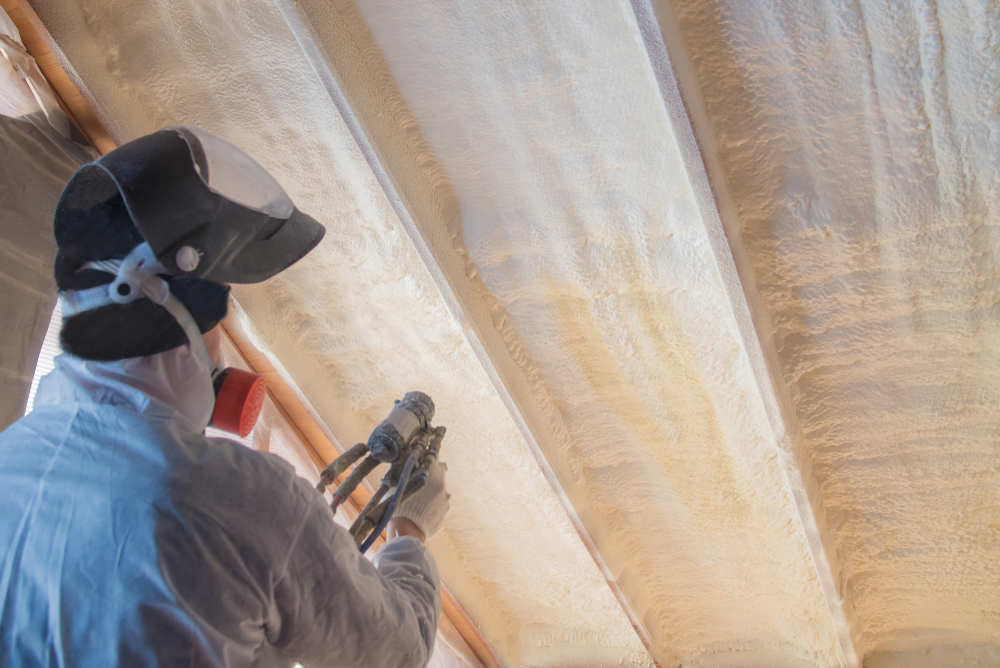

Pole barns provide flexible space for agricultural operations, equipment storage, workshops, warehouses, and commercial activities. However, their large roof areas, metal siding, and open structural designs can make temperature control difficult without proper insulation. Georgia Insulation provides pole barn insulation in McDonough, GA, and surrounding areas, helping business owners reduce heat transfer, control condensation, seal air leaks, and maintain more consistent indoor temperatures.
Georgia’s hot, humid summers can make uninsulated pole barns extremely uncomfortable. Metal roofing and siding absorb heat throughout the day, allowing it to transfer into the building. During cooler weather, temperature differences between indoor air and metal surfaces can also create condensation.
Spray foam insulation addresses these problems by expanding against suitable surfaces, filling gaps, and creating an insulating layer. Whether you use your pole barn for equipment storage, agricultural purposes, commercial operations, or a workshop, we help identify insulation options that fit the building’s construction and intended use.
On this page, we explain where spray foam can be applied in pole barns, the benefits of proper insulation, and what can happen when these structures remain uninsulated. We also cover our installation process and answer common questions about pole barn insulation.
The right insulation depends on the pole barn’s construction, intended use, moisture exposure, and available installation space. Some buildings need insulation across the entire roof and exterior walls, while others require improvements in specific areas.
We primarily consider two types of spray foam: open-cell and closed-cell. Both provide insulation and air sealing, but their density, moisture resistance, and R-values differ.
Open-cell spray foam is a lightweight, flexible material that expands significantly during application. It has an R-value of approximately R-3.5 to R-3.8 per inch and works well in areas where filling irregular cavities and reducing air leakage are priorities.
In pole barns, open-cell foam may be suitable for certain interior wall and roof assemblies when the design allows for its vapor-permeable properties. Its softer structure also helps absorb sound, which can be useful in workshops, equipment areas, and buildings with active workspaces.
However, open-cell foam can absorb liquid water and allows more water vapor to pass through than closed-cell foam. It is not suitable for every pole barn application, particularly in areas with regular moisture exposure.
Closed-cell spray foam is denser and more rigid than open-cell foam. It generally provides an R-value of approximately R-6 to R-7 per inch, making it useful in pole barns where insulation space is limited.
Its compact cell structure resists liquid water and acts as a vapor retarder at sufficient thickness. When applied properly to suitable surfaces, it helps reduce air movement and limit condensation caused by warm, humid air reaching cooler metal panels.
We commonly consider closed-cell foam for pole barn roofs, exterior walls, ceilings, and other areas where higher R-value per inch and moisture resistance are important.
Both materials can work in pole barns, but their differences affect performance and suitability.
| Factor | Open-Cell Foam | Closed-Cell Foam |
|---|---|---|
| R-value per inch | ~R-3.5 to R-3.8 | ~R-6 to R-7 |
| Density | Lower | Higher |
| Moisture resistance | Lower | Higher |
| Sound dampening | Good | Moderate |
| Cost per sq. ft. | Generally lower | Generally higher |
| Common applications | Suitable interior assemblies | Roofs, walls, and metal surfaces |
Some pole barns may benefit from using different foam types in separate areas. We consider the building's design, ventilation, moisture conditions, and insulation goals before recommending a material.
Get a Free QuoteProper pole barn insulation helps business owners manage heat transfer, reduce air leakage, and improve indoor conditions. When installed as part of a suitable building assembly, spray foam provides both insulation and air sealing.
Pole barns often have large metal roofs and exterior walls that allow heat to move quickly between indoor and outdoor environments.
During summer, heat enters through the roof and siding, increasing the demand on cooling equipment. During winter, indoor heat can escape through the same surfaces.
Spray foam expands during application and fills many gaps and openings, creating an insulating layer that slows heat movement.
This can help reduce the workload on heating and cooling equipment. Actual energy savings depend on the building’s size, existing insulation, HVAC system, and operating schedule.
Condensation is a common concern in metal pole barns. It occurs when warm, humid air comes into contact with cooler surfaces and releases moisture.
This can happen on roof panels, exterior walls, and other metal components, particularly when outdoor temperatures change.
Closed-cell spray foam resists liquid water and acts as a vapor retarder at sufficient thickness. When installed as part of a properly designed assembly, it can help limit the conditions that contribute to condensation.
However, insulation does not replace proper ventilation, humidity management, or repairs to existing leaks. We consider these factors when evaluating a pole barn.
Uninsulated pole barns can experience significant temperature differences throughout the year. Areas beneath the metal roof may become especially hot during summer, while exterior walls can contribute to cold spots during winter.
Spray foam helps reduce heat transfer through these surfaces, supporting more consistent indoor temperatures.
This can make a difference in:
A more stable indoor environment can also make the building easier to heat and cool.
Gaps around metal panels, framing connections, doors, windows, and utility penetrations can allow outdoor air to enter a pole barn.
Spray foam expands after application and fills many of these openings, helping create a continuous air barrier.
Reducing unwanted air movement helps limit drafts and makes it easier to maintain desired indoor conditions.
Noise can be an issue in pole barns used for workshops, equipment storage, and commercial operations.
Open-cell spray foam has sound-absorbing properties that can help reduce sound transmission through suitable wall and ceiling assemblies.
Although insulation alone will not eliminate all machinery or outdoor noise, choosing the appropriate material can contribute to a more comfortable indoor environment.
An uninsulated or poorly insulated pole barn is more exposed to outdoor temperature changes. Over time, heat transfer, air leakage, and condensation can affect indoor comfort, operating expenses, and building materials.
Metal roofs and siding transfer heat quickly. During Georgia’s hot summers, an uninsulated pole barn can absorb substantial heat throughout the day.
This increases indoor temperatures and may require cooling equipment to run longer to maintain comfortable conditions.
During colder months, indoor heat escapes through poorly insulated surfaces, increasing heating demand.
Common sources of energy loss include:
When these problems remain unaddressed, business owners may experience higher utility expenses and additional HVAC demand.
Metal surfaces can cool quickly when outdoor temperatures drop. When warm, humid air inside the pole barn reaches these cooler surfaces, moisture may collect on the roof and walls.
Repeated condensation can contribute to several problems:
Proper insulation, ventilation, and humidity management all play a role in controlling these conditions.
Pole barns used for commercial operations and workshops can become uncomfortable when temperatures are not properly managed.
During summer, heat builds up beneath metal roofs and makes working conditions difficult. During winter, poorly insulated walls and roofs allow indoor heat to escape.
Employees may experience temperature fluctuations throughout the day, particularly in buildings without adequate heating and cooling systems.
Improving insulation helps create a more manageable indoor environment for daily operations.
When a pole barn continuously gains heat during summer or loses heat during winter, heating and cooling systems must compensate for those changes.
This can result in longer operating cycles and increased equipment demand.
Insulation helps reduce unwanted heat movement and air leakage, allowing HVAC systems to maintain indoor temperatures more effectively when properly sized and designed for the building.
We provide insulation services from our location in McDonough, GA, serving surrounding communities and business owners throughout the region. Our approach focuses on understanding each pole barn’s construction, identifying insulation concerns, and recommending materials suited to the building’s conditions.
Based in McDonough, Georgia Insulation serves nearby pole barn owners with solutions suited to Georgia's hot, humid climate. We consider heat buildup and condensation risks when evaluating roofs, walls, and other exposed areas to determine suitable insulation materials.
We evaluate each pole barn's construction, existing insulation, moisture concerns, building use, and temperature needs before recommending a solution. This helps determine whether open-cell or closed-cell spray foam is suitable for the roof, walls, or specific areas.
We plan insulation projects around your building's needs and business schedule. Our team provides clear recommendations, a written estimate, and details about preparation, installation timing, and curing precautions so you know what to expect before work begins.
Every pole barn insulation project begins with an assessment of the structure and its current condition. We follow a process that helps us identify problem areas, select suitable materials, and complete the installation according to the planned scope.
We begin by examining the roof, walls, ceiling assemblies, and other areas you want insulated.
During the assessment, we look for signs of air leakage, condensation, rust, water intrusion, and existing insulation problems.
We also consider how the building is used, whether it is occupied during the day, and what equipment or materials are stored inside.
Any active roof leaks or moisture problems need to be addressed before insulation is installed.
After the inspection, we explain which areas would benefit from insulation and which spray foam type may be suitable.
Closed-cell foam is often considered for metal roofs and walls because of its higher R-value per inch and moisture resistance. Open-cell foam may be suitable for selected interior assemblies where its vapor-permeable properties are appropriate.
Your written estimate outlines:
Estimate Item | What It Covers |
Areas to be insulated | Roof, walls, ceilings, or other surfaces |
Foam type | Open-cell or closed-cell |
Installation thickness | Planned insulation depth |
Materials and labor | Costs associated with the work |
Project schedule | Estimated start date and duration |
We review the estimate with you and answer questions about the proposed materials, pricing, and installation requirements before scheduling the project.
Once you approve the estimate, we coordinate the installation schedule.
Before application, the surfaces must be suitable for insulation. We check for moisture, loose materials, rust, and other conditions that could affect foam adhesion.
We also prepare the work area by protecting nearby equipment, stored materials, and surrounding surfaces.
Our installers wear appropriate protective equipment and apply the foam in controlled layers according to the product requirements. We build up the insulation to the planned thickness and pay attention to coverage around seams, framing connections, and other areas included in the project.
The installation timeline depends on the pole barn’s size, accessibility, surface condition, and amount of insulation required.
After application, we inspect the insulated surfaces to check coverage, thickness, and consistency.
We look for missed areas, thin spots, and gaps around the surfaces included in the project scope. Any necessary corrections are completed before we finish the work.
We then clean the area and remove installation equipment and protective materials.
Spray foam needs time to cure and ventilate before people and pets can return to the treated area. We follow the manufacturer’s instructions for the specific product and provide the applicable reentry guidance.
We provide professional pole barn insulation services in McDonough, GA, and surrounding communities. Our tailored insulation solutions help improve energy efficiency, manage moisture, and maintain comfortable conditions for agricultural buildings, workshops, and storage spaces.
Reduce heat transfer, control condensation, and improve indoor comfort with pole barn insulation in Woodstock, GA. Contact Georgia Insulation for a free quote.
Pole barn insulation requirements depend on the building’s construction, insulation material, and intended use. Here are some common questions business owners ask before starting an insulation project.
The cost depends on the building’s square footage, foam type, installation thickness, and accessibility. Closed-cell foam generally costs more per square foot than open-cell foam.
We provide a written estimate after assessing the building and determining the areas that need insulation.
Closed-cell spray foam is commonly used because it provides a higher R-value per inch and resists liquid water. It is often suitable for metal roofs and exterior walls where moisture control is important.
The right option depends on the pole barn’s design and conditions.
Spray foam can help reduce condensation by limiting air movement and controlling heat transfer. Closed-cell foam also acts as a vapor retarder at sufficient thickness.
However, proper ventilation, humidity control, and repair of existing leaks may also be necessary.
Yes. Many existing pole barns can be insulated with spray foam.
We inspect the roof panels, walls, and other surfaces first to confirm their condition and determine the appropriate installation approach.
Yes. Insulation slows heat transfer through metal roofs and walls, helping reduce the amount of outdoor heat entering the building.
This can make indoor spaces more comfortable and reduce cooling demand.
The timeline depends on the pole barn’s size, the areas being insulated, and the condition of the surfaces.
We discuss the expected schedule after inspecting the property and preparing the project estimate.
Yes. We are based in McDonough, GA, and serve surrounding areas. Contact us with your pole barn’s location, and we can confirm service availability and discuss your insulation needs.