
Sunken, cracked, or uneven concrete around a home or business is more than a cosmetic problem. Slabs that settle create trip hazards, allow water to collect near foundations, and often get worse over time. At Georgia Insulation, we provide concrete lifting in Winder, GA and the surrounding communities to correct these issues without tearing out the existing concrete.
Concrete lifting raises sunken slabs by injecting spray foam beneath them, which fills voids, stabilizes the soil, and returns the surface to its original level. The foam expands, supports the slab from below, and cures quickly, so driveways, sidewalks, patios, garage floors, and commercial walkways can often be used again within a short time after the work is done.
For homeowners and business owners, this approach usually costs less and causes less disruption than replacing concrete. In the sections below, we explain where lifting applies, what benefits to expect, what can happen if settled concrete is left alone, and how our process works.
Most settled or uneven concrete around a home can be lifted in place, including driveways, garage floors, sidewalks, patios, and pool decks. The foam is placed at specific depths beneath the slab, which keeps the work targeted and limits disruption to your property.
Driveways carry vehicle weight, so settling often shows up as sloped sections, gaps at control joints, or slabs that sit lower than the garage apron. Water can pool in these low areas and wash away more soil, which makes the problem worse over time.
Garage floors sink for similar reasons, usually because of poor compaction or voids left by erosion. Uneven floors can cause doors to bind and water to run toward walls instead of out the door.
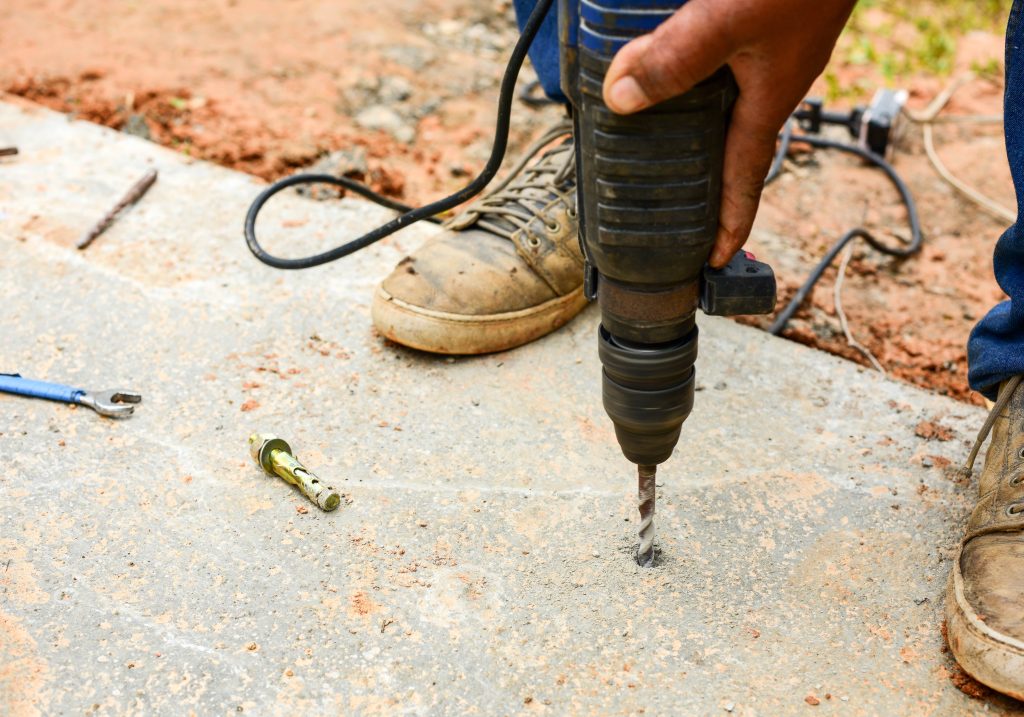
We drill small injection holes, about the size of a dime, and place polyurethane foam beneath the slab. The foam expands, fills voids, and raises the concrete in controlled stages. Most driveways can be driven on within about 15 to 30 minutes after the work.
Get a Free QuoteSidewalks and walkways often develop trip hazards when one slab sits an inch or more above its neighbor. Georgia's red clay soil shifts with heavy rain and dry spells, and tree roots can add to the movement.
Patios and porch slabs may tilt toward the house, which sends water against the foundation. Lifting them back to a proper slope helps drain water away from the structure.
Pool decks need extra care because settling can open gaps that let water wash soil from underneath. We level the deck and fill voids so the surface is safer to walk on.
| Surface | Common Problem | What We Correct |
|---|---|---|
| Sidewalks | Raised edges, trip hazards | Uneven slab heights |
| Patios and porches | Slope toward the house | Drainage direction |
| Pool decks | Gaps, sunken sections | Voids and level surface |
Polyurethane foam is injected directly beneath the concrete, into the space between the slab and the soil. It is used wherever a slab has lost support, whether from erosion, poor compaction, or soil that has settled.
Common injection locations include:
The foam is lightweight, resists moisture, and does not wash out the way some fill materials can. Because the injection points are small, we can usually patch them so they blend into the surface. Slabs that are crumbling or badly broken may need replacement instead, and we will tell you if that applies to yours.
Get a Free QuoteSunken or uneven slabs at business properties create trip hazards, drainage problems, and liability exposure that grow worse with daily use. We address these conditions at entrances, walkways, warehouse floors, and loading zones, and we match the lifting material and method to the load each slab carries.
Entrances and sidewalks see the most foot traffic of any slab on a commercial property. A raised edge of even half an inch at a joint can catch a shoe, a cane, or the wheel of a cart or wheelchair. Slabs that tilt toward a building can also direct rainwater against the foundation or doorway.
We lift these slabs by injecting closed-cell polyurethane foam through small holes, usually about 5/8 inch in diameter. The work is done in sections, so we can keep one entrance open while another is repaired. Most walkway repairs are finished in a few hours, and foot traffic can generally return within 15 to 30 minutes after injection.
Common storefront areas we correct include:
Warehouse slabs carry forklifts, pallet jacks, and racking. When soil beneath the slab settles or washes out, voids form, and the floor can crack or drop at the joints. Even a small elevation change can cause loads to shift or forklift wheels to jolt.
We use higher-density foam in these areas because it is formulated to support heavier loads. The foam fills voids and lifts the slab back toward its original grade, which helps restore a smooth travel path for equipment. Because injection holes are small and the foam cures quickly, we can often schedule work around your shifts to limit downtime.
Loading docks and truck aprons are a frequent concern. Repeated heavy wheel loads and water runoff can undermine the slab edge, so we check for voids along dock approaches and drainage paths.
Before we recommend a repair, we inspect the slab and the surrounding site. We measure how far each section has dropped, look for cracking, and check for signs of moving water, such as washout near downspouts or low spots where water collects.
Load requirements determine the foam density and injection pattern. The table below shows how we generally approach different areas:
Area | Typical Load | Our Approach |
Walkways and entrances | Foot traffic, carts | Standard-density foam, light injection pattern |
Parking pads | Passenger vehicles | Medium-density foam |
Loading docks and aprons | Delivery trucks | High-density foam, closer injection spacing |
Warehouse interiors | Forklifts, racking | High-density foam, void mapping |
Some slabs cannot be lifted successfully. If the concrete is badly crumbled or the soil problem is ongoing, we will tell you and explain whether replacement or drainage correction is the better path.
Lifting a settled slab restores a level, safe surface while keeping the concrete you already have in place. It also addresses the empty space under the slab that caused the settling, and it does so with less demolition, mess, and downtime than replacement.
A slab that has sunk even half an inch can create a trip hazard. Sidewalks, driveway aprons, and entry paths are the most common problem spots, and uneven edges can catch a shoe, a cane, or a wheelchair.
Raising the slab brings adjoining sections back to the same height, which removes the lip between them. This matters for property owners, because a documented trip hazard on a walkway can become a liability issue.
Lifting also helps with drainage. Sunken slabs often tilt toward a house, garage door, or building entrance, which sends water where it should not go.
Once the slab is raised, we can restore the intended slope so water runs away from structures. Garage floors, warehouse docks, and parking areas also become easier to use when carts, vehicles, and equipment roll across a flat surface.
Replacement means breaking up the old slab, hauling away debris, preparing the base, forming, pouring, and waiting for the new concrete to cure. That process can take days or weeks and often damages nearby landscaping.
Lifting works through small holes, typically about the size of a quarter, drilled into the existing slab. The material goes in through those holes, the slab rises, and the holes are patched.
The difference shows up in several practical ways:
Factor | Concrete Lifting | Full Replacement |
Typical work time | Often a few hours | Several days plus curing |
Return to use | Commonly within hours | Usually days to weeks |
Debris hauled away | Minimal | Large volume |
Landscaping disruption | Low | Moderate to high |
Cost is often lower as well, since you are not paying for demolition, disposal, and new material. The right choice still depends on the slab’s condition, and we will tell you if a section is too cracked or broken to lift.
Slabs settle because the soil beneath them has washed out, compacted, or shifted. This leaves voids, and a slab left over an empty space will keep sinking or cracking under load.
We use polyurethane foam, which is injected as a liquid and expands to fill those gaps. As it expands, it also compacts loose soil around the void and pushes upward on the slab until it reaches its target height.
Foam has a few properties that suit this work:
Because the material fills the void instead of only propping up the slab, the repair addresses the cause of the settling. If the underlying problem is ongoing, such as a leaking pipe or poor drainage, that issue should be corrected too, and we will point it out during our inspection.
A sunken slab rarely stays the same. Uneven edges create injury and liability concerns, trapped water speeds up soil loss, and small gaps grow into larger repair projects.
When one slab settles below its neighbor, the joint between them becomes a lip. Even a vertical offset of about 1/2 inch can catch a shoe, a cane, a walker, or the wheels of a delivery cart. Offsets of 1 inch or more are a common reason for falls on sidewalks, driveways, porch steps, and entry walkways.
For homeowners, the people at risk include children, older family members, and visitors who do not know where the uneven spots are. For business owners, the concern is wider. A customer who trips on a sunken parking lot apron or entrance walkway may bring an injury claim against the property owner.
Sunken slabs also create problems beyond walking:
Grinding a raised edge can reduce the lip, but it does not fix the void under the slab.
Concrete is designed to shed water away from a structure. When a slab settles, it can tilt toward your foundation instead. Rain then runs back against the house or building, or collects in low spots on the surface.
Standing water causes several issues:
In the Winder area, heavy summer storms and clay-rich soils add to the problem. Clay swells when wet and shrinks when dry, so a slab that already sits low will often keep moving as moisture levels change.
A void under a slab does not support the concrete above it. Each time a vehicle crosses a driveway or a heavy load sits on a patio, the unsupported area can crack or drop further. Cracks then let in more water, which removes more soil.
This cycle changes the repair options over time. A slab that has settled an inch or two and remains in one piece is often a candidate for lifting. A slab that has broken into several pieces may need to be removed and replaced.
Cost differences are significant:
Condition | Typical Repair Path |
Slab settled, still intact | Concrete lifting and leveling |
Slab cracked into sections | Lifting if pieces are stable, otherwise partial replacement |
Slab broken and heavily displaced | Demolition, soil correction, and new pour |
Replacement generally costs more than lifting and takes longer to complete because new concrete needs curing time. Addressing settlement early limits the amount of work required and keeps repair choices open.
Our crew is based in Winder, GA, and we plan every concrete lifting job around the property, the slab condition, and your schedule. Here is how we handle local service, repair planning, and the practical details of estimates and timing.
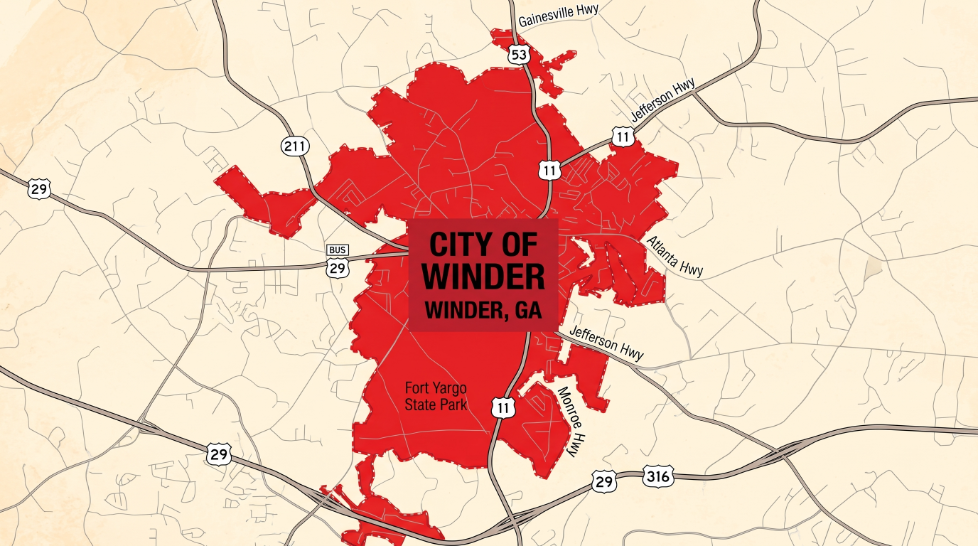
Based in Winder, GA, we provide concrete lifting and leveling throughout Barrow County and nearby areas, including Gainesville, Habersham, Gwinnett, and Jackson County. Our local experience with Georgia’s red clay soil, heavy rain, and seasonal moisture helps us address settling beneath driveways, sidewalks, patios, and garage floors. Contact us to confirm service availability outside these areas.
We tailor concrete lifting solutions to each property’s needs, whether addressing trip hazards and uneven driveways at homes or correcting loading zones, parking areas, and warehouse floors at businesses. We inspect the slab for settling causes such as soil erosion, poor compaction, and drainage issues before recommending the appropriate repair. We explain the proposed work and its purpose before getting started.
We provide a clear estimate detailing the affected slabs, recommended lifting method, and total cost based on slab size, voids, and required lift. Most concrete lifting projects are completed in a single visit, often within a few hours, with scheduling arranged around your availability. Sharing uneven areas, drainage concerns, and preferred appointment times helps us prepare for the estimate.
Each concrete lifting job at Georgia Insulation starts with a ground-level look at why the slab sank and ends with measured results and a clear return-to-use time. Between those points, we drill small holes, inject expanding polyurethane foam in controlled stages, and verify the elevation before we leave.
We begin by walking the property and examining the sunken slab, the surrounding soil, and any nearby drainage. In and around Winder, red clay soils shrink and swell with moisture, so we look for downspouts discharging near slabs, washed-out soil, and low spots where water collects.
We measure the height difference between slabs with a level and a ruler, then mark the areas that need to rise. We also check the slab itself for cracking, crumbling edges, or broken sections.
Lifting works best on slabs that are structurally intact. A slab that is badly fractured or has failed throughout may need replacement instead, and we tell you so before any work begins.
Our assessment typically covers:
Once the repair plan is set, we drill small injection holes, usually about the size of a dime or a nickel, in a planned pattern across the slab. The number and spacing depend on slab size and how much it needs to rise.
We insert a delivery port into each hole and inject high-density polyurethane foam beneath the slab. The foam expands as it cures, filling voids and pushing the concrete upward.
We work in small increments rather than forcing the slab up all at once. This staged approach gives us control over the lift and reduces the chance of cracking the concrete.
During injection, we:
Because the foam is lightweight, it adds little load to soil that is already soft.
After the final injection, we measure the slab again and compare it to the adjoining concrete. The goal is a flush, even transition, with the slab sloped to shed water away from your home or building.
We then remove the ports and fill each hole with a cement-based patch. The patch is small and may look slightly different in color at first, though it typically blends in as it weathers.
We also clean the work area and walk the finished surface with you, pointing out the final elevations.
Return to use is quick. Foam generally cures within about 15 to 30 minutes, so foot traffic can often resume the same day, and many vehicles can use the surface shortly after. We confirm the exact timing for your slab type and conditions before we leave.
We provide professional concrete lifting services in Winder, GA, and surrounding communities. Our team helps homeowners and businesses address sunken slabs, uneven walkways, and drainage issues with tailored solutions designed to restore stability and reduce further damage.
We offer inspections for properties throughout our service area. During this visit, we examine the affected concrete, assess the soil conditions beneath it, and identify the likely cause of settling or unevenness.
We recommend scheduling an evaluation as soon as you notice sinking or shifting concrete, since delays can allow the underlying soil issue to worsen.
Concrete lifting uses injected foam to raise sunken slabs, and it works on driveways, walkways, patios, and commercial lots in Winder and nearby communities. The answers below cover the method, the surfaces we repair, cost and risk factors, wait times, and what sets our crew apart.
We drill small holes, usually about the size of a dime, into the sunken slab. Through those holes, we inject a closed-cell polyurethane foam that expands and fills the voids beneath the concrete.
As the foam expands, it pushes the slab upward to its original height. We monitor the lift in small increments so the slab does not overshoot level. Once the slab is even, we patch the holes.
At homes, we lift driveways, sidewalks, patios, pool decks, garage floors, and steps. These areas often settle in Georgia because Piedmont red clay shifts with moisture changes and runoff washes soil out from under slabs.
For business owners, we raise parking lots, loading dock aprons, entrance walkways, and interior warehouse floors. Uneven commercial surfaces create trip hazards and can interrupt daily operations, so we plan the work around your hours when possible.
Lifting costs less than tearing out and pouring new concrete in most cases. It also avoids the demolition debris, heavy equipment, and long curing period that come with replacement.
The foam is lightweight, so it does not add stress to soil that is already weak. It is also water-resistant, which helps keep the void from refilling with washed-out soil. Your existing slab stays in place, so landscaping and nearby structures are less disturbed.
Raised edges create trip hazards, and a fall on your property can lead to injury and liability concerns. Water also collects in the gaps and low spots beside sunken slabs.
That water can wash out more soil, which makes the void larger and the slab more likely to crack. Drainage can also be directed toward a foundation instead of away from it. Repairing the slab early is usually simpler and less costly than waiting.
The foam cures quickly, and most slabs can handle foot traffic within minutes of the repair. Vehicles can typically use a lifted driveway or lot within about 15 to 30 minutes, depending on the foam and site conditions.
We tell you the specific wait time for your project before we leave, so you know when to move cars or reopen a walkway.
We work with spray foam every day, and we apply that experience to concrete lifting for homeowners and business owners in Winder and the surrounding areas. We know the local soil conditions that cause slabs to settle.
We inspect the slab, explain what caused the problem, and give you a clear estimate before work begins. Our crew cleans up the site when the job is done, and you can call us with questions about your project at any point.