
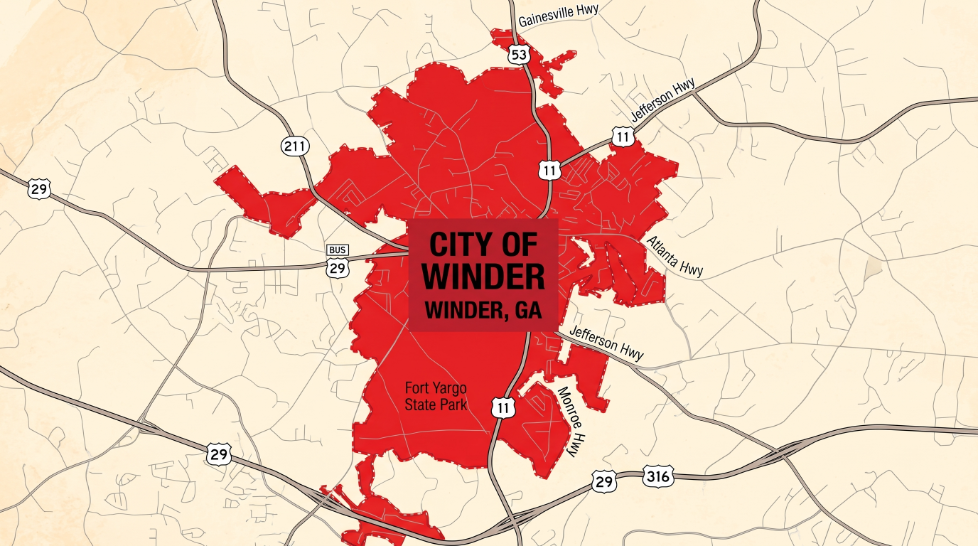
Metal buildings absorb and release heat quickly, which leads to high energy bills, uneven indoor temperatures, and condensation on ceilings and walls. At Georgia Insulation, we install metal building insulation in Winder, GA and the surrounding areas for warehouses, shops, retail spaces, worship buildings, and storage facilities.
Metal building insulation controls indoor temperature, reduces condensation, and lowers heating and cooling costs by slowing heat transfer through the steel roof and walls. Options include fiberglass blanket systems with a vapor barrier, liner systems, and spray foam, and the right choice depends on your building’s use, climate exposure, and budget.
On this page, we explain where insulation is applied in commercial buildings, the benefits you can expect, and the risks of leaving a metal structure uninsulated. We also outline our installation process and answer common questions from business owners.
Spray foam works best when the product, thickness, and placement match the part of the building being insulated. Roof decks, exterior walls, and residential structures each call for different foam types and application methods.
Roof decks are where most heat gain and loss happens in warehouses and workshops. Metal roof panels transfer heat quickly, and warm air meeting a cool underside causes condensation to drip onto inventory and equipment.
We typically apply closed-cell spray foam directly to the underside of the roof deck. It adheres to the metal, seals seams and fastener points, and acts as a vapor retarder in the same step.
Common applications include:
Thickness depends on your climate zone, building use, and energy goals. We assess each roof before recommending a depth.
Get a Free QuoteExterior walls in offices and retail buildings often have gaps around framing, windows, doors, and utility penetrations. Air leaks at these points raise heating and cooling costs and make temperatures uneven across the floor.
Spray foam fills these gaps as it expands and cures into an air-tight layer. For metal-framed walls, it also covers the girts and wall panels that would otherwise conduct heat.
Here is how the two foam types compare for wall applications:
| Foam Type | Best Use | Key Characteristic |
|---|---|---|
| Closed-cell | Exterior metal walls, areas exposed to moisture | Higher R-value per inch, acts as a vapor retarder |
| Open-cell | Interior partitions, sound control | Lower density, absorbs sound |
Retail spaces with large storefronts and frequent door openings benefit from an air barrier that limits drafts. Offices gain steadier indoor temperatures and quieter interiors.
Get a Free QuoteSpray foam applies to residential structures in much the same way. Attic roof decks, crawl spaces, rim joists, and wall cavities are common starting points for homeowners.
Garages and workshops attached to or separate from the house are frequent projects. Insulating them helps keep tools, vehicles, and stored items from experiencing extreme temperature swings. Metal outbuildings, including barns and storage sheds, also gain from closed-cell foam that limits condensation on the steel.
Typical residential applications include:
We match the foam type to the structure and how you use it.
Get a Free QuoteInsulating a metal building cuts the heat that moves through steel walls and roofs, which lowers energy use and keeps indoor conditions steadier. It also seals air leaks and controls moisture, which protects the structure, stored inventory, and the people who work inside.
Steel conducts heat quickly. On a summer afternoon in Georgia, an uninsulated metal roof can reach well over 150°F, and that heat moves straight into the space below. In winter, the same steel pulls warmth out just as fast.
Insulation slows that exchange. Closed-cell spray foam adds roughly R-6 to R-7 per inch, and because it bonds directly to the metal, it also reduces thermal bridging at purlins, girts, and fasteners.
With less heat moving through the shell, your heating and cooling equipment cycles less often and runs for shorter periods. That can lower monthly utility bills and reduce wear on compressors, fans, and furnaces.
Savings depend on the building size, use, and existing equipment, so we assess each structure before recommending an R-value target.
Uninsulated metal buildings tend to swing between hot and cold throughout the day. Spaces near the roofline run warmest, and areas along exterior walls often feel drafty in winter.
Insulation evens out those differences. Temperatures stay more consistent from floor to ceiling and from one end of the building to the other, which makes workspaces, showrooms, and storage areas easier to use.
Noise is another factor. Rain and hail on a metal roof can be loud, and foam or fiberglass layers absorb part of that sound. Equipment noise and outside traffic noise also carry less into the interior.
Practical results include:
Metal buildings have many seams, panel laps, and penetrations where air leaks in and out. Each leak carries heat, humidity, dust, and sometimes insects.
Condensation forms when warm, humid air touches a cold steel surface and turns to water. Left alone, it drips onto floors, inventory, and equipment, and it can lead to rust, mold, and damaged insulation.
Spray foam addresses both problems at once. It expands into gaps and seams to stop air movement, and a continuous layer on the underside of the panels keeps humid air from reaching the cold metal.
Fiberglass systems with a vapor barrier can also control moisture when the facing is sealed properly at every seam. We match the system to your building’s use, since a heated workshop and an unconditioned storage barn face different moisture risks.
Steel transfers heat and cold quickly, and warm interior air meets cold metal surfaces without a barrier. For business owners, that combination leads to higher utility bills, uncomfortable work areas, and damage to equipment and stored goods.
Steel conducts heat far faster than wood or masonry. In a Georgia summer, a bare metal roof absorbs solar heat and radiates it into the building. In winter, the same panels pull warmth out of the space.
The result is an interior that tracks outdoor temperatures closely. Workers lose comfort and productivity, and HVAC equipment runs longer to keep up.
Common cost impacts include:
Air leakage through seams and fasteners adds to the load. Without a continuous insulation layer, conditioned air escapes and unconditioned air enters, which keeps your system working harder than it should.
When warm, humid air touches a cold metal surface, water condenses. This is common in Georgia, where humidity is high for much of the year. In an uninsulated building, that condensation forms on the underside of the roof and walls.
The water drips onto floors, equipment, and stored products. Over time, it also attacks the building itself.
Moisture problems typically show up as:
Repairing corrosion and replacing damaged stock costs more than most owners expect. Because the damage develops gradually, it often goes unnoticed until panels need repair or goods are lost. A continuous insulation layer keeps interior air away from cold metal, which reduces condensation at its source.
Metal buildings are prone to condensation. Warm, humid indoor air meets cold steel, and moisture forms on the panels and drips onto floors, stock, and equipment.
Closed-cell spray foam seals air leaks and creates a barrier that keeps humid air from reaching the cold metal surface. This limits the moisture that leads to:
Sealing gaps around panel seams, eaves, and penetrations also keeps out dust, pests, and unconditioned air. A tighter shell helps your HVAC system hold temperature and humidity levels more reliably.
We are a licensed, locally operated insulation company with more than 35 years of industry experience, and we focus on spray foam for metal buildings. Our approach combines nearby service, planning based on how your building is used, and a clear scope of work before we start.
We serve Winder, Gainesville, Atlanta, and surrounding areas, providing insulation solutions suited to local climate conditions and metal building needs. As a BBB-accredited company since January 2022, we offer convenient site visits and follow-up support for warehouses, workshops, pole barns, retail, and industrial properties.
We tailor metal building insulation to your business needs, considering energy efficiency, condensation control, noise reduction, and stored goods protection. We evaluate suitable options, including spray foam, batt, blown-in, fiberglass, mineral wool, and cellulose, to find the right fit for your building and budget.
We provide free quotes outlining insulation coverage, materials, and project timelines. Our process includes a site assessment, written estimate, coordinated installation, and final walkthrough, with removal of existing insulation included in the scope when needed. For questions or scheduling, call (706) 795-2854.
Each metal building project starts with an inspection of the structure, followed by a material and thickness selection based on code and climate. From there, we plan site preparation around your operating schedule and finish with controlled installation and a reoccupancy review.
We begin with a walkthrough of your building. We look at the roof panels, wall girts, purlins, fasteners, and any existing insulation, such as fiberglass blankets that may be sagging or wet.
We also check for signs of condensation, rust, roof leaks, and air gaps at panel seams, since these affect how the foam should be applied.
Then we ask what you want the building to do. Common goals include:
We record the building’s dimensions, use, and occupancy hours. This gives us a clear scope before we recommend anything.
Foam choice depends on the building’s use and the surface being insulated. Closed-cell spray foam adds a higher R-value per inch and works as a vapor retarder, which suits roofs and walls prone to condensation. Open-cell foam costs less and offers more sound dampening, but it is better suited to dry interior applications.
Factor | Closed-Cell | Open-Cell |
Approximate R-value per inch | 6 to 7 | 3.5 to 4 |
Moisture resistance | High | Low |
Typical use in metal buildings | Roofs, exterior walls | Interior partitions, sound control |
Thickness is set by the R-value your building needs. Georgia falls in a mixed-humid climate zone, so the target varies by roof, wall, and building use.
Many commercial buildings also need a thermal barrier or ignition barrier over exposed foam. We confirm what your local code requires before we finalize the plan.
Spray foam application creates overspray and fumes, so preparation matters. We cover or remove items near the work area, including inventory, equipment, vehicles, and finished surfaces. If you can move stock ahead of time, the job goes faster.
We also clean the substrate. Dust, oil, moisture, and loose rust can keep foam from bonding, so we clear or treat them first.
Scheduling is a practical concern for business owners. Options include:
We confirm the schedule with you before we mobilize. Weather matters too, because foam needs suitable surface and air temperatures, and we adjust the date if conditions are not right.
Our crew applies foam in controlled passes, building up to the planned thickness. We monitor surface temperature, material ratios, and coverage as we work, and we seal seams, penetrations, and edges where air leaks tend to occur.
During application, we use protective equipment and keep unprotected people out of the work area. Ventilation is run throughout the job to move vapors out of the space.
After installation, the foam needs time to cure and off-gas. We provide reoccupancy guidance based on the product manufacturer’s instructions, which typically specifies a waiting period and continued ventilation before staff return.
We inspect the finished work for uniform thickness, gaps, and areas that need touch-ups. Then we walk the building with you and review what was installed.
We provide metal building insulation services in Winder, GA, and surrounding areas, helping businesses improve energy efficiency, control indoor temperatures, and reduce moisture-related issues. From warehouses and agricultural buildings to commercial and industrial facilities, we tailor insulation solutions to your building’s needs and Georgia’s climate.
We schedule consultations promptly and work around your business hours to minimize disruption to daily operations.
The right insulation depends on your building’s use, climate exposure, and moisture risk. Cost, installation time, and retrofit options all vary based on building size and the system you choose.
For most commercial metal buildings in Georgia, we recommend closed-cell spray foam. It bonds directly to the metal panels, creates an air seal, and acts as a vapor barrier in a single application.
Fiberglass with a vapor barrier is a lower-cost option and works well for some buildings. It does not seal air gaps the way spray foam does, so performance depends heavily on installation quality.
Cost depends on the square footage of the roof and walls, the insulation type, and the thickness you need. Spray foam typically costs more upfront than fiberglass, but it can reduce heating and cooling expenses over time.
We provide a written estimate after reviewing your building’s size, current condition, and goals. Contact us for a quote specific to your property.
Yes. Condensation forms when warm, humid air meets cold metal surfaces. Closed-cell spray foam bonds to the metal and removes that contact point, which stops moisture from forming on the panels.
This matters in Georgia, where humid summers can cause drips, rust, and damaged inventory in uninsulated buildings.
Yes. We insulate existing metal buildings regularly, including warehouses, shops, barns, and storage facilities.
Spray foam can be applied directly to the underside of the roof deck and wall panels without removing them. We inspect the surfaces first and address any rust or leaks before application.
Metal conducts heat quickly, so an uninsulated building gains heat in summer and loses it in winter. Insulation slows that transfer and keeps indoor temperatures steadier.
Spray foam also seals gaps around seams, fasteners, and panel edges where conditioned air escapes. Your HVAC system runs less often as a result, which lowers energy use.
Most projects take one to several days. The timeline depends on building size, insulation type, and how much surface prep is needed.
Small buildings can often be completed in a day or two. Larger warehouses take longer, and we will give you a schedule before work begins.