
Attic Insulation Monroe, GA

Rated 5.0 on Google Reviews
Rated 5 out of 5

Seal Out Heat Loss and Slash Energy Bills

Attic insulation in Monroe, GA slows the transfer of heat between your attic and the living space below, which lowers cooling costs in summer and heating costs in winter. At Georgia Insulation, we install attic insulation, including blown-in fiberglass and spray foam, for homes and commercial buildings in Monroe, GA and the surrounding areas. Most heat loss and heat gain in a building happens through the roof and ceiling, so the attic is often the best place to start.

Many properties in Walton County have attic insulation that has settled, thinned out, or been damaged by moisture or pests. Uneven coverage can leave some rooms hard to keep comfortable and force your HVAC system to run longer than it should. Humidity in Georgia can also lead to moisture problems in poorly insulated attics.

We work with homeowners and business owners to assess the current insulation, recommend the right material, and complete the installation. On this page, we cover where spray foam fits in different parts of a building, the benefits of proper insulation, the risks of leaving an attic under-insulated, and how our process works.

Spray Foam Applications for Homes and Commercial Buildings

Spray foam performs different jobs depending on where it goes: sealing and insulating attic spaces, blocking air and moisture in walls and crawl spaces, and forming continuous protection on commercial roofs and building envelopes. We match the foam type and thickness to the surface and the conditions around it.

🏠

Attic Floors and Roof Decks

Attics are where most homes in Monroe lose conditioned air, so we treat them first. We can apply foam in two ways: on the attic floor between the ceiling joists, or on the underside of the roof deck.

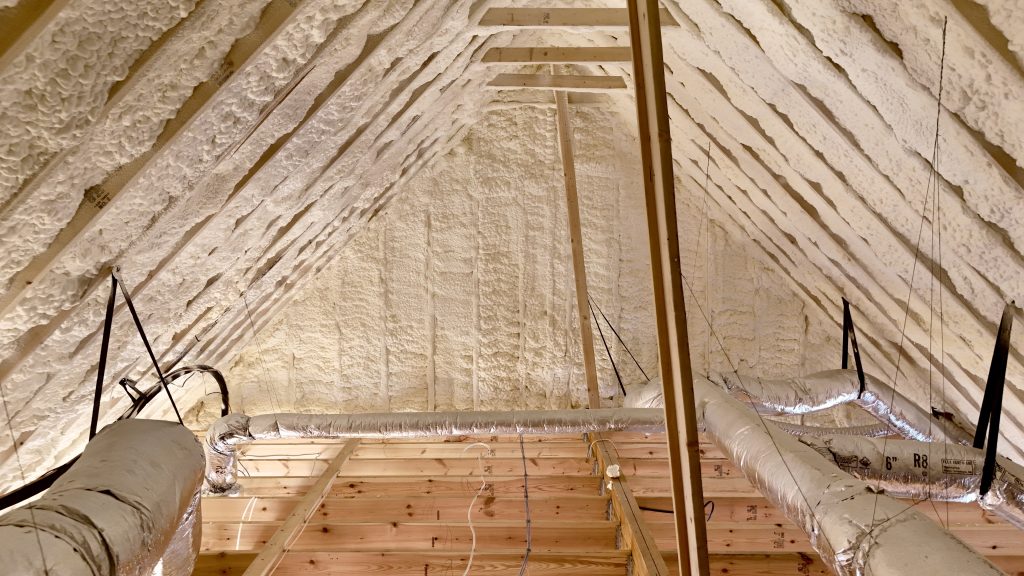
Open-cell foam is common for roof decks. It expands to fill rafter bays and seals gaps around vents, wiring, and framing. Closed-cell foam is denser, adds rigidity, and gives a higher R-value per inch, which helps where rafter depth is limited.

Foaming the roof deck moves the attic inside the thermal boundary of the home. That keeps ductwork and HVAC equipment in a more stable temperature range, which matters during hot Georgia summers.

We assess existing insulation, roof condition, and ventilation before choosing an approach.

Get a Free Quote
🧱

Exterior Walls and Crawl Spaces

In wall cavities, spray foam seals around studs, outlets, and top and bottom plates, where air often leaks. This works well in new construction before drywall goes up, and in renovations where walls are open.

Crawl spaces call for a different approach. We typically use closed-cell foam on crawl space walls or the underside of the floor system because it resists moisture and does not absorb water.

Location Typical foam type Main purpose
Wall cavities Open-cell or closed-cell Air sealing and insulation
Crawl space walls Closed-cell Moisture resistance and insulation
Under floor systems Closed-cell Insulation and air sealing

Crawl spaces with active water intrusion or standing water need that problem corrected before foam is applied.

Get a Free Quote
🏢

Commercial Roof Assemblies and Building Envelopes

Commercial buildings often have large roof areas, metal decks, and masonry walls. Spray polyurethane foam bonds directly to these surfaces and forms a seamless layer without the joints found in board insulation.

On roofs, closed-cell foam can serve as both insulation and a base for a protective coating. On the building envelope, it can be applied to masonry walls and metal building panels to reduce air leakage and limit condensation.

Common commercial uses include:

  • Warehouses and distribution buildings
  • Retail and office spaces
  • Churches and schools
  • Agricultural and storage buildings

We review the building's use, roof type, and local code requirements before recommending a system, so the application fits how the space operates.

Get a Free Quote

Benefits of a Properly Insulated Attic

A well-insulated attic slows the movement of heat in and out of your building, which lowers energy use and keeps rooms at steadier temperatures. It also reduces air leakage and eases the workload on your heating and cooling equipment.

Reduced Heat Transfer and Energy Waste

Heat moves from warm areas to cool ones. In winter, warm air rises through the ceiling and escapes into the attic. In summer, a hot roof radiates heat down into the living space below.

Attic insulation places a thermal barrier between those two zones. The U.S. Department of Energy estimates that sealing air leaks and adding insulation can save a typical home about 15 percent on heating and cooling costs, though results depend on your building’s age and current condition.

For Georgia properties, summer heat is the larger concern. Attic temperatures can climb well above 120°F on hot afternoons, and uninsulated ceilings pass much of that heat into the rooms below. Added insulation cuts that transfer, so your cooling system uses less electricity to hold its set temperature.

More Consistent Indoor Temperatures

Uneven temperatures are a common complaint in buildings with thin or settled attic insulation. Upstairs rooms run hot in summer and cold in winter, while lower floors feel different.

Proper insulation narrows those gaps. The ceiling surface stays closer to room temperature, so you feel less radiant heat overhead and fewer cold drafts sinking from above.

Consistent temperatures matter in both homes and commercial spaces:

  • Homes: Bedrooms and second-floor rooms stay comfortable without constant thermostat changes.
  • Offices and retail: Staff and customers experience fewer hot or cold spots across the floor.
  • Storage areas: Stock and equipment face smaller temperature swings.

Improved Air Sealing and HVAC Performance

Attics often contain gaps around recessed lights, plumbing stacks, wiring penetrations, and duct boots. Conditioned air leaks through these openings, and unconditioned attic air leaks back in.

Spray foam insulation fills these gaps as it expands, combining insulation and air sealing in one step. This reduces drafts and helps limit dust, humidity, and pollen from entering the living space.

Less air loss also reduces the strain on your HVAC system. Equipment runs fewer and shorter cycles, which can lower wear on compressors and blowers. Ducts running through a sealed, insulated attic also lose less heat or cooling before air reaches the vents.

Risks of Missing or Inadequate Insulation

Gaps or thin coverage in an attic let heat and air move freely between your living space and the outdoors. The result shows up in your utility bills, in how each room feels, and in how moisture behaves inside your roof and ceiling.

Higher Heating and Cooling Costs

Heat moves from warm areas to cool ones. In winter, warm air from your living space rises into an under-insulated attic and escapes through the roof. In summer, a hot attic transfers heat down through the ceiling into your rooms.

Your HVAC system then runs longer to hold the temperature you set. Georgia summers put heavy demand on air conditioning, so a poorly insulated attic can raise cooling costs for months at a time.

Common causes of this waste include:

  • Insulation that is thinner than recommended for our climate zone
  • Compressed or settled material that no longer performs as rated
  • Bare spots around hatches, vents, and light fixtures
  • Gaps where ceiling penetrations were never sealed

We see the same pattern in commercial buildings. Larger attic or roof areas mean more surface for heat transfer, so the cost of inadequate insulation grows with building size.

Inadequate insulation rarely affects a whole house evenly. Rooms directly below thin or missing insulation tend to run hotter in summer and colder in winter than rooms elsewhere.

You may notice:

  • A bedroom or upstairs room that never reaches the thermostat setting
  • Ceilings that feel warm to the touch on hot afternoons
  • Cold drafts near ceiling fixtures or attic access panels
  • A thermostat that cycles often without improving comfort

Raising or lowering the thermostat does not fix the cause. It only asks the system to work harder against a heat flow that continues around it.

Sound can also be a clue. Outside noise that carries easily into upper rooms, or echoes that seem stronger than normal, sometimes point to missing insulation.

Warm, humid air from your living space leaks into the attic through gaps around wiring, plumbing, recessed lights, and the attic hatch. When that air meets cold roof sheathing or framing in cooler months, the moisture it carries can condense on those surfaces.

Repeated condensation can wet the insulation that is present and reduce how well it works. Over time, damp wood and insulation can support mold and mildew growth and, in some cases, contribute to rot in framing.

Air sealing and proper insulation depth work together to limit this problem. Insulation slows heat flow, while sealing the leaks stops moist air from reaching cold surfaces. If you have noticed damp spots on ceilings, stained rafters, or a musty smell from the attic, we recommend having the space inspected.

Choosing the Right Insulation Approach

The right attic insulation depends on the type of spray foam, the condition of what is already in your attic, and how the space handles air and moisture. We evaluate all three before recommending a product, because a mismatch in any one of them can reduce performance or create problems later.

Open-Cell Versus Closed-Cell Spray Foam

Open-cell and closed-cell foam behave differently, and each suits specific attic designs.

Feature

Open-Cell

Closed-Cell

Typical R-value per inch

About 3.5 to 3.7

About 6 to 7

Moisture resistance

Absorbs vapor

Resists liquid water and vapor

Rigidity

Soft, flexible

Hard, adds some structural stiffness

Cost

Lower

Higher

Open-cell foam works well in conditioned (unvented) attics where roof decking stays dry and you want a lower cost per square foot. It also dampens sound.

Closed-cell foam fits attics with limited rafter depth, since it delivers more R-value in less thickness. We also recommend it for commercial buildings with metal roofs or where condensation risk is higher.

Existing Insulation and Building Conditions

What is already in your attic affects both the method and the price. We inspect the space before quoting.

Items we check:

  • Type and depth of current insulation (fiberglass batts, loose-fill, or older materials)
  • Signs of compression, water staining, or mold on insulation and framing
  • Evidence of pest activity, such as droppings or nesting
  • Roof leaks, damaged decking, or failed flashing
  • Air leaks around light fixtures, chimneys, and duct penetrations

Insulation that is wet, moldy, or contaminated by pests should be removed rather than covered. Dry fiberglass in good condition can sometimes stay in place if we add a different layer on top or air-seal beneath it.

Building type matters too. A residential attic with standard joist spacing offers different options than a commercial roof deck with steel framing or a large open span.

Ventilation, Moisture Control, and Safety Requirements

Georgia’s humid climate makes moisture management a central part of any attic project. Spray foam applied to the underside of the roof deck creates an unvented, conditioned attic, so existing soffit and ridge vents are typically sealed or no longer relied on. This approach must meet local building code and the foam manufacturer’s installation requirements.

If we install blown-in or batt insulation on the attic floor instead, ventilation stays essential. Baffles keep airflow open at the eaves, and we avoid blocking soffit vents.

Safety also shapes how we work:

  • Combustion appliances and flues need proper clearance from foam and insulation.
  • Recessed lights must be rated for insulation contact, or enclosed.
  • During spray foam application, the home or building should be vacated for the re-entry period the manufacturer specifies, commonly 24 hours or longer.

We confirm these requirements with you before work begins.

Why Choose Georgia Insulation

We are a Georgia-based insulation contractor that installs attic insulation for homes and commercial buildings. Our work is local, our materials are matched to your attic, and our recommendations come from what we find on site.

Local Service in Monroe, GA, and Surrounding Areas

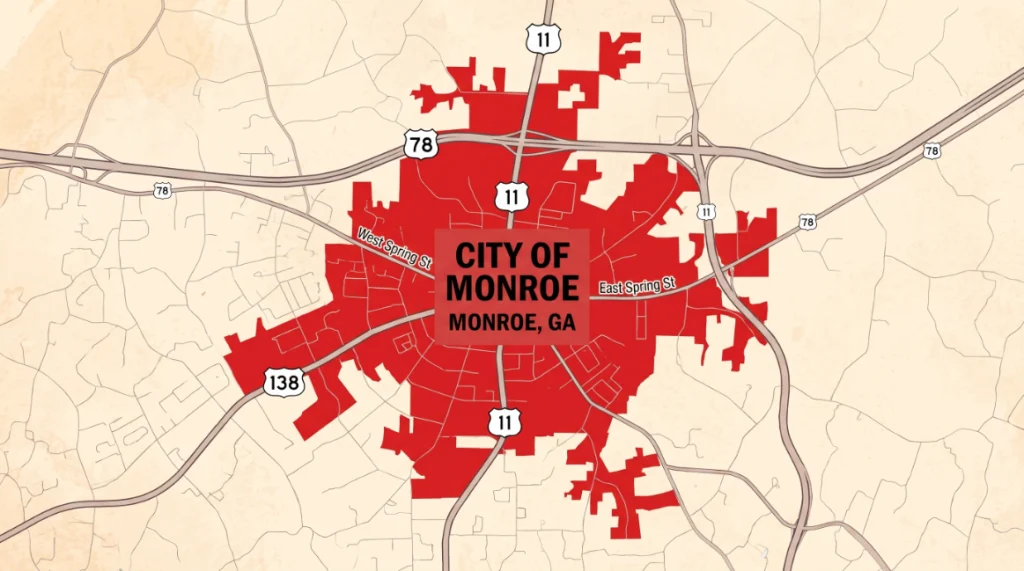
We serve Monroe and nearby communities across Walton, Newton, Barrow, and Jackson counties. Our local experience helps us address Georgia's attic insulation challenges, including heat buildup, humidity, and ventilation concerns. We also offer convenient scheduling, familiarity with local home styles, and BBB-accredited service.

Solutions for Homeowners and Business Owners

We install attic insulation for residential and commercial properties using spray foam, blown-in fiberglass, cellulose, fiberglass batts, and mineral wool. Our services also include insulation removal and replacement, insulation capping, and crawl space encapsulation to improve energy efficiency, comfort, and moisture control.

Project Recommendations Based on Your Building

We inspect your attic's insulation depth, air leaks, moisture, pest damage, and ventilation before recommending a solution. Based on our findings, we may suggest additional insulation, air sealing, insulation replacement, or spray foam at the roofline. We explain our recommendations and costs so you can choose an option that fits your needs and budget.

From Initial Assessment to Completed Installation

Every attic project we handle in Monroe and the surrounding Georgia communities follows the same sequence: an inspection and written estimate, preparation of the work area, installation with measured checks, and a final review with you. Each stage has a defined purpose, so you know what is happening and what comes next.

01 Attic Inspection and Project Estimate

We start with a visit to your home or building, usually 45 to 90 minutes depending on size. Our technician checks the existing insulation type and depth, looks for air leaks around wiring, plumbing penetrations, and recessed lights, and inspects the roof deck for moisture or staining.

We also review ventilation, since soffit and ridge vents affect how well the attic manages heat and humidity in Georgia summers. Any damaged, wet, or pest-contaminated material is noted for removal.

After the inspection, you receive a written estimate that lists:

  • The recommended insulation type and target R-value
  • Square footage to be covered
  • Air sealing and ventilation work, if needed
  • Removal of old material, if required
  • Total cost and expected timeline

We explain each line item and answer questions before you decide.

Once you approve the estimate, we schedule the work and confirm access to the attic, a power source, and a parking spot for our truck. Most residential attics take one day, while larger commercial roofs may take several.

On the day of installation, we cover floors, furniture, and walkways along our path to the attic hatch. We install baffles at the eaves to keep vents clear, and we set up lighting and temporary walkways to protect the ceiling below.

If old insulation needs to go, we remove it with a vacuum system before anything new is installed. We also mark the electrical boxes, chimneys, and flues that require clearance.

For spray foam, we ask that you and your pets stay out of the work zone and that occupants of the building plan around the application schedule.

Our crew begins with air sealing. We close gaps around wires, pipes, top plates, and ceiling penetrations using sealant or foam, because air leaks can reduce the performance of insulation placed on top.

Next, we apply the insulation to the depth specified in your estimate. Blown-in materials are spread evenly, and spray foam is applied in controlled passes to reach the stated thickness.

During and after application, we check:

  • Depth: measured at several points with marked depth rulers
  • Coverage: no gaps near edges, corners, or around obstructions
  • Clearances: vents, flues, and fixtures kept free of material
  • Attic hatch: insulated and weatherstripped

We correct any thin or missed areas before cleanup begins.

When the work is done, we walk through the attic with you or show you photos of the finished space. You can see the installed depth markers, the sealed penetrations, and the clear vent paths.

We then clean the work area, remove debris and equipment, and leave you with documentation that lists the material installed, the R-value, and the coverage area. Product warranty details are included.

For spray foam, we advise on the cure period before people and pets return to the affected space. Following the manufacturer’s timing, and ventilating as directed, is important. For blown-in insulation, you can generally return to normal use of the home right away.

We also suggest what to watch for in the weeks after installation, such as changes in room temperature consistency, and invite you to contact us with any questions.

Serving Monroe, GA and surrounding areas

We provide professional attic insulation services in Monroe, GA, and surrounding communities. Our team delivers tailored insulation solutions for homes and businesses to improve energy efficiency, control moisture, and maintain comfortable indoor temperatures year-round.

Testimonials

Posted on Google Google
Cara Tiesler profile picture
Cara Tiesler
Google star 1Google star 2Google star 3Google star 4Google star 5Trustindex verifies that the original source of the review is Google.
Georgia Insulation saved the day and our house! Breanna promptly answered my call, which was at the end of the work day, and listened to me freak out about being down to the wire and in need of insulation. She jumped right on the request and worked diligently with Jason to get me on the schedule asap. We cannot thank them enough for saving us! The installers were kind, professional and early… who is early these days?! We were very impressed by Breanna, Jason, and the rest of the team at Georgia Insulation. Don’t hesitate to work with this company, they actually care about their clients and don’t over promise (unlike the company that blew us off a day before they were scheduled to Install because they over promised and under delivered). So again, if you need a super reliable and professional insulation company, reach out to Breanna at Georgia Insulation, and she will get you taken care of! Thanks again for helping us!!
Posted on Google Google
Mary Jane profile picture
Mary Jane
Google star 1Google star 2Google star 3Google star 4Google star 5Trustindex verifies that the original source of the review is Google.
Fast friendly service
Posted on Google Google
jeff schmitt profile picture
jeff schmitt
Google star 1Google star 2Google star 3Google star 4Google star 5Trustindex verifies that the original source of the review is Google.
I can say enough great things about the people and my experience with Georgia Insulation. Terra came out and gave a thorough evaluation and quote for open cell foam insulation for our home. The quote was reasonable, and for the amount of work to be done, I thought it was a great deal. Edwin and his crew were awesome and entertaining. They removed all of the existing insulation in the attic and completely covered the underside of the roof with open cell foam. I’ve waited about 2 months to write this review, as I wanted to share energy savings. Last month bill was $106 less than the previous year, same month. The part about that blew me away, was last years June was a very mild June and this June has been quite hot. That being said, I feel very confident I will see a return on my investment. I highly recommend Georgia Insulation and Terra Schaefer and team.
Posted on Google Google
Allene Hoff profile picture
Allene Hoff
Google star 1Google star 2Google star 3Google star 4Google star 5Trustindex verifies that the original source of the review is Google.
The consultant was very good. He explained and answered all my questions concerning my problem. They were very prompt in coming out and the two young men, Edward and Ulises were very friendly and very professional. They took care not to get anything on my floors. They also cleaned up after the job was done. I would certainly recommend this company.
Posted on Google Google
Frank Armatti profile picture
Frank Armatti
Google star 1Google star 2Google star 3Google star 4Google star 5Trustindex verifies that the original source of the review is Google.
Ga insulation came to my home and insulated with close cell foam underneath my floor. Techs needed a second access to get to 2 bedrooms which I was not able to provide while they were here . The room temperatures were at 73 where they had sprayed and where they didn’t was at 59! I am excited that they are returning to finish now that I have the access they needed . The workers were excellent and very professional.This made such a difference in my heating now that the heat shuts off when needed to! Georgia Insulation is a top notch company providing a great service for a very fair price! My best decision ever!
Posted on Google Google
Will Brown profile picture
Will Brown
Google star 1Google star 2Google star 3Google star 4Google star 5Trustindex verifies that the original source of the review is Google.
Posted on Google Google
Chris Jones profile picture
Chris Jones
Google star 1Google star 2Google star 3Google star 4Google star 5Trustindex verifies that the original source of the review is Google.
Great service, fast, and good communication.
Posted on Google Google
Luke Thomas profile picture
Luke Thomas
Google star 1Google star 2Google star 3Google star 4Google star 5Trustindex verifies that the original source of the review is Google.
Great job. On time. Left place nice & clean. This is second job. I will definitely use them on the next one. Thanks All
Posted on Google Google
JC Ammons profile picture
JC Ammons
Google star 1Google star 2Google star 3Google star 4Google star 5Trustindex verifies that the original source of the review is Google.
Did an excellent job insulating our new construction. Good communication and clean work.
Posted on Google Google
James Morris profile picture
James Morris
Google star 1Google star 2Google star 3Google star 4Google star 5Trustindex verifies that the original source of the review is Google.
Georgia Insulation do excellent work and are a great bunch of people to work with. I highly recommend them and will use them again.

Schedule Your Attic Evaluation

We start every project with an on-site evaluation. This lets us check current insulation levels, identify air leaks, and measure attic conditions before recommending a solution.

Our team inspects insulation type, depth, and coverage across the attic space. We also look for signs of moisture, pest activity, or ventilation issues that could affect performance.

After the evaluation, we provide a written estimate outlining the recommended insulation type and expected coverage. Scheduling is straightforward: call us or submit a request through our website, and we will arrange a convenient time to visit your property in Marietta or one of the surrounding communities we serve.

Frequently Asked Questions

Attic insulation pricing, recommended R-values, material choices, warning signs, and installation steps all affect how well an attic performs in Georgia’s climate. The answers below cover each of these points for homeowners and business owners in Monroe and nearby areas.

How much does attic insulation cost in Monroe, GA?

Cost depends on the material, the attic’s square footage, and the existing insulation that needs to be removed or topped up. Blown-in fiberglass and cellulose typically run about $1.00 to $2.50 per square foot installed.

Spray foam costs more per square foot but also provides air sealing. In the Monroe area, open-cell spray foam generally falls between $1.00 and $1.60 per board foot, and closed-cell between $1.60 and $2.60 per board foot.

We provide a written estimate after inspecting your attic, so you see the exact figure before any work begins.

Georgia falls in climate zones 2 and 3, and the current energy code calls for R-38 to R-49 in attics. Most homes in Monroe perform best at R-38 or higher.

R-value measures resistance to heat flow, so a higher number means less heat moves through the ceiling. In practice, R-38 equals roughly 12 to 13 inches of blown-in fiberglass, while R-49 needs about 16 inches.

If your attic currently sits below R-30, adding insulation usually produces a noticeable change in cooling costs.

Spray foam works well in many attics because it insulates and seals air leaks in a single application. It expands to fill gaps around wiring, vents, and framing that other materials can miss.

Closed-cell foam adds moisture resistance and structural rigidity. Open-cell foam costs less and gives good sound dampening.

Spray foam is not the right fit for every attic. Budget, roof design, and ventilation needs all play a role, and we will tell you when blown-in insulation is the more practical option.

Several symptoms point to insulation that is thin, compressed, or damaged:

  • Utility bills that climb during summer or winter without a change in usage
  • Rooms that stay hotter or colder than the rest of the building
  • Insulation that looks flattened, damp, or discolored
  • Visible ceiling joists, which suggests the insulation is below joist height
  • Evidence of pests, such as droppings or nesting material
  • Ice dams or uneven snow melt on the roof in colder weeks

Any one of these is a reason to have the attic inspected.

In homes, proper insulation reduces the workload on your HVAC system, which lowers energy bills and helps rooms hold a steady temperature. It can also cut down on outside noise and limit dust and humidity entering living spaces.

Commercial buildings see similar gains, with the added benefit of more consistent comfort for employees and customers. Lower cooling demand also helps control operating costs across large floor areas.

In both cases, insulation also protects the roof structure by reducing temperature swings and moisture buildup.

We start with an inspection of your attic’s current insulation, ventilation, and air leaks. From there, we give you a written quote and recommend a material that matches your building and budget.

On installation day, we clear and prepare the work area, seal air leaks, and remove damaged insulation if needed. We then install the new material to the target R-value and check coverage and depth.

Before we leave, we clean up the area and walk you through the finished work.