
Pole barn insulation in Monroe, GA controls temperature, limits condensation, and protects the building and its contents from moisture damage. Metal-roofed post-frame buildings gather heat in summer and collect condensation in cooler months, which can lead to rust, mold, and wet stored equipment. Insulating the roof and walls with spray foam or another suitable material is the most direct way to stabilize temperatures and keep moisture from forming inside a pole barn.
At Georgia Insulation, we insulate pole barns, workshops, garages, storage buildings, and commercial structures for homeowners and business owners in Monroe and the surrounding areas. Spray foam works well in post-frame buildings because it seals gaps, adds insulation value, and acts as a moisture barrier in a single application. We also use other insulation types when they suit the building, its use, and your budget.
This page explains where we apply spray foam in homes and commercial buildings, the benefits you can expect, and the risks of leaving a pole barn uninsulated. It also covers our process and answers common questions, so you can decide what fits your property.
The right spray foam type and thickness depend on where it goes: roof decks need moisture control, walls need air sealing, and attics and crawl spaces need a different approach. We install both open-cell and closed-cell foam across Monroe, GA and nearby areas, matched to how each building is used.
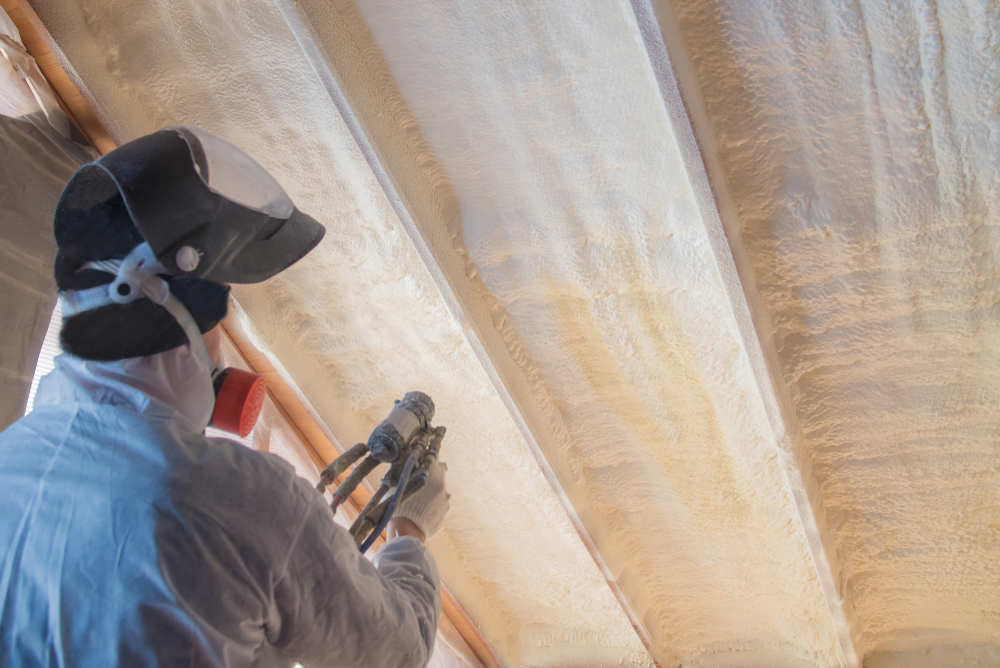
Metal roof decks are the most common trouble spot in a pole barn. Warm, humid Georgia air meets the cool underside of the steel and forms condensation, which then drips onto stored items and framing. Closed-cell foam sprayed directly to the underside of the roof deck creates an air and vapor barrier that stops this.
For exterior walls, we spray between the girts or posts and over the wall panel's interior surface. Foam bonds to the metal and fills the gaps around fasteners and panel seams.
Here is how we typically approach each surface:
| Surface | Common Foam Type | Typical Purpose |
|---|---|---|
| Roof deck | Closed-cell | Condensation control, air sealing |
| Exterior walls | Closed-cell or open-cell | Air sealing, temperature control |
| Ridge and eave gaps | Closed-cell | Sealing air and pest entry points |
Detached garages and workshops often have uninsulated walls and a single-layer roof, which makes them hot in summer and cold in winter. Spray foam seals the gaps around overhead doors, wall plates, and rafters that let in dust and outdoor air.
We commonly insulate:
Closed-cell foam is a good fit where moisture is a concern. Open-cell foam works in enclosed, drier spaces and generally costs less per board foot.
Get a Free QuoteCommercial buildings have larger surface areas, higher ceilings, and different usage needs. A warehouse that stores inventory needs steadier temperatures and less condensation, while an equine or livestock building needs controlled humidity and good ventilation planning.
We insulate:
Our crew schedules work around your operations to limit disruption. We also coordinate with ventilation needs so the foam does not trap moisture in animal housing. Pest management is a factor in agricultural settings, so we discuss sealing and gap treatment before we begin.
Get a Free QuoteSpray foam is not limited to barns and shops. In homes, we insulate attic roof decks, rim joists, crawl space walls, and cathedral ceilings.
In attics, foam applied to the underside of the roof deck turns the attic into a conditioned space, which keeps ducts and equipment at a more stable temperature. In crawl spaces, closed-cell foam on the walls and rim joist reduces moisture and drafts from below.
Other places we commonly apply foam include:
Open cavities are required for installation, so existing finished walls may need other solutions. We review each space before recommending a foam type.
Get a Free QuoteA well-insulated pole barn holds steadier temperatures, wastes less conditioned air, and keeps moisture from collecting on metal and framing. Each of these changes affects how comfortable the space is and how long the building and its contents last.
Uninsulated metal panels pick up heat quickly in summer and lose it just as fast in winter. Inside, that shows up as hot afternoons, cold mornings, and sharp swings between day and night.
Insulation slows heat transfer through the roof and walls, so the interior stays closer to a set temperature. We see the difference most in workshops, garages, and storage areas where people spend hours at a time.
Steadier temperatures also help what you keep inside:
Pole barns often have gaps at panel seams, eaves, door frames, and wall-to-roof connections. Conditioned air escapes through these openings, and outdoor air comes in to replace it.
Closed-cell spray foam seals these gaps while it insulates, which addresses air leakage and heat transfer in one step. Fiberglass and rigid board can also work, but they depend on careful installation and taping to limit air movement.
With less air escaping, a heater, mini-split, or HVAC unit runs for shorter periods to hold the same temperature. That can lower monthly energy costs, though the amount depends on building size, climate, usage, and the R-value you choose.
For Georgia buildings, cooling load is often the larger concern. A properly insulated roof reduces the heat that builds up under metal panels during long summers.
Condensation forms when warm, humid air touches a cold surface, and metal panels are a common place for it. In an uninsulated barn, that moisture drips onto equipment, stored materials, and floors.
Over time, repeated wetting leads to rust, mold growth, and rot in wood framing. It can also dull finishes and shorten the life of fasteners.
Insulation raises the temperature of the interior surface, which makes condensation less likely. Closed-cell spray foam works well here because it bonds directly to the metal and limits moisture contact with the panel.
Moisture management also depends on the details:
We match the insulation type and installation method to how you use the building, so moisture is handled as part of the design.
A bare metal shell reacts quickly to outdoor conditions. Without insulation, you can expect large temperature swings, moisture forming on interior surfaces, and a space that is hard to use for much of the year.
Metal roofing and siding conduct heat directly into the building. On a Georgia summer afternoon, the sun can heat a steel roof well above the outdoor air temperature, and that heat radiates down into the barn. Interior temperatures often climb past 100°F even when the outside air is cooler.
In winter, the same metal pulls warmth out. A heater runs longer and the space still struggles to hold a stable temperature.
Here is how the effect typically shows up:
Season | What happens in an uninsulated barn |
Summer | Roof radiates heat downward; interior runs hotter than outdoors |
Winter | Heat escapes through metal panels; heaters run longer |
Spring and fall | Wide swings between daytime and overnight temperatures |
If you plan to add heating or cooling, these losses mean higher energy bills and equipment that works harder than it should.
Condensation forms when warm, humid air meets a cold metal surface. Georgia’s humidity makes this common, and it can happen on the underside of the roof panels overnight or whenever temperatures drop quickly.
The moisture drips onto whatever is below. Over time, it can lead to several problems:
Repeated wetting also shortens the life of the building itself. Fixing corrosion and rot usually costs more than insulating the barn at the start. Spray foam addresses this by sealing the metal from interior air, so moisture has no cold surface to collect on.
Many owners use a pole barn as more than storage. It may be a workshop, a hobby space, an equine area, or a business site with employees on the floor.
In an uninsulated barn, working through July or January becomes difficult. Heat builds up in summer, making long tasks tiring and sometimes unsafe. Winter cold makes fine work harder and can affect materials like paint, adhesives, and sealants that need moderate temperatures to cure properly.
Noise is another factor. Rain and hail on bare metal panels create a loud drumming sound that makes conversation and concentration difficult. Insulation dampens that sound along with the temperature swings.
For commercial users, these conditions can reduce productivity and limit how many months of the year the space is practical.
We work out of Monroe, GA, and match insulation choices to how each pole barn or metal building is actually used. We also plan projects around your schedule, budget, and the conditions in your building.
Our Monroe-based crews understand Georgia's climate and its effects on pole barns, including condensation caused by humidity and temperature changes. Serving nearby communities allows us to provide convenient site visits, climate-specific insulation recommendations, faster estimates, and reliable local follow-up.
We begin with a site assessment to evaluate your pole barn's condition, intended use, and insulation needs. We provide clear written estimates, explain the project scope and timeline, and coordinate scheduling to minimize disruptions for homeowners and business owners.
We begin with an on-site assessment to inspect your building, identify potential issues, and measure the areas needing insulation. You receive a written estimate outlining the materials, scope, and timeline, followed by a scheduled installation and final walkthrough. We also communicate any preparation needed to help avoid delays.
Every pole barn project we take on in Monroe, GA starts with a site visit, a moisture check, and a written scope before any foam is sprayed. Surface preparation, controlled application, and a ventilation review follow in a set order so the finished insulation performs as expected.
We begin by walking the building with you. We look at the roof panels, wall girts, purlins, and any existing insulation such as fiberglass blankets or bubble wrap that may be holding moisture.
Next, we check for signs of condensation, including rust on fasteners, stained wood, and water spots on the underside of metal panels. We take moisture readings on wood framing and note any roof leaks that need repair first.
We also review how air moves through the building. Ridge vents, soffit openings, overhead doors, and exhaust fans all affect how humid air behaves once the walls and roof are insulated.
Spray foam should not go over wet framing or an active leak. If we find either, we tell you what to fix before we schedule installation.
Once we know the condition of the building, we match the insulation type to how you use the space. Most pole barns in Georgia fall into one of the categories below.
Building Use | Common Choice | Reason |
Workshop or garage | Closed-cell spray foam | Adds R-value and blocks moisture |
Livestock or equipment storage | Closed-cell spray foam on roof, walls as needed | Limits condensation on metal |
Conditioned living space | Open-cell or closed-cell, based on assembly | Controls air leakage and comfort |
We then define the scope in writing. It lists which surfaces get foam, the target thickness, the expected R-value, and any areas we leave uninsulated, such as around flues or heat sources.
You receive a clear quote before work starts, so you know what is included.
Foam bonds best to clean, dry, dust-free surfaces. We remove old insulation if it is damaged or damp, brush off loose debris, and wipe down panels that carry grease or oil.
Then we protect what should not be coated. This includes:
We use plastic sheeting and masking tape for these areas. We ask that you move vehicles, animals, and loose items out of the building before our crew arrives.
Our team also sets up ventilation equipment and checks that the spray rig is calibrated for the day’s temperature and humidity.
We apply spray foam in passes rather than one thick layer. Each pass is limited to the thickness the manufacturer allows, which helps the foam cure properly and avoid shrinking or cracking.
On the roof, we typically spray the underside of the metal panels so the foam contacts the steel directly and limits condensation. On walls, we fill the cavity between girts or spray over them, depending on the agreed scope.
After the foam cures, we measure thickness at multiple points with a depth gauge. We look for gaps around purlins, corners, and penetrations, and we trim excess foam where it interferes with framing or fixtures.
If we find thin spots, we add material on the same visit.
Once coverage is confirmed, we review how the building will breathe. Insulated pole barns often need a mechanical option, such as an exhaust fan, a dehumidifier, or a small HVAC system, to manage indoor humidity.
We also explain the reentry timeline. Spray foam needs time to cure and off-gas, so we give you the manufacturer’s recommended waiting period, which is usually 24 hours for closed-cell products, though it can vary.
During that time, keep the doors open when possible and keep people and animals out until we release the space. We confirm the date and time in writing and answer any questions before we leave the site.
We provide professional pole barn insulation services in Monroe, GA, and surrounding communities. Our tailored insulation solutions help improve energy efficiency, manage moisture, and maintain comfortable conditions for agricultural buildings, workshops, and storage spaces.
Reduce heat transfer, control condensation, and improve indoor comfort with pole barn insulation in Woodstock, GA. Contact Georgia Insulation for a free quote.
Closed-cell spray foam, open-cell spray foam, and fiberglass each perform differently in Georgia’s humid climate, and project cost depends on building size, insulation type, and R-value. The answers below cover material choice, pricing for a typical 40×60 building, condensation control, coverage areas, retrofits, and where we work.
For most pole barns in Monroe, we recommend closed-cell spray foam. It bonds directly to metal panels, seals air gaps, and works as a vapor barrier, which matters in a region with high summer humidity.
Fiberglass batts and foam board can work in some buildings, but they leave seams and gaps where moist air can reach cold metal. The best choice depends on how you use the building, your budget, and whether the space will be heated or cooled.
A 40×60 pole barn has 2,400 square feet of floor space, and the total surface area to insulate is usually much larger once you include the walls and roof. Cost depends on the insulation type, the thickness applied, and the condition of the building.
As a general range, fiberglass is the lowest-cost option, while closed-cell spray foam costs more per square foot but delivers a higher R-value per inch. We provide a written estimate after we review the building’s dimensions and your goals.
Yes, when it is applied correctly. Condensation forms when warm, humid air touches cold metal surfaces, and closed-cell spray foam creates a continuous layer that keeps that air away from the metal.
This helps reduce dripping, rust, mold growth, and damage to stored equipment. Open-cell foam is less effective as a vapor barrier, so we usually recommend closed-cell for metal-sided buildings.
In most cases, yes. The roof takes in the most solar heat during Georgia summers and is where condensation often drips from, so it is usually the first priority.
Insulating the walls as well gives you more consistent indoor temperatures and reduces moisture problems along the lower panels. If your budget requires a phased approach, we typically start with the roof and add the walls later.
Yes. Spray foam can be applied to the interior side of existing metal panels, roof decking, and wall framing without removing the exterior siding.
Before we start, we inspect the surfaces for rust, leaks, and loose fasteners, and we recommend repairs where needed. Items stored inside may need to be moved or covered during application.
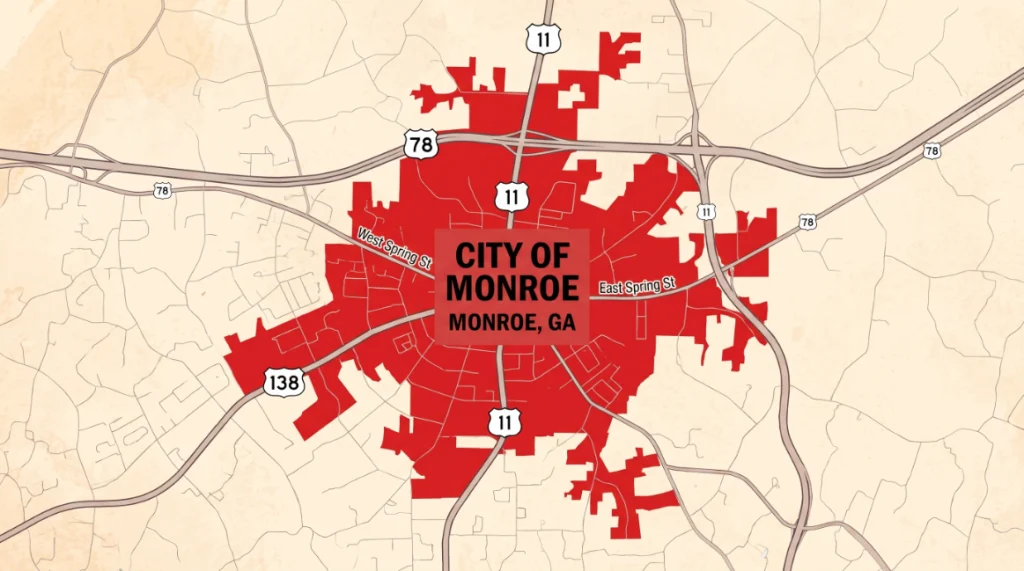
Yes. We are based in Monroe and also serve surrounding communities, including Atlanta, Marietta, and Gainesville, along with other nearby areas.
If you are unsure whether your property is within our service area, contact us with the address and we will confirm availability.