
Commercial Insulation Monroe, GA

Rated 5.0 on Google Reviews
Rated 5 out of 5

Cut Energy Costs and Protect Your Building

Commercial buildings lose a large share of their heating and cooling energy through poorly insulated roofs, walls, and floors. Commercial insulation reduces that energy loss, which lowers utility costs and keeps indoor temperatures steady for employees, customers, and equipment. At Georgia Insulation, we install commercial insulation for businesses in Monroe, GA and the surrounding areas.

Warehouses, offices, retail spaces, and storage facilities each face different temperature and moisture challenges. Gaps in insulation can lead to uneven temperatures, higher HVAC demand, and condensation that damages materials over time. We assess your building’s layout and use, then recommend an insulation solution that fits your space and budget.

This page explains where we apply spray foam and other insulation in commercial buildings, the benefits you can expect, and what happens if insulation is neglected. You will also find details about our process and answers to common questions from business owners.

Where Spray Foam Works in Commercial Buildings and Homes

Spray foam fits the roof deck, exterior walls, and floor assemblies of a building, and each location solves a different problem, from heat gain to air leakage to moisture. The right product and thickness depend on the assembly and on whether the property is a business or a home.

🏢

Roof Decks and Attics

The roof is where we apply spray foam most often. On commercial buildings, we spray the underside of metal or concrete roof decks, which seals seams and fasteners that let conditioned air escape. On low-slope roofs, a spray-applied roofing system can also be installed on top of the deck.

In homes, we typically foam the underside of the roof sheathing instead of the attic floor. This moves the attic inside the thermal boundary, so ductwork and HVAC equipment stay in a more stable temperature range.

  • Closed-cell foam adds rigidity and resists moisture on roof decks.
  • Open-cell foam suits residential attics where added sound dampening is useful.
Get a Free Quote
🧱

Exterior Walls and Building Envelopes

Spray foam bonds to masonry, steel framing, concrete block, and wood studs, and it fills irregular gaps that batts and boards leave behind. This makes it a practical choice for warehouses, retail spaces, offices, and metal buildings.

Closed-cell foam is common in commercial walls because it provides a higher R-value per inch and acts as an air barrier. Many wall assemblies need only one product to handle both insulation and air sealing.

We also seal rim joists, wall-to-roof transitions, and penetrations, which are common sources of drafts. Georgia's humid summers make this air sealing important, since outdoor moisture can enter through small gaps and cause condensation.

Get a Free Quote
🏗️

Crawl Spaces and Floor Assemblies

Crawl spaces are common under Georgia homes and some small commercial buildings, and they are a frequent source of moisture problems. We can insulate the crawl space walls and seal the vents, which creates a conditioned or semi-conditioned space.

For floors over open or unconditioned areas, such as above a loading dock or a garage, spray foam applied to the underside of the floor deck reduces cold floors and heat transfer.

Key points for these areas:

  1. Closed-cell foam is preferred where moisture exposure is possible.
  2. A vapor barrier on the ground may still be recommended.
  3. Wiring, plumbing, and pest entry points should be reviewed before application.
Get a Free Quote
📋

Application Differences Between Business and Residential Properties

Business and residential projects share the same materials, but the priorities differ.

Factor Commercial Buildings Homes
Typical surfaces Metal decks, masonry, steel framing Wood framing, sheathing, joists
Foam type Mostly closed-cell Open-cell or closed-cell
Scheduling Often phased around operating hours Occupants may relocate briefly
Code factors Fire ratings, thermal barriers, larger assemblies Local residential energy code

Commercial projects usually cover larger areas and may need coatings or thermal barriers to meet fire code. Residential jobs focus on attics, walls, and crawl spaces within a smaller footprint.

Get a Free Quote

Business Benefits of a Properly Insulated Building

Insulation reduces the energy a building uses for heating and cooling, keeps indoor temperatures steady from room to room, and limits the air and moisture movement that damages materials. For business owners, these changes show up in utility bills, tenant and employee comfort, and long-term maintenance costs.

Reduced Heating and Cooling Demand

Heat moves through roofs, walls, and floors whenever the temperature inside differs from the temperature outside. In Georgia, that means heat gain through the roof in summer and heat loss through walls in winter. Insulation slows this transfer, so your HVAC equipment runs less often to hold the same set point.

Lower run time affects more than the monthly utility bill. Equipment that cycles less accumulates less wear, which can extend its service life and reduce repair calls. In some buildings, a well-insulated envelope also allows a smaller or simpler HVAC system to be specified during construction or replacement.

Spray foam is especially effective here because it forms a continuous layer over irregular surfaces such as metal roof decks, steel framing, and wall cavities. We often see the largest savings in these building types:

  • Warehouses and distribution centers with large, exposed roof areas
  • Retail spaces with long hours of conditioned operation
  • Restaurants with heavy cooling loads from kitchen equipment

Actual savings depend on the building’s size, use, and existing condition, so we recommend an inspection before estimating results.

More Consistent Indoor Temperatures

Uneven temperatures are a common complaint in commercial buildings. A sales floor may feel comfortable while the back office stays warm, or employees near an exterior wall may be cold in winter. These differences often trace back to gaps, thin spots, or missing insulation in the building envelope.

When insulation is installed evenly and paired with air sealing, surface temperatures on walls and ceilings stay closer to the room’s air temperature. This reduces drafts and hot spots, and it limits the radiant heat that makes a space feel uncomfortable even when the thermostat reads correctly.

Consistent temperatures also matter for what you store and sell. Inventory such as food products, electronics, paper goods, and some chemicals can be sensitive to temperature swings. A stable interior makes it easier to stay within the ranges those products require.

For staff and customers, steady conditions mean fewer thermostat adjustments and fewer comfort complaints. Insulation also reduces sound transmission through walls and ceilings, which helps in office suites, medical practices, and multi-tenant buildings.

Air Sealing and Moisture Management

Air leakage is a separate problem from heat transfer, and it often accounts for a large share of a building’s energy loss. Air moves through seams, penetrations, and joints where roofs meet walls and where pipes and conduits pass through the structure. It carries heat, humidity, dust, and outdoor odors with it.

Closed-cell spray foam seals these gaps as it cures and also resists the passage of water vapor. In Georgia’s humid climate, this helps limit condensation inside wall and roof assemblies, where trapped moisture can lead to mold growth, corroded metal, and deteriorated sheathing.

Managing moisture also supports indoor air quality and protects the structure itself. We pay close attention to these areas during installation:

  • Roof-to-wall transitions
  • Rim joists and foundation edges
  • Penetrations for plumbing, electrical, and mechanical lines

Air sealing works best when it is planned along with the insulation type and thickness, since the right combination depends on how the building is built and used.

Risks of Leaving Your Property Underinsulated

Inadequate insulation raises operating costs, allows moisture to build up inside walls and ceilings, and makes interior temperatures harder to control. These problems tend to grow slowly, so many business owners do not notice them until repair bills or complaints start to arrive.

Higher Utility Costs and HVAC Strain

Heating and cooling are typically among the largest energy expenses in a commercial building. When walls, roofs, or metal panels lack sufficient insulation, conditioned air escapes and outside air takes its place. Your HVAC system then runs longer to hold the same set temperature.

Longer run times add up in several ways:

  • Higher monthly utility bills, especially during Georgia’s hot summers when cooling loads peak
  • Faster wear on compressors, fans, and motors, which shortens equipment life
  • More frequent service calls, since systems that cycle constantly need repairs sooner
  • Earlier replacement, which can cost tens of thousands of dollars for rooftop units

Metal buildings and pole barns are especially affected. Bare metal conducts heat quickly, so a roof exposed to summer sun can raise indoor temperatures well beyond what the equipment was sized to handle.

Warm, humid air that reaches a cool surface turns into liquid water. In uninsulated or poorly insulated metal buildings, this often happens on the underside of roof panels and wall sheeting, where it drips onto inventory, equipment, and flooring.

Moisture that stays in a building can cause:

  • Mold and mildew growth, which may require professional remediation
  • Rust and corrosion on steel framing, fasteners, and panels
  • Rotted wood in framing, sheathing, and pole barn posts
  • Damaged stock, particularly paper goods, electronics, food products, and textiles

Repairs for water damage are usually far more expensive than the insulation that would have prevented it. Ongoing moisture can also lead to insurance disputes if a claim is linked to a maintenance issue.

Uneven temperatures affect the people who work in your building every day. Employees near exterior walls or under roof decks may be too hot in summer and too cold in winter, which can reduce focus and increase complaints.

Temperature swings also affect the work itself. Warehouses may struggle to keep products within storage ranges, and shops may find that tools, adhesives, and finishes behave differently in extreme conditions.

Noise is another factor. Without insulation, rain on a metal roof and sound from nearby traffic or neighboring tenants carry freely into the space. Customers in retail or office settings notice these conditions, and they can influence how they view your business.

Why Choose Georgia Insulation for Your Project

Business owners need a contractor that is nearby, matches the product to the building, and schedules work without halting operations. We built our commercial insulation service around those three requirements.

Local Service in Monroe, GA and Surrounding Areas

We are a licensed, locally based Georgia team serving commercial properties in Monroe and surrounding counties. Our trained technicians install spray foam, batt, and blown-in insulation, and we have been BBB accredited since January 2022. We work with warehouses, retail spaces, offices, medical facilities, schools, churches, and industrial buildings, with solutions suited to Georgia's climate and moisture conditions.

Insulation Recommendations Based on Building Needs

We evaluate each building's structure, existing insulation, moisture conditions, and energy costs before recommending a solution. Options include closed-cell spray foam, blown-in insulation, batt insulation, and crawl space encapsulation. Every recommendation comes with a written scope explaining the materials, application areas, and reasons for the proposed approach.

Project Planning Around Business Operations

We schedule projects around your business hours, customer traffic, and deliveries to minimize disruptions. Our team can arrange after-hours or weekend work, phased installations, and clear access plans. We communicate safety requirements and scheduling updates in advance and confirm the completed work with you before leaving the site.

From Building Assessment to Installation

Every commercial insulation project at Georgia Insulation follows a set sequence: a walkthrough of the building, a written scope and estimate, controlled installation, and a final inspection. Each step is documented so you know what is being done, what it costs, and when your space is ready to use again.

01 Inspecting Existing Conditions and Defining Project Goals

We begin with an on-site visit to your building in Monroe or the surrounding area. During the walkthrough, we look at the roof deck or attic, exterior walls, metal panels, crawl spaces, and any areas where conditioned air escapes.

We check for existing insulation type and depth, moisture stains, condensation on metal surfaces, air leaks around penetrations, and damaged or compressed material. In older buildings, we also note whether old insulation needs removal before new material goes in.

We then ask about your goals. Common ones include:

  • Lowering heating and cooling costs
  • Reducing condensation in metal buildings
  • Controlling noise between tenant spaces
  • Meeting energy code or lender requirements
  • Keeping production or storage areas at steadier temperatures

Your answers set the scope, so we write them down before moving on.

With the inspection findings and your goals in hand, we recommend materials suited to each part of the building. The right choice depends on the surface, the moisture risk, and the target R-value.

Application

Common Material

Typical Use

Metal building walls and roofs

Reflective insulation, fiberglass batts

Temperature control, condensation prevention

Roof decks and exterior walls

Spray foam

Air sealing and insulation in one layer

Open attic spaces

Blown-in insulation

Fast coverage over large floor areas

Crawl spaces

Encapsulation with spray foam or rigid board

Moisture and air control

We then provide a written estimate that lists the areas covered, material type, R-value, labor, and timeline. We walk through it with you and answer questions on options, such as phasing the work across several weeks to limit disruption to your operations.

Before installation, we protect your property. We cover floors, equipment, inventory, and finished surfaces, and we mark off work zones. If spray foam is part of the project, we also plan ventilation and set clear access limits for staff and customers.

Crews then clear the work area, repair or seal gaps and penetrations, and remove any old material identified during the assessment. Installation follows the plan in the estimate. Spray foam is applied in controlled passes to reach the specified thickness, while batts, reflective layers, and blown-in material are fitted to the required depth and coverage.

We schedule work to fit your business hours when possible, including evenings or weekends for occupied buildings. Our crew lead stays in contact with your point person throughout the job.

When installation ends, we inspect the finished work against the written scope. We check thickness and coverage, look for gaps or uneven areas, and confirm that all penetrations and edges are sealed. Any corrections are made before we leave.

We then walk the site with you and review what was installed, where, and at what R-value. We also clean the work area and remove debris and packaging.

Reoccupancy timing depends on the material. Fiberglass, blown-in, and reflective products usually allow use of the space right away. Spray foam requires a cure and ventilation period, and we give you a specific time frame for returning staff, customers, and inventory based on the product used and the conditions on site.

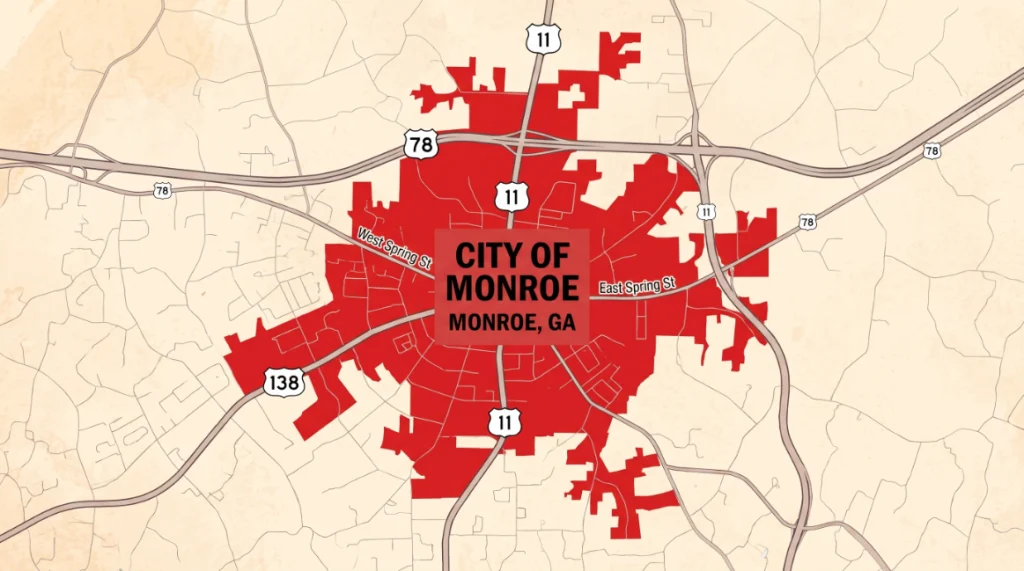
Serving Monroe, GA and Surrounding Areas

We provide commercial insulation services in Monroe, GA, and surrounding areas, helping businesses improve energy efficiency, regulate indoor temperatures, and reduce heating and cooling costs. From warehouses and offices to retail spaces and industrial facilities, we deliver insulation solutions tailored to your building’s needs and Georgia’s climate.

Testimonials

Posted on Google Google
Cara Tiesler profile picture
Cara Tiesler
Google star 1Google star 2Google star 3Google star 4Google star 5Trustindex verifies that the original source of the review is Google.
Georgia Insulation saved the day and our house! Breanna promptly answered my call, which was at the end of the work day, and listened to me freak out about being down to the wire and in need of insulation. She jumped right on the request and worked diligently with Jason to get me on the schedule asap. We cannot thank them enough for saving us! The installers were kind, professional and early… who is early these days?! We were very impressed by Breanna, Jason, and the rest of the team at Georgia Insulation. Don’t hesitate to work with this company, they actually care about their clients and don’t over promise (unlike the company that blew us off a day before they were scheduled to Install because they over promised and under delivered). So again, if you need a super reliable and professional insulation company, reach out to Breanna at Georgia Insulation, and she will get you taken care of! Thanks again for helping us!!
Posted on Google Google
Mary Jane profile picture
Mary Jane
Google star 1Google star 2Google star 3Google star 4Google star 5Trustindex verifies that the original source of the review is Google.
Fast friendly service
Posted on Google Google
jeff schmitt profile picture
jeff schmitt
Google star 1Google star 2Google star 3Google star 4Google star 5Trustindex verifies that the original source of the review is Google.
I can say enough great things about the people and my experience with Georgia Insulation. Terra came out and gave a thorough evaluation and quote for open cell foam insulation for our home. The quote was reasonable, and for the amount of work to be done, I thought it was a great deal. Edwin and his crew were awesome and entertaining. They removed all of the existing insulation in the attic and completely covered the underside of the roof with open cell foam. I’ve waited about 2 months to write this review, as I wanted to share energy savings. Last month bill was $106 less than the previous year, same month. The part about that blew me away, was last years June was a very mild June and this June has been quite hot. That being said, I feel very confident I will see a return on my investment. I highly recommend Georgia Insulation and Terra Schaefer and team.
Posted on Google Google
Allene Hoff profile picture
Allene Hoff
Google star 1Google star 2Google star 3Google star 4Google star 5Trustindex verifies that the original source of the review is Google.
The consultant was very good. He explained and answered all my questions concerning my problem. They were very prompt in coming out and the two young men, Edward and Ulises were very friendly and very professional. They took care not to get anything on my floors. They also cleaned up after the job was done. I would certainly recommend this company.
Posted on Google Google
Frank Armatti profile picture
Frank Armatti
Google star 1Google star 2Google star 3Google star 4Google star 5Trustindex verifies that the original source of the review is Google.
Ga insulation came to my home and insulated with close cell foam underneath my floor. Techs needed a second access to get to 2 bedrooms which I was not able to provide while they were here . The room temperatures were at 73 where they had sprayed and where they didn’t was at 59! I am excited that they are returning to finish now that I have the access they needed . The workers were excellent and very professional.This made such a difference in my heating now that the heat shuts off when needed to! Georgia Insulation is a top notch company providing a great service for a very fair price! My best decision ever!
Posted on Google Google
Will Brown profile picture
Will Brown
Google star 1Google star 2Google star 3Google star 4Google star 5Trustindex verifies that the original source of the review is Google.
Posted on Google Google
Chris Jones profile picture
Chris Jones
Google star 1Google star 2Google star 3Google star 4Google star 5Trustindex verifies that the original source of the review is Google.
Great service, fast, and good communication.
Posted on Google Google
Luke Thomas profile picture
Luke Thomas
Google star 1Google star 2Google star 3Google star 4Google star 5Trustindex verifies that the original source of the review is Google.
Great job. On time. Left place nice & clean. This is second job. I will definitely use them on the next one. Thanks All
Posted on Google Google
JC Ammons profile picture
JC Ammons
Google star 1Google star 2Google star 3Google star 4Google star 5Trustindex verifies that the original source of the review is Google.
Did an excellent job insulating our new construction. Good communication and clean work.
Posted on Google Google
James Morris profile picture
James Morris
Google star 1Google star 2Google star 3Google star 4Google star 5Trustindex verifies that the original source of the review is Google.
Georgia Insulation do excellent work and are a great bunch of people to work with. I highly recommend them and will use them again.

Improve Your Commercial Building’s Efficiency

Upgrade your commercial property with insulation designed for better energy efficiency, indoor comfort, and long-term performance. Contact Georgia Insulation today for a free quote tailored to your building.

Frequently Asked Questions

Commercial insulation affects energy bills, indoor comfort, moisture control, and code compliance for buildings across Walton County and nearby communities. The answers below cover benefits, application areas, pricing factors, Georgia R-value requirements, scheduling, and what we bring to each project.

What are the benefits of commercial insulation for businesses in Monroe, GA?

Proper insulation reduces the amount of heating and cooling a building needs, which lowers monthly utility costs. Georgia summers are long and humid, so cooling loads make up a large share of operating expenses for most commercial properties.

Insulation also keeps indoor temperatures more consistent, which improves comfort for employees and customers. Spray foam adds an air seal and, in many applications, a moisture barrier, which helps limit condensation and mold risk.

Sound control is another benefit. Insulated walls and ceilings reduce noise transfer between tenant spaces, offices, and conference rooms.

Spray foam works in many parts of a commercial structure. Common areas include:

  • Metal building walls and roof decks
  • Roof assemblies, including under-deck applications
  • Exterior walls and wall cavities
  • Ceilings above offices and retail spaces
  • Crawl spaces and under-floor areas
  • Warehouse and storage areas that need temperature control

The right product depends on the building type and the goal. Closed-cell foam is often used where moisture resistance and added rigidity matter, while open-cell foam can suit interior walls and ceilings where sound control is a priority.

Cost depends on the square footage, the area being insulated, the type of insulation, and the thickness needed. Access conditions and the condition of the existing insulation also affect the price.

Spray foam typically costs more upfront than fiberglass batts, but it provides air sealing and higher R-value per inch. Many business owners recover part of that difference through lower energy use over time.

We provide a written estimate after reviewing your building, so you can see the scope and pricing before work begins.

Georgia falls primarily in climate zones 2 and 3, and Monroe is in zone 3. Requirements come from the Georgia State Minimum Standard Energy Code, which is based on the International Energy Conservation Code with state amendments.

R-value targets differ by building component. Roofs, walls, and floors each have their own minimums, and the numbers change depending on construction type, such as metal buildings versus mass walls.

We review the current code requirements for your project and recommend an insulation system that meets them. Local code officials make the final determination, so we also recommend confirming details with your permitting office.

In many cases, yes. We plan the schedule around your hours, and work can often be done after closing, on weekends, or in sections of the building at a time.

Spray foam installation requires the treated area to be clear of workers during application and for a short period afterward while the foam cures. We coordinate with you ahead of time so that affected areas are vacated and ventilated as needed.

Projects in occupied buildings are easier to manage when we agree on the phasing before the first day on site.

We are a licensed, locally operated insulation company with experience in spray foam insulation, crawl space encapsulation, and commercial insulation. Our crews work on buildings of different sizes and construction types, so we can match the product to your property.

We serve Monroe and nearby communities, which means shorter response times for estimates, questions, and follow-up service. You deal with a team based in the region, not a distant contractor.

Each project starts with an on-site assessment and a written scope, so you know what we are installing, where, and why.