
Metal buildings in Douglasville and across the surrounding Georgia area face a specific set of challenges, including temperature swings, condensation, and noise. Without proper insulation, these structures lose energy efficiency, develop moisture problems, and become uncomfortable to work in year-round. We provide metal building insulation services designed to address these issues directly.
Business owners rely on their metal buildings for storage, operations, or manufacturing, and an uninsulated structure can affect both comfort and the bottom line. We work with commercial properties throughout the region to install insulation systems that regulate temperature and reduce energy costs.
This guide covers how insulation applies to different areas of a metal building, the benefits it provides, and what happens when insulation is skipped or installed incorrectly. We also explain our process and answer common questions business owners ask before starting a project.
Spray foam insulation applies to multiple areas of a structure, and each area requires a different approach based on material, exposure, and function. We assess every surface before recommending placement to ensure the foam performs as intended.
Metal roofs expand and contract with temperature changes, which can contribute to condensation. We apply closed-cell spray foam to the underside of suitable roof panels to create an air seal that helps control moisture and heat transfer.
This application can also reduce the drumming sound caused by rain or hail. Ceiling insulation works alongside roofline treatment in buildings with drop ceilings or interior liner panels.
Helps seal gaps where roof panels overlap and reduces unwanted air movement.
Covers suitable exposed surfaces to help reduce thermal bridging.
Seals suitable edges and connections to help limit air infiltration.
Commercial wall assemblies often use steel studs, which conduct heat and cold more readily than wood framing. We apply spray foam to suitable wall cavities and framing areas to create a continuous insulation and air barrier.
This method works well in warehouses, retail spaces, and offices with exposed interior framing. The foam adheres to suitable studs, tracks, and wall panels, helping close gaps that allow outside air to enter.
For buildings with mixed framing materials, we consider the wall assembly, structural layout, and exterior exposure when selecting the appropriate foam type and application.
Spray foam can help reduce air leaks in residential attics, exterior walls, and crawl spaces. In attics, we apply foam to the roof deck or attic floor depending on the ventilation design and intended use of the space.
Exterior wall cavities can be insulated during new construction or renovation. For crawl spaces, we evaluate ground moisture and foundation conditions before selecting an appropriate insulation and moisture-control approach.
Open-cell or closed-cell foam may be suitable depending on the roof assembly and ventilation plan.
Helps fill wall cavities and seal air leaks around framing and penetrations.
Closed-cell foam may be appropriate for certain foundation walls as part of a moisture-control plan.
Investing in metal building insulation delivers measurable returns across temperature control, energy costs, and workplace conditions. Below, we outline the specific advantages our Douglasville clients experience after installation.
Metal buildings are prone to rapid heat transfer, which means indoor temperatures often mirror outdoor conditions more closely than conventional structures. Without proper insulation, your building can feel unbearably hot in summer and uncomfortably cold in winter.
We install insulation that slows this heat transfer, keeping indoor temperatures within a narrower, more predictable range throughout the year. This stability matters whether you’re running a warehouse, retail space, or manufacturing facility.
Equipment sensitive to temperature swings also benefits from this consistency. We’ve seen business owners reduce equipment strain and extend the lifespan of climate-sensitive inventory simply by addressing insulation gaps.
Metal buildings commonly develop air leaks at seams, fastener points, and panel joints. These gaps let conditioned air escape and allow outside air to infiltrate, forcing your HVAC system to work harder than necessary.
Our insulation process includes air sealing alongside thermal insulation, addressing both problems at once. This combination reduces the workload on heating and cooling systems, which typically translates to lower monthly utility costs.
Issue | Without Insulation | With Our Insulation |
Air leakage | High | Significantly reduced |
HVAC runtime | Frequent, extended cycles | Shorter, less frequent cycles |
Energy costs | Higher | Lower |
We use materials suited to Georgia’s humid climate, which also helps prevent condensation buildup inside wall and ceiling cavities.
Temperature extremes and drafts directly affect how employees and customers feel inside your building. A space that’s too hot, too cold, or inconsistently conditioned can reduce productivity and discourage repeat visits from customers.
We help you create a more comfortable indoor environment by minimizing these fluctuations and drafts. Employees working in insulated spaces typically report fewer complaints related to temperature, which can support better focus and morale on the job.
For customer-facing businesses, comfort plays a role in how long people stay and how they perceive your facility. A well-insulated building reflects positively on your business’s professionalism and attention to detail.
Metal buildings without proper insulation face a predictable set of problems. Energy costs climb, moisture accumulates where it shouldn’t, and the people working inside deal with conditions that affect productivity.
Metal conducts heat and cold far faster than other building materials. Without insulation, a metal building transfers outdoor temperatures directly to the interior, forcing HVAC systems to work harder.
We see this translate into utility bills that run significantly above what similar insulated structures cost to operate. During Georgia summers, uninsulated metal roofs and walls absorb heat and radiate it inside for hours after the sun sets. Winter months bring the opposite problem, with heat escaping through metal surfaces almost as fast as it’s generated.
Over a year, these inefficiencies add up. Equipment also wears out faster from constant cycling, which means more frequent repairs and earlier replacement costs on top of the elevated monthly bills.
Metal surfaces react to temperature changes by sweating. When warm, moist air inside a building meets a cold metal roof or wall panel, condensation forms on the interior surface.
This moisture doesn’t just disappear. It drips onto equipment, inventory, and flooring below, and it collects in places that are hard to see until damage is already done. Left unaddressed, trapped moisture leads to:
We treat condensation control as a core part of any insulation project, since moisture problems tend to compound over time rather than resolve on their own.
Temperature swings inside an uninsulated metal building make daily operations harder than they need to be. Employees working in a space that’s too hot or too cold tend to lose focus and tire faster, which affects output over a full shift.
Stored goods face their own risks. Materials sensitive to temperature or humidity, including certain equipment, documents, and inventory, can degrade when conditions inside the building fluctuate with the weather outside.
We’ve found that business owners who insulate often notice the difference immediately, both in how the space feels and in how consistently their operations run regardless of the season.
We combine local experience with building-specific insulation plans, so you get a solution that fits your structure instead of a generic approach.
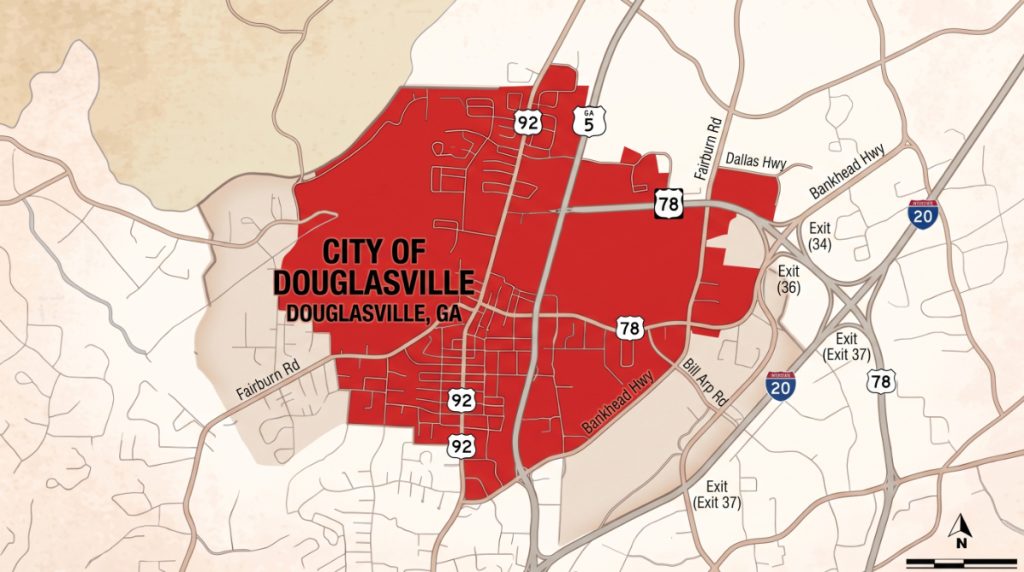
Based in Douglasville, GA, we provide metal building insulation services throughout surrounding communities. Our local team understands Georgia’s climate, building codes, and permitting requirements, delivering responsive service and reliable insulation solutions for warehouses, agricultural buildings, and commercial facilities.
We evaluate each metal building’s size, use, panel condition, climate control needs, budget, and timeline before recommending an insulation solution. Our tailored approach helps you choose the right spray foam thickness and application method for your building’s needs and long-term energy efficiency.
A well-planned metal building insulation project moves through clear stages, from initial inspection to final inspection, and we keep your facility informed at every step. Scheduling and preparation determine whether work finishes on time and whether your operations continue without major disruption.
We start with an on-site evaluation of your metal building’s structure, including wall and roof panel type, existing insulation condition, and any signs of moisture or corrosion.
This assessment identifies R-value requirements based on your building’s use, local climate factors, and any condensation issues present.
We then draft an insulation plan that specifies material type, thickness, and installation method for each section of the building. Commercial warehouses, workshops, and office spaces within the same structure often require different approaches.
You’ll receive a written proposal outlining:
Before installation begins, our crew clears the work area and inspects all surfaces for rust, gaps, or damage that could affect insulation performance.
Any compromised panels or seams get addressed first, since insulation installed over existing problems will not perform as expected.
We then install the insulation system according to the plan, securing vapor barriers where needed and fitting materials around structural elements like purlins, girts, and penetrations.
Our installers work section by section, checking fit and seal quality as they progress rather than waiting until the end to identify issues.
Once installation is complete, we walk through the building with you to review the finished work.
This includes checking seams, fasteners, and vapor barrier integrity throughout the space.
We verify that insulation meets the specifications outlined in your original plan and address any areas that need adjustment before closing out the project.
You’ll receive documentation of the completed work, which is useful for insurance records, energy audits, or future maintenance planning.
Project timelines depend on building size, insulation type, and existing conditions.
Building Size | Typical Timeline |
Small (under 5,000 sq ft) | 1-2 days |
Medium (5,000-15,000 sq ft) | 3-5 days |
Large (15,000+ sq ft) | 1-2 weeks |
Retrofits generally take longer than new construction insulation because of the extra preparation involved. We provide a specific timeline estimate once the site assessment is complete.
In most cases, yes. We schedule work in sections so that portions of your building remain accessible while installation continues elsewhere.
Noise and limited access to certain areas should be expected during active work zones. We coordinate scheduling with you in advance, including off-hours or weekend work if your operation requires minimal interruption during business hours.
We provide professional metal building insulation services in Douglasville, GA, and surrounding communities. Our team delivers tailored spray foam solutions for warehouses, agricultural buildings, workshops, and commercial facilities to help improve energy efficiency and control condensation.
We schedule consultations promptly and work around your business hours to minimize disruption to daily operations.
Business owners planning a metal building insulation project in Douglasville often have questions about cost, material selection, and the practical details of installation. We answer the most common questions below.
A 40×60 metal building typically covers 2,400 square feet, and insulation costs usually fall between $1.50 and $4.00 per square foot depending on the system selected.
Fiberglass blanket systems sit at the lower end of that range, while spray foam and insulated metal panels cost more upfront. We provide a written quote after assessing your building’s dimensions, current condition, and intended use.
The best option depends on your building’s purpose and budget. Fiberglass blanket systems with a vapor barrier work well for general-purpose structures and offer strong value for the cost.
Spray foam performs better in buildings where moisture control and air sealing are priorities, such as climate-controlled warehouses or facilities storing sensitive equipment. We recommend a system based on your specific use case rather than a one-size-fits-all approach.
Yes, spray foam can be applied to existing metal buildings without major structural changes. We assess the interior framing and wall cavities beforehand to confirm proper application and adhesion.
Existing buildings sometimes require additional prep work, such as cleaning surfaces or addressing minor rust spots, before spray foam is applied.
Yes. Metal surfaces react to temperature swings by collecting moisture on the interior side, and that moisture leads to rust and material deterioration over time.
Insulation with a vapor barrier slows this process by regulating the surface temperature difference between inside and outside air. This reduces the moisture buildup that causes corrosion on structural steel and fasteners.
Georgia’s building code generally calls for R-13 to R-19 in wall assemblies and R-19 to R-30 in roof assemblies for commercial structures, depending on the building’s classification and use.
We review your specific project against current code requirements and recommend an R-value that meets compliance while matching your climate control needs.
Most commercial metal building insulation projects take between two and five days, depending on square footage and the system chosen.
Larger buildings or those requiring extensive prep work, such as rust treatment or structural repairs, may take longer. We provide a project timeline before work begins so you can plan around it.