
Sunken or cracked concrete around your Woodstock home or business is more than a cosmetic issue. It signals voids beneath the surface that, left unaddressed, can lead to tripping hazards, water pooling, and further structural damage. Georgia Insulation provides concrete lifting services in Woodstock, GA and surrounding areas that restore uneven driveways, sidewalks, patios, and foundations without the cost or disruption of full replacement.
We use polyurethane foam injection to fill voids and raise settled concrete back to its original position. This approach works for a range of surfaces, including residential driveways, walkways, pool decks, and commercial parking areas or loading docks.
This guide covers where concrete lifting applies throughout your property, the benefits of addressing sunken slabs early, and what happens if the problem is ignored. We also explain our process and answer common questions homeowners and business owners ask before scheduling a project.
Sunken or uneven concrete shows up in many places around homes and businesses in Woodstock, GA, and each location presents its own risks and repair needs. Below, we break down where our concrete lifting service makes the most difference.
Soil movement, drainage problems, and weather changes can cause concrete around your home to settle. We lift and level a range of residential surfaces, including:
Uneven concrete can affect safety, daily use, and curb appeal. We assess each slab to identify possible causes, such as soil erosion, poor compaction, or expansive soil, before recommending an appropriate lifting solution.
Get A Free QuoteUneven concrete around commercial properties can create safety concerns, disrupt operations, and affect customer access. We lift and stabilize areas such as:
We understand that extended closures can affect business operations. Our team works to minimize disruption while addressing the underlying voids that contribute to concrete settlement.
Get A Free QuoteConcrete lifting foam and spray foam insulation are both polyurethane-based products, but they are designed for different applications. Lifting foam is injected beneath concrete slabs to fill voids and help raise and support the surface. Spray foam insulation is applied to building surfaces to improve thermal performance and reduce air leakage.
| Feature | Concrete Lifting Foam | Spray Foam Insulation |
|---|---|---|
| Purpose | Fills voids and raises concrete | Insulates and helps seal gaps |
| Material | High-density structural foam | Open-cell or closed-cell insulation foam |
| Application | Injected beneath concrete slabs | Sprayed onto suitable building surfaces |
| Primary Function | Supports and stabilizes concrete | Improves thermal performance and air sealing |
We use purpose-designed lifting foam to support concrete slabs. While both products use expanding polyurethane technology, they have different formulations and should not be used interchangeably.
Get A Free QuoteRaising a settled slab addresses both the safety concerns and the practical inconvenience that come with uneven concrete. The two advantages that matter most to our clients are a safer walking surface and a repair process that avoids the mess of full replacement.
Settled concrete creates trip hazards at the exact spots where people least expect them: doorways, driveways, and walkways. When we lift a slab back to its original elevation, we close the gaps and height differences that cause stumbles.
This matters for:
A level surface also sheds water correctly instead of pooling in low spots. Standing water on a sunken slab can turn to ice in colder months, adding a seasonal hazard on top of the existing trip risk.
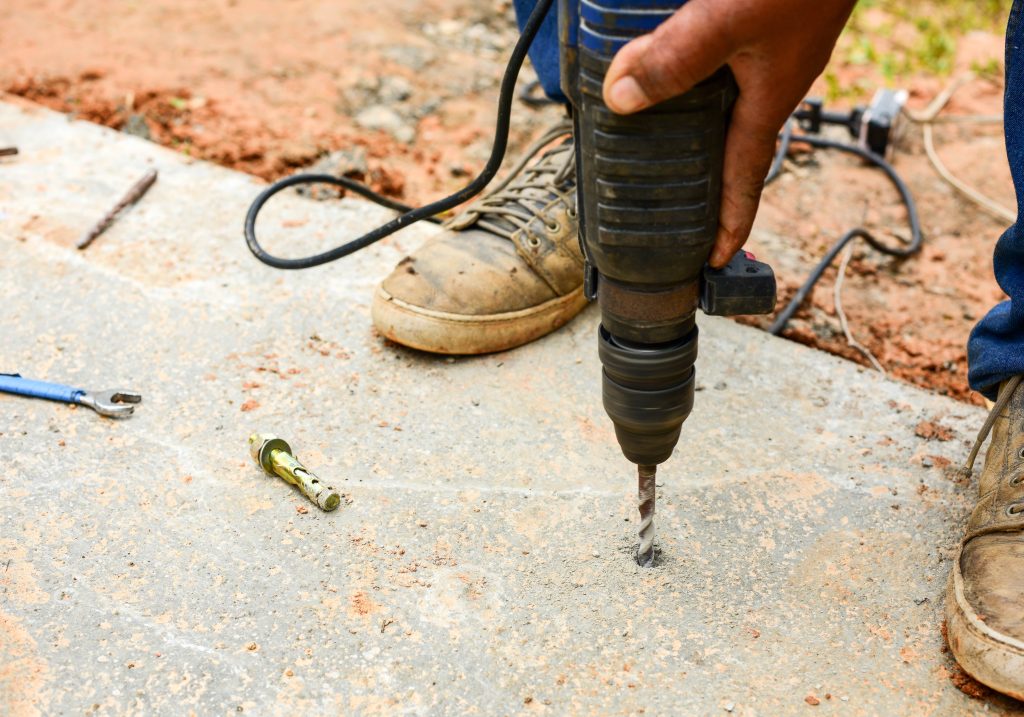
Lifting an existing slab means we don’t need to break up and haul away old concrete. We drill small access holes, typically about the diameter of a coin, and inject lifting material beneath the slab.
This approach has a few direct advantages:
Factor | Slab Lifting | Full Replacement |
Timeline | Often same-day | Multiple days |
Surface downtime | Usable within hours | Days of curing time |
Yard/landscape impact | Minimal | Significant excavation |
Because we work with the slab that’s already there, your landscaping, irrigation lines, and surrounding hardscape stay largely untouched. For business owners, this means less interruption to foot traffic or parking access during the repair.
Ignoring uneven concrete does not solve the underlying problem. The void or soil shift beneath the slab typically continues to worsen, and the surface issues it causes tend to spread or intensify over time.
A height difference of even half an inch between concrete sections can catch a foot or wheel. This creates a real risk on walkways, driveways, and parking areas where people walk at a normal pace without watching the ground closely.
For businesses, this matters even more. We know that commercial properties face direct liability when customers, employees, or delivery drivers are injured on uneven surfaces.
Uneven concrete also creates accessibility barriers. Wheelchairs, walkers, and strollers can get stuck or tip on raised edges, and in commercial settings this may conflict with ADA compliance requirements.
Common trip hazard locations include:
Uneven concrete changes how water moves across a property. Low spots collect rainwater instead of letting it drain away, creating standing pools that can seep toward foundations.
This standing water often makes the original settlement worse. Saturated soil beneath a slab loses stability faster, which can accelerate sinking in the affected area.
Water pooling near a building’s foundation also raises the risk of basement or crawl space moisture problems. Over time, this can lead to mold growth, wood rot, or foundation cracking, issues that cost far more to repair than the original concrete settlement.
Left unaddressed, a minor dip in a slab can turn into a cycle of drainage failure and continued settling.
We bring equipment, training, and local experience together to deliver concrete lifting results you can rely on. Our process is built around your property’s specific needs, whether you manage a home or a commercial site.
Based in Woodstock, GA, we serve surrounding communities with concrete lifting solutions tailored to local soil conditions and foundation concerns. We assess slab condition, soil composition, drainage, and the extent of settling or cracking to determine the right polyurethane foam injection approach for each project.
We provide honest, tailored concrete lifting recommendations based on your property's needs. Whether it's a residential driveway or a commercial loading dock, we consider traffic loads, scheduling, and surface area to recommend practical solutions and explain our findings clearly without pushing unnecessary services.
The lifting process at Georgia Insulation involves two main phases: a thorough evaluation of the slab and the ground beneath it, followed by the actual injection and leveling work. Here’s what happens at each stage.
Before we start any work, we examine the slab to understand why it settled and how much it has moved. We check for cracking patterns, measure the degree of unevenness, and identify soil conditions below the surface.
This step determines how we approach the lift. Loose or washed-out soil requires different handling than compacted fill, for example.
We also look for signs of moisture intrusion or drainage problems that may have contributed to the settling. Addressing the root cause matters as much as fixing the visible dip.
Our team maps out where injection ports will be placed based on the size of the slab and the location of the voids. This planning stage keeps the lift controlled and even.
We drill small holes, typically about 5/8 inch in diameter, at strategic points across the slab. Through these holes, we inject a two-part polyurethane foam that expands rapidly once it reaches the void space.
The foam fills gaps and compacts loose soil as it expands, creating a stable base beneath the concrete. As pressure builds, the slab begins to rise in a controlled, gradual manner.
We monitor this process closely to avoid over-lifting or applying uneven pressure. Our technicians adjust injection points as needed, working section by section until the slab reaches the correct position.
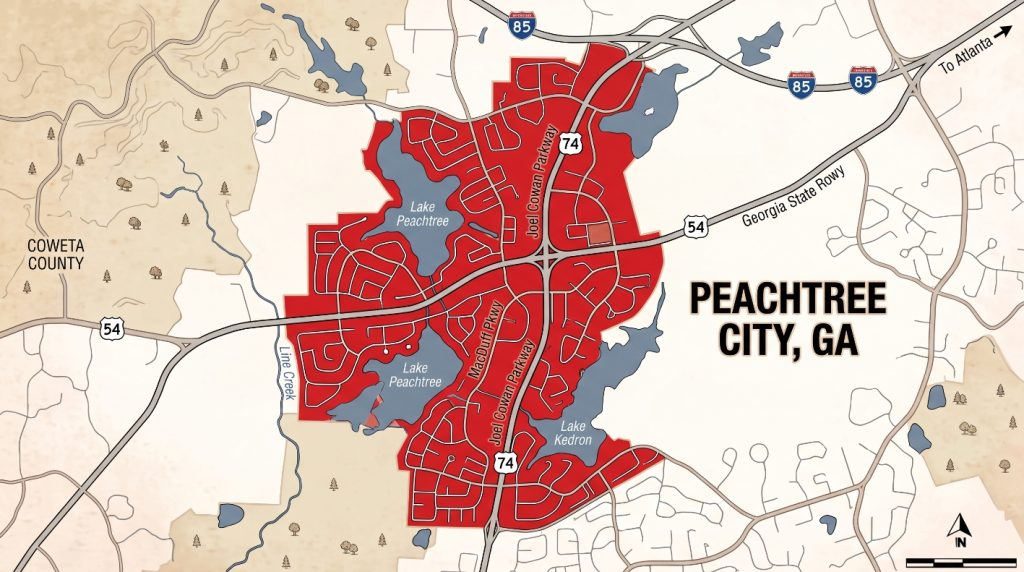
We provide concrete lifting in Peachtree City, GA and surrounding areas, helping restore uneven driveways, sidewalks, patios, pool decks, and commercial concrete surfaces.
We offer inspections for properties throughout our service area. During this visit, we examine the affected concrete, assess the soil conditions beneath it, and identify the likely cause of settling or unevenness.
We recommend scheduling an evaluation as soon as you notice sinking or shifting concrete, since delays can allow the underlying soil issue to worsen.
Here are answers to the questions we hear most often from homeowners and business owners in Woodstock about concrete lifting.
We lift driveways, sidewalks, patios, pool decks, garage floors, and interior slabs. We also handle commercial surfaces like parking lots, loading docks, and warehouse floors.
Most concrete slabs are good candidates for lifting as long as the slab itself is structurally sound and not cracked beyond repair.
Costs vary based on the size of the area, the depth of the void beneath the slab, and how much lift is needed. We provide a free on-site inspection and a written estimate before any work begins.
In most cases, concrete lifting costs 50-70% less than tearing out and replacing a slab.
Most residential projects take a few hours to complete in a single day. Larger commercial jobs may take longer depending on the square footage involved.
We schedule the work around your availability and let you know a realistic timeframe before we start.
You can walk on or drive over the lifted area within 15 minutes to an hour after we finish. The polyurethane foam we use cures quickly, so there’s no multi-day waiting period like you’d have with new concrete.
For most sunken slabs, yes. Lifting preserves the existing concrete, costs less, and avoids the mess of demolition and new pours.
Replacement makes more sense only when the slab has significant cracking, crumbling, or structural damage that lifting can’t address.
Lifted concrete typically lasts as long as the original slab would have, since the foam fills the void and stabilizes the soil underneath. We also address the underlying drainage or soil issue during the process, which helps prevent the slab from sinking again.