
Attics in Woodstock, GA homes and businesses lose and gain heat faster than almost any other area of a building. Without proper attic insulation, homeowners and business owners face higher energy bills, inconsistent indoor temperatures, and added strain on HVAC systems.
At Georgia Insulation, we work with property owners throughout Woodstock and the surrounding area to address these issues directly. Our attic insulation services are designed to create a more stable indoor environment while reducing the amount of energy your heating and cooling systems need to work.
This page covers what you need to know about attic insulation, including where it applies in homes and commercial buildings, the benefits it provides, and what happens when attics are left under-insulated. We also outline our process and answer common questions property owners ask before starting a project.
Attics require different insulation approaches depending on whether we’re sealing the roofline or the floor. Each method addresses distinct airflow and temperature patterns, so we match the material to the part of the attic being treated.
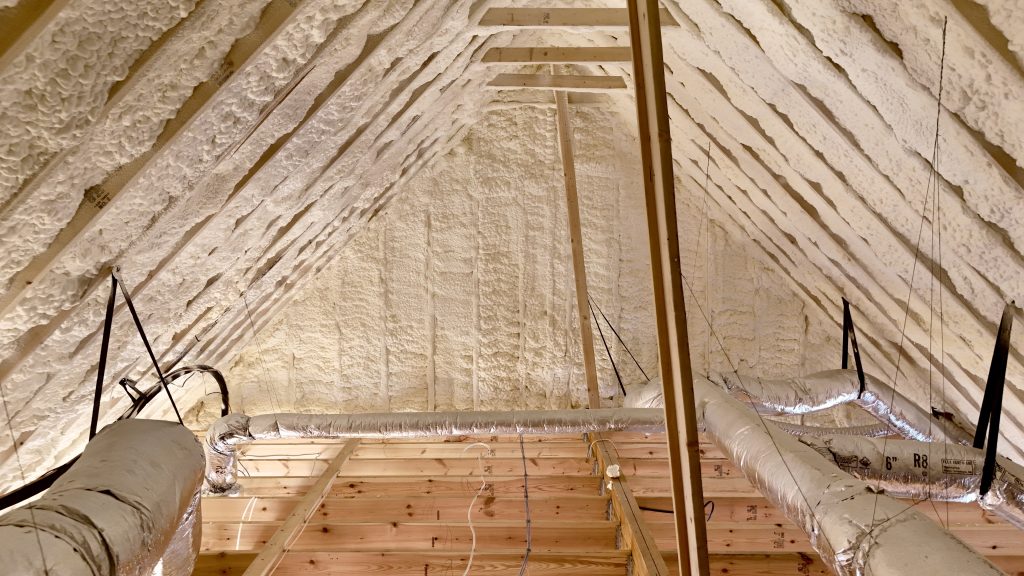
We apply spray foam directly to the underside of the roof deck when creating a conditioned attic space. This approach seals gaps around rafters and helps block air leaks at the source, rather than only slowing heat transfer.
Closed-cell spray foam can add rigidity and resist moisture intrusion when properly installed. We typically recommend this method for:
A spray foam roofline helps keep the attic closer to indoor temperatures, reducing HVAC strain and helping limit conditions that contribute to ice dams in colder weather. It can also reduce outside noise transfer, including in commercial buildings near busy roads.
Get A Free QuoteFloor insulation separates the living space below from the unconditioned attic above. We install blown-in cellulose or fiberglass batts based on the existing attic layout and obstructions such as wiring or ductwork.
Blown-in insulation can fill gaps around joists and irregular spaces. For many Woodstock homes, an insulation level between R-38 and R-60 may be appropriate, depending on the home's age, existing insulation depth, and project requirements.
Attic floor insulation is often suitable when the attic is used only for storage and does not need to be conditioned. It can also offer a lower upfront cost than insulating the entire roofline. We assess the existing insulation before recommending whether to add material or remove and replace it.
Get A Free QuoteSpray foam insulation extends well past the attic, addressing air leaks and thermal gaps in walls, crawl spaces, and commercial roofing systems. We apply the same expanding foam technology throughout a structure to create a more consistent barrier against heat, moisture, and outside air.
We install spray foam in exterior wall cavities to reduce drafts and limit heat transfer between conditioned and unconditioned spaces. This approach works well during new construction or major renovations when wall cavities are open and accessible.
Crawl spaces present a different challenge. Moisture, pests, and temperature swings often enter through this area, affecting the floors above.
We use closed-cell spray foam on crawl space walls to:
This method differs from traditional vented crawl space designs. We seal the space instead, treating it as part of the home’s conditioned envelope rather than an outdoor-adjacent buffer zone.
Commercial buildings often have flat or low-slope roofs that lose heat and allow moisture intrusion at a different rate than residential roofing. We apply spray polyurethane foam (SPF) directly to these roof surfaces to create a seamless, adhered layer that reduces thermal bridging.
Beyond the roof deck, we extend foam application to other parts of the building envelope, including:
Area | Purpose |
Parapet walls | Reduce air leakage at roof edges |
Loading dock areas | Limit drafts from frequent door use |
Mechanical penetrations | Seal gaps around pipes and vents |
For business owners managing energy costs across larger square footage, this comprehensive approach addresses multiple leak points rather than treating the roof as an isolated system.
A properly insulated attic affects two areas that homeowners and business owners notice immediately: indoor comfort and utility costs. Both outcomes come from the same source, which is the insulation’s ability to control heat movement in and out of a building.
Heat naturally rises and escapes through an under-insulated attic, which creates uneven temperatures between floors and rooms. We often find that upper levels run warmer in summer and colder in winter when attic insulation is insufficient.
A well-insulated attic slows this heat transfer. Rooms stay closer to the thermostat setting throughout the day, and temperature swings between morning and evening become less noticeable.
This matters for:
We size and install attic insulation to address these inconsistencies directly, rather than relying on HVAC adjustments to mask the problem.
When an attic lacks adequate insulation, HVAC systems work harder to maintain set temperatures. This happens because conditioned air escapes faster than it should, and outdoor temperatures have more influence on indoor air.
A properly insulated attic reduces this heat exchange. Furnaces and air conditioners cycle less frequently, which lowers the overall demand placed on the system.
Over time, this can translate into:
We evaluate existing attic insulation levels before recommending upgrades, since the right R-value depends on the building’s size, age, and current performance.
Skipping proper attic insulation in a Woodstock home or commercial building creates two main problems: wasted energy and moisture buildup. Both issues compound over time, often leading to higher repair costs than the insulation upgrade itself would have required.
Gaps in attic insulation let conditioned air escape through the roofline. During Georgia’s hot summers, this means your HVAC system works harder to keep rooms cool.
We often find that homes with insufficient attic insulation see heating and cooling costs rise by 20% or more. That gap between what you pay and what you should pay adds up fast over a year.
Common signs of air leaks include:
For commercial buildings, this translates to higher overhead costs and tenant complaints about inconsistent comfort levels.
Poor attic insulation allows warm, humid air to meet cooler surfaces, creating condensation. Over time, this moisture can soak into insulation materials, wood framing, and roof decking.
We see this most often in attics with inadequate ventilation paired with thin or compressed insulation. The result is a breeding ground for mold and mildew, which can spread into living or working spaces below.
Left unaddressed, moisture problems lead to:
Issue | Impact |
Wood rot | Weakens roof decking and structural supports |
Mold growth | Affects indoor air quality and health |
Insulation damage | Reduces effectiveness, requiring replacement |
Musty odors | Signals trapped moisture in attic spaces |
Comfort suffers too. Rooms directly below poorly insulated attics often feel stuffy in summer and cold in winter, regardless of thermostat settings.
We bring local experience and consistent craftsmanship to every attic insulation project we complete. Our pricing, scheduling, and recommendations are built around the specific needs of Woodstock homes and businesses.
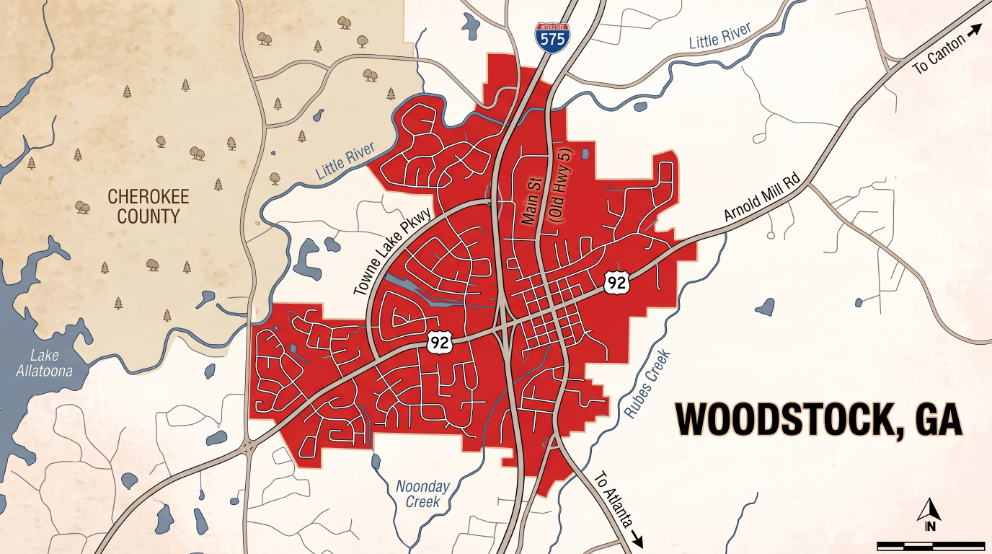
We provide attic insulation services in Woodstock, GA, and surrounding communities, with solutions tailored to local homes, climate conditions, and building codes. Our team offers on-site assessments, trained technicians, efficient scheduling, and clear pricing for residential and commercial projects.
We assess each property’s structure, existing insulation, energy codes, budget, and intended use before recommending a solution. Whether residential or commercial, we consider factors like attic access, HVAC demands, and long-term energy savings, explaining our recommendations clearly so you can make an informed decision.
We follow a structured process from the first inspection to the final walkthrough, so you know exactly what to expect at every stage. Below, we also answer the questions we hear most often from homeowners and business owners in Woodstock.
Every project starts with an on-site inspection of your attic. We check existing insulation levels, look for air leaks, moisture issues, and ventilation problems, and measure current R-values against local code requirements.
From there, we put together a written plan specific to your property. This includes the recommended material, target R-value, and an estimate of costs and timeline.
We walk you through the findings before any work begins. You’ll know what’s causing comfort or efficiency issues and what it will take to fix them.
Once you approve the plan, our crew begins with air sealing. This means closing gaps around wiring, plumbing penetrations, and the attic hatch before any insulation goes in.
Next, we install soffit baffles to maintain proper airflow and protect electrical boxes and chimney chases per code. Then we add your chosen material, batts, blown-in cellulose, or spray foam, to the agreed R-value.
We finish with a final walkthrough. Our team reviews the coverage with you, answers questions, and confirms the work meets the standard outlined in your plan.
Most residential attic insulation jobs take one day, from setup to cleanup. Larger homes or jobs requiring insulation removal may take longer.
Project Type | Typical Duration |
Standard residential attic | 4–8 hours |
Attic with removal needed | 1–2 days |
Commercial building | 1–3 days, depending on size |
Weather and accessibility can affect scheduling. We give you a firm time estimate once we’ve completed the initial assessment.
Yes, in most cases. We schedule commercial work around your operating hours whenever possible, including evenings or weekends.
Our crews work in sections to limit disruption to staff and customers. We also use drop cloths and containment barriers to keep dust and debris away from occupied areas.
For larger commercial spaces, we may recommend phasing the project over several visits. This keeps your business functional while we complete the work to the same standard as a single continuous job.
We provide attic insulation services in Woodstock, GA, and surrounding areas, helping homeowners improve indoor comfort and energy efficiency. Our team evaluates existing insulation, air leaks, moisture concerns, and attic conditions before recommending the right insulation approach for your home.
We start every project with an on-site evaluation. This lets us check current insulation levels, identify air leaks, and measure attic conditions before recommending a solution.
Our team inspects insulation type, depth, and coverage across the attic space. We also look for signs of moisture, pest activity, or ventilation issues that could affect performance.
After the evaluation, we provide a written estimate outlining the recommended insulation type and expected coverage. Scheduling is straightforward: call us or submit a request through our website, and we will arrange a convenient time to visit your property in Marietta or one of the surrounding communities we serve.
Pricing, R-value targets, material choice, and timelines are the questions we hear most often from homeowners and business owners in Woodstock. Here are direct answers based on local climate conditions and our installation experience.
Cost depends on attic size, the material you choose, and how much existing insulation needs to be removed first.
Blown-in insulation typically costs less per square foot than spray foam. Spray foam has a higher upfront cost but can reduce long-term energy bills due to its air-sealing properties.
We provide a free, no-obligation quote after inspecting your attic and discussing your goals.
For our climate zone, we generally recommend an R-value between R-38 and R-60 for attic insulation.
The exact number depends on your home’s construction, existing insulation levels, and whether you’re insulating a residential attic or a commercial space. We assess each property individually before making a recommendation.
Spray foam creates an air seal in addition to insulating, which makes it effective for blocking drafts and moisture intrusion. Blown-in insulation is a cost-effective option for adding depth to existing insulation or filling attics with irregular framing.
We’ll walk you through both options based on your attic’s condition, your budget, and your performance goals.
Common signs include uneven temperatures between rooms, high energy bills, ice damming in winter, or visible gaps in existing insulation. If you can see the attic floor joists through the insulation, that’s usually a sign the depth is insufficient.
We offer inspections to measure current R-value and identify any air leaks or moisture issues.
Most residential attic insulation jobs take one day to complete, depending on attic size and the amount of old insulation that needs removal.
Larger commercial projects may take longer. We’ll give you a specific timeline estimate after the initial inspection.
Yes, we provide attic insulation services for commercial buildings throughout Woodstock and the surrounding areas. This includes office buildings, retail spaces, and warehouses with accessible attic or roof cavity spaces.
We work with property managers and business owners to schedule installation with minimal disruption to daily operations.