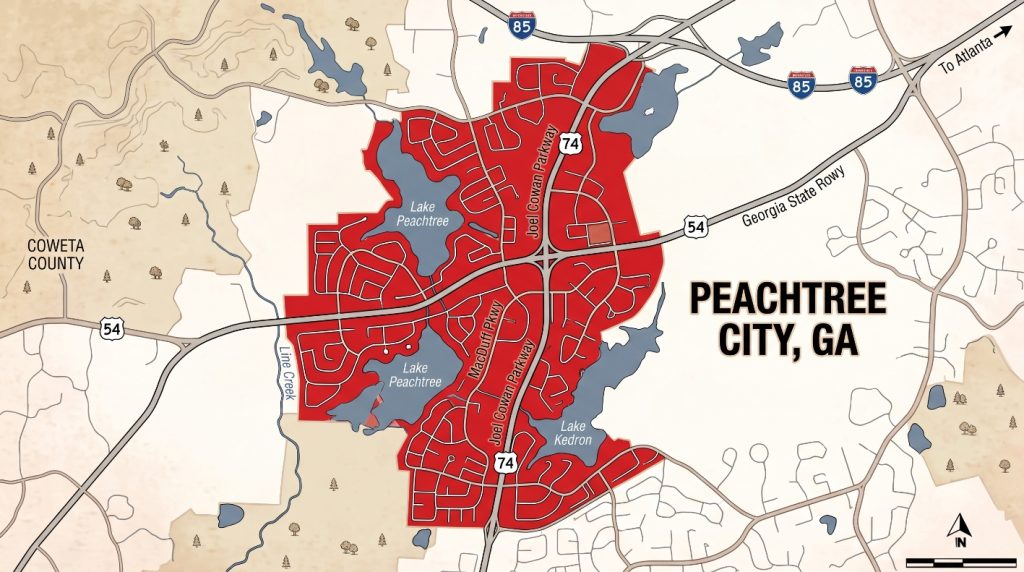

Commercial Insulation Peachtree City, GA
Reliable Spray Foam Solutions for Local Businesses
Poor insulation in a commercial building drives up energy costs and creates uncomfortable working conditions for employees and customers. Georgia Insulation provides commercial insulation services in Peachtree City, GA, helping business owners control temperature, reduce utility expenses, and protect their buildings from moisture and air leaks. We work with office buildings, warehouses, retail spaces, and industrial facilities throughout the surrounding areas.
Many business owners overlook insulation until they notice high energy bills or uneven temperatures throughout their space. We assess each building’s structure and recommend insulation solutions suited to its specific needs, whether that involves walls, roofs, or specialized areas like loading docks.
This page covers the insulation options we offer, the benefits of proper insulation, and what happens when commercial spaces go without it. We also explain our process and answer common questions business owners ask before starting a project.
Where Spray Foam Works in Commercial Buildings and Homes
Spray foam performs differently depending on the structure and its purpose, but the core function stays the same: sealing gaps and blocking air movement. We apply it across rooflines, walls, storage areas, attics, crawl spaces, and garages, adjusting the formula and thickness to match each surface.
Commercial Rooflines, Walls, and Storage Areas
Rooflines take the most direct heat exposure in any commercial building, which makes them a priority area for us. We apply spray foam directly to the underside of metal or built-up roof decks, creating a continuous barrier that resists heat transfer and moisture infiltration.
Walls benefit from the same approach, particularly in metal buildings where thermal bridging is common. We fill wall cavities and seal joints to stop conditioned air from escaping through seams and fasteners.
Storage areas, including warehouses and climate-sensitive inventory spaces, require consistent temperature and humidity control. Spray foam helps us maintain:
- Stable interior temperatures for stored goods
- Reduced condensation on walls and ceilings
- Lower humidity levels that protect inventory from mold or warping
Residential Attics, Crawl Spaces, and Garages
Attics lose significant heat in winter and gain heat in summer, so we treat this space as a top priority in residential applications. We spray foam directly onto the roof deck or attic floor to create a sealed thermal boundary.
Crawl spaces present a different challenge: ground moisture and poor air circulation. We apply closed-cell foam to the walls and rim joists, which blocks moisture migration and reduces the risk of wood rot.
Garages, especially those attached to living spaces, often go unsealed. We insulate garage ceilings and shared walls to prevent temperature swings from affecting adjacent rooms.
Benefits for Peachtree City Businesses
Commercial insulation affects two areas that matter most to local business owners: consistent indoor temperatures and protection against moisture damage. We’ve seen both issues directly impact operating costs and building condition across Peachtree City properties.
Improved Temperature Control
Georgia summers push commercial HVAC systems to their limits. Without adequate insulation, conditioned air escapes through walls, rooflines, and gaps around openings, forcing equipment to run longer and harder.
We install spray foam insulation that creates a continuous thermal barrier across your building envelope. This barrier keeps interior temperatures stable regardless of outdoor conditions, whether it’s a humid July afternoon or a cold snap in January.
Stable temperatures translate into several practical advantages:
- Lower utility bills from reduced HVAC runtime
- Consistent comfort for employees and customers in every room
- Less strain on equipment, which extends the lifespan of your heating and cooling systems
- Fewer temperature complaints from staff working near exterior walls or ceilings
We size and apply our insulation based on your building’s specific layout, so you get even coverage without weak points.
Reduced Air Leaks and Moisture Intrusion
Air leaks and moisture problems often go hand in hand. Gaps in a building’s envelope let humid air in during summer and allow conditioned air out year-round, while unsealed areas invite water intrusion during heavy rain.
Spray foam insulation seals these gaps on contact. Unlike traditional batt insulation, it expands to fill cracks around pipes, electrical conduits, and structural joints, closing off pathways that air and water typically use to enter a building.
This sealing effect protects your property in concrete ways:
Risk Without Sealing | Result With Spray Foam |
Humid air enters walls | Reduced condensation and mold risk |
Water seeps through gaps | Lower chance of structural rot |
Conditioned air escapes | Reduced energy waste |
We pay close attention to high-risk areas such as roof penetrations, loading dock seams, and foundation transitions, since these spots commonly allow moisture and air to bypass standard insulation methods.
Risks of Inadequate Building Insulation
Skipping proper insulation does not just affect comfort. It creates financial and structural consequences that compound over time, and we see both play out in buildings across Peachtree City.
Higher Operating Costs
When insulation fails to do its job, your HVAC system works harder to maintain a stable indoor temperature. This added strain shows up directly on monthly utility bills.
Over a year, the gap between a well-insulated building and a poorly insulated one can represent thousands of dollars in wasted energy. We also find that equipment subjected to this constant overwork tends to break down sooner, leading to:
- More frequent repair calls
- Shorter HVAC system lifespan
- Higher replacement costs down the line
These costs rarely appear all at once. Instead, they build gradually, often going unnoticed until a budget review reveals the pattern.
Comfort and Moisture Problems
Insufficient insulation allows outside air, humidity, and temperature swings to penetrate a building’s envelope. This creates uneven heating and cooling, with some rooms too cold and others too warm, regardless of thermostat settings.
Moisture is a more serious concern. Without a proper barrier, condensation can form inside walls and ceilings, creating conditions for mold growth and material decay.
We routinely see this damage affect:
Area | Common Issue |
Drywall | Staining, soft spots |
Wood framing | Rot, structural weakening |
Indoor air | Mold spores, poor air quality |
Left unaddressed, these problems can require costly repairs and may affect occupant health and productivity.
Why Work With Georgia Insulation
We bring local experience and building-specific recommendations to every commercial insulation project we take on. Our process is built around understanding your facility before we propose a solution.
Local Service for Peachtree City and Surrounding Areas
Based near Peachtree City, we understand the local climate, building codes, and commercial construction styles. Our nearby crews provide quick site visits, efficient project planning, and responsive follow-up service throughout the surrounding communities.
Recommendations Matched to Your Building
We assess each commercial building based on its age, materials, use, existing insulation, and energy goals. From there, we recommend the right insulation type and installation method for your building’s specific needs.
How the Installation Process Works
Our commercial insulation projects follow a defined sequence from initial evaluation through final inspection. This structure keeps projects on schedule and ensures installation meets code requirements.
01 Site Assessment and Project Scope
We begin with a walkthrough of your facility to evaluate existing insulation conditions and identify problem areas.
Our team checks for:
- Gaps and air leaks around windows, doors, and roof penetrations
- Existing insulation condition, including moisture damage or compression
- R-value requirements based on your building type and local code
- Access points for attics, crawl spaces, and mechanical rooms
Based on these findings, we draft a project scope outlining material recommendations, labor estimates, and a projected timeline. We review this scope with you before any work begins, so you understand what the project involves and what it will cost.
02 Preparation, Installation, and Final Review
Before installation starts, we clear work areas and protect surrounding surfaces, fixtures, and equipment from debris.
Our crew then installs the specified materials, whether that’s spray foam, batt, or blown-in insulation, according to the agreed scope.
We follow manufacturer specifications and local building codes throughout the process. Our technicians check seal quality and coverage at each stage rather than waiting until the job is complete.
Once installation is finished, we conduct a final walkthrough with you. This includes a visual inspection of all treated areas and, where applicable, thermal imaging to confirm consistent coverage. We address any questions before closing out the project.
Serving Peachtree city, GA and Surrounding Areas
We provide commercial insulation services for offices, warehouses, retail spaces, and other commercial properties in Peachtree city, GA, and surrounding areas, helping businesses improve energy efficiency, comfort, and moisture control.
Testimonials
Improve Your Commercial Building’s Efficiency
Upgrade your commercial property with insulation designed for better energy efficiency, indoor comfort, and long-term performance. Contact Georgia Insulation today for a free quote tailored to your building.
Frequently Asked Questions
Business owners in Peachtree City often ask us about building types, installation locations, costs, and compliance. Below are answers to the questions we hear most.
What types of commercial buildings do you insulate?
We insulate offices, warehouses, retail spaces, restaurants, metal buildings, and pole barns. We also work on manufacturing facilities and multi-unit properties.
Each building type has different insulation needs based on size, use, and construction. We assess your property before recommending a solution.
Where can spray foam be installed in a commercial building?
We install spray foam in roofs, walls, attics, and crawl spaces. It also works well around pipes, ductwork, and metal building panels.
Spray foam seals gaps that other insulation types may miss. This includes joints, seams, and irregular surfaces common in commercial structures.
How can insulation lower a business's energy costs?
Insulation reduces the amount of heated or cooled air that escapes through walls, roofs, and floors. This means your HVAC system doesn’t have to work as hard to maintain a set temperature.
Over time, this can lead to lower monthly utility bills. The exact savings depend on your building’s current insulation condition and local climate.
What are the risks of inadequate commercial insulation?
Poor insulation can lead to higher energy bills, uneven indoor temperatures, and increased strain on HVAC equipment. It can also allow moisture to build up, which may cause mold or structural damage.
Gaps in insulation sometimes create entry points for pests. Over time, these issues can affect employee comfort and increase repair costs.
What insulation requirements apply to commercial buildings in Georgia?
Georgia follows energy codes that set minimum insulation standards based on building type and climate zone. These codes address R-values for roofs, walls, and floors in commercial construction.
We stay current on these requirements and factor them into our recommendations. This helps you avoid compliance issues during inspections or future renovations.
How long does commercial insulation installation take?
We schedule work to minimize disruption, often completing jobs during off-hours or in sections to keep parts of your building operational. Spray foam installation requires temporary ventilation and limited access to the work area during curing, but this is typically confined to specific zones. You can discuss scheduling options with us in advance to fit your business needs.