
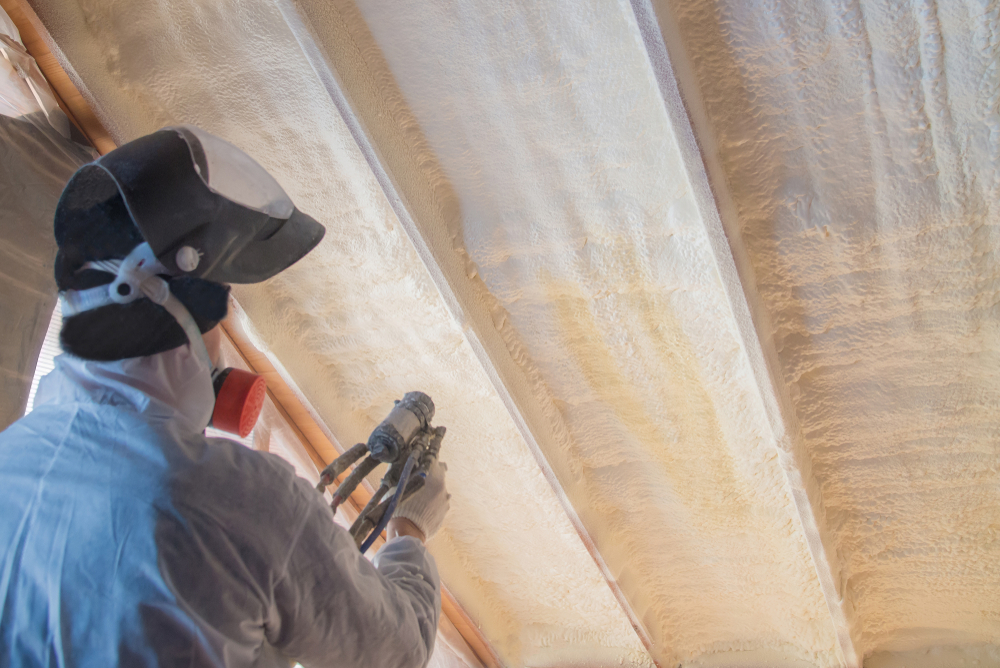


Homes and businesses across Newnan, GA lose energy through gaps, cracks, and poorly insulated spaces that traditional insulation materials fail to seal. Spray foam insulation expands to fill these gaps completely, creating an airtight barrier that stops energy loss at the source. We provide spray foam insulation services for homeowners and business owners throughout Newnan and the surrounding areas.
Uneven temperatures, high energy bills, and moisture problems often point to insulation that no longer performs as it should. Spray foam addresses these issues directly by sealing the building envelope, whether in an attic, crawl space, or commercial structure. We work with property owners to identify where their insulation is failing and apply a solution built for long-term performance.
Our team brings technical knowledge and local experience to every project, understanding the specific climate and construction challenges found in this region of Georgia. We handle both open-cell and closed-cell applications for residential and commercial properties, matching the product to the structure and the goal.
Spray foam insulation works in nearly every part of a structure, from attics down to crawl spaces, and across tight or awkward spots that other materials can’t seal properly. We apply it in both residential and commercial settings, adjusting the formula and technique based on the specific area.
Attics lose significant heat in winter and trap excess heat in summer, making them one of the most common areas we treat. Spray foam seals gaps around rafters, vents, and electrical penetrations that fiberglass batts tend to miss.
Rooflines benefit from spray foam when you want a conditioned attic space rather than a vented one. We apply closed-cell foam directly to the roof deck, which helps block moisture and reduces the chance of ice dams forming in colder months.
Crawl spaces present their own challenges, including ground moisture and poor air circulation. We use spray foam on crawl space walls to create a sealed environment, which helps control humidity and limits the entry of pests and outside air.
Wall cavities, both interior and exterior, accept spray foam well during new construction or major renovations. The foam expands to fill irregular gaps around studs, pipes, and wiring, creating a tighter seal than traditional batt insulation.
Garages often go overlooked, but they affect the comfort of adjacent living spaces. We insulate garage walls and ceilings to reduce temperature transfer, particularly in attached garages where heat or cold can seep into nearby rooms.
Hard-to-reach areas, such as:
benefit from spray foam's ability to expand and fill spaces that rigid materials can't reach. We rely on this adaptability to address spots that are otherwise difficult to insulate effectively.
Commercial properties face different demands than homes, including larger square footage and varied HVAC zones. We apply spray foam in warehouses, retail spaces, and office buildings to manage energy costs across these larger areas.
Workspaces with specific temperature or humidity requirements, such as storage facilities or production areas, benefit from the air-sealing properties of spray foam. It helps maintain consistent conditions without placing extra strain on heating and cooling systems.
Metal buildings also respond well to spray foam application. We use it to address condensation concerns common in metal structures, since the foam adheres directly to interior surfaces and reduces the temperature differential that leads to moisture buildup.
Spray foam insulation addresses two core concerns for property owners: how a building feels day to day and how efficiently it operates over time. The sections below cover both.
Spray foam expands on contact and fills gaps, cracks, and irregular spaces that rigid insulation often misses. This creates a continuous air barrier across walls, attics, and crawl spaces.
A sealed building envelope reduces drafts near windows, doors, and outlets. Rooms maintain more consistent temperatures from floor to ceiling, and from one room to the next.
Air sealing also limits outdoor noise transfer, which matters for homes near busy roads and for commercial spaces that need quiet work areas. Fewer gaps mean fewer entry points for dust, pollen, and insects.
We install spray foam to match the specific cavities and surfaces of each structure, since gaps vary by building age and construction method.
Spray foam’s air-sealing properties directly reduce the energy a heating or cooling system needs to maintain set temperatures. Less conditioned air escapes, so equipment cycles less often.
Factor | Effect |
Air leakage | Reduced through sealed gaps and seams |
HVAC cycling | Decreased due to stable indoor temperatures |
Moisture intrusion | Limited by closed-cell foam’s water-resistant structure |
Closed-cell spray foam also acts as a moisture barrier in areas prone to humidity, such as basements and crawl spaces. This helps limit conditions that support mold growth and wood rot.
We assess moisture exposure risk before recommending a specific foam type, since closed-cell and open-cell products perform differently in damp environments. Matching the product to the application supports both energy performance and long-term material condition.
Gaps in your insulation create pathways for conditioned air to escape and outdoor air to seep in. Over time, these gaps force your HVAC system to work harder while making certain rooms uncomfortable.
Uninsulated gaps allow air to move freely between conditioned and unconditioned spaces. You might notice cold spots near exterior walls in winter or warm, stuffy rooms during summer months.
These temperature inconsistencies are most noticeable in rooms farthest from your thermostat. Second floors often run warmer than main levels, while rooms above garages or crawl spaces tend to feel colder.
In commercial buildings, uneven temperatures can affect multiple tenants or departments differently. We often find that gaps around window frames, electrical outlets, and attic access points are common culprits behind these drafts.
When air leaks through unsealed gaps, your heating and cooling systems must work longer to maintain your set temperature. This constant cycling adds wear to your HVAC equipment and shortens its lifespan.
Your monthly energy bills reflect this extra strain. Homes and buildings with significant gaps can see energy costs rise by a noticeable percentage compared to properly sealed structures.
Commercial properties face similar issues on a larger scale, often with higher utility costs due to greater square footage. We recommend addressing these gaps early, since the longer they remain unsealed, the more your equipment compensates and the more you pay in avoidable energy expenses.
We bring licensed technicians, proven materials, and local knowledge to every spray foam insulation project. Our approach combines technical expertise with recommendations tailored to your specific property type and energy goals.
Based in Peachtree City, we serve homeowners and businesses across surrounding Georgia counties. Our local climate and building code knowledge guides our insulation solutions, while our trained technicians provide professional installation, clear communication, and dependable support.
We assess each property based on its age, construction, and use before recommending an insulation solution. Our recommendations consider insulation type, application areas, R-value requirements, project timeline, and cost, with clear explanations so you understand what your property needs.
Spray foam installation involves a few clear stages, from the initial site visit to the final cleanup. Knowing what happens at each step helps you prepare your property and understand the timeline.
We start every project with a thorough assessment of your property. Our team inspects attics, walls, crawl spaces, and other target areas to identify air leaks, moisture issues, and existing insulation conditions.
Based on this assessment, we create a project plan tailored to your building’s specific needs. This plan outlines:
We walk you through this plan before work begins, so you know exactly what to expect and can ask questions about the scope or cost.
On installation day, our crew prepares the workspace by covering floors, furniture, and fixtures to protect them from overspray. We also seal off the work area from the rest of the building, since occupants and pets need to stay out during application and for a period afterward.
Our technicians then apply the spray foam using specialized equipment that mixes and sprays the material at controlled temperatures. This step typically takes a few hours, depending on the size of the project.
After application, the foam needs time to cure. Once curing is complete, our team removes protective coverings, cleans the work area, and does a final walkthrough with you to confirm the job meets our standards.
Spray foam insulation solutions for homes and businesses in Peachtree City, GA and surrounding areas, helping improve comfort, air sealing, and energy efficiency.
Improve energy efficiency, indoor comfort, and air sealing with professionally installed spray foam insulation. Get a free quote and find the right insulation solution for your home or commercial property.
Below we answer the questions we hear most often from homeowners and business owners in Peachtree City and the surrounding area.
Cost depends on square footage, the type of foam used, and the areas being insulated. Closed-cell foam typically costs more than open-cell foam due to its density and R-value.
We provide a free, no-obligation estimate after assessing your property. This allows us to give you an accurate price based on your specific project rather than a general range.
We install spray foam in attics, crawl spaces, basements, and wall cavities. For commercial buildings, we also apply it in metal buildings, warehouses, and roofing systems.
Each area has different moisture, temperature, and access conditions. We select the right foam type and application method for each specific space.
Open-cell foam is lighter, more flexible, and less expensive. It works well for interior walls and areas where sound dampening is a priority.
Closed-cell foam is denser, provides a higher R-value per inch, and adds structural rigidity. We often recommend it for crawl spaces, exterior walls, and areas exposed to moisture.
Spray foam creates an air seal that reduces the amount of conditioned air escaping through gaps and cracks. This can lead to lower heating and cooling costs over time.
The amount of savings depends on your home or building’s current insulation levels, air leakage, and HVAC system. We assess these factors during our initial inspection.
Once fully cured, spray foam is inert and does not off-gas. During installation and curing, we follow manufacturer guidelines for ventilation and re-entry times.
Our technicians wear appropriate protective equipment during application. We inform you of any re-entry timelines specific to your project before we begin work.
Most residential projects take one to two days, depending on the size of the area and the type of foam used. Larger commercial projects may require additional time.
We provide a project timeline before starting so you know what to expect. Weather conditions and site accessibility can also affect scheduling.