
Sunken concrete affects driveways, sidewalks, patios, and foundations throughout Newnan and the surrounding area. Soil erosion, poor compaction, and moisture changes cause slabs to settle unevenly over time. Georgia Insulation provides concrete lifting services that restore slabs to their original position without the cost of full replacement.
We work with homeowners and business owners who need a practical solution for uneven concrete. Our process involves injecting material beneath the slab to fill voids and raise the surface back into place. This approach addresses the underlying issue rather than masking it temporarily.
Settled concrete creates trip hazards, drainage problems, and ongoing structural concerns if left unaddressed. We identify the cause of settlement and apply a lifting method suited to your specific property and slab condition. Our team serves Newnan and nearby communities with a direct, no-nonsense approach to concrete repair.
Uneven concrete affects nearly every part of a property, from front walkways to commercial loading docks. We lift slabs in both residential and commercial settings, addressing safety hazards and drainage issues wherever concrete has settled.
We lift driveways that have settled unevenly, a problem that often leads to cracking and water pooling near garage entrances. Walkways and sidewalks present trip hazards when sections sink below grade, and we restore them to a level surface without replacing the concrete.
Patios lose their function when uneven slabs create awkward transitions for outdoor furniture or grills. Pool decks require special attention, since sunken sections near the coping can cause water to drain back toward the house instead of away from it.
We work on:
Business owners face liability concerns when entrances or sidewalks shift out of level. We address these areas quickly to reduce the risk of customer or employee injury on uneven surfaces.
Loading docks and warehouse aprons experience heavy, repeated weight from trucks and forklifts, which accelerates settling compared to typical residential concrete. We lift these areas without shutting down operations for extended periods.
Parking lots and curb ramps also fall under this category, particularly where ADA compliance requires a level transition. Our approach restores functional slopes without full-depth replacement.
Lifting sunken concrete solves the underlying problem rather than masking it, and the results show up in both daily use and long-term structural performance. We find that homeowners and business owners notice two main advantages: safer surfaces right away, and a repair that doesn’t require tearing out the slab.
A sunken or uneven slab creates real hazards. Trip points, standing water, and awkward transitions between surfaces all increase the risk of falls on driveways, walkways, and patios.
When we lift a slab back to its original position, we eliminate these height differences. Water drains the way it was designed to instead of pooling against your foundation or doorways.
This matters for:
For commercial properties, a level surface also reduces exposure to customer or employee injury claims.
Concrete doesn’t sink without a reason. Soil erosion, poor compaction, or moisture changes beneath the slab are usually the cause, and these conditions remain even after a slab is poured fresh.
Lifting the existing slab addresses the settling directly. We inject material beneath the concrete to fill voids and stabilize the soil, which supports the slab from below instead of just replacing what’s visible on top.
This approach preserves the slab you already have, which keeps costs and project timelines lower than full replacement. It also reduces the disruption to landscaping, parking areas, or foundation work that demolition would otherwise require.
Sunken concrete rarely stays the same size or shape once settlement begins. The longer a slab sits uneven, the more likely you are to face safety concerns, water damage, and additional repair costs.
An uneven walkway, step, or driveway creates a genuine fall risk for anyone walking across it. Even a height difference of half an inch between slab sections can catch a foot or wheel.
This matters most in areas with regular foot traffic, such as:
For business owners, this raises liability questions. A customer or employee who trips on a sunken slab may hold the property owner responsible for the injury.
Uneven concrete can also block or slow down wheelchairs, strollers, and hand trucks. We often see sunken sections near garage doors that make it difficult to roll equipment or vehicles in and out smoothly.
Once a slab sinks, it no longer directs water the way it was designed to. Low spots collect rainwater instead of letting it drain away from the foundation.
This pooling water softens the soil beneath and around the slab further, which can cause additional settling over time. Water that sits near a foundation wall can also seep into basements or crawl spaces.
In Georgia’s climate, repeated wet-dry cycles in clay soil speed up this process. We find that slabs left untreated for a season or two often settle more than they would have with early intervention.
Left unaddressed, this cycle can turn a single sunken section into a wider drainage and settlement problem across the property.
Our team combines local knowledge with technical expertise in polyurethane foam injection, and we provide clear guidance so you know exactly what your property needs.
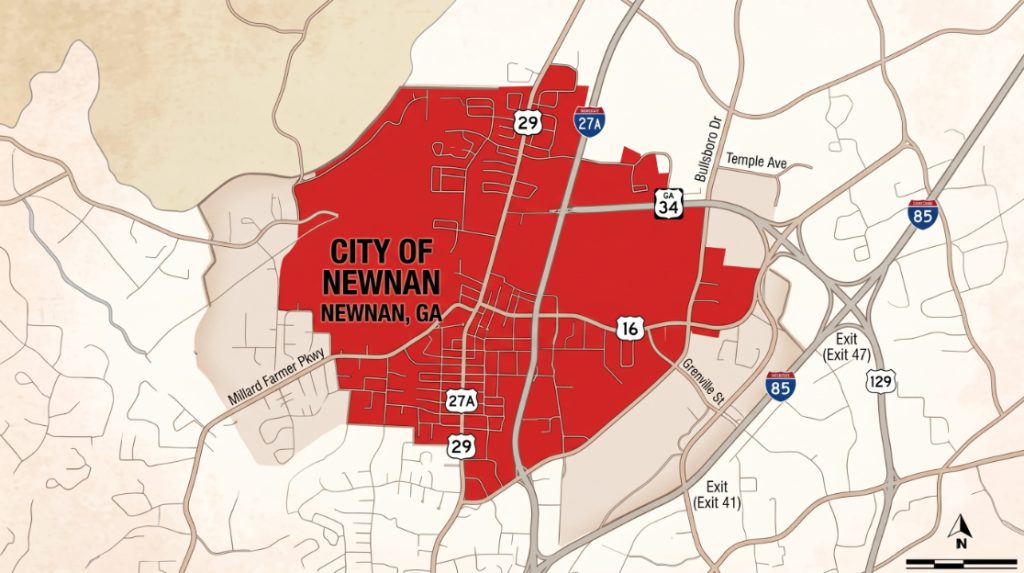
We serve Newnan, GA and surrounding Coweta County communities, with local knowledge of soil and climate conditions that can cause concrete settling. Our team provides responsive service for residential and commercial properties, using consistent equipment and processes while following local requirements.
We provide straightforward concrete assessments for residential and commercial properties, identifying settlement, safety, alignment, and accessibility concerns. We explain our recommendations clearly, provide a written estimate, and only recommend lifting when it is an appropriate solution.
Our concrete lifting process follows a clear sequence from the initial inspection to the final elevation check. Here’s a breakdown of what happens at each stage.
We start by inspecting the affected slab to determine the cause of settlement and the extent of the void beneath it. Our team checks for drainage issues, soil erosion, or poor compaction that may have contributed to the problem.
Once we understand the underlying cause, we measure the slab’s current elevation and mark the areas that need lifting. This helps us identify where injection ports should be placed.
We then put together a written service plan that outlines the scope of work, the material we’ll use, and the expected outcome. You’ll know what to expect before any drilling begins.
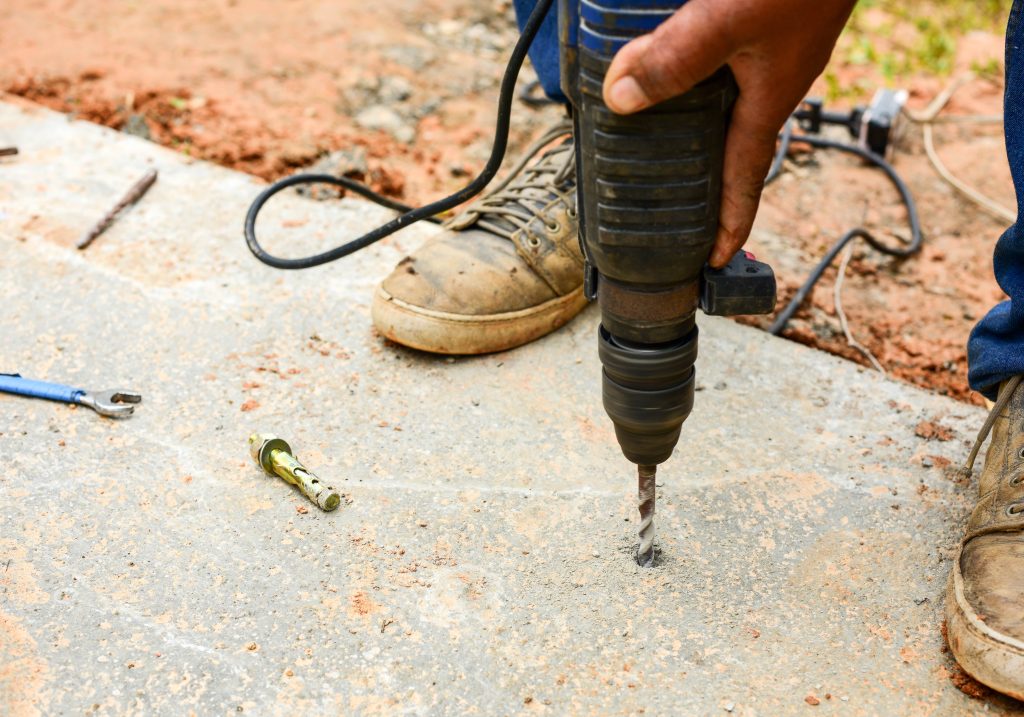
foam is then pumped beneath the slab through these openings.
As the foam expands, it fills voids and gradually raises the concrete. We monitor the elevation throughout this stage using measuring tools, adjusting the injection as needed to bring the slab back to its intended level.
Once the slab reaches the target height, we stop the injection and let the material cure. The holes are patched, and we conduct a final review to confirm the surface is level and stable. Most projects are completed within a few hours.
While concrete lifting addresses settling slabs and foundations, we also provide spray foam insulation as a standalone service for homeowners and business owners in Newnan and the surrounding area. This service targets energy loss and air leakage in both residential and commercial structures.
We apply spray foam insulation in several key areas of a home, each with its own requirements.
Each application uses either open-cell or closed-cell foam, depending on moisture exposure and the space’s structural needs. We assess these factors before recommending a specific product for your project.
Commercial buildings present different insulation challenges than residential properties. We apply spray foam to rooflines to create a continuous barrier against water infiltration and thermal loss, which is particularly useful for flat or low-slope commercial roofs.
For building envelopes, we target wall assemblies, loading dock areas, and transitions between materials where air can escape. Our team evaluates the building’s construction type and usage before determining foam density and application thickness. This service works well for warehouses, retail spaces, and office buildings where energy costs and structural durability are ongoing concerns for owners and managers.
We provide concrete lifting in Newnan, GA and surrounding areas, helping restore uneven driveways, sidewalks, patios, pool decks, and commercial concrete surfaces.
We offer inspections for properties throughout our service area. During this visit, we examine the affected concrete, assess the soil conditions beneath it, and identify the likely cause of settling or unevenness.
We recommend scheduling an evaluation as soon as you notice sinking or shifting concrete, since delays can allow the underlying soil issue to worsen.
Homeowners and business owners often have questions about the causes of sinking concrete, the lifting process, and what to expect before and after a project. We’ve answered the most common questions below.
Concrete sinks when the soil beneath it shifts, compacts, or erodes over time. Poor soil compaction during the original installation, heavy rainfall, drainage issues, and changes in moisture levels all contribute to this process. Clay-heavy soils, common in the Newnan area, expand and contract with moisture changes, which can leave gaps beneath a slab.
Tree roots and poor grading around a property can also redirect water in ways that erode supporting soil.
We drill small holes into the sunken slab and inject a specialized material underneath it. This material expands and fills the voids left by eroded or compacted soil, raising the slab back to its original position.
Once the slab is level, we seal the holes. The process doesn’t require slab removal or replacement.
Yes, we lift driveways, sidewalks, patios, pool decks, and commercial walkways. The same method applies to residential and commercial concrete, regardless of the surface’s purpose.
We assess the slab’s thickness, size, and current condition before determining the right approach for each surface type.
Most residential projects take a few hours to complete in a single day. Larger commercial jobs, such as parking lots or extended sidewalks, may require additional time depending on the scope of the work.
We provide a specific timeframe after inspecting the site and reviewing the extent of the sinking.
The lifted surface is typically ready for foot traffic within an hour after the project is complete. Vehicle traffic on driveways usually requires a short waiting period, which we’ll confirm on-site based on the material used.
Costs depend on the size of the slab, the depth of the void beneath it, and the extent of the sinking. Driveways, sidewalks, and patios each have different pricing based on square footage and material needs.
We provide a detailed estimate after evaluating the property in person.