Crawl spaces in Middle Georgia homes create problems that spread far beyond the space itself. Cold floors in winter, musty odors, and higher energy bills often trace back to an uninsulated or poorly sealed crawl space. Georgia Insulation provides crawl space insulation services in Warner Robins, GA that address moisture, temperature control, and air quality issues at their source.
We work with homeowners and business owners throughout the area who deal with humid air, pest intrusion, or inconsistent indoor temperatures caused by an unprotected crawl space. Our approach combines insulation materials with encapsulation techniques suited to the specific conditions found under your building.
This page covers our crawl space insulation process, the risks of leaving a crawl space untreated, and what you can expect when you choose our team for the job.
Spray foam seals the gaps, cracks, and joints where air and moisture typically enter a crawl space. We apply it differently depending on whether the space sits beneath a house or a commercial building.
In homes, we spray foam directly onto crawl space walls, rim joists, and the underside of subfloors. This creates a continuous air barrier that stops drafts from reaching living spaces above.
Closed-cell spray foam works well here because it resists moisture absorption. It also adds structural rigidity to the areas where it's applied.
We pay close attention to:
Once sealed, the crawl space temperature stabilizes. This reduces the load on heating and cooling systems and helps prevent condensation that leads to wood rot or mold growth.
Commercial crawl spaces often cover larger areas and include more complex mechanical systems. We adjust our application methods to account for extended duct runs, additional plumbing lines, and higher moisture loads from larger building footprints.
Spray foam still forms the same air and moisture barrier, but coverage requires more material and longer application time. We inspect for fire code compliance, since some commercial spaces require thermal barriers over the foam.
Property managers benefit from:
| Factor | Result |
|---|---|
| Reduced air infiltration | Lower HVAC operating costs |
| Moisture control | Fewer structural repairs |
| Sealed penetrations | Better indoor air quality |
We coordinate scheduling around business hours to limit disruption to operations.
An insulated crawl space affects your indoor temperature stability, your energy costs, and the air you breathe inside your home or business. When we insulate this area correctly, we address all three at once.
Uninsulated or poorly insulated crawl spaces allow conditioned air to escape through your floors. This forces your HVAC system to work harder to maintain a set temperature, especially in Warner Robins summers and winters.
We install insulation that creates a thermal barrier between your living space and the ground below. This reduces the temperature difference your HVAC system has to compensate for.
Common results our clients see include:
Crawl spaces without proper insulation and sealing often allow outside air, moisture, and contaminants to enter your home. This air can carry mold spores, dust, and allergens directly into your living space through gaps in flooring.
We insulate crawl spaces to limit this air exchange. By reducing moisture infiltration, we also reduce conditions that support mold and mildew growth.
This matters for:
An uninsulated crawl space creates conditions for moisture buildup and gives pests an easy way into your home. Left unaddressed, these issues can affect both air quality and the structural integrity of your building.
Without insulation, warm indoor air meets cool crawl space surfaces and produces condensation. This moisture has nowhere to go, so it settles on wood framing, insulation, and ductwork.
Over time, we commonly find mold colonies developing in these damp, dark spaces. Mold spores travel upward into living areas through gaps in flooring, which can affect indoor air quality for everyone in the building.
High humidity also promotes wood rot in floor joists and support beams. This weakens the structure gradually, often before homeowners notice any visible signs.
Common signs of moisture problems include:
Gaps left by missing or damaged insulation give insects and rodents direct access to your crawl space. Termites, carpenter ants, and rodents are drawn to the moisture and organic material that accumulates there.
Once inside, these pests often chew through insulation, wiring, and wood framing. We regularly see termite damage that started in an uninsulated crawl space and spread to floor joists above.
Rodents can also damage ductwork and electrical systems, creating additional repair costs. Beyond pest activity, the combination of moisture and temperature swings weakens structural components faster than in a properly insulated space.
This can lead to sagging floors, cracked drywall, and reduced stability in the building’s foundation area over time.
Homeowners and business owners in Warner Robins choose us because we combine regional expertise with consistent installation quality. Both factors directly affect how well your crawl space performs over time.
We understand the specific challenges that Middle Georgia's climate and soil conditions create for crawl spaces. Warner Robins sees high humidity for much of the year, and homes in this region often sit on soil types that hold moisture close to the foundation. We've worked on homes and commercial buildings throughout the area, including older properties with outdated vapor barriers and newer construction with ventilation issues, and this experience helps us identify problems specific to local building codes and construction methods used in the area. We also account for regional pest pressures, such as termites and moisture-loving insects, when recommending insulation and encapsulation approaches.
Our team follows manufacturer specifications and industry best practices for every insulation type we install, including spray foam, batt, and blown-in materials, using equipment calibrated for accurate application thickness and coverage. Before starting any project, we inspect the crawl space for existing moisture damage, structural issues, or ventilation gaps so we can address underlying problems rather than insulating over them. Our installation process includes a pre-installation inspection to assess current conditions, moisture barrier placement where encapsulation is needed, proper sealing around vents, pipes, and access points, and a post-installation review to confirm coverage meets project specifications. We hold the licensing required to perform insulation work in Georgia, and our technicians receive ongoing training on updated materials and application techniques.

We follow a structured process that starts with a thorough evaluation and ends with a properly sealed, insulated crawl space. Each step is designed to address moisture, air leaks, and insulation gaps before installation begins.
We start every project with a detailed inspection of your crawl space.
Our team checks for:
We measure humidity levels and assess airflow patterns to understand how your crawl space is performing. This step helps us identify the root cause of any problems, not just the symptoms.
Based on our findings, we recommend a specific insulation approach for your home or commercial building. We explain what we found and why it matters before any work begins.
Before installing insulation, we prepare the space to ensure long-term performance.
This includes:
Once the area is prepared, we apply spray foam insulation to the walls, rim joists, and other targeted areas. We work carefully around plumbing, electrical lines, and structural components to avoid damage.
After application, we inspect the finished work to confirm full coverage and a proper seal. We leave the space clean and ready for continued access to utilities.
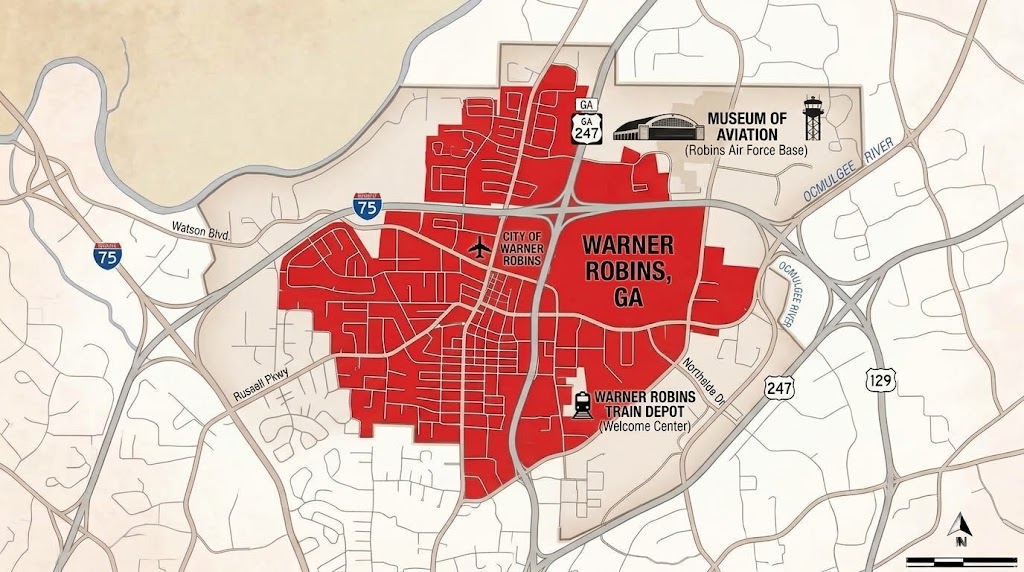
We install crawl space insulation throughout Warner Robins and the surrounding communities of Middle Georgia. Our crews work on homes and commercial buildings alike, adjusting our approach to the soil and moisture conditions found in each location.
Starting with a consultation lets us evaluate your crawl space and identify the best insulation approach for your property.
We provide a written estimate after the inspection, with no obligation to proceed. This gives property owners time to review options before making a decision.
Crawl space insulation projects raise practical questions about cost, materials, and results. Here are the answers we give most often to homeowners and business owners in Warner Robins.
Pricing depends on square footage, the type of insulation we use, and whether we also install a vapor barrier or seal existing moisture damage. Most residential crawl spaces range from a few hundred to a few thousand dollars for a complete job.
We provide a free on-site inspection before giving an exact quote. This lets us account for access issues, existing insulation removal, and any repairs needed first.
Closed-cell spray foam is our most common recommendation for crawl space walls because it creates an air seal and resists moisture. Fiberglass batts and rigid foam board are other options we use depending on the structure and budget.
We select the material based on your crawl space’s ventilation, moisture levels, and how the space connects to the rest of your home.
For Georgia’s climate zone, we typically recommend an R-value between R-13 and R-19 for crawl space walls. This range balances energy performance with cost for our region’s humidity and temperature swings.
We adjust this recommendation based on your specific home layout and whether the crawl space is vented or sealed.
Yes. An uninsulated or poorly insulated crawl space allows conditioned air to escape and outside air to enter, which forces your HVAC system to work harder.
We’ve seen clients notice a measurable difference in heating and cooling costs after we seal and insulate their crawl space correctly.
Insulation alone won’t stop moisture, but when we pair it with a vapor barrier and proper sealing, it significantly reduces the conditions that lead to mold growth. Moisture in a crawl space often comes from ground humidity, so addressing both the air and the ground barrier matters.
We assess your crawl space’s moisture source first, then recommend the right combination of insulation and vapor control.
Most crawl space insulation projects take one day to complete, depending on the size of the space and the condition it’s in. If we need to remove old insulation or address moisture damage first, the timeline may extend to two days.
We give you a specific time estimate after our initial inspection so you know what to expect