Spray Foam Insulation Warner Robins, GA

Rated 5.0 on Google Reviews
Rated 5 out of 5

Georgia Insulation's Trusted Home & Commercial Solution

Spray foam insulation solutions

Georgia summers push attics past 150 degrees, and winter mornings can still bring a chill into poorly sealed homes. Spray foam insulation seals gaps and cracks that fiberglass and cellulose leave open, stopping air leaks at the source rather than just slowing them down. For homeowners and business owners in Alpharetta and the surrounding area, that difference shows up directly on monthly utility bills.

We work with properties that struggle with humidity, temperature swings, and rising energy costs tied to an outdated or incomplete insulation system. Older homes with minimal attic insulation, crawl spaces exposed to moisture, and commercial buildings with drafty walls all face similar issues. Our approach targets these specific problem areas rather than applying a one-size-fits-all solution.

This page covers how spray foam insulation works across different parts of a home or commercial building, the risks tied to skipping this upgrade, and what our installation process looks like from start to finish. We install spray foam for attics, crawl spaces, walls, and commercial buildings, addressing the climate challenges specific to Georgia properties. Whether the goal is lower energy bills, better humidity control, or a more comfortable indoor space, the information below outlines what to expect.

Where Spray Foam Works Best

Spray foam performs differently depending on where we install it. Attics, walls, crawl spaces, garages, and commercial spaces each present unique conditions that affect how we approach application.

🏠

Attics And Rooflines

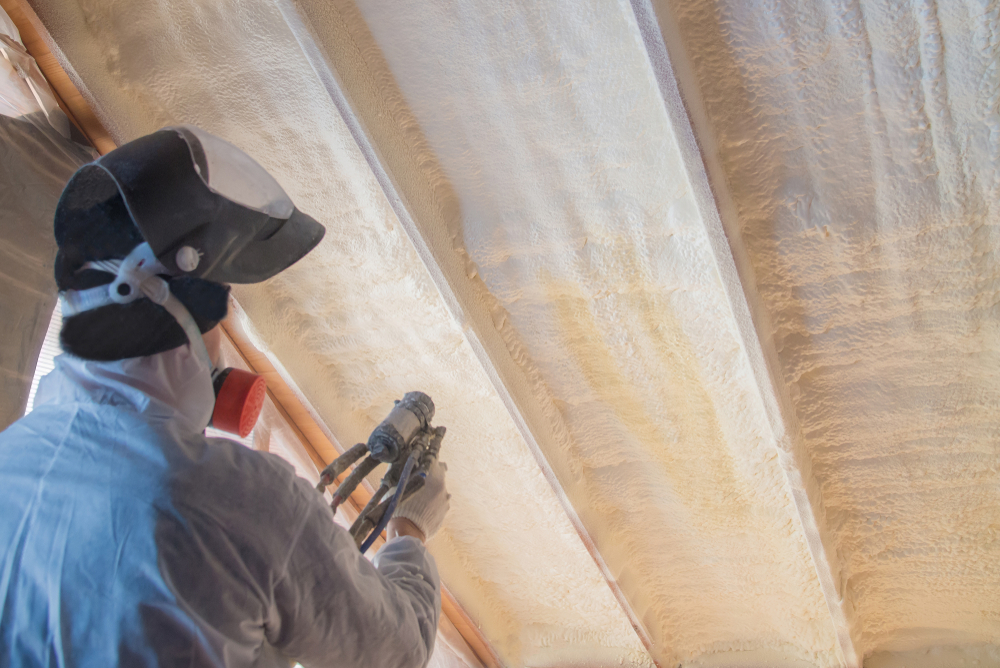
Attics take on extreme heat in the summer and lose warmth fast in the winter. We apply spray foam directly to the underside of the roof deck, sealing the entire attic space rather than just the floor.

This approach turns the attic into part of your home's conditioned space. It stops the heat transfer that drives up cooling costs during Georgia summers.

We also target rooflines where gaps commonly form around rafters and eaves. Closed-cell foam works well here because it adds rigidity and blocks moisture from reaching wood framing.

🧱

Exterior Walls And Crawl Spaces

Exterior walls develop gaps around studs, outlets, and window frames over time. We inject foam into these cavities to eliminate the air leaks that traditional batt insulation often misses.

Crawl spaces present a different challenge: moisture. Georgia's humidity creates conditions for mold and wood rot in unsealed crawl spaces.

We use closed-cell foam on crawl space walls because it resists water absorption. This keeps the space dry and protects the flooring above it.

Common problem areas we address:

  • Rim joists
  • Sill plates
  • Duct penetrations
  • Foundation vents
🏡

Garages And Bonus Rooms

Garages often sit outside the main insulation envelope, which means they transfer heat and cold into adjacent living spaces. We spray foam garage ceilings and shared walls to cut down on this transfer.

Bonus rooms above garages face a similar issue. These rooms often run hotter or colder than the rest of the house because they're isolated from the main HVAC zone.

We apply foam to the walls, floor, and roofline of these spaces to bring their temperature closer in line with the rest of the home. This reduces strain on the HVAC system and makes the room more usable year-round.

🏢

Commercial Offices And Facilities

Commercial buildings lose energy through large roof surfaces, loading docks, and mechanical rooms. We apply spray foam to flat and low-slope roofs to create a continuous air barrier that reduces HVAC load.

Office spaces benefit from foam insulation in exterior walls, particularly in older buildings with outdated insulation. This helps maintain consistent temperatures across different zones.

We also insulate mechanical rooms and storage areas where temperature swings can damage equipment or inventory. For warehouses and facilities with high ceilings, foam application on the roof deck addresses one of the largest sources of energy loss in the building.

Performance Benefits For Properties

Spray foam insulation delivers measurable improvements in how a building manages heat, air, and moisture. These performance gains affect utility bills, indoor comfort, and the long-term condition of the structure itself.

Improved Energy Efficiency

Spray foam expands to fill gaps that traditional insulation often misses. This creates a tighter thermal envelope, which reduces the amount of heat that escapes in winter and enters in summer.

We find that this translates into lower energy consumption for heating and cooling systems. HVAC equipment doesn’t have to work as hard to maintain a set temperature.

Over time, this can lead to noticeable reductions in monthly utility costs. Unlike fiberglass batts, spray foam doesn’t compress or shift, so its insulating value remains stable year after year.

For both homeowners and business owners, this means fewer surprises on energy bills and less strain on equipment that regulates indoor temperature.

Stronger Air Sealing

Air leaks are one of the biggest contributors to energy loss in a building. Gaps around windows, doors, electrical outlets, and structural joints allow conditioned air to escape and outside air to seep in.

We apply spray foam to seal these gaps directly, creating a continuous barrier that traditional insulation materials can’t match. This barrier blocks drafts and reduces the workload placed on heating and cooling systems.

A well-sealed building also keeps out dust, pollen, and outdoor pollutants that would otherwise enter through small openings. For commercial properties, this can support better indoor air quality across large spaces, which matters for employee comfort and operational consistency.

Moisture And Humidity Control

Spray foam creates a barrier that limits the movement of moisture-laden air into walls, attics, and crawl spaces. This matters because trapped moisture can lead to mold growth, wood rot, and structural damage over time.

We use closed-cell spray foam in areas prone to moisture exposure, such as basements and crawl spaces, due to its water-resistant properties. Open-cell foam, while more breathable, still reduces air infiltration that carries humidity into a structure.

By controlling how much moisture enters a building envelope, spray foam helps protect:

  • Wood framing and structural components
  • Drywall and interior finishes
  • Stored belongings in attics or crawl spaces
  • Indoor air quality by limiting mold-friendly conditions

This is particularly relevant in Georgia’s humid climate, where excess moisture can accumulate quickly.

Consistent Indoor Comfort

Uneven temperatures between rooms or floors often point to insulation gaps or air leakage. Spray foam addresses this by creating uniform coverage across walls, attics, and other areas prone to inconsistency.

We see fewer temperature swings in properties with spray foam insulation, since it minimizes hot and cold spots caused by drafts or thermal bridging. This is especially useful in older homes or buildings with additions, where insulation quality can vary by section.

For commercial spaces, consistent temperatures support a more predictable environment for employees and customers. Reduced drafts also mean less reliance on space heaters or portable fans to compensate for uneven conditions, which can add unnecessary cost and clutter to a workspace.

The Cost Of Leaving Gaps Unsealed

Unsealed gaps in your walls, attic, or crawl space do more than let outside air in. They drive up energy bills, create uncomfortable living or working conditions, invite moisture problems, and force your HVAC system to work harder than it should.

Higher Heating And Cooling Costs

Air leaks let conditioned air escape and outside air seep in, forcing your HVAC system to run longer to maintain a set temperature. This shows up directly on your monthly utility bill.

In Middle Georgia’s climate, homes and businesses deal with hot, humid summers and cool winters. Unsealed gaps mean your cooling system works overtime from May through September, and your heating system compensates for drafts in the winter months.

We often find that buildings with significant air leakage spend considerably more on energy than necessary. Sealing these gaps with spray foam reduces the workload on your HVAC system and keeps more of your conditioned air where it belongs.

Gaps around windows, doors, and in attic or wall cavities allow outside air to move freely into your living or working space. This creates noticeable drafts, particularly near exterior walls and floors.

Uneven temperatures are another common result. Some rooms may feel comfortable while others—especially those farthest from the thermostat or closest to exterior walls—stay too hot or too cold.

For businesses, this can affect employee comfort and customer experience. For homeowners, it means constantly adjusting the thermostat or relying on space heaters and fans to compensate:

  • Cold spots near baseboards or ceiling lines
  • Rooms above garages or near attics that swing in temperature
  • Drafts near electrical outlets and recessed lighting

When warm, moist air meets cool surfaces inside wall cavities or attics, condensation forms. Unsealed gaps make this more likely by allowing humid air to infiltrate spaces where it shouldn’t.

Over time, this moisture can lead to:

Concern

Potential Result

Wood rot

Structural damage to framing

Mold growth

Air quality issues, health concerns

Insulation damage

Reduced insulation effectiveness

Musty odors

Persistent smell throughout the building

We treat moisture control as a priority because it affects both the structure of your building and the health of the people inside it. Spray foam creates an air barrier that limits the movement of humid air into vulnerable areas.

When gaps force your HVAC system to run more often and for longer periods, the equipment experiences more wear. This can shorten its lifespan and increase the likelihood of repairs.

Systems that cycle on and off frequently, or run continuously to keep up with air loss, are more likely to need service. Compressors, blowers, and other components face more strain under these conditions.

We’ve seen how proper air sealing reduces the demand placed on heating and cooling systems. This means fewer repair calls and a longer functional life for equipment you’ve already invested in.

Why Choose Georgia Insulation

Selecting an insulation contractor comes down to local knowledge, service range, and material quality. We’ve built our approach around these three factors to give Warner Robins property owners a service they can rely on.

Local Warner Robins Experience

We understand the building conditions common to Warner Robins and Middle Georgia, where high humidity, hot summers, and mild winters can affect how insulation performs over time. Our team has worked in crawl spaces, attics, and walls throughout the area, including older homes with outdated insulation and newer construction that needs energy code compliance, so we know which materials hold up best against Georgia’s climate. This local experience helps us identify problem areas quickly and recommend the right solutions based on issues we’ve seen in other Warner Robins properties.

Solutions Tailored To Building Needs

We work on both residential and commercial projects, with services covering single-family homes such as attics, crawl spaces, walls, and additions; multi-family properties including apartments, townhomes, and condo units; and commercial buildings such as offices, warehouses, retail spaces, and metal buildings. Each property type has different insulation needs based on its structure, usage, and square footage, so we assess the specific requirements of your building instead of applying a one-size-fits-all method. Whether you're insulating a single room or an entire commercial facility, we scale our process to match the project size and complexity.

Quality Materials And Workmanship

We use spray foam products built for thermal performance, moisture resistance, and long-term durability, with materials that meet industry standards for insulation value and air sealing. Installation matters just as much as material choice, so our crew applies spray foam with attention to coverage, thickness, and proper curing while following manufacturer guidelines. We also conduct a post-installation review to check coverage and quality, helping ensure the finished product performs as intended. We stand behind our workmanship and use methods designed to reduce callbacks and performance issues down the line.

Our Installation Approach

We follow a structured process for every job, from initial inspection to final walkthrough. This consistency helps us deliver accurate quotes and dependable results across residential and commercial properties.

01 Property Assessment

We start with a thorough inspection of the space where insulation will be installed. This includes attics, crawlspaces, basements, walls, and commercial structures such as warehouses or metal buildings.

During this visit, we check for existing insulation, moisture issues, air leaks, and structural conditions that could affect the installation. We also measure square footage and identify any areas that need special attention, such as around wiring, plumbing, or HVAC ductwork.

This step allows us to understand the specific challenges of your property. It’s not a generic checklist; we look at how your building is constructed and how air moves through it. The information we gather here shapes every decision that follows.

Once we complete the assessment, we explain what we found and what we recommend. We’ll tell you whether open-cell or closed-cell spray foam is the better fit, based on the location and your goals.

We break down the scope of work in plain terms:

  • Areas to be treated (attic, crawlspace, walls, etc.)
  • Type of foam recommended for each area
  • Estimated coverage and thickness
  • Project timeline
  • Total cost, with no hidden fees

We answer questions before any work begins. We want you to understand exactly what you’re paying for and why we’re recommending it, so there are no surprises once installation starts.

Our technicians apply spray foam using calibrated equipment designed to maintain consistent mixing ratios and spray pressure. This matters because incorrect application can lead to poor expansion, off-ratio foam, or uneven coverage.

We protect surrounding surfaces, seal off work areas, and follow safety protocols throughout the process. Our team wears appropriate protective equipment and ventilates the space as needed during and after application.

We apply the foam in controlled layers to achieve the correct thickness without overheating or under-curing. This is especially important in enclosed spaces like crawlspaces or attics, where airflow can be limited.

We monitor conditions like ambient temperature and humidity, since both affect how spray foam cures and performs long-term.

After the foam has cured, we inspect the finished work before considering the job complete. We check for full coverage, proper thickness, and any gaps that might need a second pass.

We also look at adjacent areas to confirm nothing was damaged or overlooked during the application process. If we find any spots that need touch-up work, we address them at this stage, not after we’ve already left the site.

We walk you through the completed work so you can see the results firsthand. This final review confirms the installation meets the standards we set during the planning phase.

Serving Warner Robins And Surrounding Areas

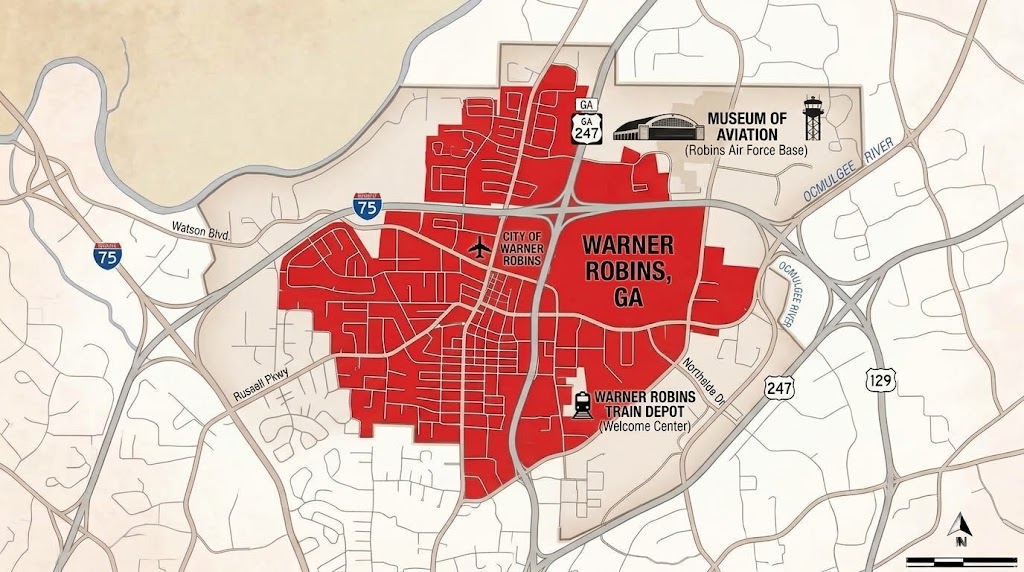
We install spray foam insulation for homeowners and business owners throughout Warner Robins, plus communities within roughly a 30-mile radius, including ZIP codes 31088 and 31093. Our crews handle attics, crawl spaces, walls, and metal buildings, whether the project is a single-family home or a commercial facility.

Testimonials

Posted on Google Google
Cara Tiesler profile picture
Cara Tiesler
Google star 1Google star 2Google star 3Google star 4Google star 5Trustindex verifies that the original source of the review is Google.
Georgia Insulation saved the day and our house! Breanna promptly answered my call, which was at the end of the work day, and listened to me freak out about being down to the wire and in need of insulation. She jumped right on the request and worked diligently with Jason to get me on the schedule asap. We cannot thank them enough for saving us! The installers were kind, professional and early… who is early these days?! We were very impressed by Breanna, Jason, and the rest of the team at Georgia Insulation. Don’t hesitate to work with this company, they actually care about their clients and don’t over promise (unlike the company that blew us off a day before they were scheduled to Install because they over promised and under delivered). So again, if you need a super reliable and professional insulation company, reach out to Breanna at Georgia Insulation, and she will get you taken care of! Thanks again for helping us!!
Posted on Google Google
Mary Jane profile picture
Mary Jane
Google star 1Google star 2Google star 3Google star 4Google star 5Trustindex verifies that the original source of the review is Google.
Fast friendly service
Posted on Google Google
jeff schmitt profile picture
jeff schmitt
Google star 1Google star 2Google star 3Google star 4Google star 5Trustindex verifies that the original source of the review is Google.
I can say enough great things about the people and my experience with Georgia Insulation. Terra came out and gave a thorough evaluation and quote for open cell foam insulation for our home. The quote was reasonable, and for the amount of work to be done, I thought it was a great deal. Edwin and his crew were awesome and entertaining. They removed all of the existing insulation in the attic and completely covered the underside of the roof with open cell foam. I’ve waited about 2 months to write this review, as I wanted to share energy savings. Last month bill was $106 less than the previous year, same month. The part about that blew me away, was last years June was a very mild June and this June has been quite hot. That being said, I feel very confident I will see a return on my investment. I highly recommend Georgia Insulation and Terra Schaefer and team.
Posted on Google Google
Allene Hoff profile picture
Allene Hoff
Google star 1Google star 2Google star 3Google star 4Google star 5Trustindex verifies that the original source of the review is Google.
The consultant was very good. He explained and answered all my questions concerning my problem. They were very prompt in coming out and the two young men, Edward and Ulises were very friendly and very professional. They took care not to get anything on my floors. They also cleaned up after the job was done. I would certainly recommend this company.
Posted on Google Google
Frank Armatti profile picture
Frank Armatti
Google star 1Google star 2Google star 3Google star 4Google star 5Trustindex verifies that the original source of the review is Google.
Ga insulation came to my home and insulated with close cell foam underneath my floor. Techs needed a second access to get to 2 bedrooms which I was not able to provide while they were here . The room temperatures were at 73 where they had sprayed and where they didn’t was at 59! I am excited that they are returning to finish now that I have the access they needed . The workers were excellent and very professional.This made such a difference in my heating now that the heat shuts off when needed to! Georgia Insulation is a top notch company providing a great service for a very fair price! My best decision ever!
Posted on Google Google
Will Brown profile picture
Will Brown
Google star 1Google star 2Google star 3Google star 4Google star 5Trustindex verifies that the original source of the review is Google.
Posted on Google Google
Chris Jones profile picture
Chris Jones
Google star 1Google star 2Google star 3Google star 4Google star 5Trustindex verifies that the original source of the review is Google.
Great service, fast, and good communication.
Posted on Google Google
Luke Thomas profile picture
Luke Thomas
Google star 1Google star 2Google star 3Google star 4Google star 5Trustindex verifies that the original source of the review is Google.
Great job. On time. Left place nice & clean. This is second job. I will definitely use them on the next one. Thanks All
Posted on Google Google
JC Ammons profile picture
JC Ammons
Google star 1Google star 2Google star 3Google star 4Google star 5Trustindex verifies that the original source of the review is Google.
Did an excellent job insulating our new construction. Good communication and clean work.
Posted on Google Google
James Morris profile picture
James Morris
Google star 1Google star 2Google star 3Google star 4Google star 5Trustindex verifies that the original source of the review is Google.
Georgia Insulation do excellent work and are a great bunch of people to work with. I highly recommend them and will use them again.

Upgrade Your Space With Spray Foam Insulation

Improve energy efficiency, indoor comfort, and air sealing with professionally installed spray foam insulation. Get a free quote and find the right insulation solution for your home or commercial property.

Frequently Asked Questions

Homeowners and business owners in Warner Robins often ask about cost, safety, application areas, lifespan, foam types, and energy savings before scheduling an installation. Below, we answer these questions directly.

How much does spray foam insulation cost in Warner Robins, GA?

Cost depends on square footage, foam type, and the areas being insulated. Closed-cell foam typically costs more per square foot than open-cell foam due to its density and higher R-value.

We provide a detailed quote after assessing your property so you know exactly what to expect before work begins.

Yes, spray foam insulation is safe once fully cured. During installation, our team uses proper ventilation and protective equipment to manage temporary fumes released during the curing process.

We follow manufacturer guidelines and local building codes on every job to keep your property and occupants protected.

Spray foam works in attics, crawl spaces, exterior walls, and rim joists in residential properties. In commercial buildings, we apply it in roofing systems, metal buildings, warehouses, and mechanical rooms.

It adapts to irregular spaces and gaps that other insulation materials often miss.

Spray foam insulation typically lasts 20 to 30 years or more without settling or degrading. Unlike fiberglass batts, it does not sag or compress over time.

This durability means fewer replacements and less maintenance across the life of your building.

Open-cell foam is softer, more flexible, and better suited for interior walls and ceilings where soundproofing matters. Closed-cell foam is denser, offers a higher R-value per inch, and adds structural rigidity.

Closed-cell foam also resists moisture better, making it a common choice for crawl spaces and areas prone to humidity.

Yes. Spray foam creates an air seal that reduces the workload on heating and cooling systems.

Less conditioned air escapes through gaps and cracks, which can lead to noticeable reductions in monthly energy costs.