Sunken concrete around your Sandy Springs home or business is not just a cosmetic issue. It signals shifting soil beneath the surface, and that instability can lead to water pooling, tripping hazards, and structural strain over time.
We use polyurethane foam injection to lift and stabilize sunken concrete without the cost or mess of full slab replacement. This method works for driveways, sidewalks, patios, and commercial slabs throughout Sandy Springs and the surrounding areas.
Waiting to address uneven concrete typically makes the problem worse, not better. Our team identifies the cause of the settling and applies a solution built to last, giving property owners a durable and efficient fix.
Concrete settles unevenly across different areas of a property, and each surface presents its own risks and repair considerations. We approach residential and commercial applications differently based on load requirements, usage patterns, and safety concerns.
Homeowners typically notice settling first in these areas:
We treat each area based on its specific slab thickness, soil conditions, and daily use. A sunken driveway, for example, requires a different lifting approach than a small section of walkway.
Commercial properties face concrete issues on a larger scale, often with higher liability exposure. We work on:
| Application | Common Concern |
|---|---|
| Parking lots | Vehicle damage, ADA compliance |
| Loading docks | Equipment alignment, safety |
| Warehouse floors | Structural load-bearing needs |
| Retail walkways | Customer safety, liability |
| Building entrances | Accessibility, first impressions |
Business owners depend on level surfaces to keep operations running without interruption. A single uneven section in a parking lot or loading dock can slow down deliveries or create a safety incident.
We schedule commercial work to minimize disruption to daily business activity.
Lifting settled concrete addresses two concerns that matter most to property owners: physical safety and long-term repair costs. When we correct sunken slabs promptly, we help prevent further deterioration and reduce the financial burden of larger repairs down the road.
Uneven concrete creates trip hazards for anyone walking across a driveway, sidewalk, or patio. We often see gaps, ridges, and dips that catch feet or wheels, especially in low-light conditions.
For commercial properties, this risk extends to liability concerns. A customer or employee who trips on a sunken slab can lead to injury claims and legal exposure.
Settled concrete near entryways or parking areas also affects accessibility. We address these issues by restoring a level surface, which:
Replacing a concrete slab involves demolition, disposal, and new material costs. We find that lifting the existing slab typically costs less than full replacement because it uses the concrete already in place.
The process also takes less time. Most lifting projects are completed in a single day, while replacement often requires curing time before the surface can bear weight again.
We consider concrete lifting a practical option for property owners who want to avoid the disruption of tear-out work. It preserves existing landscaping, driveways, and structures surrounding the slab, which helps limit additional repair expenses.
Uneven slabs create more than a cosmetic issue. They lead to safety hazards, drainage problems, and structural damage that can worsen over time if left unaddressed.
We see trip hazards as one of the most immediate risks of uneven concrete. A height difference of even half an inch between slab sections can catch a foot and cause a fall.
This risk is higher for children, older adults, and anyone with mobility limitations. On a commercial property, a fall like this can result in a liability claim.
Uneven slabs also disrupt how water moves across a surface. Instead of draining away, water pools in low spots, and standing water leads to several problems:
When concrete slabs near a home or building settle unevenly, they can direct water toward the foundation instead of away from it. This happens most often with patios, walkways, and driveways that were originally sloped for drainage.
Water pooling against a foundation wall can lead to:
Over months and years, this moisture exposure can contribute to foundation cracking or shifting. We find that correcting the slope of nearby concrete is one of the more direct ways to reduce water-related foundation issues.
An uneven slab rarely stays the same. Once the soil beneath the concrete has settled or eroded, the surface continues to shift under normal weight and weather exposure.
We often find that the voids under a slab expand over time, so a small dip today can become a larger sinking area within a year or two. Cracks widen as the slab flexes without proper support.
This shifting can affect nearby structures. A sunken driveway can pull away from a garage foundation, and a settled patio slab can put stress on an attached deck or entryway.
Addressing the problem early keeps repair costs lower and prevents damage from spreading to connected structures.
We combine hands-on experience with local expertise to deliver concrete lifting results that hold up over time. Our team understands both residential and commercial needs, giving property owners in Sandy Springs a dependable option for uneven concrete.
We understand the soil conditions and climate patterns that affect concrete in Sandy Springs and the surrounding North Georgia area. Clay-heavy soil and seasonal moisture changes can contribute to settling, and we consider these factors during every assessment. Our familiarity with local building codes and permit requirements helps keep projects compliant and moving forward without unnecessary delays. We have worked on driveways, sidewalks, and patios throughout the area, giving us experience recognizing settling issues common to this region. Rather than applying a generic solution, we base our recommendations on the property's specific conditions and what works best for properties in this part of Georgia.
We serve both homeowners and business owners, adjusting our approach based on the property type and its specific concrete needs. For residential properties, common projects include driveways, walkways, pool decks, and patios. For commercial properties, we work on parking lots, loading docks, warehouse floors, and sidewalks. Our crews use polyurethane foam injection for both residential and commercial projects, adjusting the equipment and material volume based on the size, condition, and load requirements of each surface. A small residential walkway requires a different approach than a commercial loading dock designed to handle heavy truck traffic. We size each project accordingly to provide a stable lift that is appropriate for how the concrete surface will be used.

We follow a consistent process for every job, from the initial site visit to the final walkthrough. Each step is designed to identify the cause of settling and confirm the concrete is stable before we leave.
We start by inspecting the affected concrete slab and the surrounding soil conditions. Our team checks for cracking patterns, void locations, and drainage issues that may have contributed to the sinking.
We then measure the slab’s elevation to determine how much lift is needed. This step tells us exactly where to place injection points.
Before any work begins, we prepare the site:
This preparation keeps the process efficient and reduces disruption to your property.
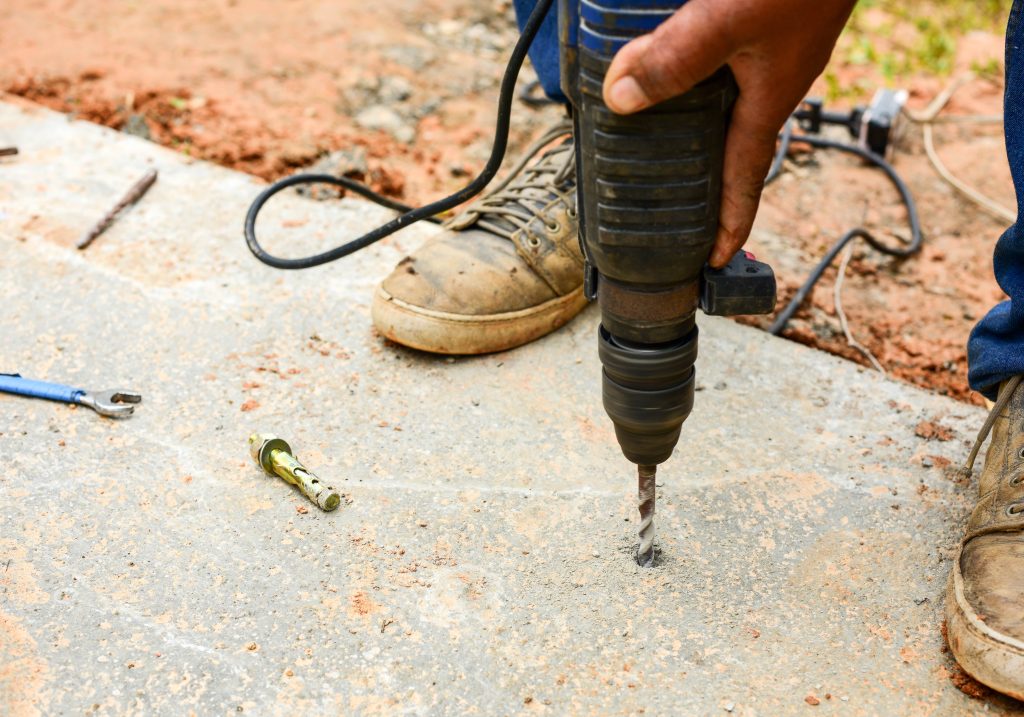
Once the site is ready, we drill small holes at the marked injection points. We inject our lifting material beneath the slab in controlled amounts, monitoring the slab’s response as it rises.
We adjust the injection rate at each point to raise the concrete evenly. This prevents new stress points or uneven settling after the lift.
After the slab reaches the target elevation, we seal the injection holes and clean the surface. We then re-measure the slab to confirm it meets our leveling standard.
A final inspection follows, where we check for stability and answer any remaining questions you have about the finished work.
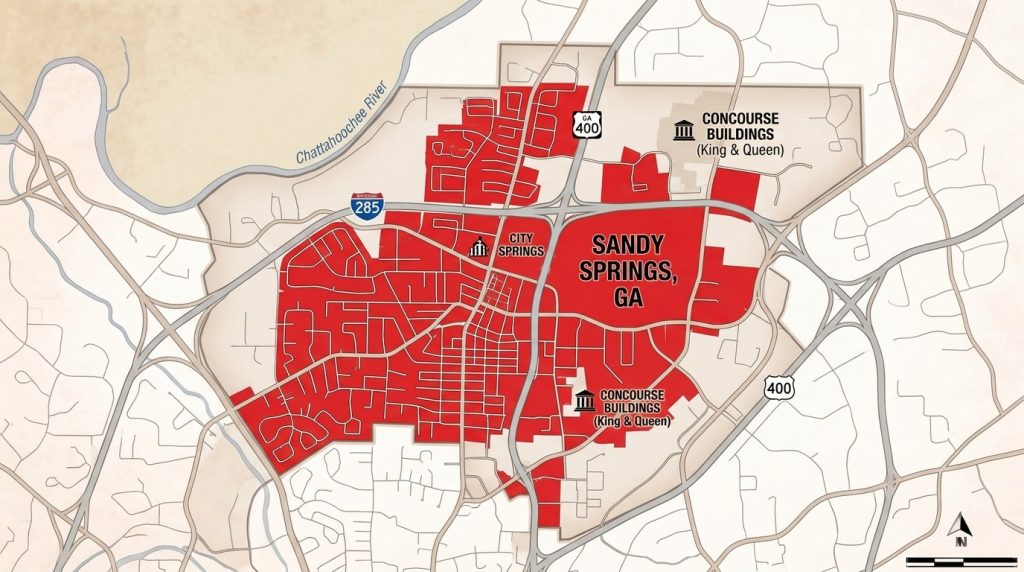
We serve homeowners and business owners throughout Sandy Springs, GA, and the neighboring communities. Our service area includes:
We understand the soil conditions and foundation types common to this region. Clay-heavy soil, seasonal moisture shifts, and older infrastructure in some neighborhoods all contribute to concrete settling. Our familiarity with local building codes and drainage patterns allows us to recommend solutions suited to your specific property.
If you’re unsure whether your location falls within our service radius, contact us directly. We’re happy to confirm coverage before scheduling a visit.
Requesting an estimate begins with a call or an online form submission. We ask for basic details about the affected area, including the size of the slab, visible cracking, and how long the issue has been present.
From there, we schedule an on-site assessment. One of our technicians examines the concrete, checks for void space beneath the surface, and evaluates surrounding drainage.
We provide a written estimate that outlines the scope of work, expected timeline, and cost. There’s no obligation to proceed after the assessment. We recommend scheduling early, particularly if you’ve noticed new cracks or uneven settling, since delays can allow the underlying issue to worsen.
Cost, timing, durability, and material choice are the questions we hear most from homeowners and business owners in Sandy Springs.
Pricing depends on slab size, the amount of settling, and the number of injection points required. Most residential projects fall well below the cost of full slab replacement, often saving 50-70%. We provide a detailed quote after inspecting the affected area.
Polyurethane foam is lighter, cures faster, and doesn’t add extra stress to weak or eroded soil. Mudjacking uses a heavier cement-based slurry that can take days to cure and may cause the same settling issues to return. We use polyurethane foam because it delivers a more stable, longer-lasting result.
Most residential jobs take a few hours to complete in a single day. Commercial projects with larger slabs may require additional time depending on scope. Foam sets within 15 minutes, so the area is ready for use shortly after we finish.
Concrete lifted with polyurethane foam typically lasts as long as the slab itself, provided the underlying soil conditions remain stable. Drainage issues or new erosion can affect longevity. We inspect surrounding grading during our assessment to reduce the chance of repeat settling.
Results are long-lasting when the underlying cause of settling has been addressed. We evaluate soil and drainage conditions before starting the work to reduce the chance of future sinking.
Yes, we can lift concrete with existing cracks, though the cracks themselves won’t disappear. Lifting the slab back to level improves function and reduces trip hazards. Sealing the cracks afterward helps prevent moisture intrusion.
Coverage depends on the cause of the settling and the specifics of the policy. Damage from a covered peril, such as a burst pipe, may qualify, while gradual settling from normal soil conditions usually doesn’t. We recommend contacting your insurance provider directly to confirm coverage for your situation.