Warehouse temperatures in Marietta swing hard between summer heat and winter cold, and that swing affects everything from stored inventory to employee comfort. Georgia Insulation provides warehouse insulation services in Marietta, GA that stabilize indoor temperatures, cut energy costs, and protect the building envelope year-round.
We work with commercial property owners who need practical solutions, not guesswork. Uninsulated or poorly insulated warehouses lose conditioned air through walls, ceilings, and loading areas, forcing HVAC systems to work harder and increasing operating costs.
Our team applies spray foam insulation to the specific areas of your warehouse that need it most, based on how the building is used and where energy loss occurs. This approach gives commercial owners a clear path to lower utility bills and a more controlled indoor environment.
Warehouses have distinct thermal weak points, and we apply spray foam differently depending on the surface and its exposure to outside conditions. Each area of the building requires a specific approach to achieve full coverage and long-term performance.
Roof decks account for a large share of heat gain and heat loss in warehouses, especially those with metal roofing. We apply closed-cell or open-cell spray foam directly to the underside of the deck, creating a continuous air barrier that stops conditioned air from escaping.
This application also addresses condensation control. Metal roofs are prone to sweating when warm, moist air meets a cold surface, and that moisture can lead to rust or mold over time.
Spray foam eliminates this gap by adhering tightly to the deck, leaving no space for air movement. For ceilings in office areas or mezzanines within the warehouse, we adjust foam thickness based on local energy code requirements and the specific use of that space.
GET A FREE QUOTEExterior walls, particularly those made of metal or concrete block, lose conditioned air through seams, fasteners, and panel joints. We spray foam directly onto these wall surfaces to seal gaps that batt insulation typically cannot reach.
Loading dock areas present an additional challenge, since dock doors are opened and closed frequently throughout the day. We insulate the wall sections surrounding dock doors, along with header areas and frame perimeters, to reduce the amount of conditioned air lost during loading operations.
This approach helps maintain more stable indoor temperatures near high-traffic zones. For facilities with climate-controlled storage, we pay close attention to these transition points, since they tend to be the most common source of temperature fluctuation near the building perimeter.
GET A FREE QUOTEProper insulation directly affects two areas that matter most to warehouse operators: temperature stability and moisture control. Both influence energy costs, product integrity, and building longevity.
We install spray foam insulation in roofs, ceilings, walls, and loading dock areas to reduce heat transfer year-round. This helps stabilize indoor temperatures, so HVAC systems don’t have to work as hard during Georgia’s hot summers or cooler winter months.
Our clients typically see measurable reductions in energy consumption after installation. Some benefits we track include:
For facilities storing temperature-sensitive goods, this consistency isn’t just a comfort issue. It protects product quality and reduces waste from spoilage or damage.
Warehouses are prone to condensation buildup, especially where temperature differences exist between indoor air and roof or wall surfaces. We apply spray foam insulation to create an effective air and moisture barrier that limits this buildup.
Left unaddressed, condensation contributes to mold growth, corrosion, and structural deterioration over time. Our insulation systems reduce these risks by minimizing the temperature gradients that cause moisture to form in the first place.
This is particularly important for warehouses storing paper products, electronics, or materials sensitive to humidity. We assess each facility’s specific moisture challenges before recommending an insulation approach.
Uninsulated or poorly insulated warehouses cost businesses money in two main ways: through higher monthly operating expenses and through damage to the building and its contents. Both issues compound over time, and both are preventable with proper insulation.
Warehouses without adequate insulation force HVAC systems to work harder to maintain stable temperatures. This translates directly into higher monthly energy bills, sometimes by a significant margin.
Heat escapes through walls, roofs, and gaps during colder months. In summer, the opposite happens, and outside heat penetrates the building faster than a properly insulated space allows.
We often see business owners underestimate how much this adds up over a year. A facility running inefficient HVAC cycles 24/7 can spend thousands of dollars more annually than one with proper thermal protection in place.
Common signs of energy loss include:
Temperature instability doesn’t just affect comfort. It puts inventory at risk, particularly for businesses storing food, pharmaceuticals, or temperature-sensitive materials.
Fluctuating conditions can lead to spoilage, degraded product quality, or outright loss of goods. For businesses operating on tight margins, this kind of damage is costly and difficult to recover from.
Beyond inventory, the building itself can suffer. Moisture buildup from poor insulation often leads to condensation, which can cause:
We find that addressing these risks early through proper insulation prevents both product loss and long-term structural repair costs.
We combine hands-on commercial experience with practical solutions built for warehouse conditions. Our team focuses on getting the details right, from material selection to application in high-clearance spaces.
We have applied spray foam insulation in warehouses, distribution centers, and industrial buildings across the Marietta area. Our technicians understand how commercial structures differ from residential ones, including higher ceilings, larger surface areas, and varied roof types. We work with both open-cell and closed-cell spray foam. Each has different R-values, moisture resistance properties, and cost points. Our crews are trained to apply foam evenly across large surfaces without gaps or thin spots. We also follow manufacturer specifications and local building codes on every project. This matters because improperly applied spray foam can lead to uneven insulation performance or code violations. We aim to get it right the first time.

No two warehouses operate the same way. We assess your facility's specific use, whether it's cold storage, manufacturing, or general storage, before recommending an insulation approach. Our evaluation includes: Ceiling height and roof structure – affects application method and material volume Temperature control requirements – cold storage needs differ from standard warehouse space HVAC system integration – insulation choices should support existing equipment, not work against it Moisture exposure – some facilities require additional vapor barrier considerations We then build a scope of work based on these factors. This means you get a plan suited to how your building actually functions, not a generic package applied to every job.
We follow a structured process from the first phone call to the final walkthrough. This keeps every warehouse insulation project on schedule and gives you clear expectations at each stage.
We start with an on-site assessment of your warehouse. Our team inspects the roof deck, walls, and any existing insulation to identify gaps, moisture issues, or areas of heat loss.
We take measurements and note structural details that affect material selection. Metal buildings, tilt-up concrete structures, and pre-engineered warehouses each require different approaches.
Based on our findings, we provide a written recommendation. This includes:
We answer your questions before you approve any work.
Once you approve the plan, we schedule the installation around your operating hours. We understand that warehouse downtime affects your business, so we coordinate timing to reduce disruption to staff and inventory.
Our crew applies spray foam insulation using commercial-grade equipment, following manufacturer specifications for thickness and coverage. We protect surrounding equipment and inventory during the process.
After installation, we conduct a final review. This includes checking coverage consistency, verifying there are no gaps or thin spots, and confirming the work meets the agreed specifications.
We walk the site with you before closing out the project, so you can see the completed work firsthand.
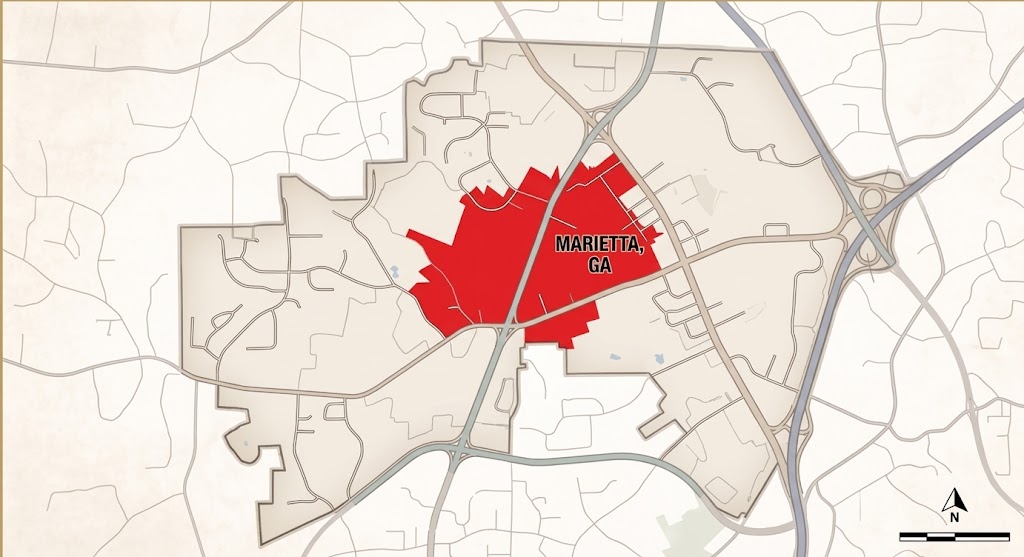
Georgia Insulation operates out of Marietta and covers a wide network of surrounding communities across the region. Below, we outline our service footprint and the steps to schedule a commercial consultation for your warehouse.
Requesting an estimate starts with a call or online inquiry to our office. We ask for basic details about your warehouse, including square footage, current insulation type, and specific problem areas.
From there, we schedule an on-site consultation. Our team inspects the property, measures relevant spaces, and evaluates existing insulation conditions.
We then provide a written estimate outlining recommended materials, labor scope, and project timeline. There is no obligation attached to this consultation, and we answer any technical questions before you commit to a project.
Warehouse owners in Marietta ask us similar questions before committing to an insulation project. Here are the answers we give most often.
We typically recommend closed-cell spray foam for warehouses because it seals gaps and creates a moisture barrier at the same time. Open-cell foam works well for interior partition walls where cost matters more than moisture resistance.
The right choice depends on your building’s construction, climate exposure, and how you use the space. We assess these factors before making a recommendation.
Yes, in most cases. We schedule work around your operating hours and can section off areas so you keep running while we insulate other parts of the building.
Larger projects may require partial shutdowns of specific zones. We discuss this during our initial walkthrough so there are no surprises.
Reductions vary based on your current insulation levels, building size, and HVAC setup. Many warehouse owners see noticeable drops in heating and cooling costs within the first year.
We can give you a more specific estimate after evaluating your facility’s current conditions.
Roofs and ceilings usually come first since heat loss and gain happen most through these surfaces. Loading dock areas and exterior walls follow close behind.
We prioritize based on where your building loses the most energy, which we identify during our assessment.
Georgia follows the Georgia State Energy Code, which sets minimum R-value requirements based on building type and climate zone. Marietta falls within a zone that typically requires higher R-values for roof and wall assemblies compared to warmer parts of the state.
We verify current code requirements for your specific building before recommending materials.
Most warehouse projects take a few days to two weeks, depending on square footage and the scope of work. Smaller sections or single-area jobs move faster.
We provide a project timeline after our initial site visit so you can plan around it.