Marietta homes and businesses face hot summers and cool winters, and attic insulation determines how well a building handles both. Attic insulation reduces heat transfer, which keeps energy costs lower and indoor temperatures more stable throughout the year. Without proper insulation, heating and cooling systems work harder than necessary.
We provide attic insulation services for homeowners and business owners throughout Marietta and the surrounding metro Atlanta area. Our work addresses gaps in existing insulation, outdated materials, and areas where heat loss or heat gain commonly occurs. We use methods and materials suited to the specific structure, whether it’s a residential attic or a commercial building.
This page explains our attic insulation process, the benefits of proper installation, and what happens when insulation is neglected or improperly installed. We also outline our service areas and answer common questions homeowners and business owners ask before starting a project.
We apply spray foam insulation differently depending on the structure and its specific needs. Our approach varies for residential attics and commercial buildings, but our standard for quality remains the same.
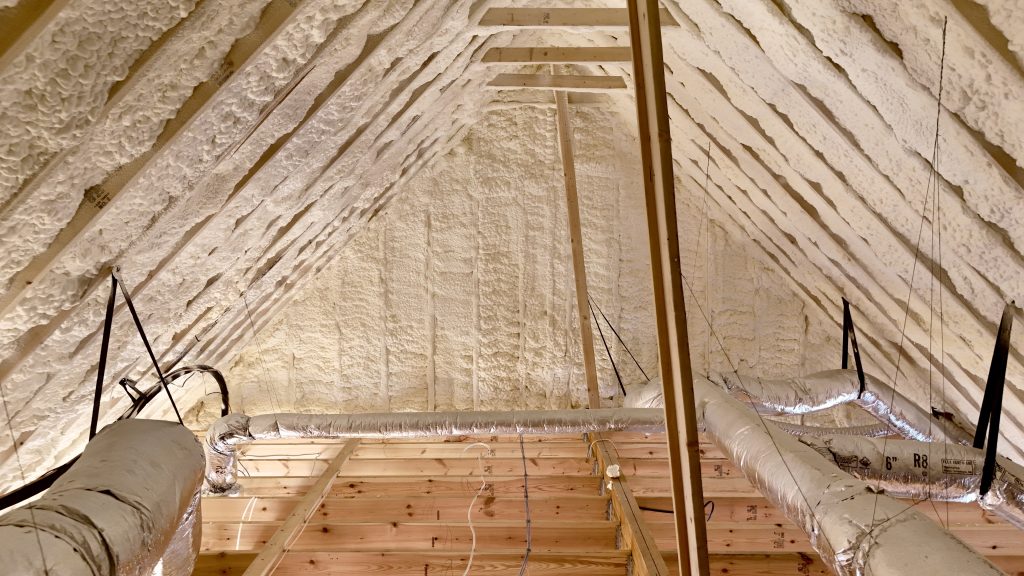
We install spray foam in attics to seal gaps around rafters, joists, and penetrations that other insulation materials often miss.
Our team uses:
We assess your attic's ventilation and structure before choosing a foam type. Proper application helps prevent ice dams in winter, reduce heat buildup in summer, and maintain insulation performance over time.
GET A FREE QUOTEWe handle larger-scale insulation projects for warehouses, retail spaces, offices, and industrial facilities. Commercial buildings often have unique challenges, including metal roofing, high ceilings, and mechanical systems.
Our commercial services include:
| Application Area | Foam Type | Primary Benefit |
|---|---|---|
| Roof decks | Closed-cell | Moisture barrier |
| Metal buildings | Closed-cell | Condensation control |
| Interior walls | Open-cell | Sound dampening |
| Loading docks | Closed-cell | Air sealing |
We coordinate with property managers and business owners to schedule installations that minimize disruption to daily operations. Our crews follow commercial building codes and work within the specifications required for your facility type.
GET A FREE QUOTEAttic insulation affects three areas of your home or building at once: energy use, indoor comfort, and moisture management. Each factor connects directly to the others, and addressing them together produces better long-term results than treating them separately.
Heat moves through an uninsulated or under-insulated attic year-round. In summer, attic temperatures can climb well above outdoor levels, pushing heat down into living spaces below. In winter, warm air escapes upward through the same gaps.
We install insulation that resists this heat transfer, which reduces the workload on your HVAC system. When your system runs less often, energy consumption drops.
For homeowners, this translates into lower monthly utility bills. For business owners, it means reduced operating costs across larger square footage, where inefficiencies compound over time.
Uneven insulation creates temperature swings between rooms and floors. Upper levels often feel warmer in summer and colder in winter, while lower levels struggle to compensate.
We address this by insulating the attic floor or roofline, depending on your home’s design and ventilation setup. This creates a more uniform thermal barrier across the structure.
The result is fewer hot and cold spots throughout the day. Your HVAC system also cycles less frequently, since it isn’t working to correct temperature imbalances caused by gaps in coverage.
Moisture buildup in attics leads to specific, identifiable problems:
We manage moisture through a combination of air sealing and insulation placement, which limits the conditions that allow condensation to form. Proper attic ventilation works alongside insulation to move humid air out before it settles.
Addressing moisture early protects the structural integrity of your roof and attic framing, reducing the likelihood of costly repairs later.
Gaps, thin spots, and compressed insulation in an attic don’t just reduce comfort. They create measurable problems that affect your wallet, your daily comfort, and the structure of your home or building.
Air leaks force your HVAC system to work harder than it should. Conditioned air escapes through gaps around framing, windows, and rooflines, so your system runs longer cycles to maintain the temperature you set.
We often see homeowners and business owners paying for air they never actually get to use.
Over a year, this adds up. A few key factors drive the cost increase:
We find that sealing these leaks properly is one of the most direct ways to bring utility bills back under control.
Air leaks force your HVAC system to work harder than it should. Conditioned air escapes through gaps around framing, windows, and rooflines, so your system runs longer cycles to maintain the temperature you set.
We often see homeowners and business owners paying for air they never actually get to use.
Over a year, this adds up. A few key factors drive the cost increase:
We find that sealing these leaks properly is one of the most direct ways to bring utility bills back under control.
When warm, humid air meets a cooler surface inside your walls or attic, condensation forms. Left unresolved, this moisture buildup can lead to mold growth, wood rot, and weakened structural components.
We treat this as a serious concern because moisture damage often develops out of sight before it becomes visible.
Common signs we look for include:
Sign | What It May Indicate |
Musty odors | Hidden mold growth |
Peeling paint or wallpaper | Trapped moisture behind walls |
Soft or sagging drywall | Water damage in progress |
Visible mold spots | Long-term air and moisture infiltration |
Addressing air leaks early helps us protect the structural integrity of your property and maintain healthier indoor air.
We combine local knowledge of Marietta’s climate with practical experience serving both residential and commercial properties.
We understand how Georgia's humidity and temperature swings affect attic performance. Our team has worked on homes and buildings throughout Marietta and the surrounding areas, so we know which insulation approaches hold up best here. We factor in local building codes and typical attic configurations found in this region. This means we can identify problem areas quickly, whether it's poor ventilation, inadequate R-value, or moisture buildup common in Georgia attics. Our familiarity with the area also allows us to respond promptly and schedule work efficiently. We're not applying generic solutions; we're applying what we've learned from working on properties like yours.

We serve two distinct types of clients, and we tailor our approach accordingly. For homeowners, we focus on: Improving comfort in living spaces Reducing monthly energy costs Addressing attic-specific issues like pest entry points or uneven temperatures For business owners, we focus on: Minimizing HVAC strain across larger square footage Supporting consistent indoor conditions for employees or customers Meeting energy-efficiency goals tied to operating costs We recognize that commercial buildings often have different attic or roof-deck structures than residential homes. Our estimates and installation plans reflect these differences, so the insulation method matches the actual space and its use.
We follow a structured process from initial inspection to final walkthrough. Each step is designed to identify problem areas, apply the right materials, and confirm the work meets our standards before we consider the job complete.
We start by inspecting your attic space, checking existing insulation levels, and measuring current R-values against recommended standards for your building type.
We look for air leaks, moisture damage, ventilation issues, and any signs of pest activity. For commercial buildings, we also assess roof structure and HVAC interaction with the attic or roof deck space.
We document our findings and explain them in plain terms. This includes:
Based on this assessment, we provide a written recommendation and estimate before any work begins.
We select insulation materials based on your attic’s structure, climate needs, and budget. Options include spray foam, blown-in cellulose, and fiberglass batts, each suited to different applications.
For residential attics, we typically apply spray foam along roof lines and in hard-to-reach areas to seal gaps that batt insulation cannot cover. Blown-in insulation works well for open attic floors, filling around joists and obstructions.
Commercial buildings often require a combination approach, addressing larger spans and different roof configurations.
Our crews install materials to the specified depth and coverage needed to reach target R-values. We seal air leaks around penetrations, such as vents and wiring, before insulation is placed. This step reduces the chance of conditioned air escaping through gaps.
Once installation is complete, we inspect the work to confirm even coverage and correct depth throughout the attic space.
We check that insulation meets the R-value specified in your estimate and that no gaps or thin spots remain around edges or fixtures. We also confirm that ventilation pathways, such as soffit vents, remain unobstructed.
Before we leave, we walk the property with you to review the completed work. We answer any questions and provide documentation of the materials used and R-value achieved. This gives you a clear record for warranty purposes or future reference.
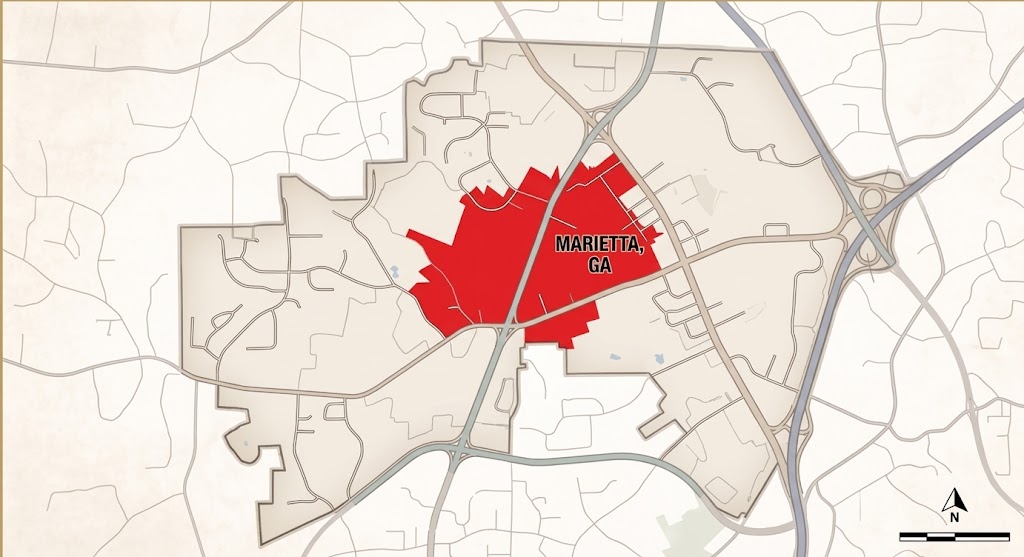
Georgia Insulation installs and upgrades attic insulation for homeowners and business owners throughout Cobb County. We work on properties ranging from historic homes near Marietta Square to newer construction in outlying subdivisions.
We start every project with an on-site evaluation. This lets us check current insulation levels, identify air leaks, and measure attic conditions before recommending a solution.
Our team inspects insulation type, depth, and coverage across the attic space. We also look for signs of moisture, pest activity, or ventilation issues that could affect performance.
After the evaluation, we provide a written estimate outlining the recommended insulation type and expected coverage. Scheduling is straightforward: call us or submit a request through our website, and we will arrange a convenient time to visit your property in Marietta or one of the surrounding communities we serve.
Homeowners and business owners in Marietta often ask us about R-values, installation timelines, and whether upgrading insulation actually makes a measurable difference. Here are the answers we give most often.
We typically recommend R-30 to R-60 for attics in our climate zone. The exact number depends on your home’s age, roof structure, and current insulation levels.
R-30 provides better thermal resistance than R-19 and is generally the stronger choice for Georgia attics. We assess your specific attic before recommending one over the other.
Yes, we install spray foam on attic floors and directly under roof decking. This method seals gaps and creates a conditioned space that reduces heat transfer more effectively than some traditional materials.
Signs include uneven room temperatures, high energy bills, and visible gaps or thin, compressed insulation. We offer inspections to give you a clear answer based on your attic’s actual condition.
Most residential attic jobs take one day to complete. Commercial buildings or larger spaces may require additional time depending on square footage and access.
Yes, properly insulated attics reduce the workload on your HVAC system, which can lower monthly energy costs. Savings vary based on your home’s size, existing insulation, and local energy rates.