Homeowners and business owners across Marietta deal with the same frustrations: rooms that never stay comfortable, energy bills that climb every year, and moisture problems that lead to mold. Spray foam insulation solves these issues by sealing gaps and creating an air barrier that traditional insulation methods cannot match.
We install spray foam insulation in attics, walls, crawl spaces, and commercial buildings throughout Marietta and the surrounding Georgia communities. Our approach addresses the root cause of energy loss rather than just covering it up.
This guide covers what spray foam insulation does, where we install it, and why it matters for your property’s efficiency and comfort. We also explain our process, the areas we serve, and answer common questions homeowners and business owners ask before starting a project.
Spray foam is not equally beneficial in every location. We focus our recommendations on the areas of a building where air leakage and moisture problems cause the most damage and energy loss.
Attics are often the single largest source of energy loss in a home. Heat rises, and without proper insulation, it escapes through the roof deck during winter and builds up during summer.
We apply closed-cell or open-cell spray foam directly to the underside of the roof deck or across the attic floor, depending on the structure. This creates an air seal that stops conditioned air from escaping and blocks outside air from entering.
Common attic issues spray foam addresses:
Crawl spaces and basements are frequently overlooked, but they affect indoor air quality and humidity levels throughout the entire building. Ground moisture and outside air infiltration are the two biggest concerns in these spaces.
We use closed-cell spray foam in these areas because of its moisture resistance and vapor barrier properties. It adheres directly to foundation walls and rim joists, sealing gaps that fiberglass batts cannot reach.
This approach helps:
Exterior walls are a practical application point for spray foam, particularly during new construction or major renovations. We install it within wall cavities before drywall goes up, filling irregular gaps around wiring, plumbing, and framing that traditional insulation often misses.
Closed-cell foam adds rigidity and some structural reinforcement to wall assemblies. Open-cell foam offers sound dampening benefits, which we often recommend for interior walls between rooms or floors.
For homeowners planning a remodel, we assess wall cavity depth and existing materials before recommending a foam type. New construction projects benefit from insulation installed at the framing stage, since it allows full coverage without disturbing finished surfaces later.
Commercial properties face different insulation demands than residential buildings. Larger square footage, metal roofing, and continuous HVAC operation all increase the value of a properly sealed building envelope.
We apply spray foam in commercial settings for:
Facility managers often see measurable reductions in HVAC run time after installation. We work directly with building owners and contractors to schedule installation around business operations, minimizing disruption to daily activities.
Spray foam insulation addresses several issues at once: temperature swings, drafts, and moisture buildup. Marietta’s humid summers and cooler winters put insulation to the test, and spray foam holds up under both conditions.
We install spray foam because it maintains consistent indoor temperatures throughout the year. Unlike fiberglass batts, it expands to fill gaps and forms a continuous thermal barrier.
This reduces the hot and cold spots common in homes with older insulation. Rooms above garages, attic spaces, and additions tend to benefit most from this stability.
Your HVAC system also works less to maintain a set temperature. We often see this translate into fewer thermostat adjustments and more even comfort from room to room.
Air leakage accounts for a significant portion of energy loss in most homes and buildings. We use spray foam to seal gaps around:
Once cured, spray foam creates an airtight seal that doesn’t shift or settle over time. This differs from loose-fill or batt insulation, which can leave gaps as it compresses.
We pay close attention to these areas during installation because even small openings allow conditioned air to escape.
Moisture entering wall cavities or crawl spaces can lead to structural issues over time. We apply closed-cell spray foam in areas prone to moisture exposure, including crawl spaces, basements, and exterior walls.
Closed-cell foam has a denser structure that resists water absorption better than open-cell varieties. This makes it a practical choice for Georgia’s humid climate, where moisture control is an ongoing concern.
By limiting moisture infiltration, we help reduce conditions that support mold and mildew growth. This is particularly relevant in enclosed spaces with limited airflow, such as crawl spaces and attics.
We select spray foam for its stability over time. It doesn’t sag, settle, or lose its shape the way some traditional insulation materials do after years of use.
Insulation Type | Typical Lifespan | Performance Over Time |
Spray Foam | 20-30+ years | Maintains R-value, doesn’t settle |
Fiberglass Batts | 15-20 years | Can compress, reducing effectiveness |
Loose-Fill Cellulose | 10-15 years | Settles, may need topping off |
Because spray foam retains its form, it continues performing at a consistent level long after installation. We view this durability as one of the more practical advantages for homeowners and business owners planning for long-term energy costs.
Unsealed gaps in your attic, walls, and rim joists let conditioned air escape and outdoor air intrude. This drives up utility bills, creates uncomfortable living spaces, and can lead to moisture problems over time.
When air gaps go unsealed, your HVAC system works harder to maintain a set temperature. We often see homeowners running their heating or cooling systems longer than necessary just to compensate for constant air leakage.
This translates directly into higher monthly utility bills. In Marietta’s humid subtropical climate, summer cooling costs are especially affected by gaps around windows, doors, and attic penetrations.
Over a year, these losses add up. A poorly sealed home can lose conditioned air at a rate that forces equipment to cycle on and off far more frequently than it should, shortening its lifespan.
Air gaps create noticeable drafts near baseboards, electrical outlets, and window frames. We frequently find that rooms farthest from the HVAC unit feel colder in winter and warmer in summer.
This temperature inconsistency makes it difficult to keep every room comfortable at the same time. Some homeowners respond by adjusting the thermostat repeatedly, which only increases energy use without solving the actual problem.
Common signs of uneven temperatures include:
Unsealed gaps allow warm, moist air to meet cooler surfaces inside walls or attics. This temperature difference can lead to condensation forming in places that are hard to inspect regularly.
Over time, trapped moisture can affect insulation performance and building materials. We recommend addressing air gaps before moisture becomes a recurring issue rather than after signs of dampness appear.
Left unresolved, condensation-related issues can also affect indoor air quality, particularly in enclosed spaces like crawlspaces or attic cavities.
We combine local knowledge, flexible service options, and consistent installation standards to deliver insulation that performs as expected. Our team works with homeowners and business owners across Marietta and the surrounding areas.
We understand how Georgia's climate affects insulation performance. Humid summers and mild winters create specific demands on a building's envelope, and we account for these conditions in every recommendation we make. Our team has worked on properties throughout Marietta and nearby communities. This means we're familiar with common construction types found in the area, from older homes with limited attic access to newer commercial buildings with metal roofing. We don't apply a one-size-fits-all approach. Instead, we assess each property individually and explain our reasoning clearly, so you understand why we suggest a particular type of spray foam or application method.
We serve two distinct groups with different needs, and our approach reflects that. For homeowners, we address attics and rooflines, crawl spaces and basements, exterior walls, garages, and additions, while for business owners, we handle metal building insulation, warehouse and industrial spaces, office buildings, and new construction projects. Each property type comes with its own challenges. A metal building, for example, requires insulation that helps control condensation and reduce noise, while a residential attic often needs a stronger focus on air sealing and moisture control. We adjust our methods and materials based on these differences rather than treating every job the same way.

We follow a consistent process on every job, regardless of size. Our technicians are trained in proper application techniques, including correct foam thickness and coverage to meet the intended R-value. Before starting any project, we inspect the space to identify moisture issues, air leaks, or structural concerns that could affect the outcome. Addressing these factors first helps prevent problems after installation. We also use commercial-grade equipment and materials suited to the specific application, whether that's open-cell foam for interior walls or closed-cell foam for areas exposed to moisture. Our goal is straightforward: install insulation correctly the first time, so you get the performance and longevity you're paying for.
Every project starts with an inspection of the space, moves through a written plan with product details, and ends with careful application and a final walkthrough. Here is what each stage involves.
We begin by inspecting the attic, crawl space, walls, or commercial structure to identify air leaks, moisture issues, and existing insulation gaps. Our team checks R-values in place, notes areas of heat loss, and reviews ventilation.
For crawl spaces, we look for signs of moisture intrusion that could affect foam performance. In commercial buildings, we assess larger areas such as roof decks and mechanical rooms.
This step takes into account the layout of the property and any specific concerns raised by the owner. We measure square footage and document conditions with photos when needed.
After the evaluation, we provide a written scope of work outlining the areas to be treated. We specify whether open-cell or closed-cell foam is recommended for each section, based on factors like moisture exposure and space constraints.
Area | Common Foam Type | Reason |
Attic | Open-cell | Balances cost and coverage |
Crawl space | Closed-cell | Resists moisture |
Walls | Open-cell or closed-cell | Depends on cavity depth |
Commercial roof deck | Closed-cell | Adds rigidity and moisture control |
We include material quantities, estimated coverage, and pricing in this document before any work begins.
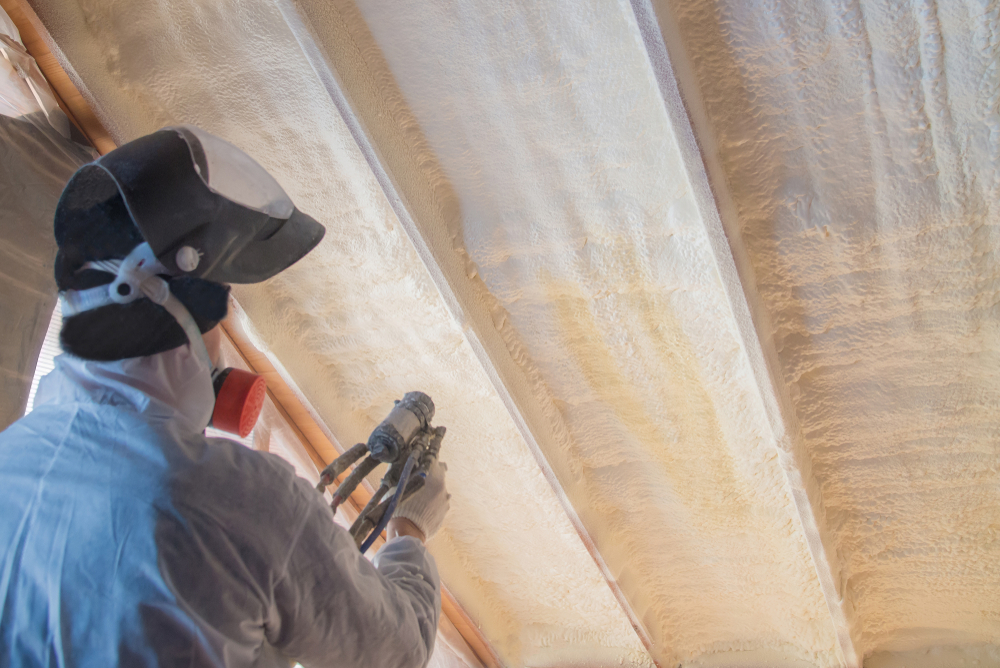
Our technicians prepare the space by covering surfaces and setting up ventilation equipment. We apply the foam in even layers, allowing proper expansion and cure time between passes.
Once application is complete, we inspect the finished surfaces for consistent coverage and check for any gaps. We verify that the treated area meets the thickness specified in the scope of work.
Before we leave the site, we walk through the project with the owner and answer any questions about the finished insulation.
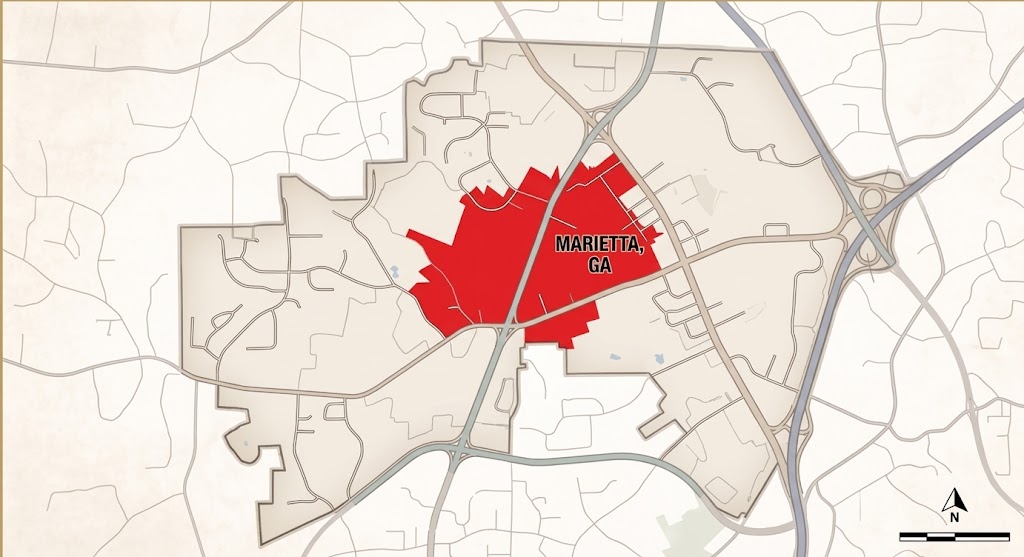
We install spray foam insulation for homeowners and business owners throughout Marietta and the surrounding North Georgia region. Our teams work on residential and commercial projects alike, and we schedule estimates based on your location and timeline.
We provide free, no-obligation estimates for homeowners and business owners in our service area. Our team visits your property, assesses the space, and provides a written proposal outlining the recommended foam type and cost.
To schedule an estimate, call us or fill out the request form on our website. We respond promptly and work with you to find a convenient appointment time.
Costs, safety, application areas, and timelines are the questions we hear most from homeowners and business owners in Alpharetta. Below, we address these topics directly so you know what to expect before scheduling a project.
Pricing depends on square footage, foam type, and the areas being insulated. Open-cell foam costs less than closed-cell foam, but closed-cell offers higher R-value per inch and added moisture resistance.
We provide a written estimate after assessing your home’s specific needs. Factors like attic accessibility and existing insulation removal can also affect the final price.
Open-cell foam is softer, more flexible, and typically costs less. It works well for interior walls and areas where sound dampening matters.
Closed-cell foam is denser and creates a stronger air and moisture barrier. We often recommend it for crawl spaces, exterior walls, and areas exposed to higher moisture levels.
We apply spray foam in attics, crawl spaces, basements, exterior walls, and rim joists. It also works well in commercial settings like warehouses, offices, and retail spaces.
Both new construction and existing structures can benefit from this insulation method. We assess each space individually to determine the right foam type and application approach.
Spray foam creates an air seal that reduces the amount of conditioned air escaping through gaps and cracks. This can lead to lower heating and cooling costs over time.
Actual savings vary based on your home’s size, current insulation, and local climate conditions. We can review your energy usage patterns to give you a realistic expectation.
Most residential projects take one to three days, depending on the size of the space and foam type used. Commercial buildings may require additional time based on square footage and complexity.
Curing time is separate from application time. We inform you of both timelines before starting any project so you can plan accordingly.
Yes, we serve Atlanta along with Smyrna and other surrounding communities in the region. Our service area covers both residential neighborhoods and commercial districts.
If you’re unsure whether we cover your specific location, contact us directly. We can confirm service availability for your address before scheduling an appointment.