Sunken concrete around your Alpharetta home or business is not just an eyesore. It signals shifting soil beneath the slab, and it can turn a driveway, walkway, or patio into a tripping hazard.
We use polyurethane foam injection to lift and stabilize concrete without the cost or disruption of full replacement. This method works for residential and commercial properties throughout the area, addressing uneven surfaces caused by soil erosion, poor compaction, or moisture changes.
We serve homeowners and business owners in Alpharetta and the surrounding Georgia communities. Below, we outline how our concrete lifting process works, what it costs to ignore the problem, and why property owners choose us for this service.
Concrete settlement affects residential and commercial properties differently, but the underlying cause is the same: soil beneath the slab has shifted, compacted, or washed away. We identify the specific application and signs of damage before recommending a lifting method.
Homeowners typically need concrete lifting for driveways, walkways, patios, and garage floors. Sunken sections near a home's foundation can also signal drainage problems that need attention alongside the lifting work.
We treat pool decks as a separate category, since uneven concrete around a pool creates both a tripping hazard and a place for water to pool incorrectly.
Steps and porches require precise leveling because even small height differences between slabs can violate local building codes. Our approach for each area depends on slab thickness, soil type, and how much weight the surface regularly bears.
GET A FREE QUOTECommercial properties present different demands. Parking lots, loading docks, and warehouse floors carry heavier and more frequent loads than residential surfaces, so settlement can progress faster once it starts.
Business owners often need work scheduled during off-hours to avoid disrupting operations, and we plan projects around this whenever possible.
GET A FREE QUOTECertain warning signs indicate a slab needs attention before the problem worsens. We look for:
Some signs are subtle, like a slight tilt in a patio, while others are obvious, such as a sidewalk section that has dropped several inches. Either way, addressing settlement early typically limits the scope of repair needed.
GET A FREE QUOTERestoring uneven concrete addresses two priorities we hear from clients most often: safety for the people using the space and protection of the investment they have made in their property. Both outcomes come from the same corrective process, but each carries its own set of practical advantages.
Uneven concrete creates trip hazards on walkways, patios, and driveways. We see this most often at slab edges, expansion joints, and areas near downspouts where settling occurs unevenly.
Lifting the concrete back to its original level removes these tripping points. This matters for households with young children or older adults, and for businesses where customers or employees walk daily.
Accessibility is another concern we address directly. Uneven surfaces can interfere with:
Correcting the slab restores a flat, predictable surface. This reduces liability exposure for business owners and gives homeowners confidence that their outdoor spaces are safe for daily use.
Sunken or cracked concrete signals deferred maintenance to anyone evaluating a property. This includes potential buyers, appraisers, and insurance inspectors.
We find that addressing uneven slabs early prevents the problem from expanding. Water pooling in low spots can accelerate erosion beneath the slab, leading to further sinking or cracking over time.
Restoring the surface protects the following:
Property Feature | Risk If Left Uneven |
Driveways | Cracking, drainage issues |
Patios | Structural instability |
Sidewalks | Accelerated wear, code violations |
Maintaining level concrete supports curb appeal and helps preserve the resale value of the property. It also avoids the higher cost of full slab replacement, which is typically more expensive than lifting and leveling the existing concrete.
Sunken or cracked concrete rarely stays the same. Left alone, it typically shifts from a minor inconvenience into a safety hazard or a source of water damage that affects your foundation.
Uneven concrete creates a real risk for anyone walking across your property. A height difference of even half an inch between slabs can cause a fall.
For business owners, this matters even more. If a customer or employee gets hurt on your property, you could face a liability claim.
We often see this issue in these areas:
Waiting to address these hazards doesn’t reduce your risk. It usually increases it, since the settling tends to continue and the height difference between slabs grows over time.
A small crack in concrete is an entry point for water. Once water gets underneath a slab, it can erode the soil that supports it, which leads to further sinking.
This becomes a cycle: cracks let water in, water weakens the base, and the slab settles further. Each stage of this process typically costs more to fix than the one before it.
Water that pools near your foundation can also seep into basements or crawl spaces. We recommend addressing cracks as soon as you notice them, rather than waiting for the damage to spread.
We combine local knowledge with practical experience to deliver concrete lifting results that hold up over time. Our approach focuses on accurate diagnosis, quality materials, and clear communication throughout the process.
We understand the soil conditions and building patterns common in Alpharetta and the surrounding North Georgia area. Clay-heavy soil, seasonal moisture changes, and shifting ground are frequent causes of sunken concrete in this region. Our team has worked on driveways, sidewalks, patios, and commercial slabs throughout the area. We know which lifting methods work best for different types of concrete failure, whether it's a small residential walkway or a larger commercial parking surface. We're familiar with local permitting requirements and building codes. This helps us complete projects efficiently while meeting the standards expected in Alpharetta and nearby communities.
We serve both residential and commercial clients with the same level of attention to detail. Our process includes: On-site inspection to assess the extent of settling and identify the cause Clear cost estimates before work begins, with no hidden fees Minimal disruption to your property during the lifting process Durable results using proven concrete lifting techniques For homeowners, we lift and stabilize driveways, walkways, pool decks, and garage floors. For business owners, we address parking lots, loading docks, and entryways where uneven concrete can create liability concerns. We schedule work around your timeline and communicate clearly at each step, so you know what to expect from start to finish.

We follow a clear, step-by-step process for every job in Alpharetta and surrounding areas. From the first inspection to the final check, we focus on accuracy and a stable result.
We start by examining the affected slab and identifying the cause of settling. This includes checking for soil erosion, poor compaction, or water drainage issues beneath the concrete.
We measure the extent of the unevenness and mark injection points based on the slab’s size and condition. Our team also inspects surrounding areas, such as adjoining walkways or foundations, to rule out related problems.
We explain our findings in plain terms and outline what the job will involve. Before any work begins, we provide a written estimate that covers the scope, materials, and expected timeline.
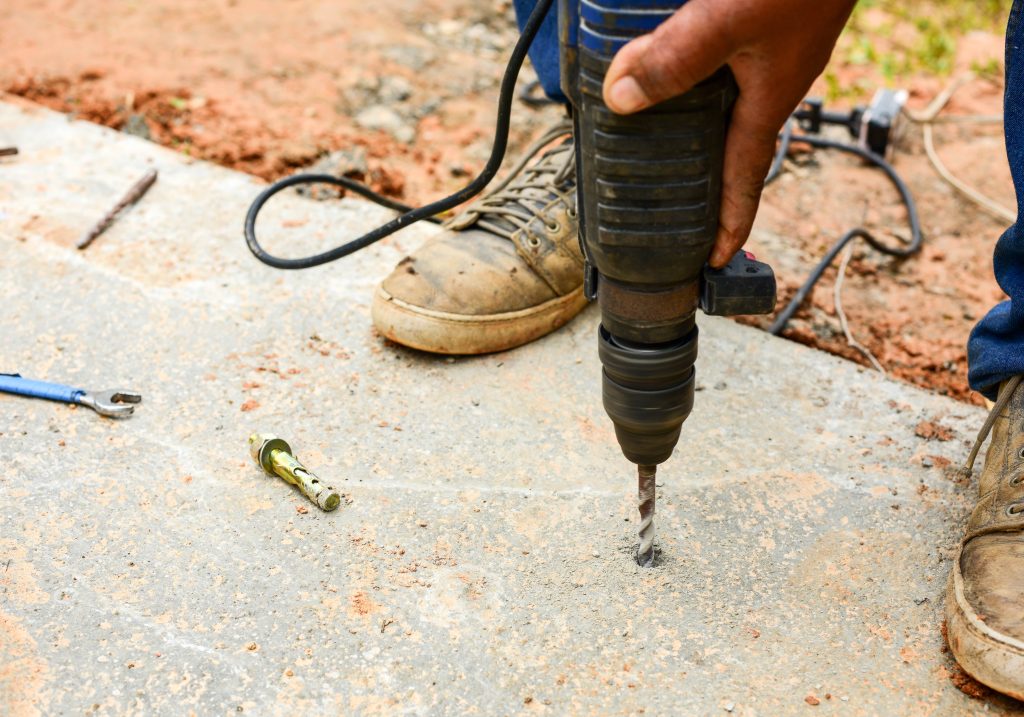
Once we begin, we drill small holes—typically the size of a dime—into the slab at the marked points. We then inject polyurethane foam beneath the surface in controlled amounts.
The foam expands to fill voids and gradually raises the slab back to its original position. We monitor the lift closely, using measuring tools to confirm the concrete reaches a level and stable position.
After lifting, we seal the injection holes with a matching compound. We then perform a final inspection to check the slab’s stability, confirm it holds weight evenly, and verify the surface meets our leveling standards before we consider the job complete.
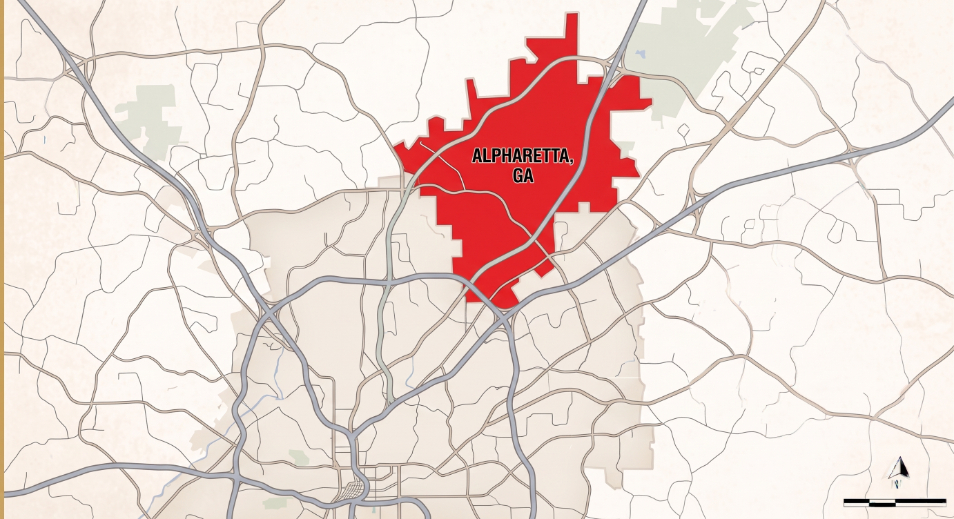
Georgia Insulation provides concrete lifting for homeowners and business owners throughout Alpharetta and the greater Fulton County region. Our teams travel across the local area to address sinking driveways, uneven patios, and settling commercial slabs.
Restore uneven driveways, sidewalks, patios, and other concrete surfaces with professional concrete lifting. Contact us today for a free estimate.
We hear the same practical questions from homeowners and business owners across Alpharetta before they schedule a project. Here are straightforward answers about material, timing, cost, durability, and the types of damage we can fix.
We drill small holes, typically dime-sized, into the affected concrete slab. Then we inject expanding polyurethane foam beneath the surface, filling voids and lifting the slab back to its original position. Once the foam cures, we seal the holes, and the surface is usable within hours.
We work on driveways, sidewalks, patios, garage floors, pool decks, and steps. We also handle commercial applications, including parking lots, loading docks, and warehouse floors. If it’s a concrete slab that’s sunk or shifted, we can likely lift it.
In most cases, yes. We inject foam beneath the slab through small holes, usually less than a dime in size.
This method raises the driveway back to its original position without breaking up the existing concrete.
Yes, in most cases. Concrete lifting costs a fraction of full slab replacement because we’re not removing and pouring new concrete. We’re addressing the underlying void, not rebuilding the surface from scratch.
Lifted concrete typically lasts as long as the original slab would have, assuming the underlying soil conditions are stable. The polyurethane foam we use doesn’t break down or wash away like soil can, so it provides lasting support beneath the slab.
We can lift sunken sections of a driveway and close the gaps causing unevenness. For cracks, we can stabilize the slab to prevent further movement, though visible cracks may still require separate cosmetic repair depending on severity.