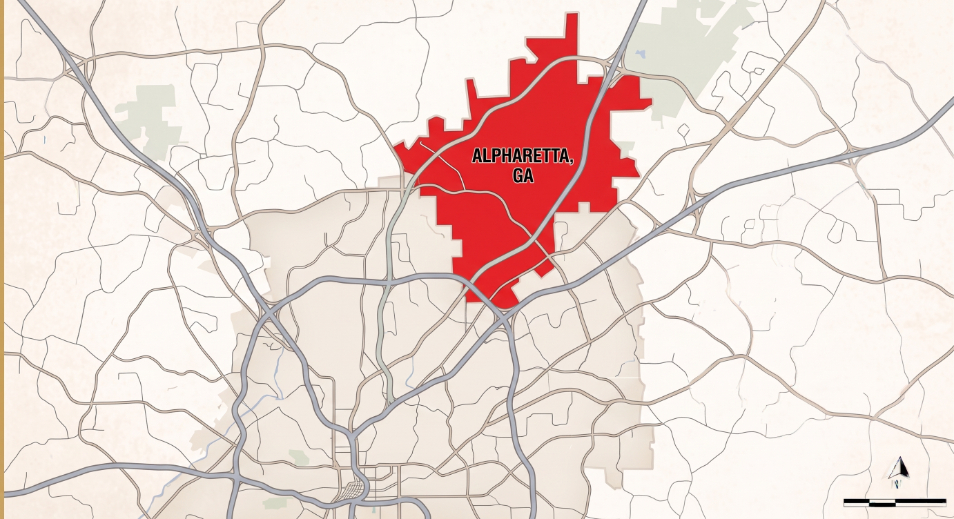
Commercial Insulation Alpharetta, GA

Rated 5.0 on Google Reviews
Rated 5 out of 5

Spray Foam Solutions for Business Owners

Business owners in Smyrna, GA lose money every day their commercial building sits poorly insulated. Rising energy bills, inconsistent temperatures, and strain on HVAC systems all point back to the same issue: inadequate insulation.

Georgia Insulation provides commercial insulation services designed to solve these problems, helping businesses control energy costs and maintain a stable working environment. We work with warehouses, offices, retail spaces, and industrial facilities throughout Smyrna and the surrounding area.

Our team understands the specific demands commercial properties place on insulation systems. This page explains how our services address those demands, what the process looks like, and why proper insulation matters for your bottom line.

Spray Foam Applications Across Commercial Properties

Spray foam performs differently depending on where we apply it. Each area of a commercial building presents its own airflow patterns, temperature ranges, and structural considerations, and we adjust our approach accordingly.

🏠

Roof Decks And Attics

The roof is where a commercial building loses or gains the most heat. We apply closed-cell spray foam directly to the underside of the roof deck, creating a continuous air seal that resists thermal transfer.

This approach also reduces the risk of condensation forming on the deck, a common cause of wood rot and mold growth. Unlike batt insulation, spray foam fills irregular gaps around trusses and framing without leaving voids.

For attics used as mechanical spaces, we can convert them into conditioned areas, which lowers strain on rooftop HVAC units. This is particularly useful for buildings in Georgia's humid climate, where attic temperatures can exceed 140°F in summer.

GET A FREE QUOTE
🧱

Exterior And Interior Walls

We install spray foam within wall cavities during new construction or retrofits to create an air barrier that standard fiberglass batts don't provide. Closed-cell foam adds rigidity and some structural support to the wall assembly, while open-cell foam works well for sound dampening between interior spaces.

Exterior walls benefit most from closed-cell application due to its higher R-value per inch and resistance to moisture intrusion. Interior partition walls, especially in offices or medical facilities, often use open-cell foam to reduce noise transfer between rooms.

We assess wall thickness and cavity depth before recommending a foam type, since the wrong choice can affect drying potential within the assembly.

GET A FREE QUOTE
🏭

Warehouses And Industrial Spaces

Large open spaces like warehouses present unique challenges: high ceilings, metal building construction, and significant temperature stratification. We apply spray foam directly to metal roof panels and wall girts, which stops thermal bridging that occurs with traditional insulation methods.

This is especially important for metal buildings, where uninsulated steel conducts heat and cold rapidly. Foam application also addresses condensation control, a frequent issue in warehouses storing temperature-sensitive goods or equipment.

For facilities with high ceilings, we focus foam application on the roof deck and upper wall sections, since that's where the majority of heat exchange occurs. This reduces the workload on rooftop units or industrial HVAC systems, which typically represent the largest utility expense for these properties.

GET A FREE QUOTE
⚙️

Mechanical Rooms And Crawl Spaces

Mechanical rooms house equipment sensitive to temperature and moisture, making insulation a practical necessity rather than an upgrade. We apply spray foam to walls and ceilings in these spaces to stabilize temperatures around boilers, chillers, and electrical panels.

Crawl spaces present a different set of concerns, primarily ground moisture and outside air infiltration. We use closed-cell foam on crawl space walls to create a vapor barrier, which addresses humidity before it reaches wood framing or ductwork above.

This reduces the likelihood of mold growth and wood decay in areas that are otherwise difficult to inspect regularly. Properly insulated crawl spaces also improve indoor air quality throughout the building above.

GET A FREE QUOTE

Business Benefits Of A Better Thermal Envelope

A tightly sealed, well-insulated envelope reduces mechanical strain, keeps indoor conditions stable, and limits the moisture problems that damage materials over time. These three factors work together to protect both operating budgets and building assets.

Lower Energy Costs

Spray foam insulation creates a continuous barrier that reduces the heating and cooling loads placed on HVAC equipment. When we seal gaps in walls, roofs, and around penetrations, we cut the amount of conditioned air that escapes.

This directly lowers monthly utility bills. It also reduces wear on mechanical systems, since equipment doesn’t need to run as often or as hard to maintain a setpoint.

Over time, these savings add up:

  • Reduced runtime on furnaces, boilers, and rooftop units
  • Lower peak demand charges during extreme weather
  • Extended equipment lifespan due to less frequent cycling

Improved Indoor Comfort

Uneven temperatures between floors, rooms, or zones usually point to gaps in the envelope. We address these gaps directly, which helps eliminate hot spots in summer and cold drafts in winter.

Consistent indoor temperatures matter for employees, tenants, and customers alike. A building that maintains stable conditions supports productivity and reduces complaints tied to discomfort.

Spray foam also dampens sound transfer between spaces. This is a practical benefit for offices, medical facilities, and any commercial space where noise control affects daily operations.

Moisture And Air Control

An improved thermal envelope limits the movement of humid or conditioned air across building assemblies. We focus on stopping air infiltration at key points, including rooflines, wall cavities, and foundation transitions.

Controlling this airflow reduces the risk of condensation forming inside walls or ceilings. Left unchecked, that moisture can lead to mold growth, wood rot, or corrosion of structural components.

Better air control also supports more consistent indoor air quality. Fewer gaps mean fewer entry points for outdoor pollutants, pests, or excess humidity to affect occupied spaces.

The Cost Of Delaying Insulation Upgrades

Postponing insulation upgrades does not stop the underlying problems. It allows them to compound, often turning a manageable investment into a larger expense down the road.

Escalating Utility Bills

Poor insulation forces HVAC systems to work harder to maintain interior temperatures. Every month this continues, we see the gap between actual and potential energy costs widen.

Commercial buildings with inadequate insulation can lose conditioned air through walls, roofs, and around penetrations. This waste shows up directly in utility statements.

The longer an upgrade is delayed, the more these losses accumulate. A building that could operate efficiently instead continues paying a recurring penalty for outdated or missing insulation, month after month, year after year.

Gaps in insulation create temperature differentials that lead to condensation on interior surfaces. We commonly find this moisture collecting in wall cavities, around windows, and near roof lines.

Left unaddressed, condensation contributes to:

  • Mold growth
  • Wood rot
  • Corrosion of metal components
  • Deterioration of insulation materials themselves

These issues rarely stay contained to one area. Moisture moves, and so does the damage, often reaching structural elements before it becomes visible on interior finishes.

Repair costs for moisture-related damage typically exceed the cost of the insulation upgrade that would have prevented it in the first place.

Inconsistent insulation coverage creates hot and cold zones throughout a building. Employees and tenants notice this daily, and complaints about comfort often trace back to insulation gaps rather than thermostat settings.

HVAC systems respond to these inconsistencies by cycling more frequently and running longer to compensate. We see this pattern accelerate equipment wear and shorten the expected lifespan of mechanical systems.

The strain also increases maintenance frequency. Filters clog faster, components wear sooner, and the likelihood of a costly system failure rises. Delaying insulation upgrades effectively transfers the burden onto HVAC equipment that was never designed to offset a building envelope problem.

Why Georgia Insulation Is A Trusted Partner

We bring over 35 years of combined insulation experience to every commercial project we take on. Business owners choose us because we pair technical expertise with practical solutions built for real-world building conditions.

Commercial Spray Foam Expertise

We specialize in spray foam applications across a wide range of commercial structures, from warehouses to retail centers. Our team understands the material science behind open-cell and closed-cell foam, and we select the right product based on your building's specific requirements. We've worked on projects involving: Metal buildings and pole barns Multi-story office complexes Cold storage facilities Manufacturing plants Each building type presents different challenges, including moisture control, temperature regulation, and structural constraints. We factor all of these into our approach before we begin any work.

Solutions Tailored To Building Needs

No two commercial properties are identical, and we don't treat them that way. We assess your building's layout, HVAC system, and energy usage patterns before recommending an insulation plan. This means we might suggest spray foam for your roofline, batted insulation for interior partition walls, and encapsulation for a crawl space, all within the same project. We base our recommendations on what will perform best for your specific space, not on a one-size-fits-all package. Our goal is to match the solution to the problem, whether that's reducing HVAC strain, addressing moisture issues, or improving overall energy efficiency.

Professional Installation Standards

We hold the proper licensing required to perform commercial insulation work in Georgia, and our installers follow manufacturer specifications for every product we apply. This includes correct spray foam thickness, proper curing times, and adherence to local building codes. We also conduct quality checks throughout the installation process rather than only at the end. This helps us catch and correct issues early, reducing the chance of gaps, uneven coverage, or application errors that could affect performance later.

Our Commercial Project Process

We follow a structured process for every commercial project, from initial assessment through final walkthrough. Each phase is designed to keep your building operational and your timeline predictable.

01 Site Evaluation And Recommendations

We start with an on-site assessment of your commercial property. Our technicians inspect walls, roofing systems, HVAC zones, and any areas where energy loss is likely.

We check existing insulation for gaps, moisture damage, or deterioration. We also review your building’s layout and usage patterns, since a warehouse and an office building have different insulation needs.

Based on our findings, we recommend a specific spray foam solution suited to your property. We explain our reasoning, including material type, coverage areas, and expected performance outcomes.

This step allows us to give you an accurate proposal rather than a generic estimate.

We put the full project scope in writing before work begins. This includes the areas to be insulated, materials used, labor timeline, and total cost.

We schedule installation around your business hours whenever possible. For properties that operate continuously, we work with your team to plan around shifts or high-traffic periods.

Our scheduling process includes:

  • A confirmed start and completion date
  • Notice of any building access requirements
  • Coordination with your facilities or maintenance staff
  • A point of contact for questions during the project

We avoid vague timelines. You know what to expect before our crew arrives.

Our crew installs spray foam insulation according to the agreed scope, working section by section to limit disruption. We apply insulation to walls, roof decks, and other specified areas using equipment suited to commercial-scale application.

Once installation is complete, we conduct a final review with your team. We check coverage, inspect for gaps, and confirm the work matches the original proposal.

We also clean the work area before leaving the site. Our goal is to complete the project with minimal impact on your daily operations and a clear record of what was installed.

Serving Alpharetta And Surrounding Business Communities

Georgia Insulation works with commercial property owners across Alpharetta and the greater North Metro Atlanta region. We understand the building codes, climate demands, and construction styles common to this area.

Testimonials

Posted on Google Google
Cara Tiesler profile picture
Cara Tiesler
Google star 1Google star 2Google star 3Google star 4Google star 5Trustindex verifies that the original source of the review is Google.
Georgia Insulation saved the day and our house! Breanna promptly answered my call, which was at the end of the work day, and listened to me freak out about being down to the wire and in need of insulation. She jumped right on the request and worked diligently with Jason to get me on the schedule asap. We cannot thank them enough for saving us! The installers were kind, professional and early… who is early these days?! We were very impressed by Breanna, Jason, and the rest of the team at Georgia Insulation. Don’t hesitate to work with this company, they actually care about their clients and don’t over promise (unlike the company that blew us off a day before they were scheduled to Install because they over promised and under delivered). So again, if you need a super reliable and professional insulation company, reach out to Breanna at Georgia Insulation, and she will get you taken care of! Thanks again for helping us!!
Posted on Google Google
Mary Jane profile picture
Mary Jane
Google star 1Google star 2Google star 3Google star 4Google star 5Trustindex verifies that the original source of the review is Google.
Fast friendly service
Posted on Google Google
jeff schmitt profile picture
jeff schmitt
Google star 1Google star 2Google star 3Google star 4Google star 5Trustindex verifies that the original source of the review is Google.
I can say enough great things about the people and my experience with Georgia Insulation. Terra came out and gave a thorough evaluation and quote for open cell foam insulation for our home. The quote was reasonable, and for the amount of work to be done, I thought it was a great deal. Edwin and his crew were awesome and entertaining. They removed all of the existing insulation in the attic and completely covered the underside of the roof with open cell foam. I’ve waited about 2 months to write this review, as I wanted to share energy savings. Last month bill was $106 less than the previous year, same month. The part about that blew me away, was last years June was a very mild June and this June has been quite hot. That being said, I feel very confident I will see a return on my investment. I highly recommend Georgia Insulation and Terra Schaefer and team.
Posted on Google Google
Allene Hoff profile picture
Allene Hoff
Google star 1Google star 2Google star 3Google star 4Google star 5Trustindex verifies that the original source of the review is Google.
The consultant was very good. He explained and answered all my questions concerning my problem. They were very prompt in coming out and the two young men, Edward and Ulises were very friendly and very professional. They took care not to get anything on my floors. They also cleaned up after the job was done. I would certainly recommend this company.
Posted on Google Google
Frank Armatti profile picture
Frank Armatti
Google star 1Google star 2Google star 3Google star 4Google star 5Trustindex verifies that the original source of the review is Google.
Ga insulation came to my home and insulated with close cell foam underneath my floor. Techs needed a second access to get to 2 bedrooms which I was not able to provide while they were here . The room temperatures were at 73 where they had sprayed and where they didn’t was at 59! I am excited that they are returning to finish now that I have the access they needed . The workers were excellent and very professional.This made such a difference in my heating now that the heat shuts off when needed to! Georgia Insulation is a top notch company providing a great service for a very fair price! My best decision ever!
Posted on Google Google
Will Brown profile picture
Will Brown
Google star 1Google star 2Google star 3Google star 4Google star 5Trustindex verifies that the original source of the review is Google.
Posted on Google Google
Chris Jones profile picture
Chris Jones
Google star 1Google star 2Google star 3Google star 4Google star 5Trustindex verifies that the original source of the review is Google.
Great service, fast, and good communication.
Posted on Google Google
Luke Thomas profile picture
Luke Thomas
Google star 1Google star 2Google star 3Google star 4Google star 5Trustindex verifies that the original source of the review is Google.
Great job. On time. Left place nice & clean. This is second job. I will definitely use them on the next one. Thanks All
Posted on Google Google
JC Ammons profile picture
JC Ammons
Google star 1Google star 2Google star 3Google star 4Google star 5Trustindex verifies that the original source of the review is Google.
Did an excellent job insulating our new construction. Good communication and clean work.
Posted on Google Google
James Morris profile picture
James Morris
Google star 1Google star 2Google star 3Google star 4Google star 5Trustindex verifies that the original source of the review is Google.
Georgia Insulation do excellent work and are a great bunch of people to work with. I highly recommend them and will use them again.

Request A Commercial Insulation Consultation

We offer on-site consultations for business owners considering insulation upgrades. During this visit, we evaluate your current insulation, identify problem areas, and discuss options suited to your building type and budget.

There is no obligation attached to this initial assessment. We provide a clear breakdown of findings and recommended next steps.

To schedule a consultation, contact our office by phone or through our website. We typically respond within one business day and can arrange a site visit at a time convenient for your operations.

Frequently Asked Questions About Commercial Insulation in Alpharetta, GA

Business owners often ask us about R-values, installation timelines, and safety when spray foam is applied in occupied buildings. We answer these questions directly below, based on what we see most often in Alpharetta and the surrounding metro area.

What are the benefits of spray foam insulation for commercial buildings?

Spray foam creates an air seal that reduces energy loss through walls, roofs, and gaps around penetrations. This lowers heating and cooling costs and helps HVAC systems run less often.

It also adds structural rigidity to certain assemblies and reduces moisture infiltration, which limits mold growth. Sound transmission between spaces decreases as well, which matters in multi-tenant buildings.

We install spray foam in attics, roof decks, exterior walls, and crawl spaces. It also works well in mechanical rooms, warehouses, and metal building interiors.

Rim joists and areas around windows, doors, and utility penetrations are common trouble spots we target. These locations often account for a large share of a building’s total air leakage.

Georgia follows the International Energy Conservation Code (IECC), which sets minimum R-values based on climate zone and wall assembly type. Most of the Alpharetta area falls within Climate Zone 3A.

For steel-frame or mass walls, requirements typically range from R-13 to R-20, depending on construction type. We verify current code requirements for each project before recommending a specific product or thickness.

Gaps or degraded insulation force HVAC systems to work harder to maintain set temperatures. This increases monthly utility bills, sometimes by a significant margin depending on building size and age.

Uneven insulation also creates temperature inconsistencies between rooms or floors. Employees and customers may notice hot or cold spots, which can affect comfort and productivity.

Spray foam is safe once fully cured, and off-gassing during application requires temporary evacuation of the treated area. We follow manufacturer guidelines and industry safety standards during every installation.

Ventilation and re-entry times depend on the product used and the size of the space. We communicate these timelines clearly before work begins so your team can plan accordingly.

Installation time depends on the size of the building and the areas being treated. A single-room or crawl space project may take a few hours, while a full commercial roof or wall system can take several days.

We provide a project timeline during the estimate phase based on square footage and access requirements. Larger facilities may require phased scheduling to minimize disruption to daily operations.