


Spray Foam Insulation in Griffin, GA: Expert Solutions for Homes and Businesses
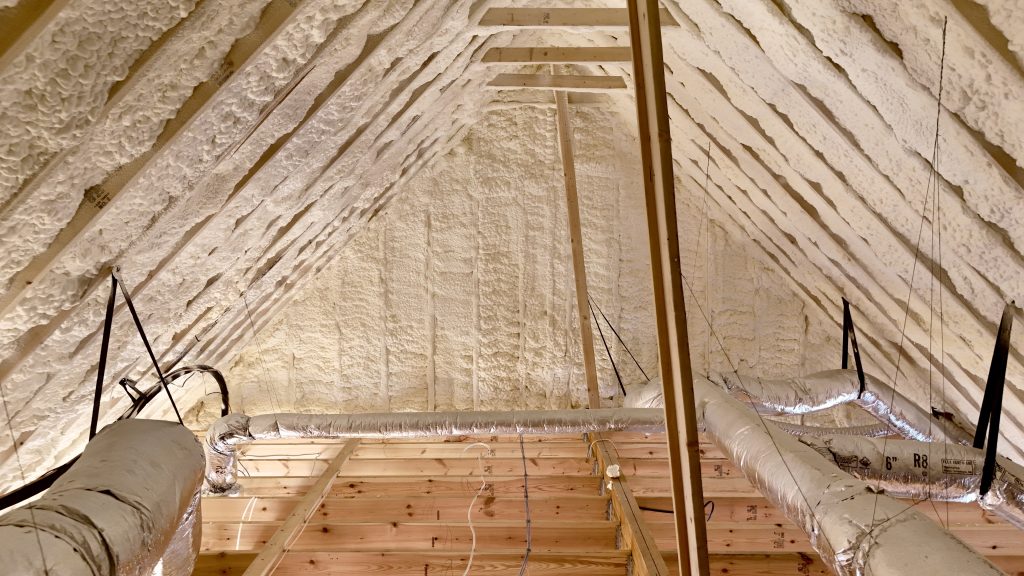
Georgia summers push attic temperatures well above 120 degrees, and that heat doesn’t stay put. It moves through poorly insulated walls, ceilings, and floors, driving up energy bills and putting extra strain on HVAC systems. Spray foam insulation creates an air-tight barrier that blocks this heat transfer, keeping conditioned air where it belongs.
We install spray foam insulation for homeowners and business owners throughout Griffin, GA and the surrounding areas. Our team works on attics, crawl spaces, walls, and commercial structures, applying a product built to handle Georgia’s humidity and temperature swings.
Poor insulation doesn’t just cost money. It contributes to moisture problems, uneven temperatures, and reduced indoor air quality. We address these issues directly, giving property owners a long-term solution rather than a temporary fix.
Where Spray Foam Delivers the Most Value
Some areas of a home or commercial building lose more energy than others, which means insulating them properly makes a bigger difference in comfort and cost savings. We focus our work on the three areas where spray foam has the greatest impact on performance.
Attics And Rooflines
Heat rises, so attics and rooflines are often the biggest source of energy loss in a building. We apply spray foam directly to the underside of the roof deck, sealing gaps around rafters, vents, and chimneys that fiberglass batts typically miss.
This approach creates a conditioned attic space rather than a vented one. As a result, HVAC equipment and ductwork located in the attic run more efficiently because they’re no longer exposed to extreme temperature swings.
For commercial buildings with flat or low-slope roofs, we also insulate the roofline to reduce heat transfer through the largest surface area of the structure.
Exterior Walls
Exterior walls account for a significant portion of a building’s total surface area, and gaps in wall insulation lead to drafts and uneven indoor temperatures. We inject or spray foam into wall cavities to fill spaces around studs, wiring, and plumbing that standard insulation often leaves uncovered.
Closed-cell foam adds rigidity to wall assemblies, which can improve resistance to moisture intrusion. Open-cell foam, by contrast, allows walls to remain more flexible while still blocking air movement.
We select the foam type based on the wall construction and the building’s specific needs, whether it’s a residential home or a commercial structure with metal or masonry walls.
Crawl Spaces And Basements
Crawl spaces and basements sit close to the ground, which makes them prone to moisture, temperature fluctuations, and air leakage. We apply closed-cell spray foam to rim joists, foundation walls, and other areas where outside air commonly enters.
Area | Common Issue | How Spray Foam Helps |
Rim joists | Air leakage | Seals gaps between foundation and framing |
Foundation walls | Moisture and cold transfer | Creates a moisture-resistant barrier |
Crawl space floor | Ground moisture | Reduces humidity migration into the home |
By treating these areas, we help stabilize indoor humidity levels and reduce the load on heating and cooling systems throughout the rest of the building.
Why Choose Us?
Georgia Insulation: Your Solution to Home Comfort
Expert Professionals
Our experienced team is licensed and certified. We employ a highly-selective hiring process, and take pride knowing that our team is comprised of some of the most experienced, well-trained insulation professionals in the industry.
Quality Materials
We’ll never cut corners on your home. We use only high-grade insulation materials – the same we’d use in our homes – to make sure your insulation protects your home for a lifetime.
Local Service
We are proud to call Georgia home, so we treat our customers like our neighbors. Whatever your insulation needs, we’ll always go the extra mile to make sure you leave satisfied!
Solutions for Commercial Properties
Commercial buildings each present different insulation challenges, from large open spans to shared walls between tenants. We adjust our spray foam approach based on the building type, occupancy, and existing structure.
Warehouses And Metal Buildings
Metal buildings lose and gain heat quickly, and condensation on interior metal surfaces is a common problem. We apply closed-cell spray foam directly to the interior of metal roofs and walls to control this moisture and add structural rigidity.
This insulation method also reduces noise from rain and wind, which matters in large open spaces used for storage or operations. Closed-cell foam holds up well against the temperature swings typical in warehouses with high ceilings and large door openings.
For agricultural buildings and hangars, we account for ventilation needs and any equipment that generates heat. Our team measures the building envelope carefully before recommending foam thickness, since under-insulating leaves gaps in performance and over-insulating adds unnecessary cost.
Offices And Retail Spaces
Office and retail buildings depend on consistent indoor temperatures to keep employees and customers comfortable throughout the day. We insulate walls, ceilings, and rooflines using open-cell or closed-cell foam depending on the specific area and moisture exposure.
Air sealing is a priority in these spaces because gaps around windows, doors, and HVAC penetrations let conditioned air escape. Our installation reduces those losses, which can lower monthly utility costs over time.
We also work around active business hours when needed, since many office and retail clients cannot close during installation. Scheduling and containment measures keep dust and odor to a minimum while our crew completes the work.
Multifamily Buildings
Apartment complexes and multifamily properties have unique insulation needs because of shared walls, floors, and ceilings between units. Spray foam helps reduce sound transfer between units, which is a frequent complaint in poorly insulated buildings.
We also focus on fire-rated assemblies, since multifamily construction is subject to specific code requirements for foam placement near living spaces. Our crews use products and application methods that meet these building code standards.
Common problem areas include:
- Rim joists and crawl spaces below ground-floor units
- Attic spaces above top-floor units
- Shared walls between units for sound control
- Mechanical rooms and utility chases
Addressing these areas helps property owners manage energy costs across multiple units while improving comfort for tenants.
Performance Benefits for Local Properties
Griffin’s humid subtropical climate puts real demands on a building’s thermal envelope. Spray foam addresses these demands through three core mechanisms: reduced energy loss, controlled air and moisture movement, and consistent interior temperatures.
Improved Energy Efficiency
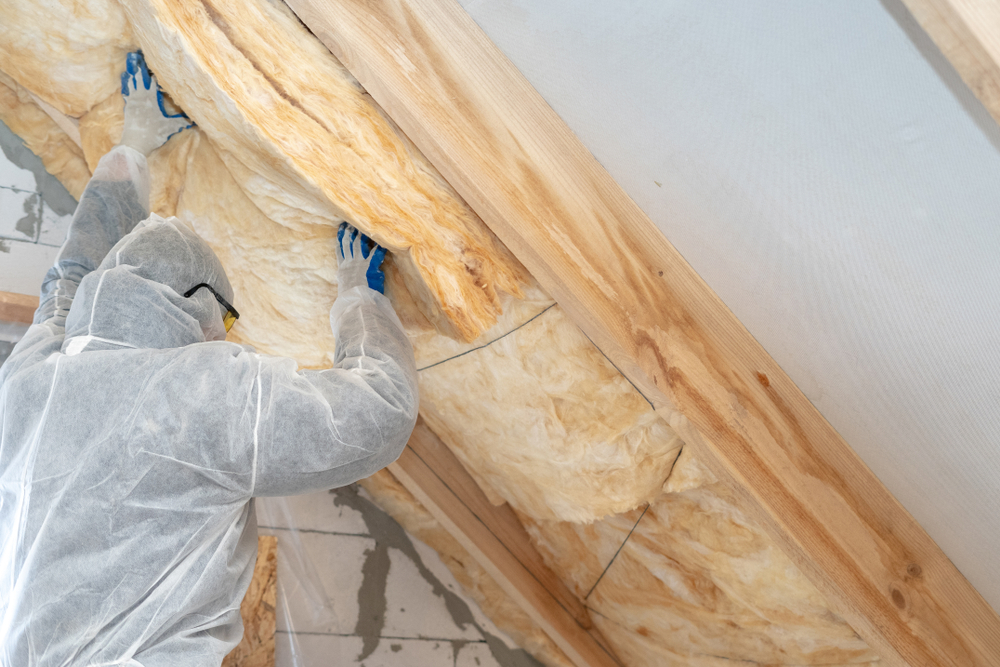
Spray foam creates a continuous thermal barrier that closed-cell and open-cell fiberglass batts typically can’t match. Unlike traditional insulation, foam expands to fill gaps, cracks, and irregular spaces where conditioned air normally escapes.
We find that this air-sealing quality directly reduces the workload on HVAC systems. When less conditioned air leaks out, furnaces and air conditioners cycle less often.
Homeowners in our service area often see a measurable drop in monthly utility costs after installation. The R-value per inch is also higher than most conventional materials, meaning we can achieve strong thermal performance without adding excessive material thickness to walls or attics.
Air Sealing and Moisture Control
Georgia’s humidity levels make moisture control a priority for any building envelope. Spray foam forms an airtight seal that blocks the infiltration of humid outdoor air, which reduces the conditions that lead to condensation inside walls and attics.
This matters because trapped moisture can compromise structural wood and promote mold growth over time. Closed-cell spray foam, in particular, acts as a vapor barrier, adding a layer of protection in crawl spaces and basements where moisture tends to collect.
We apply foam with attention to local building codes and climate-specific moisture patterns. This approach helps property owners avoid the hidden damage that often develops behind walls before it becomes visible.
Enhanced Indoor Comfort
Consistent indoor temperatures depend on minimizing drafts and hot or cold spots throughout a structure. Spray foam’s expanding application fills voids around outlets, framing, and penetrations that other insulation types tend to miss.
We’ve seen this translate into fewer temperature fluctuations between rooms and floors. Properties with spray foam also tend to experience less outdoor noise transfer, since the foam’s density dampens sound in addition to sealing air gaps.
For both homeowners and business owners, this means fewer complaints about uneven heating or cooling and a more predictable indoor environment across all seasons.

We Proudly Serve in Griffin, GA
Baldwin, Georgia, is a small North Georgia community with a rich local history and a strong connection to the surrounding mountains and natural areas. The city was incorporated in 1896 and was named after Joseph A. Baldwin, a railroad official. Baldwin sits along U.S. 441 and the Eastern Continental Divide, giving it a unique place in the region.
Today, Baldwin is a great place to live for people who enjoy a quieter community while staying close to outdoor recreation and nearby towns. Local parks, including Mitchell Gailey Memorial City Park, give families places to relax and spend time together. Nearby Lake Russell and the Chattahoochee-Oconee National Forest offer opportunities for fishing, hiking, camping, boating, and enjoying the outdoors.
We are thankful to the residents of Baldwin for their support and business through the years. Serving local homeowners has been an important part of our work, and we look forward to continuing to provide dependable attic insulation for customers throughout Baldwin and the surrounding communities.
EXCELLENTTrustindex verifies that the original source of the review is Google. Georgia Insulation saved the day and our house! Breanna promptly answered my call, which was at the end of the work day, and listened to me freak out about being down to the wire and in need of insulation. She jumped right on the request and worked diligently with Jason to get me on the schedule asap. We cannot thank them enough for saving us! The installers were kind, professional and early… who is early these days?! We were very impressed by Breanna, Jason, and the rest of the team at Georgia Insulation. Don’t hesitate to work with this company, they actually care about their clients and don’t over promise (unlike the company that blew us off a day before they were scheduled to Install because they over promised and under delivered). So again, if you need a super reliable and professional insulation company, reach out to Breanna at Georgia Insulation, and she will get you taken care of! Thanks again for helping us!!Posted on GoogleTrustindex verifies that the original source of the review is Google. Fast friendly servicePosted on GoogleTrustindex verifies that the original source of the review is Google. I can say enough great things about the people and my experience with Georgia Insulation. Terra came out and gave a thorough evaluation and quote for open cell foam insulation for our home. The quote was reasonable, and for the amount of work to be done, I thought it was a great deal. Edwin and his crew were awesome and entertaining. They removed all of the existing insulation in the attic and completely covered the underside of the roof with open cell foam. I’ve waited about 2 months to write this review, as I wanted to share energy savings. Last month bill was $106 less than the previous year, same month. The part about that blew me away, was last years June was a very mild June and this June has been quite hot. That being said, I feel very confident I will see a return on my investment. I highly recommend Georgia Insulation and Terra Schaefer and team.Posted on GoogleTrustindex verifies that the original source of the review is Google. The consultant was very good. He explained and answered all my questions concerning my problem. They were very prompt in coming out and the two young men, Edward and Ulises were very friendly and very professional. They took care not to get anything on my floors. They also cleaned up after the job was done. I would certainly recommend this company.Posted on GoogleTrustindex verifies that the original source of the review is Google. Ga insulation came to my home and insulated with close cell foam underneath my floor. Techs needed a second access to get to 2 bedrooms which I was not able to provide while they were here . The room temperatures were at 73 where they had sprayed and where they didn’t was at 59! I am excited that they are returning to finish now that I have the access they needed . The workers were excellent and very professional.This made such a difference in my heating now that the heat shuts off when needed to! Georgia Insulation is a top notch company providing a great service for a very fair price! My best decision ever!Posted on GoogleTrustindex verifies that the original source of the review is Google. Posted on GoogleTrustindex verifies that the original source of the review is Google. Great service, fast, and good communication.Posted on GoogleTrustindex verifies that the original source of the review is Google. Great job. On time. Left place nice & clean. This is second job. I will definitely use them on the next one. Thanks AllPosted on GoogleTrustindex verifies that the original source of the review is Google. Did an excellent job insulating our new construction. Good communication and clean work.Posted on GoogleTrustindex verifies that the original source of the review is Google. Georgia Insulation do excellent work and are a great bunch of people to work with. I highly recommend them and will use them again.
Get Your Free Spray Foam Insulation Estimate
Improve your home’s comfort and energy efficiency with professional spray foam insulation. Contact Georgia Insulation today for a free estimate and expert recommendations.
FREQUENTLY ASKED QUESTIONS
Homeowners and business owners in Griffin often ask us about lifespan, safety, installation, and cost savings before moving forward with spray foam insulation. Below, we answer the questions we hear most often.
How long does spray foam insulation last?
Spray foam insulation typically lasts 20 to 30 years without significant degradation. It doesn’t settle or compress over time like traditional insulation materials.
We use high-quality formulations that maintain their insulating properties for decades. This long lifespan means fewer replacement costs over the life of your home or building.
Is spray foam safe for homes and businesses?
Once cured, spray foam is safe for occupied spaces. During installation, we require the area to be vacated for a specific period to allow proper curing.
We follow manufacturer guidelines and industry safety standards on every job. Our team uses proper ventilation and protective equipment throughout the application process.
Can it be installed in existing walls?
Yes, we install spray foam in existing walls using an injection method. Small holes are drilled into the wall cavity, and foam is injected to fill the space completely.
This approach works well for older homes that weren’t originally insulated. We patch and seal the access points after installation.
What areas of a building benefit most from it?
Attics, crawl spaces, and rim joists see some of the biggest improvements from spray foam. These areas are common sources of air leakage and temperature loss.
Exterior walls and basement spaces also benefit significantly. In commercial buildings, we frequently apply spray foam in roof decks and around HVAC penetrations.
How does it help lower energy costs?
Spray foam creates an air seal that stops conditioned air from escaping. This reduces the workload on heating and cooling systems.
We’ve seen clients report noticeable reductions in their monthly utility bills after installation. The exact savings depend on the size of the building and the areas treated.
How long does the installation process take?
Most residential projects take one to three days, depending on the size of the home and the areas being insulated. Commercial jobs vary based on square footage and building complexity.
We provide a timeline estimate during our initial assessment. Our crews work efficiently to minimize disruption to your daily routine.
Get Your FREE Consultation Today!
Just fill out your information and a member of our team will get started with you right away.